Sometime this winter The Mate allowed that he wouldn’t mind a little break from splitting firewood and running our wood stove. So, with our family obligations cleared, our thoughts turned to Mexico, where lately it seems a good half of our (retired) acquaintance has been sojourning in the cold months.

When it came to Mexico, we quickly found out our knowledge fell into two categories .
1. Things we don’t know about Mexico: almost everything
2. Things we do know about Mexico: any place where we are likely to meet lots of fellow Americans is a place we don’t want to visit right now.
With that in mind, I bought a Lonely Planet book and started checking out regions. That’s when La Huasteca Potosina and the Sierra Gorda caught my eye and held it. I started doing some reading, and stumbled onto the most helpful travel blog I’ve encountered, written by an intrepid pair of Australians. Sallysees.com helped me create my own itinerary, and I strongly recommend their blog for many areas of Mexico and some other places they’ve traveled.

Following Sally’s advice, I planned to rent a car in the city of San Luis Potosi and drive a big circle. My Spanish has been improving, and I was looking forward to testing it.
Or I thought I was. But when Hijo Dos (Son Two), who’s fully fluent, offered to accompany us, I think I was relieved as my Mate in saying ¡Sí, por favor! So we all flew together from Seattle.

Our plane got in late so we spent the night in a hotel near the airport, but next day we drove about three hours through increasingly impressive desert…

…to La Huasteca, a region named for the Huastec people, a place of lush, jungly green oases with magical blue rivers and waterfalls. Our first stay was the small town of Tamasopo.
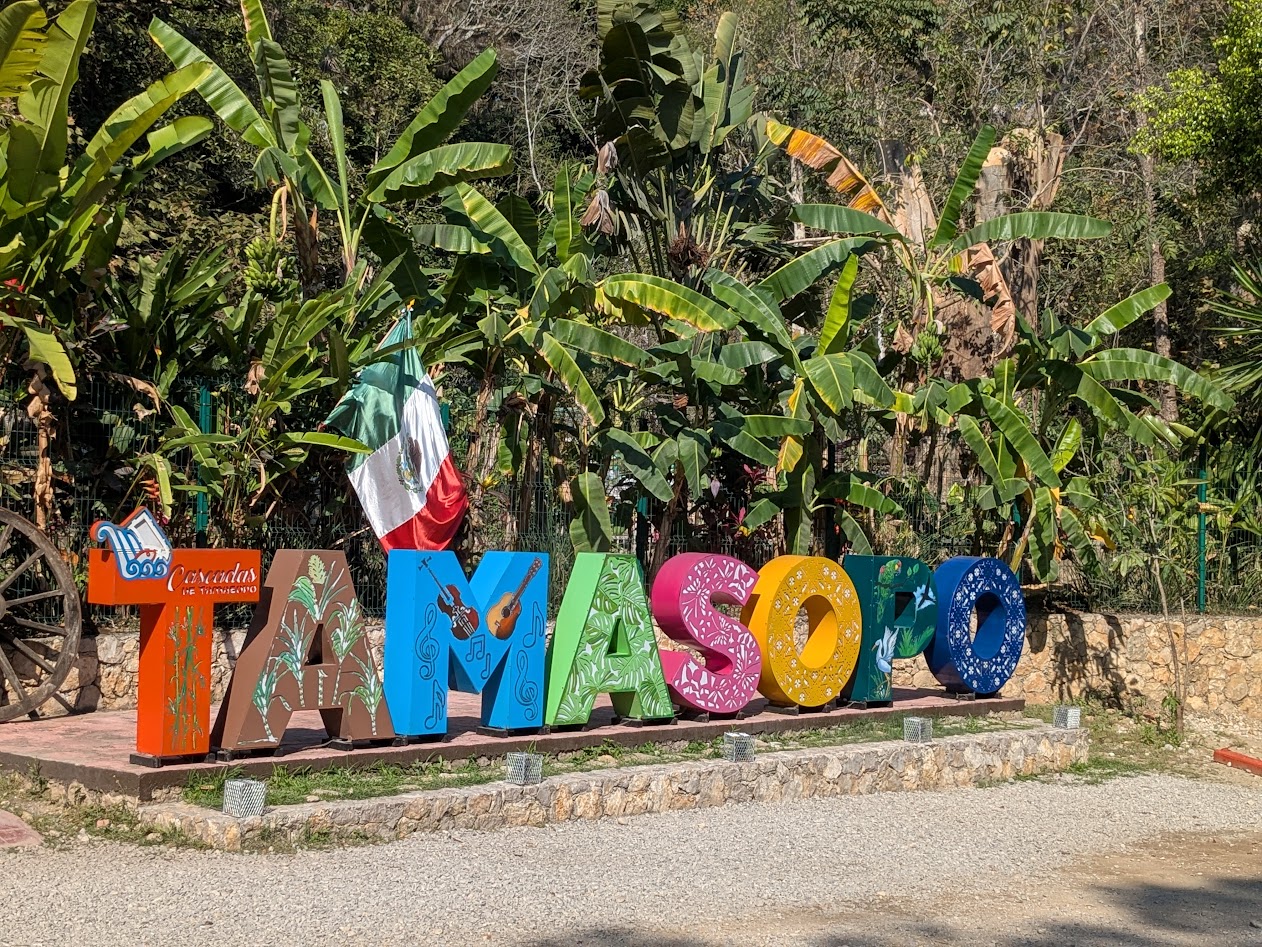
The Rio Tamasopo ran right past our first accomodations–such a relief after hours of desert driving!


The cypress trees there are as impressive as the water; in fact, they shape the water’s flow with their roots.

Another huge plus of our cabaña was its proximity to what could well be the top attraction of the whole area (except that it has so many competitors): el Puente de Diós (Bridge of God).

It’s less a bridge than it is a roaring waterfall which comes to rest in a magical, dark blue cenote—ringed by drapery of ferns and more tiny waterfalls—from which the river somehow disappears through the cliff and comes out the other side.
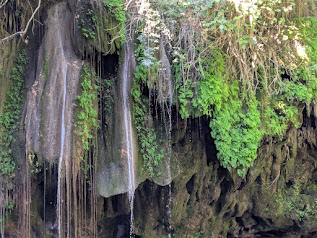
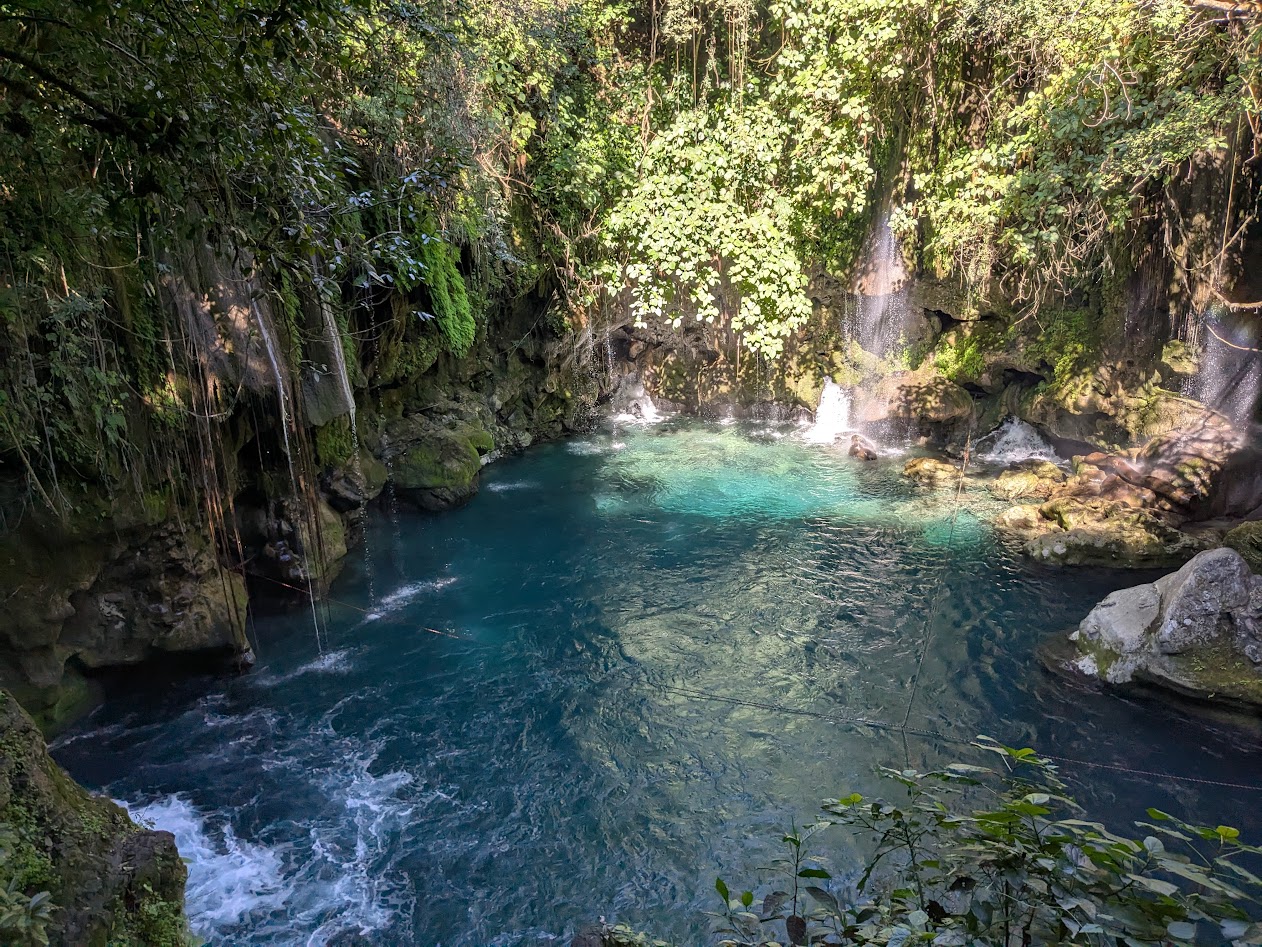
Tourists can float through this underwater cavern with lifejackets on…

My family never opted for the boisterous-seeming life-jacket-cave-float option, preferring to hang out in the sunny water just downstream…
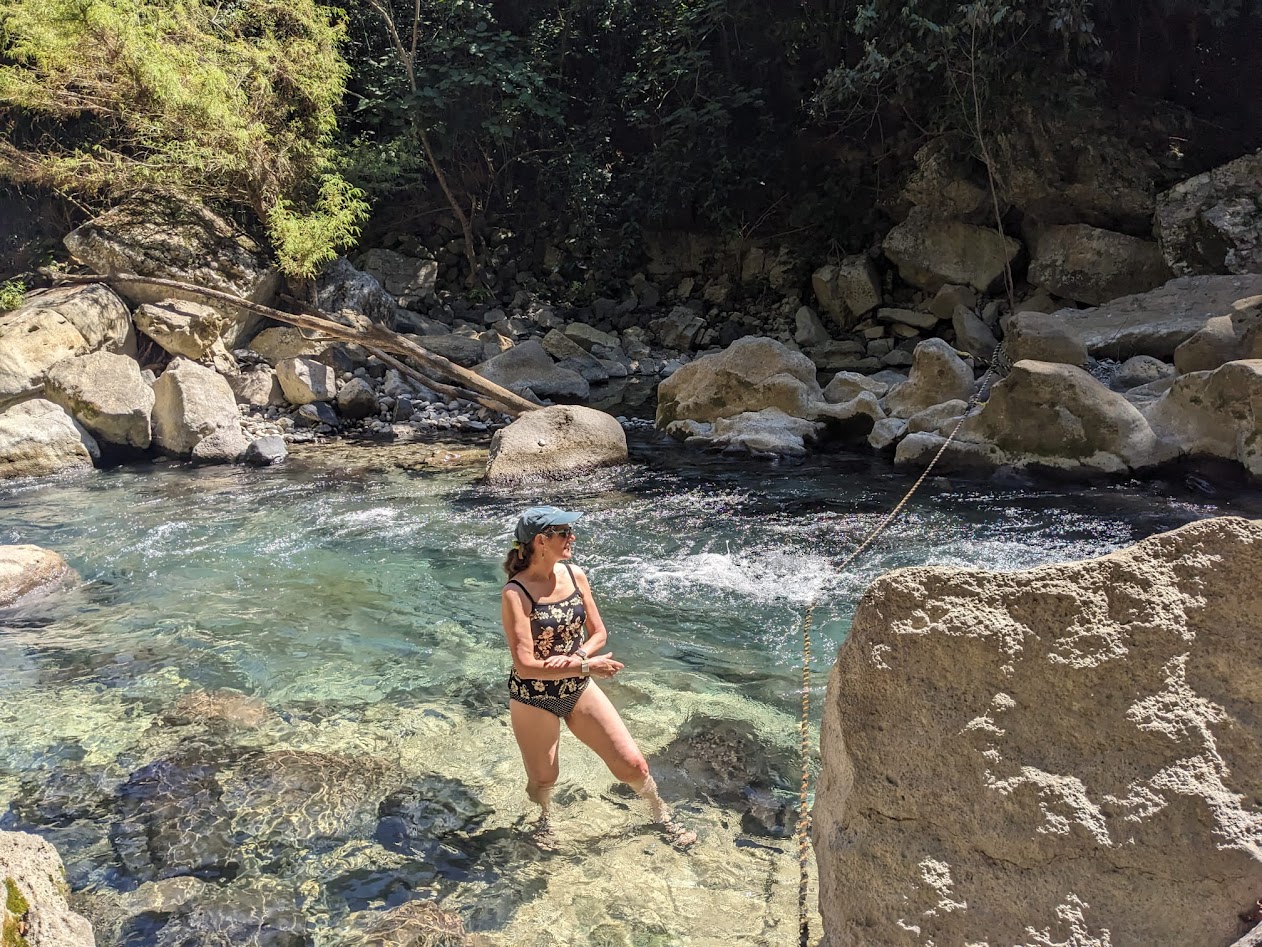
…and (Hijo Dos y yo) to sneak back in next morning before the guides and tourists arrived.
Being there alone with only the roar of the falls, steaming in the chill air, was magical.

Another nearby attraction, just a couple of miles by car, were the Cascadas de Tamasopo. Having been warned by Sally’s blog that these falls had been curated into a kind of waterpark, we saved them for the day we left Tamasopo.

Because we got there early we were still able to fully enjoy the natural beauty of the water without being too distracted by The surrounding eateries and lounge chairs.

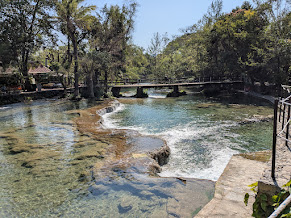
Three days into our trip, we had yet to meet a single non-Mexican tourist. ¡¡¡Sí!!!
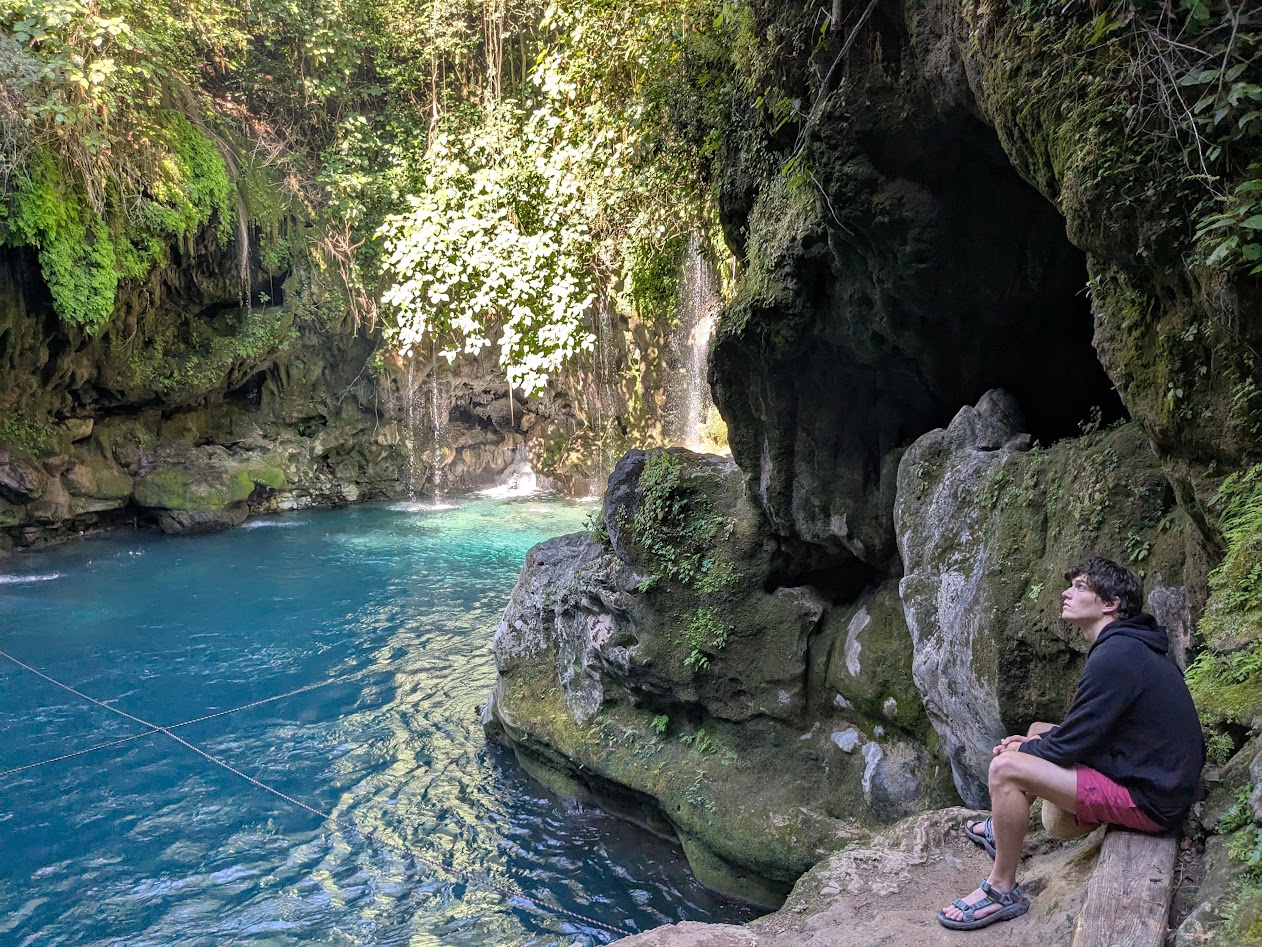
Next stop: the Selva Teenek Wildlife Rehabilitation Ecopark. Let’s see some critters!
 Wing's World
Wonderful photos and unique place. Maybe someday …
Thanks, Intrepid One! Maybe!
Oh my, that water is stunningly beautiful! The color and clarity remind me of the spring-fed rivers in Florida. Is the water chilly? It sounds like you had quite the adventure!
Laurel, yes! All the water in these photos was warm enough to linger in. Some of the places in my next installment were a bit chillier, but nothing actually cold. Amazing.