
Virtual Book Club, Anyone? The Goldfinch, Canada, and A Tale for the Time Being: Teenagers Adrift in an Adult Sea

This is NOT a book review. It’s an invitation.

By strange coincidence, each of the last three books I’ve read this summer has featured a teenager whose life is wrenched awry by the actions of adults. These are NOT “young adult” novels by any stretch. They are a reminder that young adults can be a microcosm of the human spirit: fate vs. self-determination, culture vs. character, all within the confines of a body whose only constant is change.

Book #1 is the most well-known: Donna Tartt’s The Goldfinch. As I was wolfing it down during a trip, it seemed like everyone I met was reading it too. Problem is, no one who lives close to me has read it, and once I finished it, I was dying to talk about it! So I engaged in a mini-virtual book club with a friend via email, which was so rewarding, I thought of enlarging it to the blogosphere.

Read the book? Post a discussion question, or an observation. Anyone else who’s read it can take it from there.

The Goldfinch is a mind-blowing book, and it will probably be made into a movie. But don’t wait for that. Read it soon. (Not wanting to buy the hardback, not willing to wait for the long library list to dwindle, I snarfed it up on Kindle.) Favorite supporting character: Boris, the Russian teen with the Australian accent and the heart that refuses to harden, no matter what it’s exposed to.
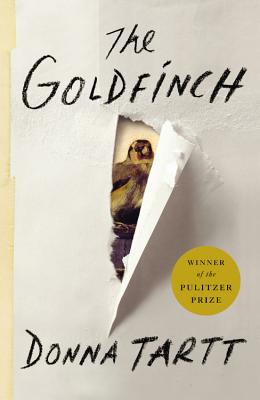
goldfinch

But let me tell you about the other two books! (And maybe The Goldfinch will be out in paper by the time you’re done with them.) 

Richard Ford’s Canada is probably the hardest read, in that it takes time. The deliberate pace is, in fact, part of the book’s theme–but you won’t know that until you’ve read it. I’ll borrow the words of a reviewer here to give you a quick idea of it:

“Canada, Richard Ford’s long-awaited new novel, is not one to be rushed. While the plot sounds sensational — robbery, murders, a flight across the Canadian border — Ford’s laconic, measured prose forces the reader to slow the pace and savor the story. This is a novel about actions, intentions, and consequences as well as about belonging, introspection, and the solitary nature of life. Powerful and atmospheric, Canada will excite and gratify Ford’s fans and introduce newcomers to a masterful American writer.”  –Tova Beiser, Brown University Bookstore, as cited on Indiebound.org

Favorite supporting character: Canada itself. Yes, the country. Read the book, then we can talk about that.

canada

The third book is probably the fastest and most page-turning read: Ruth Ozeki’s A Tale for the Time Being. It features two narrators: Ruth, the middle-aged author who finds a Hello Kitty lunchbox washed up on the beach of her remote island in western Canada, and Nao, the sixteen year-old Japanese girl who…of course…wrote that diary. Best supporting character: Nao’s 104 year-old great-grandmother, a Buddhist nun, with whom Nao communicates by texting. This book also messes with the whole relationship between author, reader and story. Mind-blowing. But I’ve used that term already, huh.

Tale

So…have you read any of these? If so, please chime in! If not, click over to indiebound.org, or rush to your favorite local bookstore to get one, or all three.  Read fast, THEN chime in. I’ll wait.


From the Author of Cloud Atlas, Another Ridiculously Good Read

Let me apologize up front for not writing about President Kennedy today. I figure others will pick up the slack. I need to write about a book.

I’d love to sum it up in a pithy, “Two words for ya–” but unfortunately, this book has a MOUTHFUL of a title. Ready?

The Thousand Autumns of Jacob de Zoet, by David Mitchell.

Read this.

Read this.

Normally my “can’t-put-it-down” books are mysteries–especially ones by Elizabeth George. But this literary novel has me in its clutches, and not for the usual reasons.

Oh, it’s got the goods all right. Sympathetic hero with a blind spot? Check. Ridiculously authentic, obviously-well-researched setting (Japan circa 1800)? Check. Crackling dialogue (seamlessly “translated” from Dutch and Japanese yet!)? Sensory detail of the most intimate and unexpected kind? Aching love story? Political intrigue? Breathless plot twists? Evil villains? Check, check, check, check, check, and…check.

But here’s what really gets me about this novel, grammar nerd that I am: its simple declarative sentences.

An example, chosen randomly from page 194:

Uzaemon glimpses the enormity of the risk he is taking.

Would they bother with a warrant? Or just dispatch an assassin?

Uzaemon looks away. To stop and think would be to abort the rescue.

Feet splash in puddles. The brown river surges. Pines drip.

I think I’m in love.

…THIS JUST IN! I wrote the above before arriving at page 451. That’s where I found this paragraph:

Gulls wheel through spokes of sunlight over gracious roofs and dowdy thatch, snatching entrails at the market place and escaping over cloistered gardens, spike-topped walls, and triple-bolted doors. Gulls alight on whitewashed gables, creaking pagodas, and dung-ripe stables; circle over towers and cavernous bells and over hidden squares where urns of urine sit by covered wells, watched by mule drivers, mules, and wolf-snouted dogs, ignored by hunchbacked makers of clogs; gather speed up the stoned-in Nagasaki River and fly beneath the arches of its bridges, glimpsed from kitchen doors, watched by farmers walking high, stony ridges…

Do you hear it yet? Feel it? Read the passage aloud. 

It RHYMES.

And it goes on like this, this single paragraph, for nearly a page and a half, all gorgeous internal rhyme hidden amidst sense-snatching detail like some kind of literary sleight-of-hand. The final sentence of the paragraph ends this way:

…where their flight began, over the balcony of the Room of the Last Chrysanthemum, where a puddle from last night’s rain is evaporating; a puddle in which Magistrate Shiroyama observes the blurred reflections of gulls wheeling through spokes of sunlight. This world, he thinks, contains just one masterpiece, and that is itself.

I think I read that last sentence holding my breath, hearing the paragraph, like the gulls, wheel full circle back to where its flight began.

As far as I’ve noticed, this is the only paragraph in the book like this–and Mitchell throws it out there on page 451 like, “Hey, yeah, see what I could do if I wanted? I could write this whole book in rhyme if I felt like it. Dare me?”

I’m telling ya: this former English teacher and lifelong reader & writer gets chills.

But I need to finish this book, and it’s your turn now. Do you have a book which you love as much for its use of sentence structure or language as for the story? Should I read it? Tell, tell.

Why Barbara Kingsolver’s Flight Behavior Makes Me Wish I Were Back in the Classroom

First, a bit of irony: after dutifully writing and scheduling five posts so I could go away to Greece for two weeks without my blog curling up and dying, I come back home only to fall off my own schedule.

Turns out, jet lag + travel germs + 3 days in a row of staying up late to rehearse or perform music while having to get up next morning at 4 to bake = sore throat-drippy-nose-splitting-headache bad idea. If I had blogged in the past couple of days, it would have sounded like this: WHIIIIIIIIINE.

But I’m back! and excited to talk about a book I just finished, one that makes me wish wish wish I could have my old job back, teaching high school English.

First of all, it’s Barbara Kingsolver–one of my top ten current (as in, still writing) novelists. I taught The Bean Trees for years–practically memorized it–and used to love pointing interested students toward its sequel, Pigs in Heaven. (Couldn’t get that one past our school board; tad too much sex involved.) And I don’t know anyone who read The Poisonwood Bible who wasn’t blown away. (That one would have eaten up a whole semester.)

(Courtesy faber.co.uk)

(Courtesy faber.co.uk)

Without giving anything away, here are five reasons why you should go read Flight Behavior:

1. Through her characters, Kingsolver addresses the polarity of our country–essentially, the red/blue split, with emphasis on the income gap, religion, science, and community rootedness. But she does this so intimately, it is only after reading that one feels elucidated. “Oh, THAT’s why those people feel that way!”

In one hilarious-but-poignant scene, the protagonist, Dellarobia Turnbow, is confronted by a self-righteous outsider who wants her to sign a pledge to reduce her carbon footprint. As he reads aloud the steps she could take to be a better global citizen, both characters are struck by the pamphlet’s assumptions about opportunity.

“Okay,” he said…”Skipping  ahead to Everyday Necessities. Try your best to buy reused. Use Craigslist.”

“What is that?” she asked, though she had a pretty good idea.

“Craigslist,” he said. “On the Internet.”

“I don’t have a computer.”

Mr. Akins moved quickly to cover his bases. “Or find your local reuse stores.”

Find them,” she said.

Since Dellarobia can afford to shop nowhere else for her family…well, you get the idea. Kingsolver keeps her touch subtle.

2. Kingsolver also plays delicately with the reader’s expectations. Here we have a heroine who is beautiful, impulsive, feeling trapped in her marriage, and, in the very opening paragraph, “[knows] her own recklessness and marvell[s]…at how one hard little flint of thrill could outweigh the pillowy, suffocating aftermath of a long disgrace.” When a tall, dark, handsome stranger appears…what else can happen? Ah, what, indeed?

3. The prose is gorgeous. Just re-read #2, above.

4. If you like writers like Virginia Woolf or Ian McEwan who can NAIL never-spoken aspects of the human psyche in single, crushingly simple sentences…parts of this book will make you gasp in appreciation.

5. Finally–not really, I could go on, but 5 seems like a good place to stop–Flight Behavior functions as a call to action. Without pointing fingers, the novel reminds us that, just because we choose not to think about it, our responsibility towards our planet does not dissipate. As the visiting scientist, Ovid Byron, rants to a hapless TV reporter:

“What scientists disagree on now, Tina, is how to express our shock.The glaciers that keep Asia’s waterways in business are going right away. Maybe one of your interns could Google that for you. The Arctic is genuinely collapsing. Scientists used to call these things the canary in the mine. What they say now is, The canary is dead.”

If I had this book and thirty kids in a classroom, here’s what I’d ask them to do:

1. Find a scene in this book which you think perfectly illustrates the way prejudices form. Explain why. Then, explain how the scene relates to your own prejudices about people. Whom are you most sympathetic to in this scene, and why?

2. Some of the characters–evil mother-in-law, charismatic Southern preacher, out-of-touch scientist, slutty best friend–could easily be stereotypes. Choose two or three of these characters from the book and explain how the author keeps them from being cliches.

3. One of Kingsolver’s most powerful techniques is the long paragraph ended with a very short, simple sentence. Find one of these and explain how that technique increases the reader’s emotional reaction.

4. Think of a person you wish you could force to read this book, someone who might not want to. (It could be someone known to you personally, or not.) Why do you think this book might make them uncomfortable? Given what this book shows about the uselessness of being judgmental, how would you go about trying to interest that person in this book?

Again–I could go on. But I’m no longer drawing a paycheck for this sort of thing…sigh. And besides, it’s time for my next dose of decongestant.

(Courtesy David Govoni, Flikr Creative Commons)

(Courtesy David Govoni, Flikr Creative Commons)

But I have an idea. YOU go read the book and then check back in with me, OK? And if you already have, PLEASE weigh in. What was your own reaction? What discussion questions would you ask?

Case Histories: the Case for Cross-Genre Novels

I am SO not Ms. Goodreads. Not because I don’t want to be; I just can’t seem to fit it into my schedule. So the book I’m describing, Kate Atkinson’s Case Histories,  is nowhere close to new; it came out in 2004. I’ve had it on my to-read list for a year and a half. But I finally got there, and I want to talk about it.

Spoiler alert: no spoiler alerts will be necessary. Not because this novel isn’t a whodunnit; it is, kinda-sorta. But what’s fascinating about the book to me is Atkinson’s boldness in breaking whodunnit conventions right and left. Janet Maslin in The New York Times describes it as “a compelling hybrid; part complex family drama, part mystery,” and I would add to that, “part message to other authors: don’t be afraid to write the way you want.”

Sure, there’s a P.I. involved–Jackson Brodie, as hunky as his name suggests. Yup, he’s got a dark past and a broken marriage. And yup, Atkinson serves up multiple deaths. Some love interest. Jealousy. But NONE of the plot follows the lines that even masters like Elizabeth George feel bound by.

Filial and paternal love. Hope vs. hopelessness. The ability of the human mind to create its own truth. THOSE are Atkinson’s real themes, and she doesn’t mind messing with the reader’s detective-fiction expectations to delve into them. The result is, indeed, as “compelling” as any potboiler mystery, but the resonance of those “case histories,” those desperately, desperately sad stories of lives destroyed by violence–THAT continues long after the whoddunit questions are answered.

Here’s a link if you want to read about it. But my suggestion? Find a small local bookstore and give your money to them. Amazon is doing just fine.

http://www.amazon.com/Case-Histories-Jackson-Brodie-ebook/dp/B000SEI07S/ref=sr_1_1?s=books&ie=UTF8&qid=1380641868&sr=1-1&keywords=case+histories+by+kate+atkinson

Anyone else read this book? Want to weigh in? Does the cross-genre thing work for you, or do you like your mysteries to behave like mysteries? What about Atkinson’s other novels? Should I be reading those next?

A Must-Read

“Ever wake up in someone else’s body?” asks the front cover of Martyn Bedford’s new book, Flip. Seems cool, right? Especially when your 14-year-old former body was asthmatic, unpopular, and chess-and-clarinet playing, like Alex Gray’s…and your new body, that of one Phillip Garamond (whom everyone calls “Flip”) is studly, athletic, and has a gorgeous girl hanging off each arm.Who wouldn’t want to make that switch?

Alex, that’s who. This book does a wonderful job of portraying how terrifying such an unexplained switch would be. There you are, knowing you’re not you, having to play the role of someone else, and you know no one will believe you if you try to explain! Or worse, they’ll lock you up and shoot you full of drugs because they think you’re psycho. Alex is trapped, and his story deals as much with his deep fears about his self and soul as it does with his adventures in trying to get back to his real body. Both are very satisfying to read about. This story kept me riveted right to the end.

Alex is also English, so if you’re missing Harry Potter, it feels nice to dive back into some of that English slang you’ve been missing. Don’t get me wrong; there are no wizards or spells here, and the magic is explained in an almost scientific way. But that just raises the stakes, by making the situation seem all too real.

There’s even a love interest…or at least a “like” interest, which, in my opinion, can be even better sometimes!

The Farwalker’s Quest by Joni Sensel

If you like your heroines tough but still realistically young and conflicted, you will enjoy Ariel in the first book of Joni Sensel’s fantasy trilogy. She’s 12 and approaching the Namingfest, when all the 12 year-olds in the village receive their calling, and the new last name that comes with it. Her best friend Zeke’s name will be Tree-Singer, due to his talent at communication with trees. Ariel’s will be Healtouch…or it would be, if she could pass her healing test! Problem is, Ariel’s destiny seems to lie in a region more dangerous and adventurous than a sickroom.

When a mysterious brass dart, bearing an undecipherable message, appears in Zeke’s tree, ominous strangers are drawn to Ariel’s village, and her world is turned upside down. Soon Ariel finds herself on a quest in which enemies cannot be distinguished from friends, and the adventure she felt herself longing for seems more than she can bear. But she does, because she’s tough…and funny. My kind of heroine. I look forward to reading Book 2, The Timekeeper’s Moon.

An Abundance of Katherines by John Green

In no particular order, here are five reasons to love this book:

1. A sympathetically geeky-but-sweet, Napoleon Dynamite-ish protagonist, Colin Singleton, who’s a prodigy, not a genius–NOT the same thing!

2. His best (and only, for most of his life) friend, Hassan (“I-am-not-a-terrorist!”), who’s sensitive about his man-boobs and trying really hard–ok, not so hard–to be a good Muslim, while effortlessly being a wonderful friend

3. The author’s footnotes. I adore these; they make me feel like I’m someone special the author is passing secret little notes to as I read his book.

4. Fantastic sentences, like … oops, I just realized I’ve returned my copy of the book to the library! So I can’t do a direct quote. You’ll just have to trust me on the sentences.

5. An honest-to-goodness, downright MORAL OF THE STORY. Actually, more like three morals. You have to read the book to the end to find out what they are, and then you can write and tell me what you think. They are all powerful, though.