Leaving the blue waters of La Huasteca Potosina would have been hard, except that we were looking forward to new wonders. Starting with the town of Xilitla, which is famous for the Surrealist Gardens built by an eccentric Englishman almost a century ago.
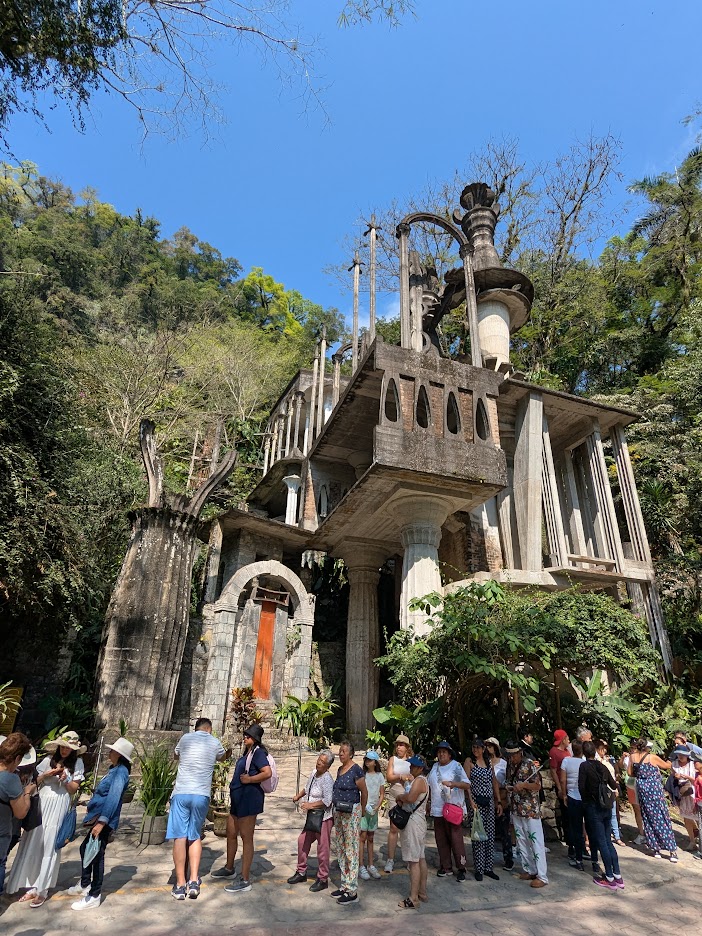
Since we don’t enjoy standing in line, we decided to view the Gardens from the outside, which was still pretty cool.

Instead, we spent a happy hour meandering through the main town of Xilitla (pronounced Hee-leet-la), which was as colorful as Aquismon, with an even prettier hilltop aspect.

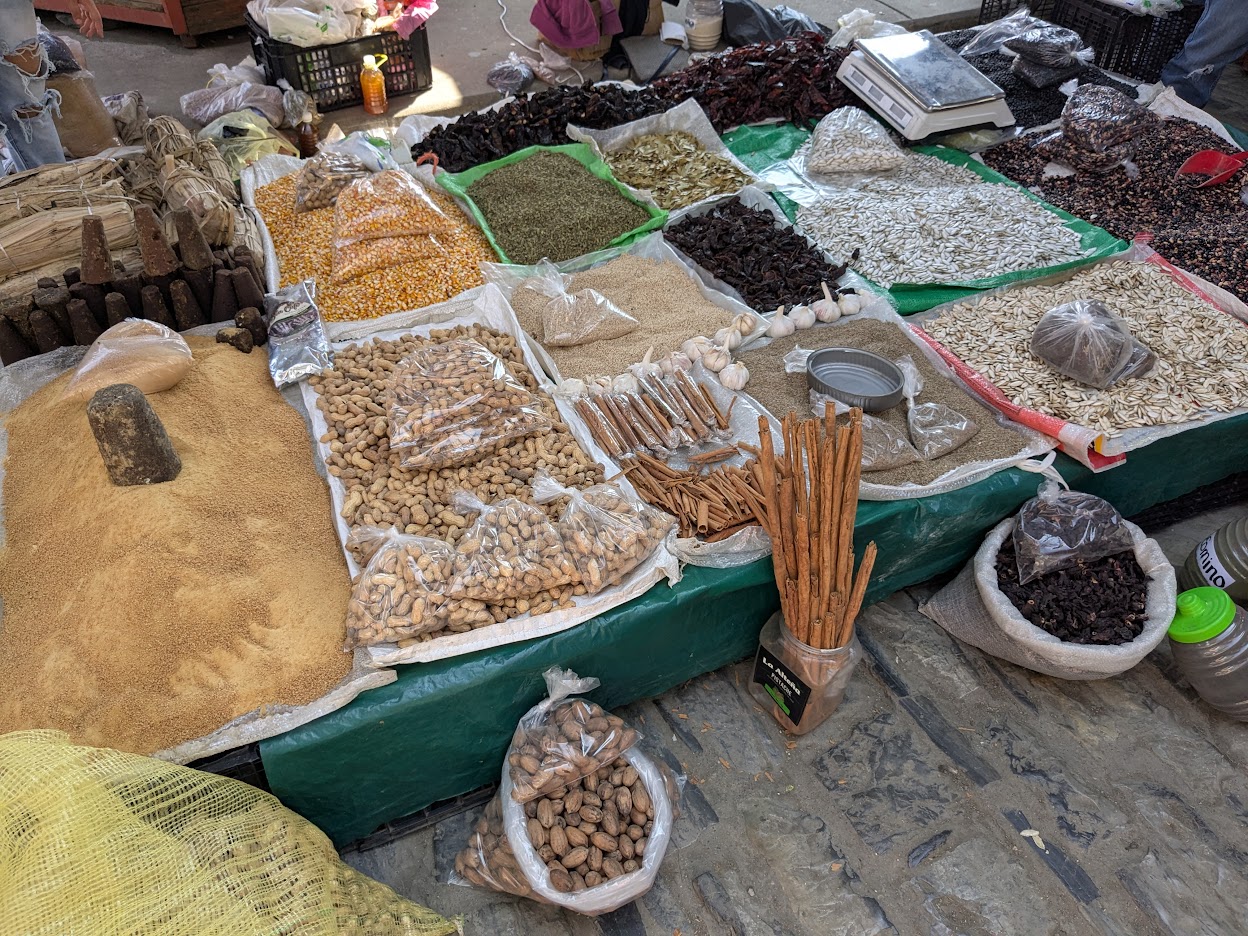
It was a market day–even more colorful!

I found myself wishing I’d brought a bigger suitcase.
Since there were no hikes in Xilitla, we hadn’t made reservations there. So we pushed on, crossing over into the state of Queretaro. To my dismay, while the mountains grew taller, they also grew drier.

The main town, Jalpan, looked pretty enough, but…where’s all the green I expected?
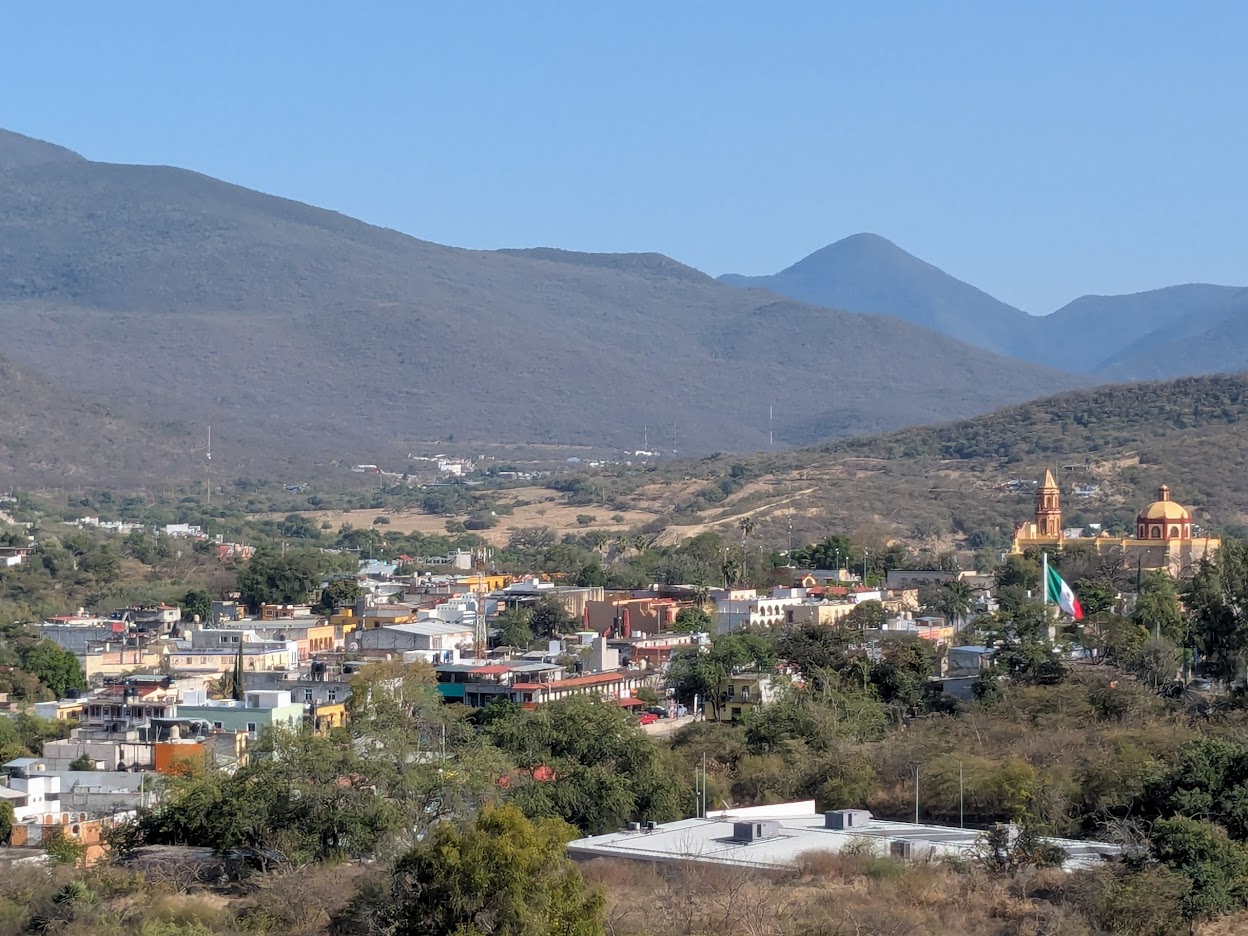
This new landscape worried me, given the weather forecast. It was supposed to be in the 90s our first day, followed by 102. That’s too hot for hiking! And too hot for anything else. I began to wonder if I’d made a mistake, bringing us here.
But our rooms, run by the nonprofit Sierra Gorda Ecological Group, cheered me up considerably.

And walking into town that night, we were equally cheered by Jalpan itself: another well-named Pueblo Mágico.

Jalpan went all-out for their “Magic Town” designation, seemed like. Not only was the plaza decorated…

…but each side alley had its own colorful theme.

Oh, and the church wasn’t bad either:

So Jalpan itself stole our hearts. Still, I worried: are we really going hiking in 98 degrees? Turns out, I wasted a good worry. La Sierra Gorda is all about hidden mountain oases.
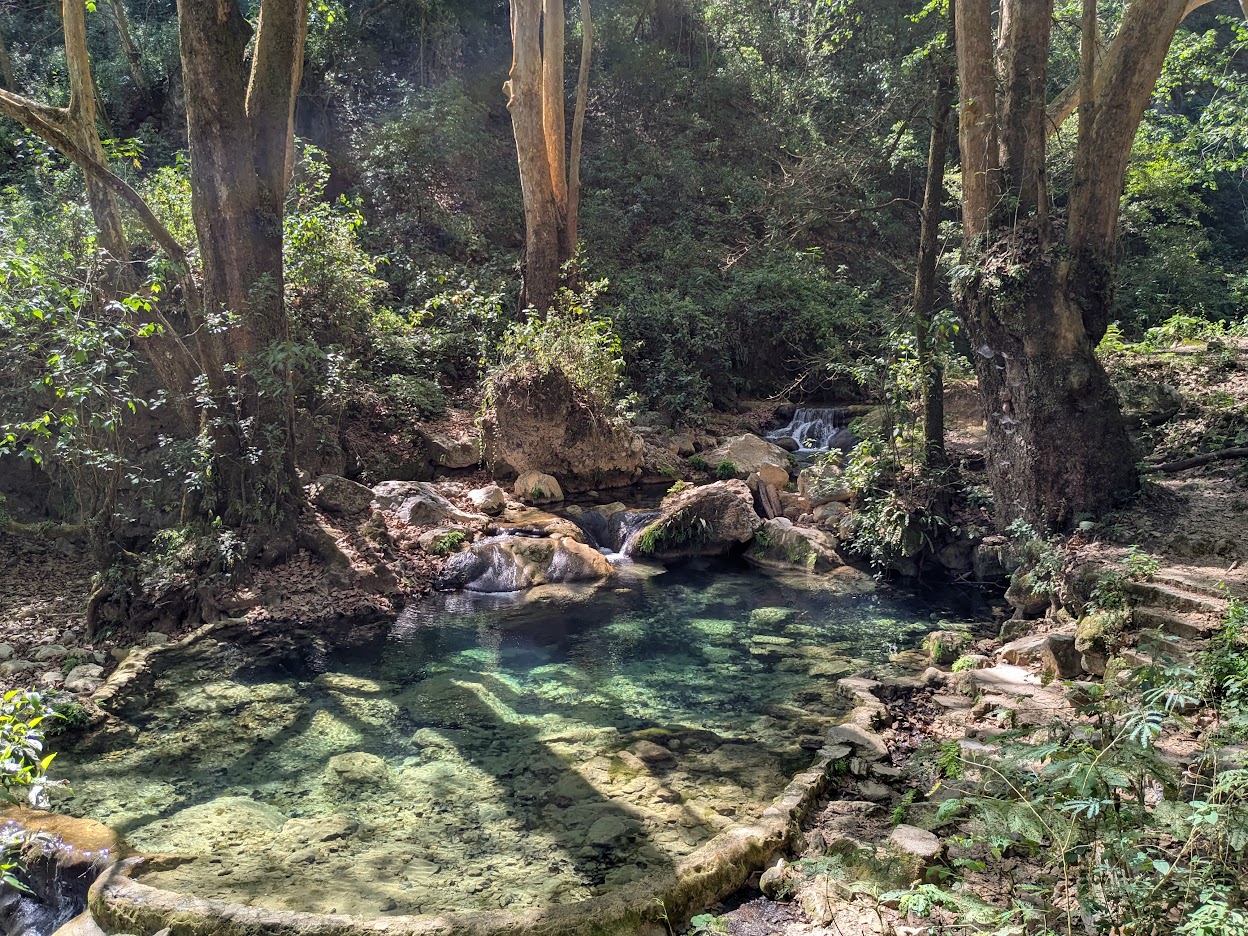
Our first hike, along this creek, featured all the blue water we’d been missing. And big ol’ sycamore trees…

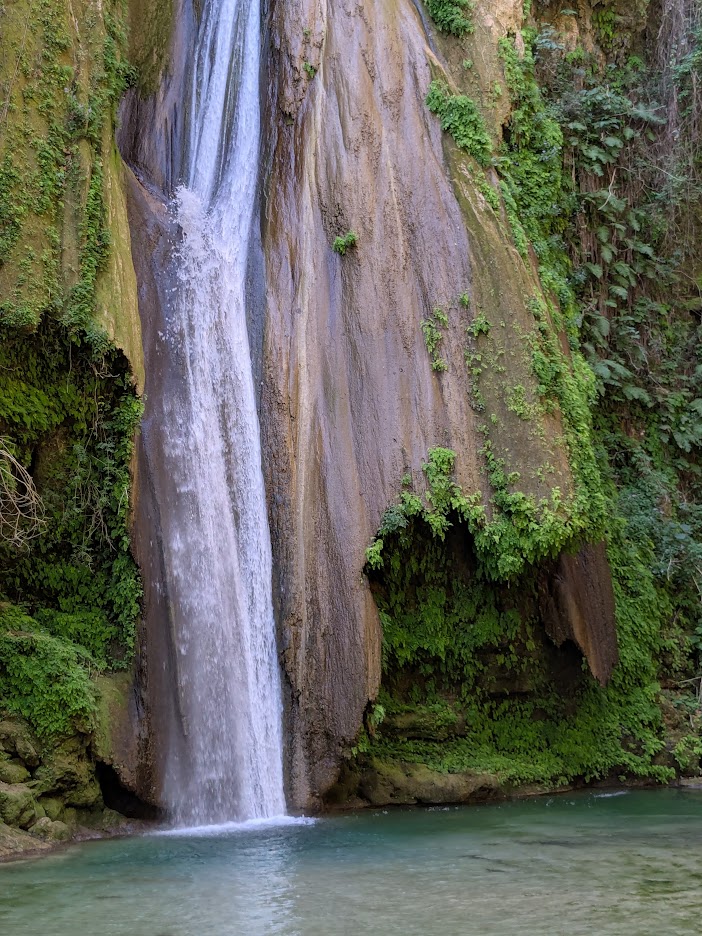
And yes! a waterfall.

Let me zoom in a sec on that fan of rock…which, understand, is CREATED by the water itself–a fan-shaped stalactite.
One wasn’t allowed to swim in this pool, as it’s a habitat for highly endangered axolotls. (Which we didn’t find.) But at the end of the hike…

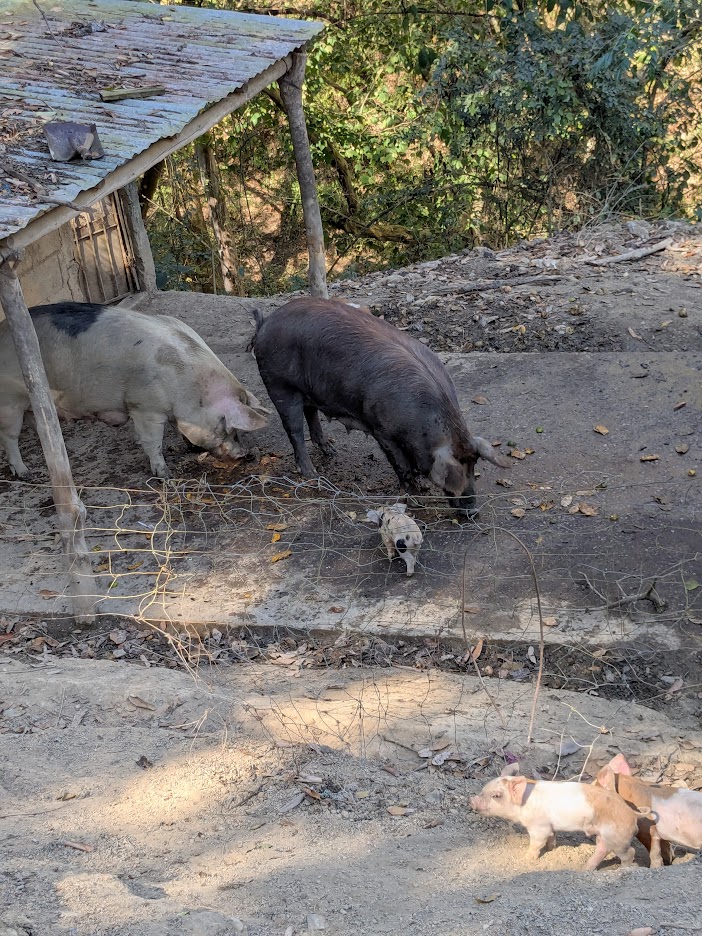
Oh–and another reward: highly cute piggies at the trail entrance.
Buoyed by our first oasis experience, we ventured out on Day 2…the 102-degree day…with high hopes for lower temps in another cool oasis: El Puente de Diós (Sierra Gorda version, not to be confused with the one in Tamasopo). This hike is famous and sensitive enough that we were required to hire a local guide. And this time, we were also rewarded beyond our wildest expectations.
The hike started similarly to the day before: clear stream, big trees.

But soon enough the canyon narrowed.

And narrowed further.
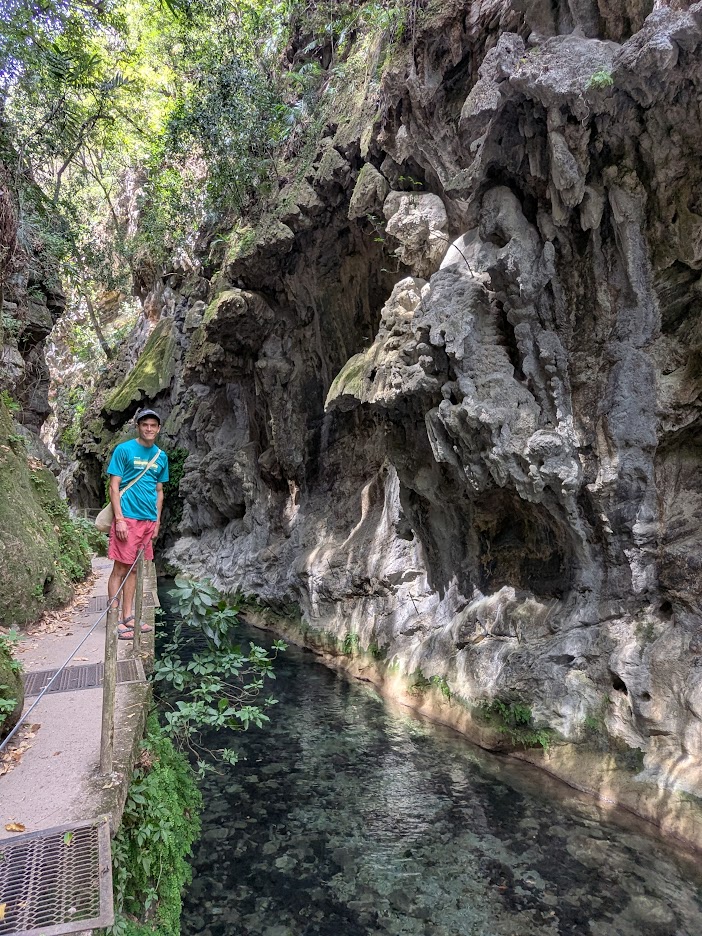
We didn’t realize it at the time, but those rocky fans on either side of the canyon are growing closer to each other with each drop of water than pours down.
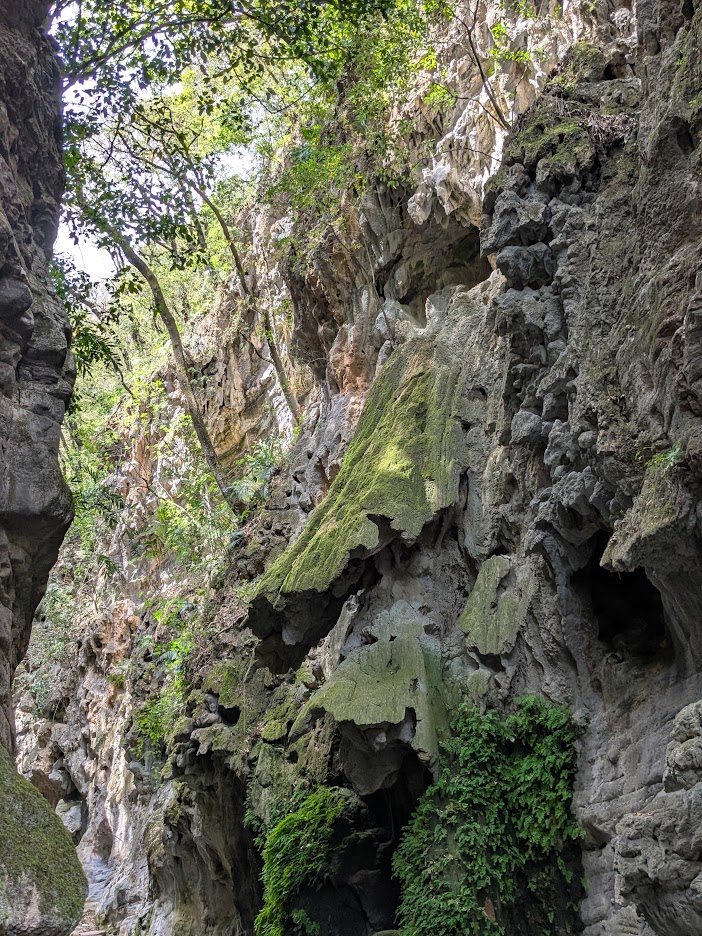
Soon we would see just how close those rocky sides could grow. But first…fun with rock faces!
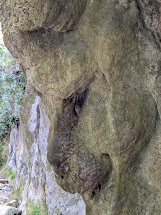
Soon after this stretch, the canyon opened back up…

…and we started hearing a waterfall roar.
But not just any waterfall. This Bridge of God was…

Can you see what happened here? The two sides of the canyon “grew” together, millennium by millennium, drop by mineral-laden drop, to connect into this bridge.
But the most incredible view was from underneath. Here’s looking THROUGH the bridge…
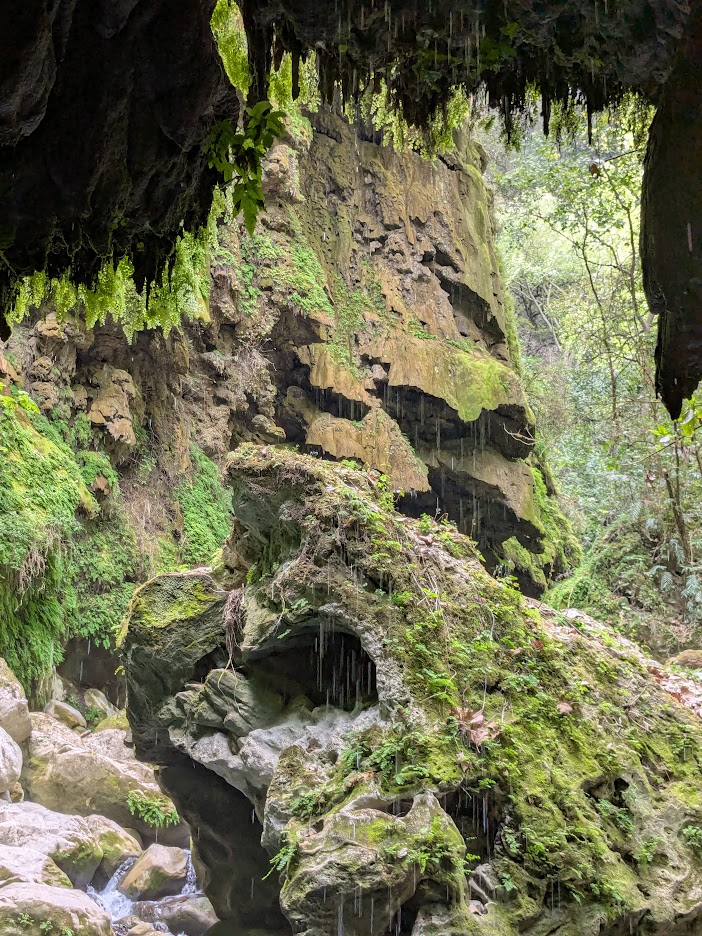
…but here is looking UP…into the bridge’s belly.

Imagine a roar too loud for conversation.
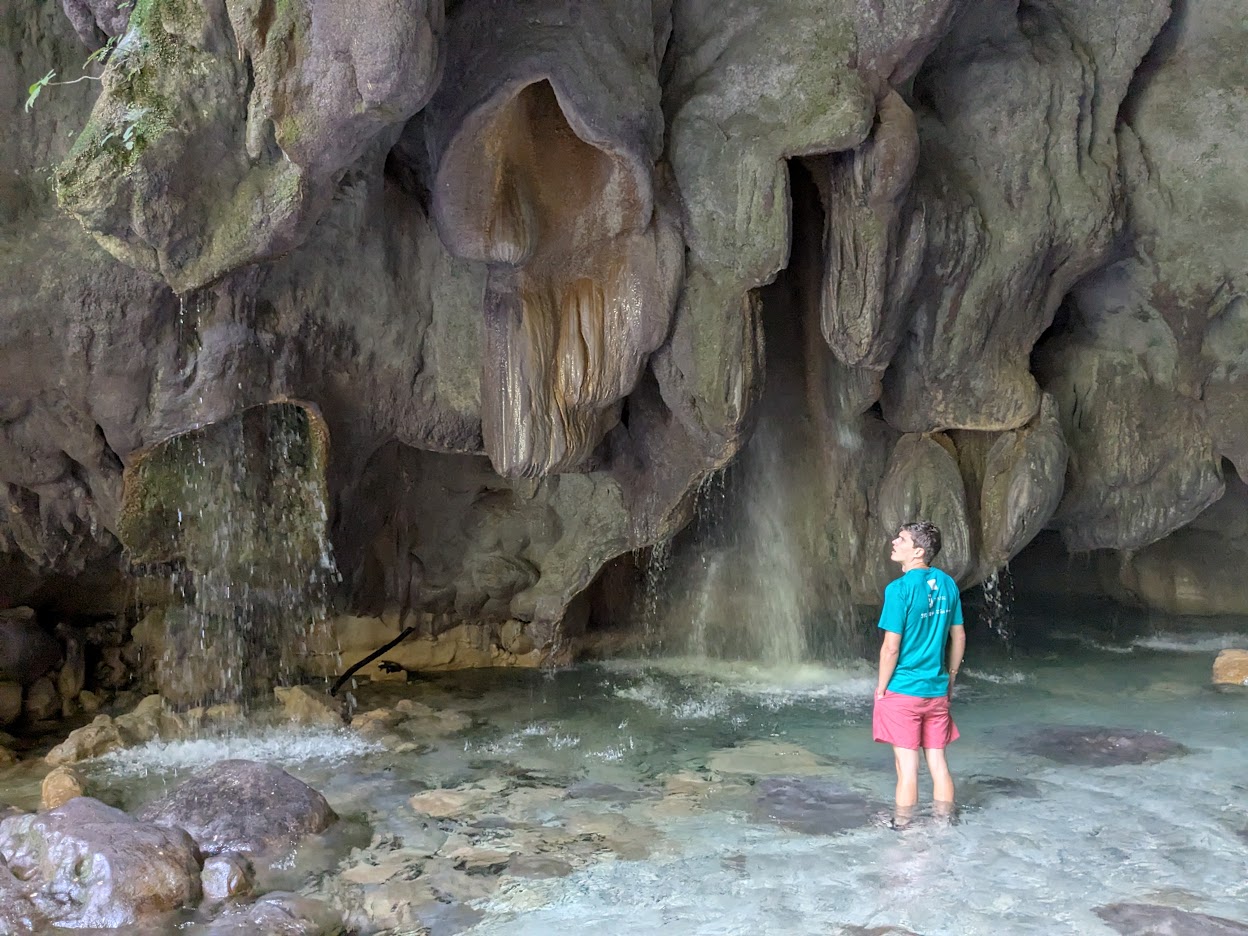
Our guide assured us the water was safe to drink; we took him at his word.

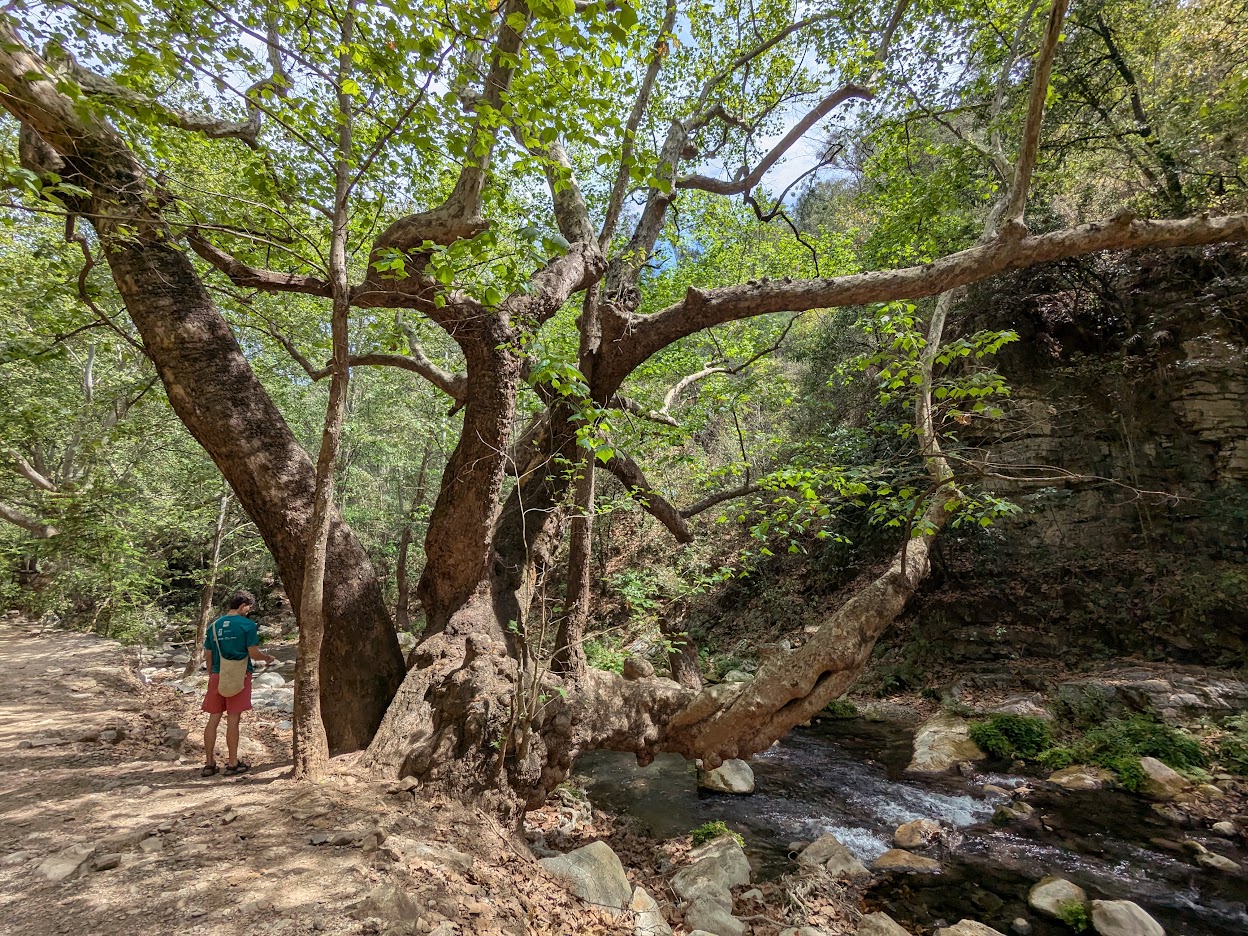
No need to swim at God’s Bridge; we were fully cooled by our own awe, all the way back down the trail. Oh, and our guide pointed out this tree, which he said was 800 years old.
On the drive back to Jalpan, as coda to a perfect day, we stopped at the tiniest little lunch spot off the road, run by the tiniest little woman, Doña Mary.

No menus; our host simply narrated what she’d cooked that day. Something she mentioned sounded to me like “little mushrooms” (honguitos), so I asked Hijo Dos to inquire. Turns out she served something called Huitlacoche, which Google told us later is “a fungus that grows on corn kernels, forming a blue-gray, tumor-like growth,” which is considered a delicacy.
It looked as disgusting as it tasted delicious.

Approaching Jalpan, we watched the temp guage in our rental car climb and climb. I’d never seen 40 degrees Centigrade before! Let’s hear it for oases.
Next day, we decided to say goodbye to La Sierra Gorda. Most of it, we found, is inaccessible–a wonderful, thriving natural habitat, but not offering many more hikes than those we’d enjoyed. Not wishing to drive long distances on some INCREDIBLY twisty roads, we opted to spend our next night back in Tamasopo.
We ate brunch before leaving Jalpan next morning, where I tried one more ingredient new to me: prickly-pear fruit (in a burrito), which they call tuna or tunita.

I just gotta say, Jalpan–you grew on us, big time.

Next up: last days in the blue waters, and giant Meatpile! Thanks for keeping me company.
 Wing's World