
“Loving Forward”: Why America Needs Rev. Dr. William Barber Now…and So Do I

Do you recognize this man?
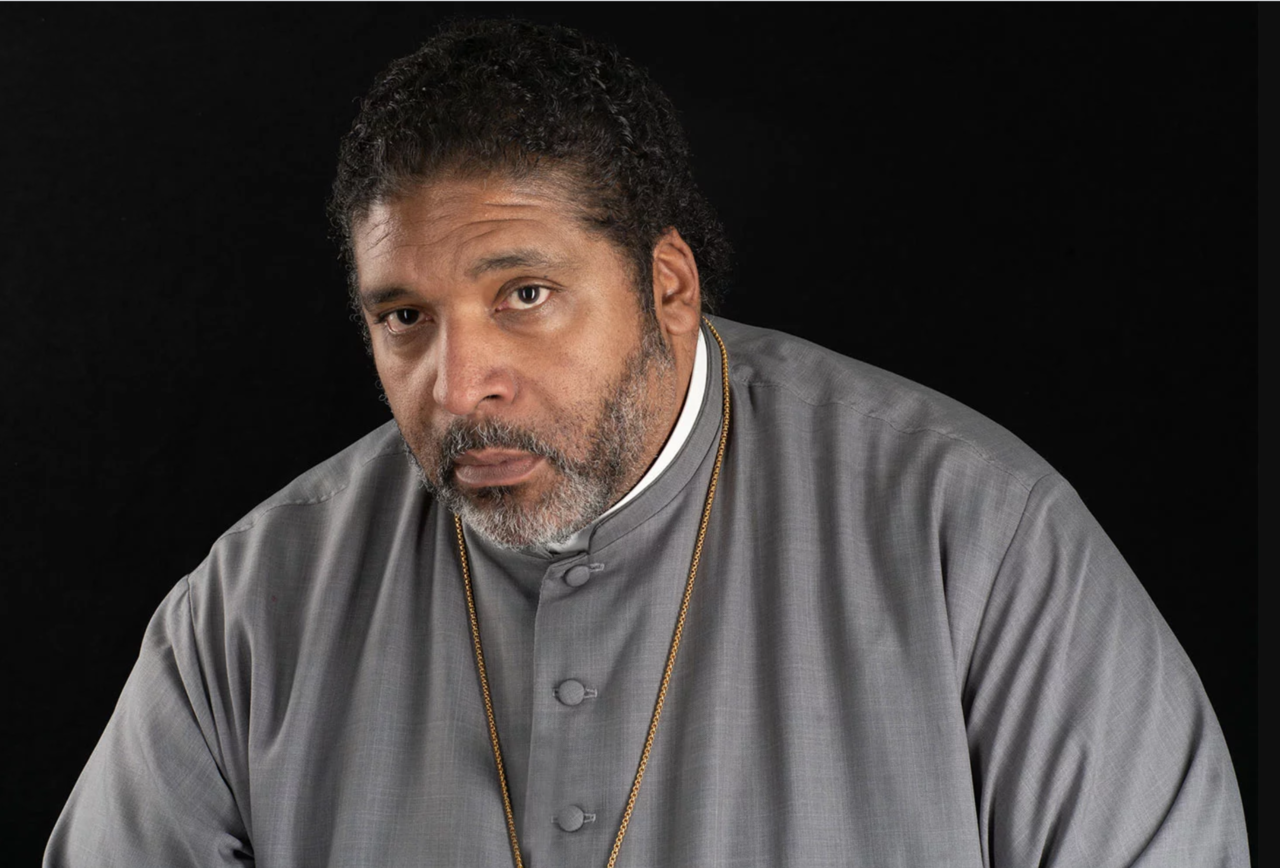
Rev. Dr. William Barber [photo courtesy Wikimedia]

If we were back in my childhood of the 1960s-70s, all watching the same 3 or 4 channels, everyone would know this preacher. Everyone would have seen him preaching, heard him cajoling or roaring from the pulpit. Though his accent is eastern Carolina, not Atlanta, we would have known him the way we knew that other Rev. Dr., the one whose birthday is now a federal holiday.

But we’re all in our separate media silos now; separate channels, separate apps. Rev. Barber is back on the east coast (managing to pastor a congregation at Yale even while doing all this political work), and here on the west, I RARELY meet anyone who’s heard of him.

I’m trying to change that.

One of my very earliest memories is of the civil rights movement in my hometown of Durham, NC: holding hands and swaying in a demonstration, singing “We Shall Overcome.” I learned later that Duke students and faculty–including my dad–came out in support of Duke’s all-Black custodians, probably 1965.

Without going into detail, suffice to say the civil rights movement was a big part of my family. My dad’s arrest at a sit-in led to a Supreme Court case, Klopfer v. N.C., which set the precedent that the right to speedy trial applies to the states. 50 years later, my dad was thrilled to get arrested again…following Reverend Barber. (You can read about that here.)

Out here in the Pacific Northwest, all that history feels remote. Or it did until Trump, the Supreme Court and Project 2025 started attacking voting rights again. Now here we are, right back in the mid-60s, fighting to maintain what we thought we’d won.

The only difference? “We” is more than Black Americans now. “We” is we.

If you find yourself thinking, “We sure could use Dr. King now,” then

a) you’re not alone, and

b) meet Rev. Barber.
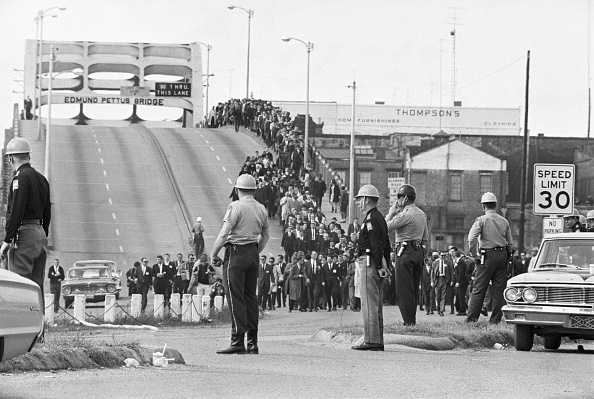
State troopers watch as marchers cross the Edmund Pettus Bridge over the Alabama River in Selma, Alabama as part of a civil rights march on March 9. Two days before troopers used excessive force driving marchers back across the bridge, killing one protester. [Courtesy Legal Defense Fund]

This February, Rev. Barber’s group, Repairers of the Breach, will be leading a march modeled on the famous Selma to Montgomery March of 1965. They’ll start in Wilson, NC on Feb. 11 and walk almost 50 miles (15 miles/day), finishing in Raleigh on Valentines Day. How I wish I could be there! I can’t…but I plan to support the march financially. And I plan to tell everyone I can about it.

PS: For more information, or to contact Rev. Barber & the Repairers of the Breach directly, click here.
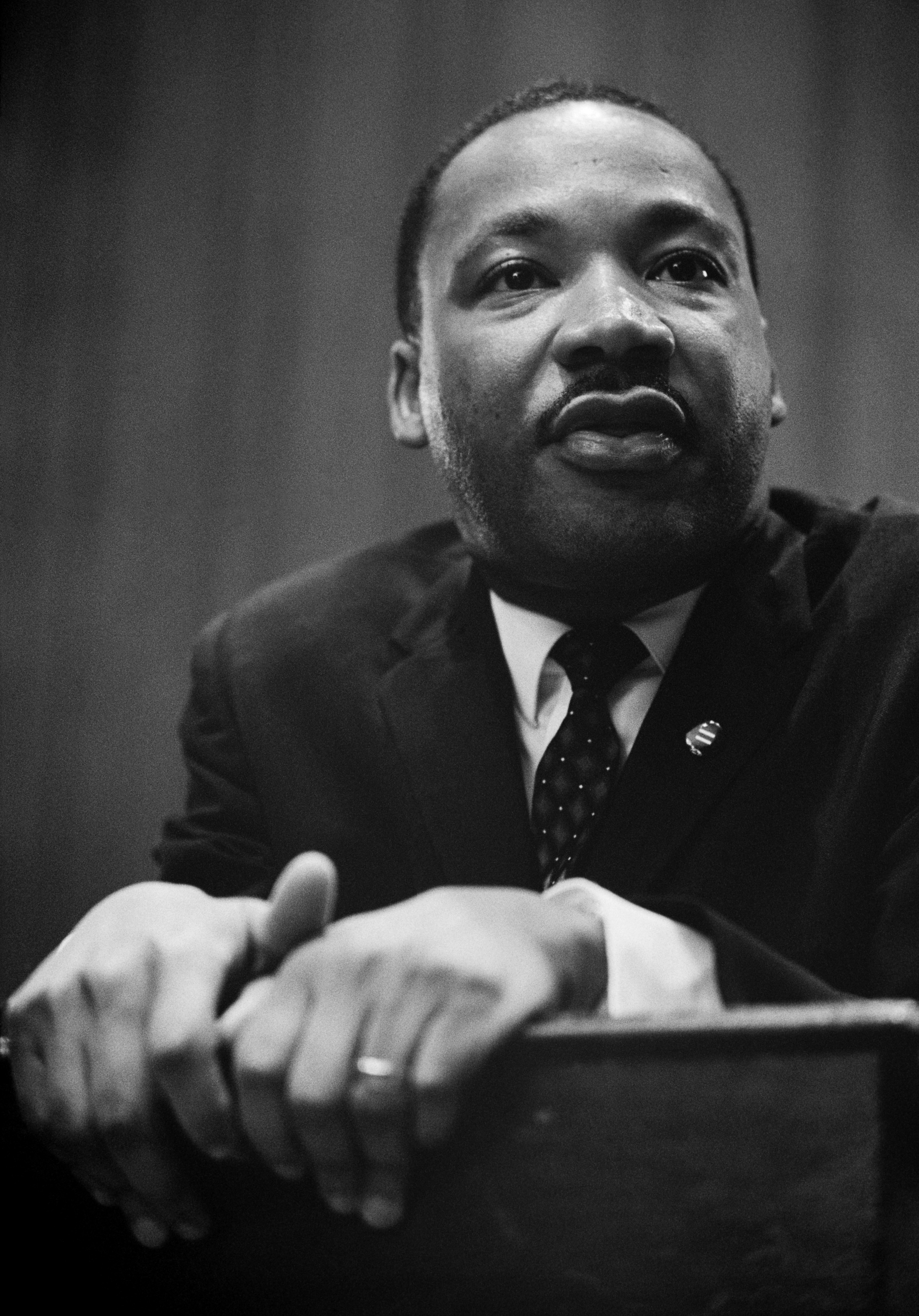
Remembering An Awful Day: The Murder of Dr. King

April 4, 1968. I was six. I remember looking down from the top of the stairs to see my mother looking up. She was crying.

Courtesy Wikimedia

If you are old enough to remember the day Martin Luther King died, where were you?

If you are too young to remember…here’s a song for you. It’s about Coretta, because April 4, 1968 was worse for her than for any of us.


Coretta


Every city in this land got a street named for your man;

We celebrate his birthday, we sing and hold hands.

But sometimes I wonder if we’d ever be here

If you hadn’t stood beside him for all of those years.

                        All of those years…imagine the tears.

                        Coretta Scott King, your name hardly appears.


Lovely young soprano, Alabama to Ohio:

Your music could’ve carried you even further, you know.

But Martin sweeps you off your feet, or you sweep him,

And you’re swept into the movement, sink or swim.

                        Sink or swim…opposition is grim.                     

                         Montgomery Bus Boycott is the first big win.


Martin’s filling up the jails, says that love will never fail              

And you’re right there with him, center of the gale.

But your four little children can’t be left alone

And Martin says their mama needs to stay at home.

                        Stay at home, keep the children calm.                          

                        Thank the Lord you are out when your house gets bombed.


Klan don’t need to wait for dark; Selma’s like their personal park.           

Cross the Pettus Bridge to face Sheriff Clark.

On that Bloody Sunday you can hear the cries

With your hands in the laundry and your eyes on the prize.

                        Eyes on the prize…when a martyr dies                                  

                        Best step aside, feel the power rise.


Martin goes to Memphis town; hand of hate cuts him down.          

Now they’re looking to you to lead ’em to high ground.

You’re still in shock, you don’t know what to feel

But just like Martin, you’re made of steel.

                        Made of steel…Lord, this is real:               

                        41 year-old widow of a slain ideal.


So you take up Martin’s cross, learn to be a movement boss         

And you march and you rally and you  pay the cost.

You tell your fellow women to embrace their role:

“If you want to save the nation, you must become its soul.”

                        Become its soul…it took its toll.    

                        But Coretta, look around, we’re approaching the goal.*


For over thirteen thousand days, you walked those weary ways      

Speaking out against the war, supporting the gays.

For the poor and persecuted you carried the flame

And never got a monument. Ain’t it a shame?

       Ain’t it a shame? No one’s to blame.                              

                        But Coretta Scott King, we remember your name.

                        Ain’t it a shame? No one’s to blame.

                        But Coretta Scott King, we remember your name.          


G. Wing, March 2013

*I wrote this song in a more optimistic time. Not sure I still believe that goal’s getting any closer

Memories of Martin–and Coretta Too

One of my earliest memories is holding hands and swaying with a bunch of strangers, singing “We Shall Overcome.” I was probably five, and, from later figuring, that was probably at a 1967 demonstration by Duke University faculty (which my Dad was) and students and local activists in support of the Duke maintenance workers.

From that age on, I knew Dr. King as a man to listen to. When he was murdered (I remember my mother crying), I knew he was a man to revere. Only more recently have I started thinking more about the woman beside the man–Coretta Scott King.

Coretta in 1964 (Courtesy Wikimedia)

Coretta in 1964 (Courtesy Wikimedia)

I haven’t yet seen the movie “Selma,” but I will, and I’m grateful to its makers for reminding a new generation that The Movement was–and is–a long, long, LONG series of struggles. And it wasn’t only about one man.

In honor of the Martin Luther King holiday, I’d like to share this song I wrote about his wife, two years ago. I haven’t gotten around to recording it yet, so you’ll just have to imagine the tune…but I hope the lyrics speak for themselves. 

Coretta


Every city in this land got a street named for your man;

We celebrate his birthday, we sing and hold hands.

But sometimes I wonder if we’d ever be here

If you hadn’t stood beside him for all of those years.

All of those years…imagine the tears.

Coretta Scott King, your name hardly appears.


Lovely young soprano, Alabama to Ohio:

Your music could’ve carried you even further, you know.

But Martin sweeps you off your feet, or you sweep him,

And you’re swept into the movement, sink or swim.

Sink or swim…opposition is grim.

Montgomery Bus Boycott is the first big win.


Martin’s filling up the jails, says that love will never fail

And you’re right there with him, center of the gale.

But your four little children can’t be left alone

And Martin says their mama needs to stay at home.

Stay at home, keep the children calm.

Thank the Lord you are out when your house gets bombed.


Klan don’t need to wait for dark; Selma’s like their personal park.

Cross the Pettus Bridge to face Sheriff Clark.

On that Bloody Sunday you can hear the cries

With your hands in the laundry and your eyes on the prize.

Eyes on the prize…when a martyr dies

Best step aside, feel the power rise.


Martin goes to Memphis town; hand of hate cuts him down.

Now they’re looking to you to lead ’em to high ground.

You’re still in shock, you don’t know what to feel

But just like Martin, you’re made of steel.

Made of steel…Lord, this is real:

41 year-old widow of a slain ideal.


So you take up Martin’s cross, learn to be a movement boss

And you march and you rally and you pay the cost.

You tell your fellow women to embrace their role:

“If you want to save the nation, you must become its soul.”

Become its soul…it took its toll.

But Coretta, look around, we’re approaching the goal.


 For over thirteen thousand days, you walked those weary ways

Speaking out against the war, supporting the gays.

For the poor and persecuted you carried the flame

And never got a monument. Ain’t it a shame?

Ain’t it a shame? No one’s to blame.

But Coretta Scott King, we remember your name.

Ain’t it a shame? No one’s to blame.

But Coretta Scott King, we remember your name.

G. Wing, March 2013

The Selma March (Courtesy Wikimedia)

The Selma March (Courtesy Wikimedia)

Have you seen “Selma”? Care to share your impressions? Or your own memories of Martin, or Coretta? Let’s take time to remember.