
It takes a lot these days to pull me back into the blogosphere, but my friend David Hall is a lot. A child psychiatrist and peace activist for multiple decades, David has just published the second edition of his 2001 book, Stop Arguing and Start Understanding: Eight Steps to Solving Family Conflicts.
This is a person and a book I thought many of y’all would appreciate knowing about.

As David’s blurb puts it,
“At the heart of Hall’s approach is the empowerment of readers, encouraging them to embody greater tenacity and compassion in their interactions. By addressing family conflicts with a fresh perspective, readers can transform their dynamics and pave the way for a more fulfilling family life. Hall’s emphasis on recognizing the unique viewpoint of each family member is a pivotal cornerstone of his methodology. Through this lens, the book offers practical and actionable steps that lead to genuine understanding and resolution.”
Full disclosure: My own family has never sought counseling, nor have I ever purchased such a book. But as I found myself thinking, “David’s is a book I would buy,” I also felt like digging deeper: why is that? Which led me to this brief interview.
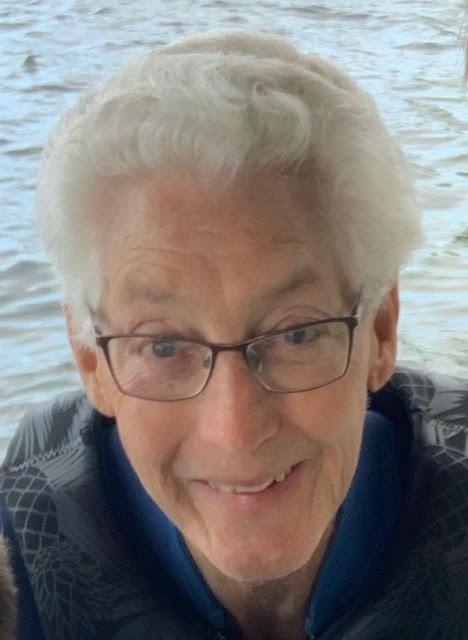
Me: How did you get into this business, anyway?
DH: I was a Goldwater Republican when I entered Harvard as a freshman in 1964. I’d been my high school’s student leader of an all-school mock political convention for which Bill Miller, Goldwater’s Vice presidential nominee, helicoptered into our school for the keynote.
As I came out of a lecture hall, a SDS [Students for a Democrative Society] leaflet asked if I knew who was the personal hero of Nguyen Kao Ky, South Vietnam’s then Vice President. The answer? Adolf Hitler. That leaflet set me on a new course of understanding the war in Vietnam. As I approached graduation, I studied the selective service laws and eventually applied and was granted a Conscientious Objector deferment based on the Gospel of Matthew.
That led to my being drafted halfway through the Master of Arts in Teaching program at the Harvard Graduate School of Education. I ended up working for the next 3 years in the Treatment Program for Habitual Sexual Offenders at Western State Hospital south of Tacoma. Deciding on a future after that led me to medicine and child psychiatry, wanting to get to kids BEFORE they offended.
Me: Can you describe a typical day of work with children in the past decade or so?
DH: My last decade of full-time work was at Island Hospital in Anacortes three days a week. I had a full schedule from 9am to 5pm working an hour at a time with kids and families ranging in age from 2-1/2 to 80. We’d sit facing each other while I listened carefully to their concerns and hopes for change. The process built on collaborative creative problem-solving exercises looking at new strategies that might replace interactive patterns of communication that continually led to conflict. The challenge was often finding ways to address longstanding histories of family conflict and sometimes significant trauma for parents and their parents, so we focused on breaking the grip of this cascade of intergenerational distress. A key was maintaining a no-fault, no blame approach to any of the emotional or physical trauma, establishing a trustworthy and nurturing environment in which the work could take place, and helping participants to be honest, articulate, and hopeful about healing their soul wounds.
Me: Your book focuses on family conflict. Have you played the role of family therapist in your career, or have you simply found that, with your individual clients, family communication (or its lack) lay at the root of, or exacerbated other problems?
DH: Several years into private practice of child psychiatry, I spent a year with Dr. Tom Roesler’s Montlake Family Therapy Institute learning strategies for dealing with family systems, which became the foundation over the next three decades for engaging conflicted families in healing conversations. I knew from my work with habitual sexual offenders that almost always family trauma lay behind their fractured personalities, often with parents whose fractured personalities continued what I came to call the cascade of intergenerational violence.

Me: I know you and your wife Anne have made international travel a staple of your political and moral lives, including many trips to Gaza. Do you feel a connection between your work with kids and families and your work between nations, or did those two strands of your life arise separately?
DH: My travels grew directly out of my awareness that how children are treated makes a huge difference in how they behave as adults and as participants in governing politics. My first international trip was to Tashkent, Seattle’s sister city in the 1980s. I went as the trip physician with a group of 15 teenagers who spent three weeks with 15 Russian teenagers putting together a “Peace Child” musical, which we performed in the local park at the end of the trip. Subsequently Anne and I took our church youth group on separate trips to Haiti and Tanzania.
In 1993 we traveled with Washington Physicians for Social Responsibility to Chelyabinsk, Russia, the Soviet Union’s plutonium production region, and to conferences of International Physicians for the Prevention of Nuclear War in Stockholm, Worcester, and Beijing. Following that meeting, we went up to Lhasa, Tibet, then already under Chinese occupation.
Also in 1993 we began a series of medical visits to Israel, the West Bank, and Gaza, where we eventually focused on bringing outside medical training and accompaniment to physicians isolated by the Israeli occupation in the open air prison that is Gaza. I have come to see the way Israeli politics plays out with their immediate enemies in the Palestinian territories directly parallels the way the United States deals with its enemies halfway around the world.

Me: How many times have you and Anne been to Gaza?
DH: I think 8 trips to Gaza beginning in Oct 1993. Our latest was just as COVID was breaking. We arrived in Gaza in late February 2021 then on March 5th we learned that COVID was likely to close the Ben Gurion Airport, so we got together and decided to leave the next day.
Me: I’ve heard that on September 22, you are receiving a Lifetime Achievement Award from Washington Physicians for Social Responsibility. Can you say a little bit about what this award means to you?
DH: This award is in recognition of my core leadership on the WPSR board for 38 of the last 40 years. I served 2-year terms as chapter president in 1991-2 and 2003-4.
When I retired briefly during our move to Lopez in 2011, the WPSR chapter president died, and the chapter collapsed. I was one of three who put it back together in 2013.
I also served on the national PSR board in the 1990s and was president of that board in 1997. I describe PSR/WPSR as my home community, the third leg of my personal grounding along with family and child psychiatry.
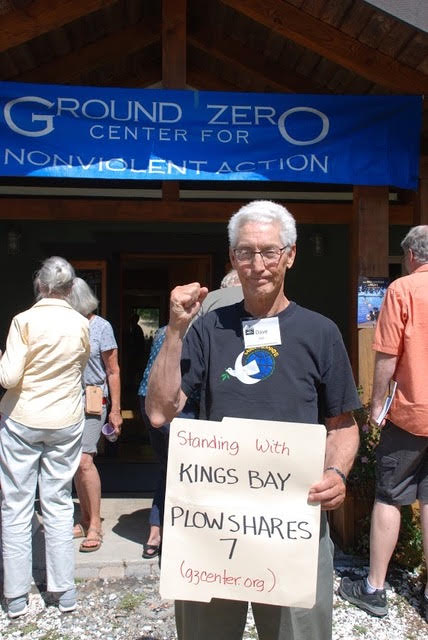
Me: How did you come up with the Nine Steps described in your book?
DH: My early child psychiatry family therapy experiences nudged me to summarize what I learned from the families I was working with.
The core lesson was learning to listen deeply and patiently, understanding that I didn’t really know these people until I could guide them toward more honest and open disclosure of their true feelings and experiences.
From my several years leading a peer-confrontation therapy group of convicted sexual offenders in the Washington State Treatment Program for Habitual Sex Offenders at Western State Hospital, I’d learned to listen empathically to their childhood stories of maltreatment, ostracism, and humiliation.

Me: What would you say to someone (maybe a parent like I was, or my parents) who says, “Oh, my family’s fine–we just fight it out, we don’t need a book like this!”
DH: The choice to recognize conflict and deal with it is personal and belongs to every parent and family member. It’s when someone in the family says things need to change that I have a window of opportunity to be helpful.
Me: Thank you so much, David! I feel grateful for the opportunity to shine a little more light on some of the healing work you’ve spent your life on.
And just in case you haven’t yet, click here to buy your own copy of Stop Arguing and Start Understanding. This man knows what he’s talking about.
 Wing's World