“Loving Forward”: Why America Needs Rev. Dr. William Barber Now…and So Do I

Do you recognize this man?
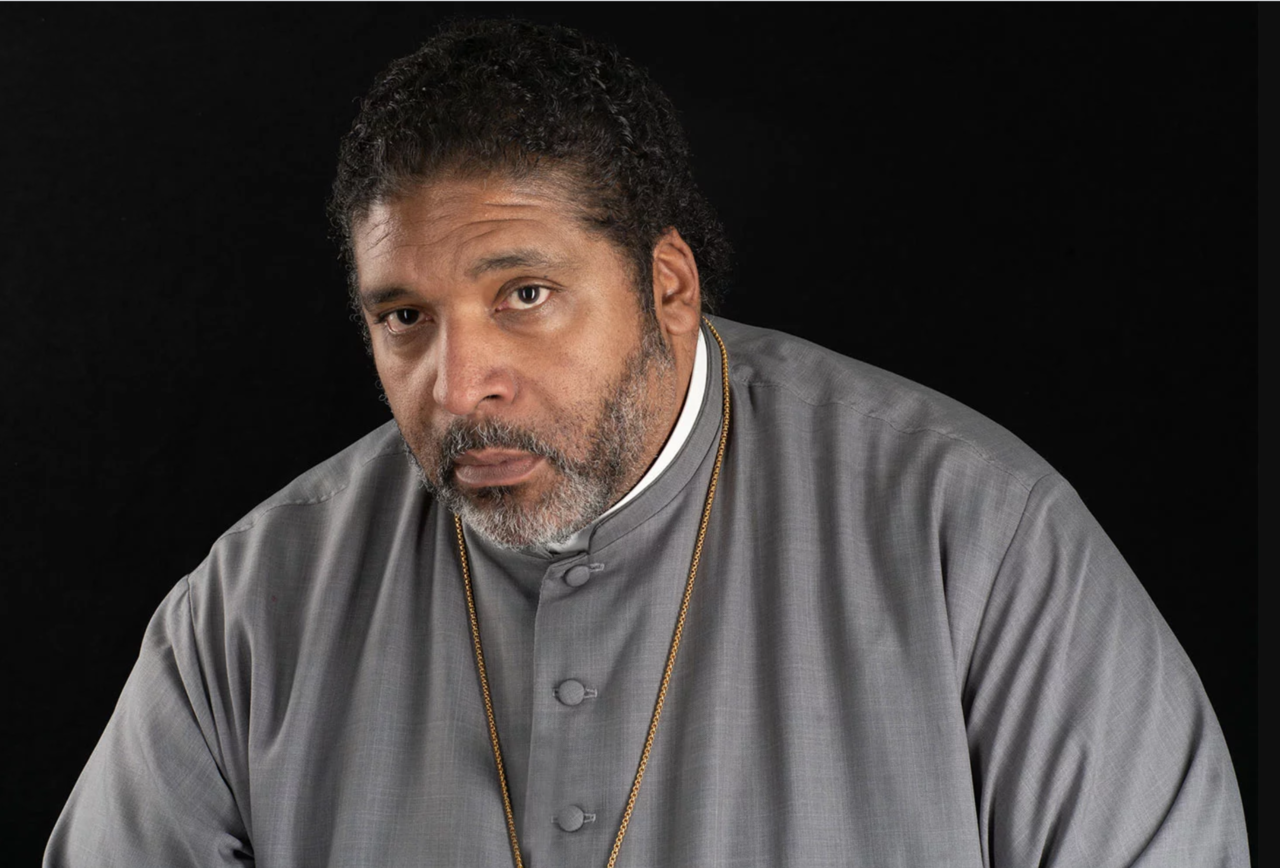
Rev. Dr. William Barber [photo courtesy Wikimedia]

If we were back in my childhood of the 1960s-70s, all watching the same 3 or 4 channels, everyone would know this preacher. Everyone would have seen him preaching, heard him cajoling or roaring from the pulpit. Though his accent is eastern Carolina, not Atlanta, we would have known him the way we knew that other Rev. Dr., the one whose birthday is now a federal holiday.

But we’re all in our separate media silos now; separate channels, separate apps. Rev. Barber is back on the east coast (managing to pastor a congregation at Yale even while doing all this political work), and here on the west, I RARELY meet anyone who’s heard of him.

I’m trying to change that.

One of my very earliest memories is of the civil rights movement in my hometown of Durham, NC: holding hands and swaying in a demonstration, singing “We Shall Overcome.” I learned later that Duke students and faculty–including my dad–came out in support of Duke’s all-Black custodians, probably 1965.

Without going into detail, suffice to say the civil rights movement was a big part of my family. My dad’s arrest at a sit-in led to a Supreme Court case, Klopfer v. N.C., which set the precedent that the right to speedy trial applies to the states. 50 years later, my dad was thrilled to get arrested again…following Reverend Barber. (You can read about that here.)

Out here in the Pacific Northwest, all that history feels remote. Or it did until Trump, the Supreme Court and Project 2025 started attacking voting rights again. Now here we are, right back in the mid-60s, fighting to maintain what we thought we’d won.

The only difference? “We” is more than Black Americans now. “We” is we.

If you find yourself thinking, “We sure could use Dr. King now,” then

a) you’re not alone, and

b) meet Rev. Barber.
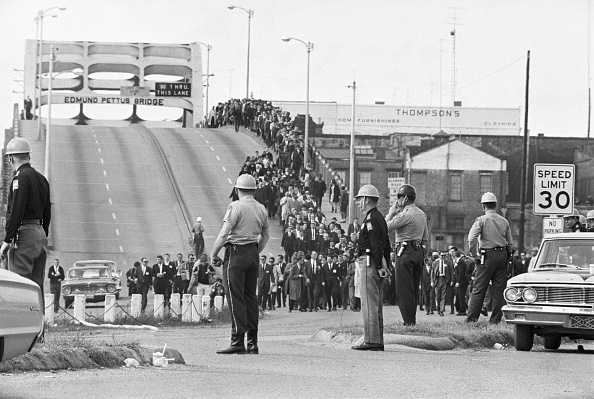
State troopers watch as marchers cross the Edmund Pettus Bridge over the Alabama River in Selma, Alabama as part of a civil rights march on March 9. Two days before troopers used excessive force driving marchers back across the bridge, killing one protester. [Courtesy Legal Defense Fund]

This February, Rev. Barber’s group, Repairers of the Breach, will be leading a march modeled on the famous Selma to Montgomery March of 1965. They’ll start in Wilson, NC on Feb. 11 and walk almost 50 miles (15 miles/day), finishing in Raleigh on Valentines Day. How I wish I could be there! I can’t…but I plan to support the march financially. And I plan to tell everyone I can about it.

PS: For more information, or to contact Rev. Barber & the Repairers of the Breach directly, click here.
One Question for the Tuned-out Loved One in Your Family

“I’ve tuned out,” your adult son, your cousin, your sister-in-law tells you. “Politics is too f**cked up for me bother. And there’s nothing I can do anyway.”

I hope the first thing you do is to support your loved one for prioritizing self-care. But then I have a question for you to ask them.

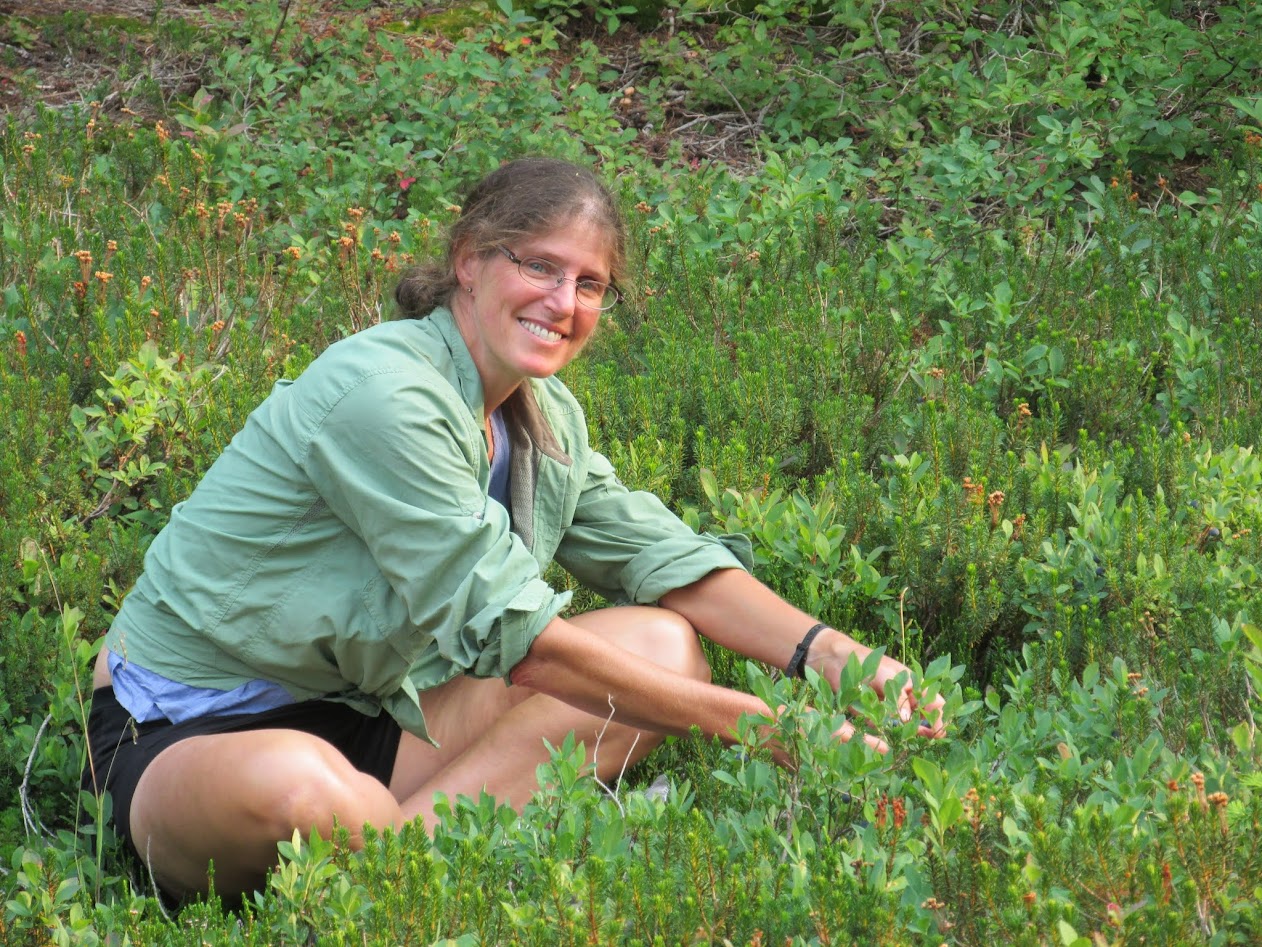
Wild blueberries? (Yes, this photo’s OLD. My knees don’t let me sit that way these days.)

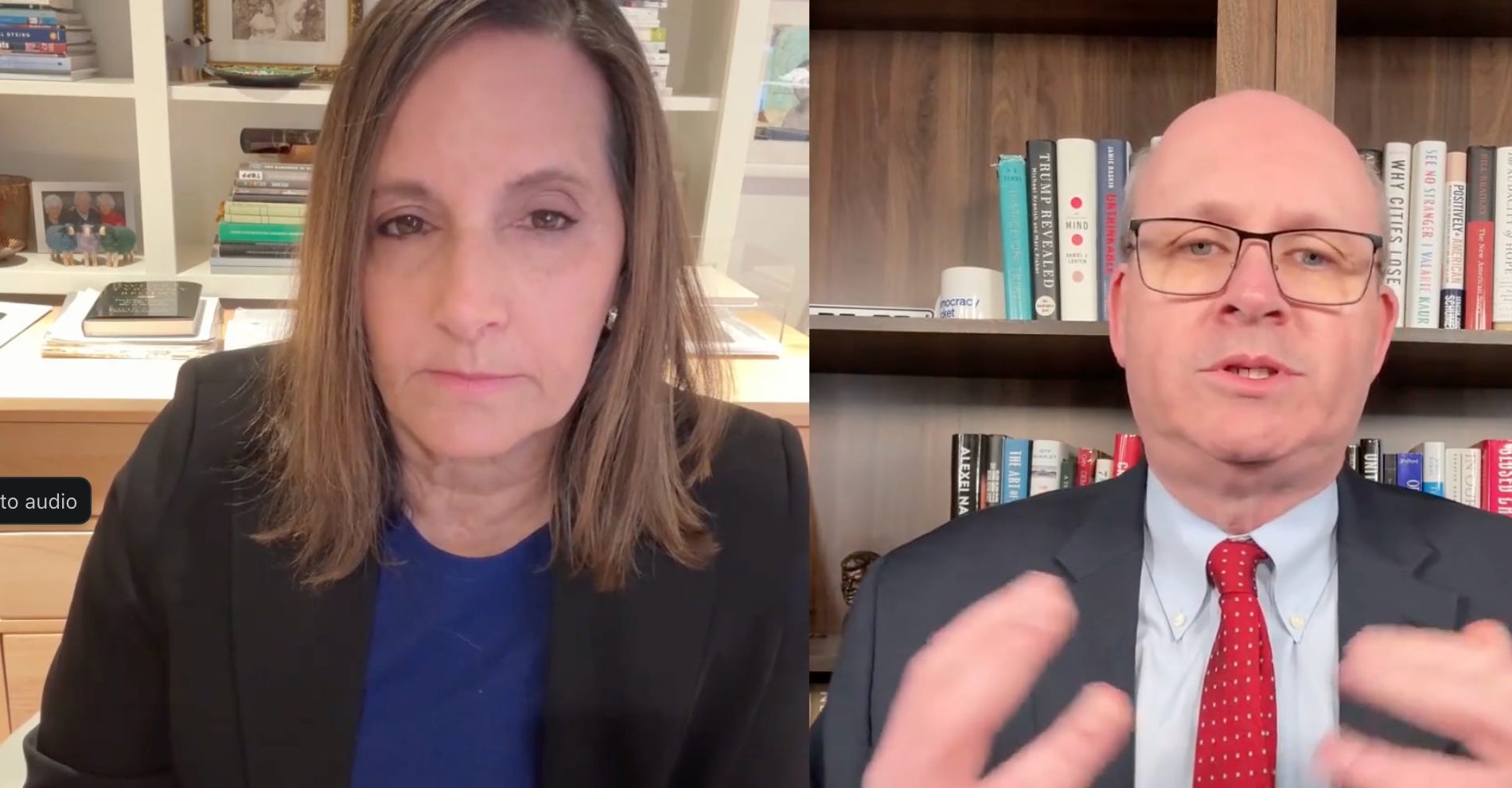
That question popped into my mind last night while reading Joyce Vance’s Civil Discourse on Substack. She was asking legal expert Marc Elias (a lawyer who’s argued before the Supreme Court five times and counting) about what voters should be concerned about in 2026. Marc’s answer jolted me:

According to Democracy Docket’s case tracker, there are about 170 active voting and election cases nationwide. Unfortunately, the majority of those cases (roughly 55%) are anti-voting cases that seek to make it harder to vote…

Nope. The Feds ARE the Bad Guys now. Says Marc:

“…One of the most important new developments this year is the Trump DOJ’s emergence as one of the most prolific sources of anti-voting litigation. In less than a year, the Department of Justice has filed 25 anti-voting lawsuits. While pro-democracy attorneys often found ourselves allied with the DOJ in the past, we are now forced to oppose them to prevent the federal government from trampling on voting rights.”

Joyce and Marc talking [Courtesy Civil Discourse]

“Okay, Gretchen,” you say, “What does this have to do with harvesting?”

Glad you asked. Because here’s the part that made me realize, even someone’s apolitical son, cousin or sister-in-law might want to know this.

When Joyce asked Marc how our federal government is going about the nitty-gritty of voter suppression, here’s what he told her:

In other words: they’re harvesting our data. ALL of it. Not this kind of harvest…

…but this:

[image courtesy Wikimedia Commons]

Marc Elias goes on:

Never before has the federal government sought all this information from nearly every state. Never before has the DOJ sued more than 20 states (most of which lean Democratic) to obtain it...We are seeing the weaponization of federal power against American voters, and I think this voter data collection effort by Trump’s DOJ could become the major story of the 2026 election cycle.”

Harvest kale, not my proclivities.

If their answer is No…maybe suggest they look into Civil Discourse, or any other site that relies on lawyers, teachers and historians.

If YOU want to know more, join Substack and tune in to Joyce’s upcoming conversation with Marc, January 15th @ noon EST, where they will dive further into the questions of what’s going on with the data harvest, and what we can do about it.

My New Furlough “Job”: Fun With Elected Officials

Even though, like many Americans, I’m furloughed from my job at the moment, I recognize that I’m in the 1% of ridiculously lucky people who has no one in my home demanding care nor worry; ample resources; and lovely outdoor space close to hand.

I’m sorry, New York–I wish I could send you some!

What I also have? A sense of helplessness. When we finished quarantining after our road trip, I signed up to deliver food around our island. But then I had to go off-island again. Twice. I understand the reason for the quarantine rule, but still I chafed. What can I DO to HELP?

Enter University of Washington professor David Domke and Common Purpose. I’d already attended an Orientation with this impressive group dedicated to promoting voting, and signed up for national get-out-the-vote work next fall. But next fall is so, so far away, and the daily COVID news weighs heavily. So I was thrilled when the email call came to ADVOCATE FOR EXPANDED VOTING OPTIONS FOR NEXT NOVEMBER,* from my own living room.

*Notice I’m not saying voting for whom? That’s not what this push is about. You don’t have to dig too deep to find which party supports more voting and which party wants to limit it…but that ain’t my affair. I just happen to think America has had about enough disenfranchisement for our past couple-plus centuries.

Plus, Professor Domke said it would be fun!

27 of our 50 states don’t allow for any way to vote except in-person on one single day. Which, in a pandemic, sounds pretty CRAZY, right? Right. Just ask Wisconsin. So I signed up to contact elected officials in those 27 states. Two senators. One governor. And one person in charge of elections.

Oh dear. That’s 4 x 27…128 people. Fun, huh?

I decided to treat this task like a job. You have the option to call, email, or tweet, and since the only thing I loathe more than making political calls is receiving them, I chose email as my medium. I tweaked the form letter Common Purpose sent to make it sound more like me. Okay. Ready for fun.

For the past 2 days, I’ve emailed for approximately an hour. Because there’s a Senate bill coming up now (Thank you, Oregon Senator Ron Wyden!) I started with Senators. 

Copy email letter. Open provided link to given Senator. Autofill all my details. Pick topic. Paste letter. Make sure I’m not subscribing to any newsletters! Prove I’m human. Click Submit. Next…

Y’know what, Professor Domke? This is NOT fun. This is boring as all get-out. I hate this.

So I started embroidering a little.

I let the two senators from North Carolina know I’m a Tarheel born & bred, and finished my letter with “Go Heels!” (Too bad for me if they’re Duke fans.)

I congratulated some of the senators who recently (or less recently) dropped out of the race for being so stalwart.

I started noticing stuff. Like: Some senators make you choose a prefix for your name; others let you opt out. Some senators have “Abortion/Right to Life” on their Issues list; others, just one or the other. Some senators don’t have anything on their Issues list that covers the topic at hand–Elections? COVID? Civil Rights?–forcing me to choose “Other.” Hmph.

And Cory Booker has the most adorable website, which asks for your first name right off the bat, then goes to “Hi, Gretchen!” Awww…Miss you, Cory.

After thirty minutes or so, I noticed something else: I was actually having a kind of nerdy fun. Go figure.

Hey, time’s up. I contacted 40 senators. Only 14 to go. And then all those Governors and Secretaries of State…

Wonder if any of their websites will tell me “Hi!”?

If you’d like to join this fun enterprise–no, really, in all seriousness, if you’d like to participate in the push to keep voters safely at home without being deprived of their right to help elect our next President, click here.

Woohoooo! Democracy! At least until I get to back to work at the bakery.