New England to New Scotland, Part II: “A Moose and a Whale at the Same Time”

That’s what we were told we might see, driving the Cabot Trail around Cape Breton. As it happened, we saw neither. But in our week up there, we never stopped believing we might.

Here’s why:
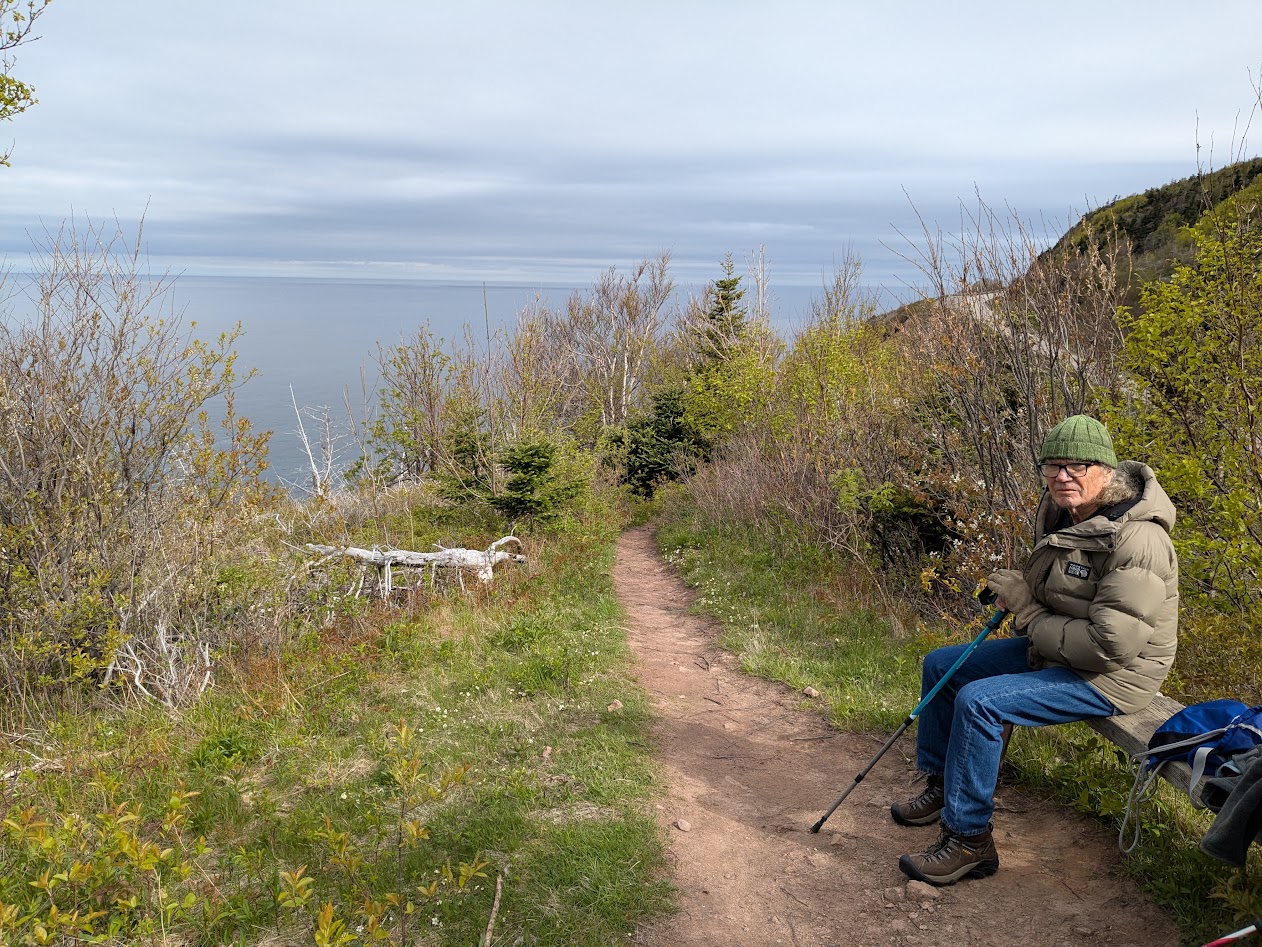
To left: whale habitat. Center: moose habitat (and The Mate). To right: the road.

For this part of the journey, having said goodbye to Son One and our New England cuzzies, we flew to Halifax, rented a campervan, and drove to Cape Breton Highlands National Park.

For those who followed my saga about Vanna Grey–this is a touch ironic

Here are a few nutshell things we learned about Cape Breton:

  1. It’s actually an island above the lower half of Nova Scotia (where Halifax is)
(image from Wikimedia Commons)

2. One crosses onto that island via (sadly undramatic) causeway, not–as I’d expected–a bridge.

3. It’s home to more fiddlers, per capita, than anywhere in the world (unverified, but I enjoy thinking this!)

4. The authorities there have decided that the moose population has grown too large, threatening to eat down the forests, thus they have culled them…making moose sightings much rarer than they used to be. (sad for us, and the locals we spoke to weren’t very happy about it either)

Closest we got to a moose was this huge, fresh print in the mud. (We also saw some poop, but you don’t need to)

The coastline is quite different on the west side than the east, and the center is also quite distinct. So let me break it down photographically. Two things we did see everywhere: blooming serviceberry…
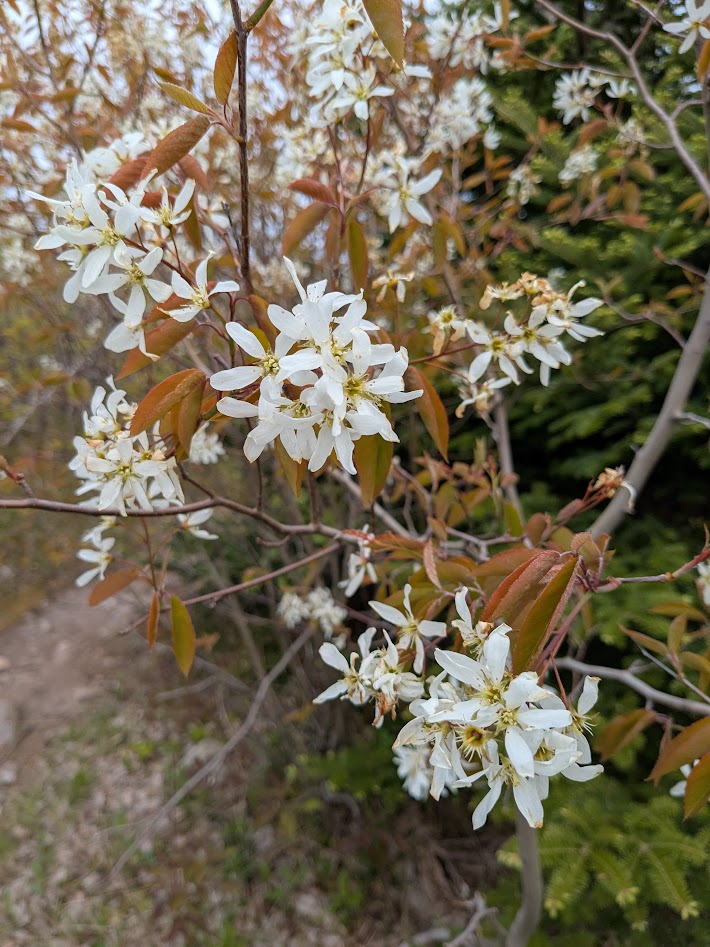
like wedding decorations for the woods!

…and tea-colored water, colored, I understand, by the tannins in the bogs that dominate the center of the island (and the whole province).
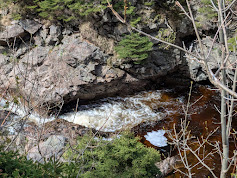
Brown, but clear. And lovely.

That combination really struck us on our first west-side hikes.

See what I mean about that serviceberry?

The western coastline is STEEP, with few roads down to the water. So we mostly viewed it from above.

See any whales out there? Or moose?

If you’re wondering about the brown, keep in mind: end of May is still VERY early spring up there. The hardwoods were just beginning to leaf out.

Ditto the ferns. You can tell this area was under snow pretty recently.

Oh, and did I mention the fog?

Here, BTW, you can see an example of a moose-munched forest. Not much there!

Speaking of fog…

looking back down on our road, from the Skyline Trail

The inland part of Cape Breton looked, to me, like Alaskan taiga (stunted forest) or tundra (no forest at all).

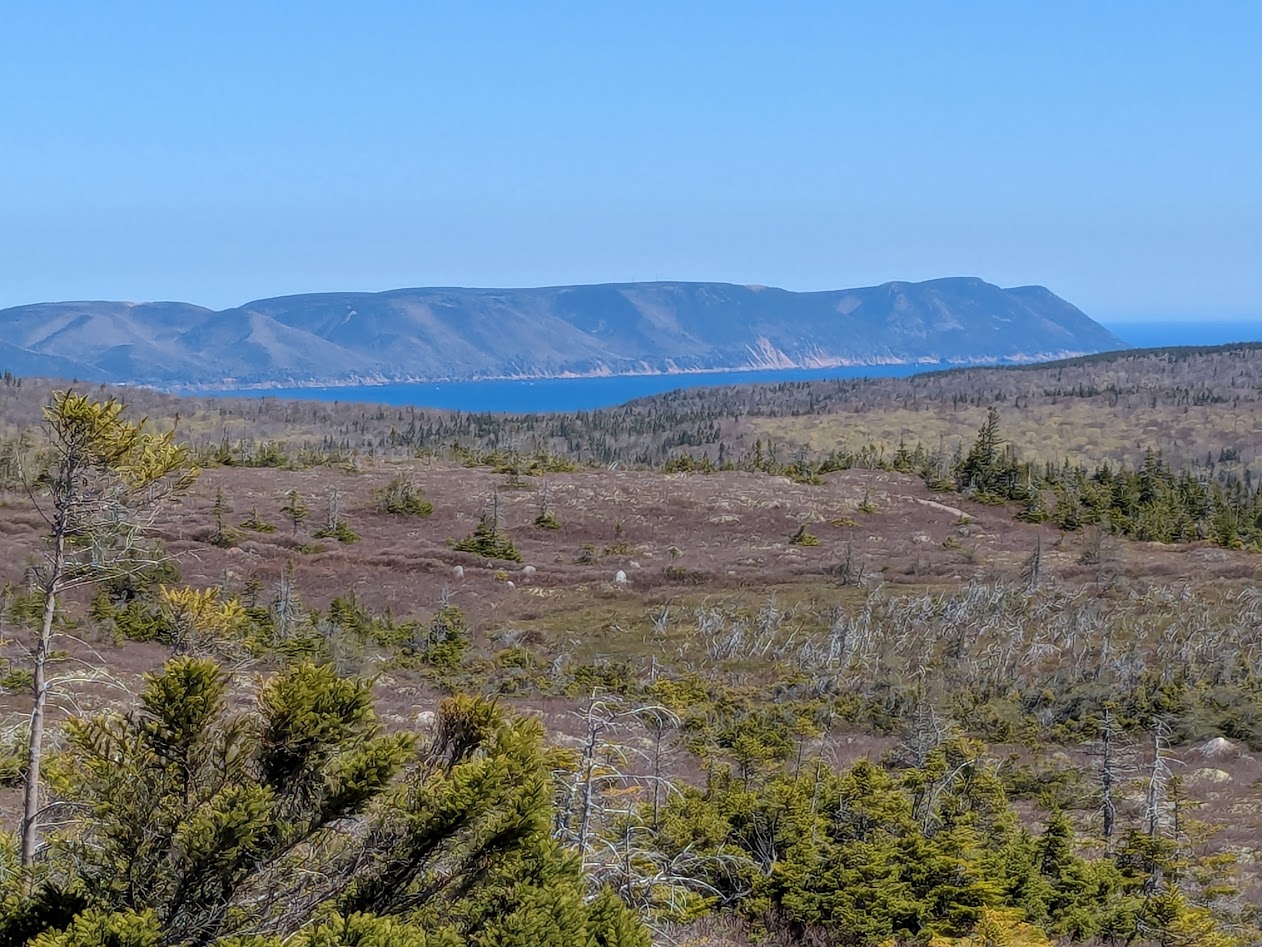
taiga…
and tundra.

When I’ve shown folks this picture, their response has been, “Wow–it looks so dry!” Nope. Very wet. Just not leafed out yet.
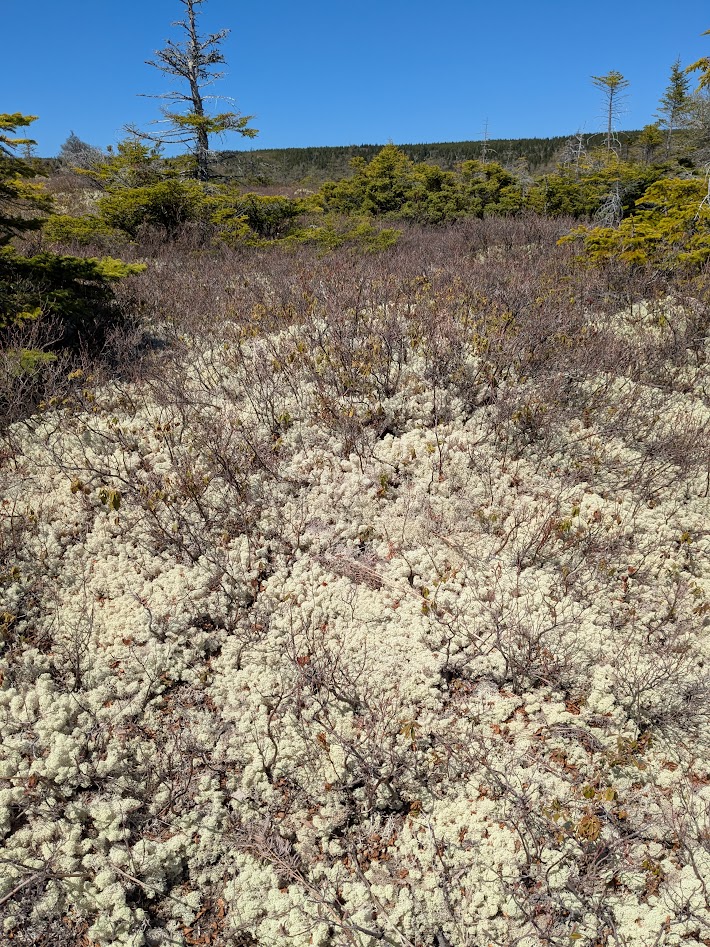
blueberry plants growing in thick reindeer lichen

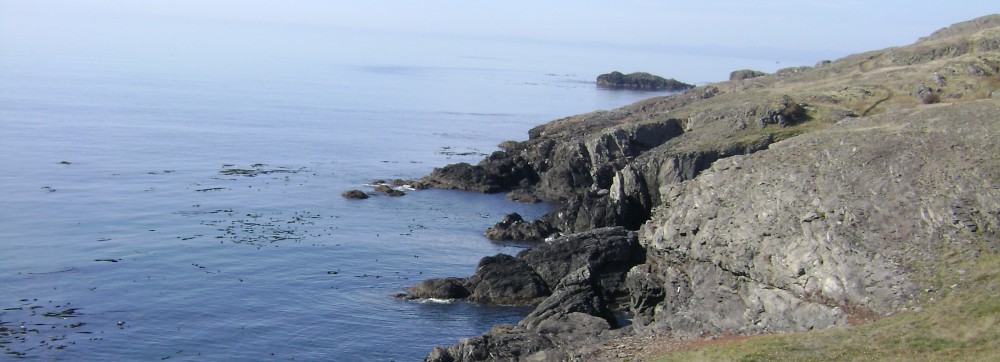
On to the east coast of the island. If the center is Alaska-esque, we thought the east coast looked like Maine:

The granite really is that pink!

And those brown creeks make such a contrast there!

This is my favorite picture from the whole trip.

Closeup of that granite:

Nova Scotia tartan?

We also explored some beautiful inland lakes on the east side…

…starting with this sweet little crossing of the headwaters.

This one shows off the best combo: pink sand, strong-tea water, and a great grey giant from the past:

SURE there’s no moose out there?

Speaking of the moose we didn’t see…I’ve been totally remiss in discussing the wildlife we DID see! Like this black bear (don’t get too excited–it was mostly visible through binocs):
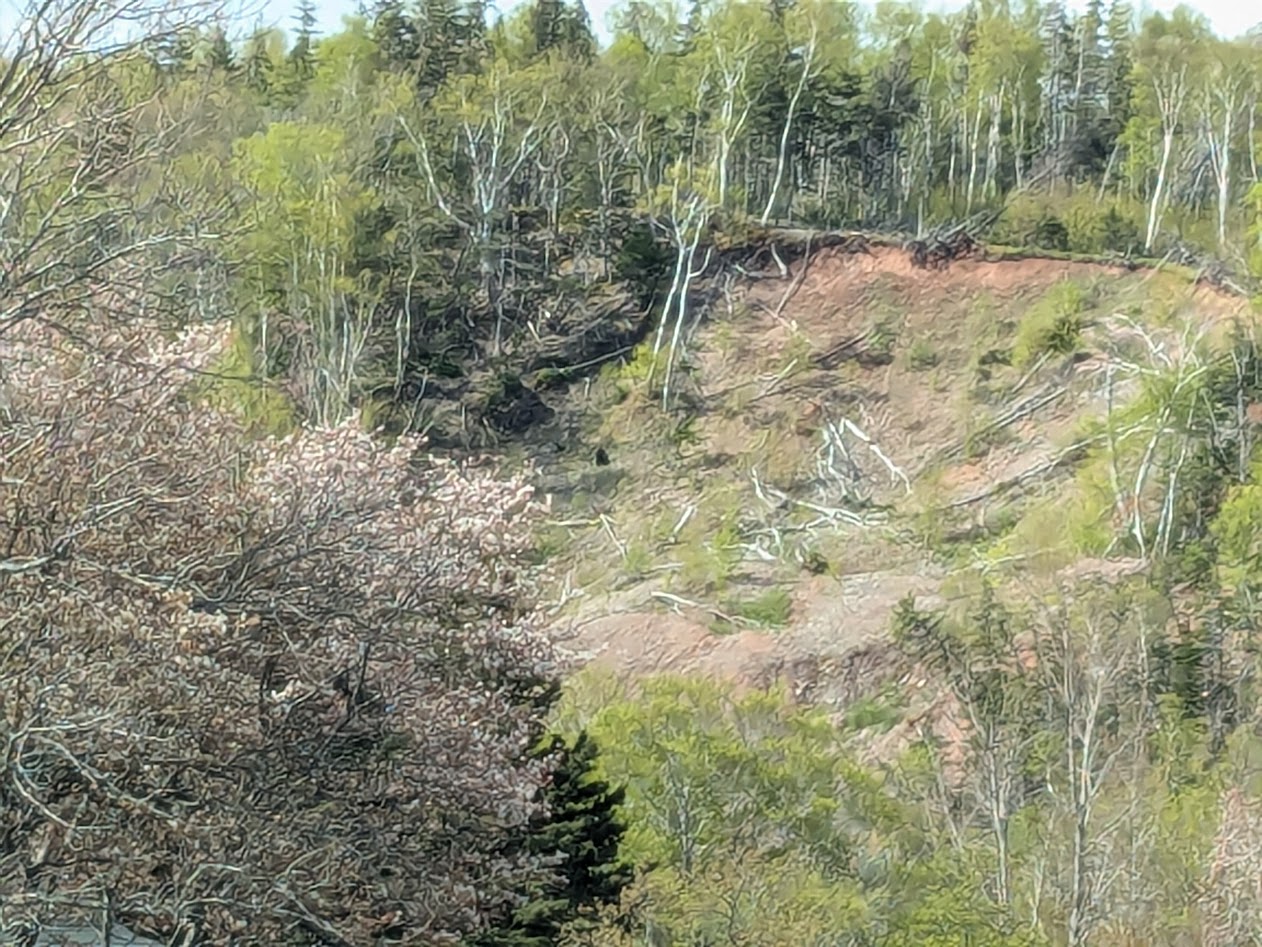
That black dot in the very center of the shot? Bear. (I did warn you it wasn’t close.)

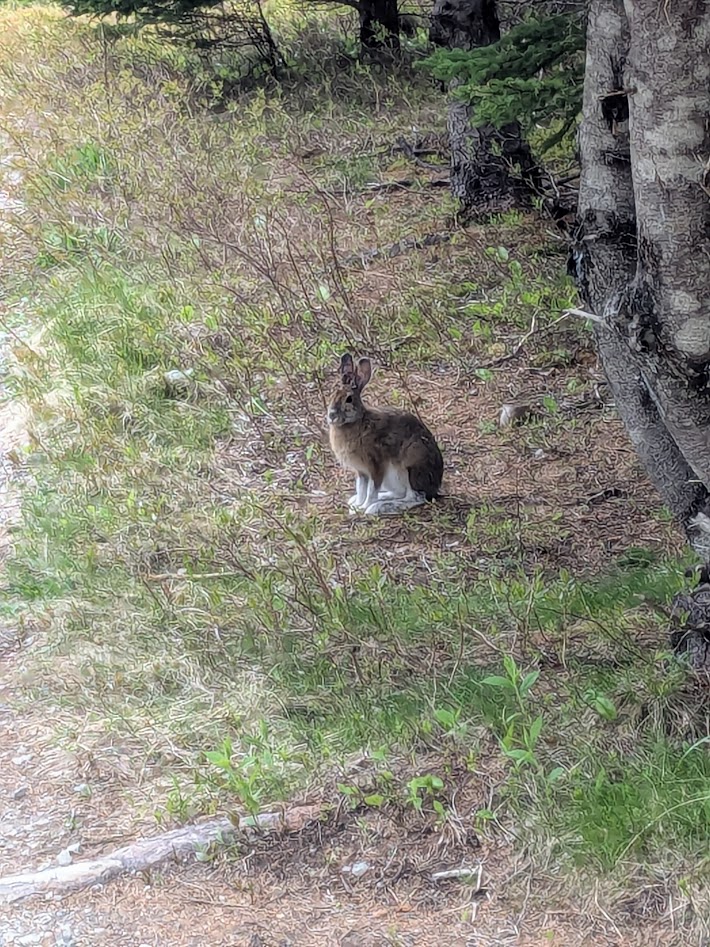
We also encountered a couple of bunnies, which, we realized by their coloring, were actually Arctic Hares still transitioning from their winter whites.
Our favorite hike followed this skinny spit sticking out into the big blue Atlantic:

Ok, not blue yet…wait till the sun comes out…
That’s a little better. But keep your eye on that boat…

The lobster fishermen were busy while we were there, and they got so close we were job-shadowing them from shore!

Literally. I was counting their catch as they hauled it up.

Our last day on Cape Breton Island, we spent on the detached, southeastern part (see map above, near the town of Sydney), which is an island itself…attached by the briefest ferry ride we’ve ever been on:

Any decent ballplayer could throw across this gap! It took less than a minute to cross. Must be cheaper to maintain than a bridge…?

Over there, as the weather chilled down, The Mate & I did something we do very rarely on our trips together: we visited a museum. Make that a LIVING museum, Fort Louisborg.
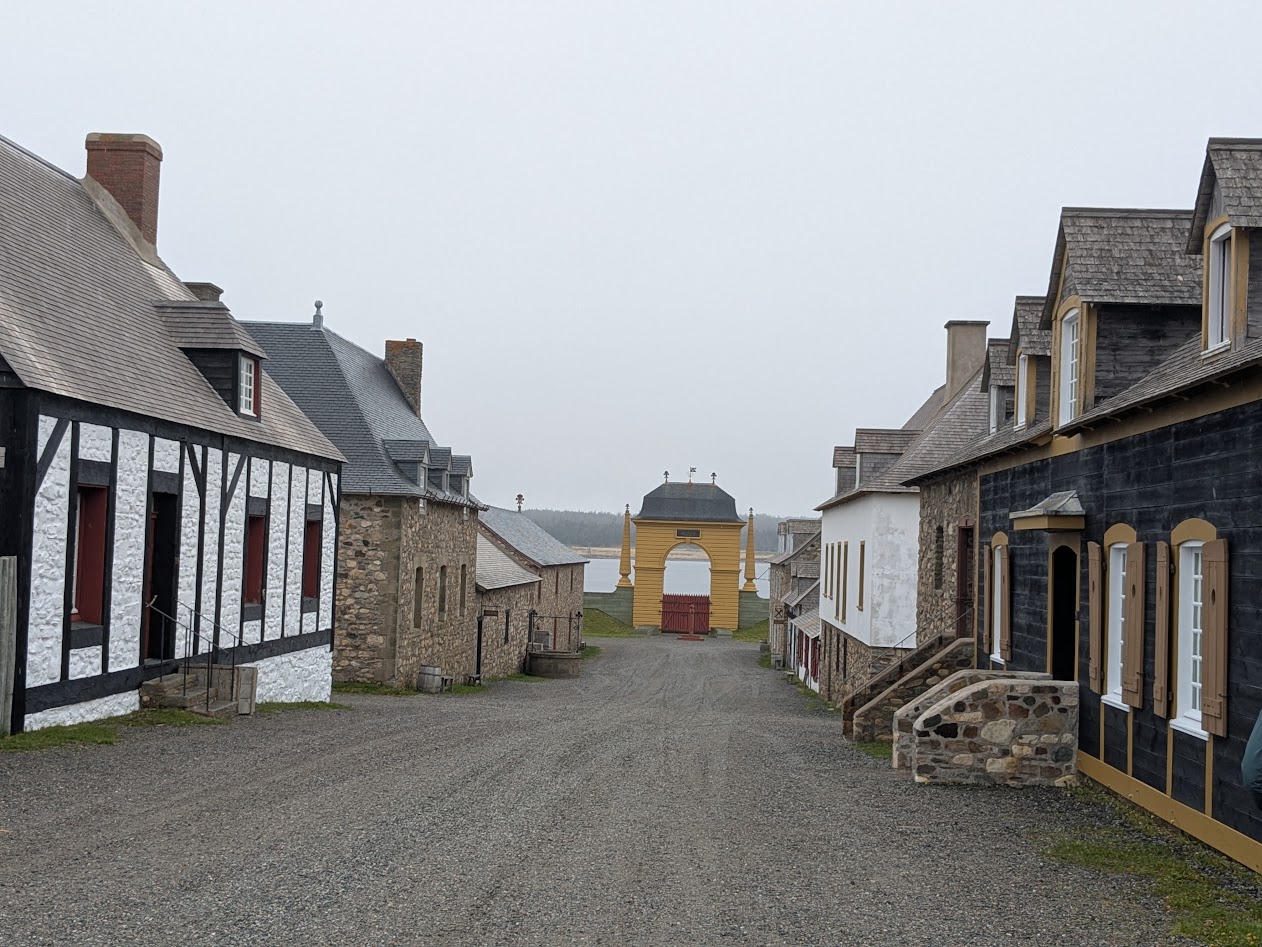
Did I mention it’s still late May? Apparently nothing much gets going in Nova Scotia till June. We had the place mostly to ourselves.

Built by the French in 1713. Captured by the English. Recaptured by the French. Then finally destroyed by the Brits…all in about 50 years! Oh–and then rebuilt by the Canadian Government in the 1960s. The WHOLE thing.

This lady used the word “we” when describing the French. Good job, Madame.

I commented on how commodious these bunks looked…and was told by a chap in a soldier costume, “We’re three to a bed, you know.”

Oh.

After a week of leisurely wandering–the whole Cape being smaller than I’d expected, so we never had far to drive–we headed back to “mainland” Nova Scotia. First, we enjoyed this rare east-coast sunset over the ocean, from Cape Canso:

Wait–how’d the ocean get onto the west side???

Then, the obligatory lighthouse, in Antigonish:
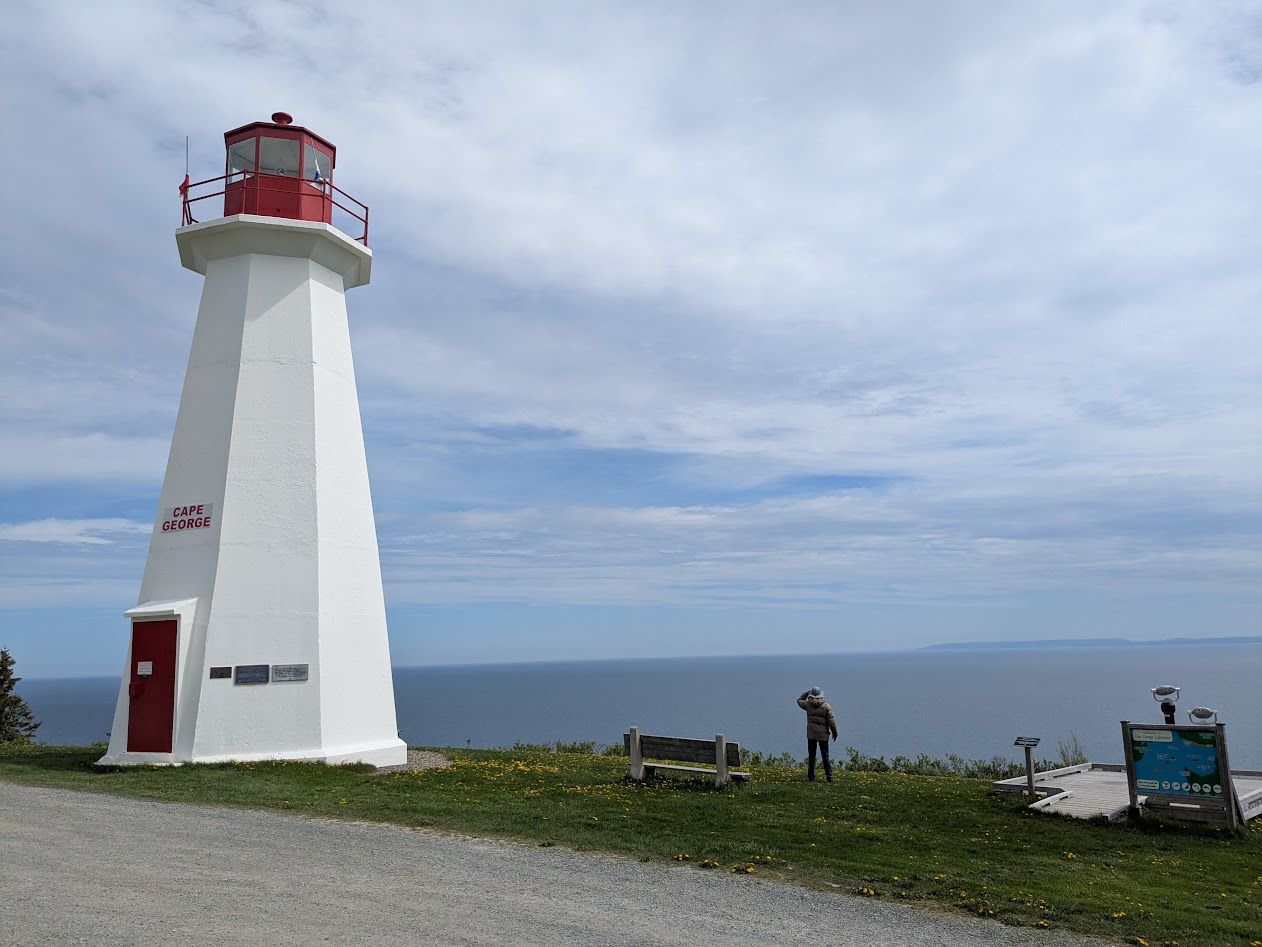
pronounced Auntie-gon-ISH, we learned…very Scots!

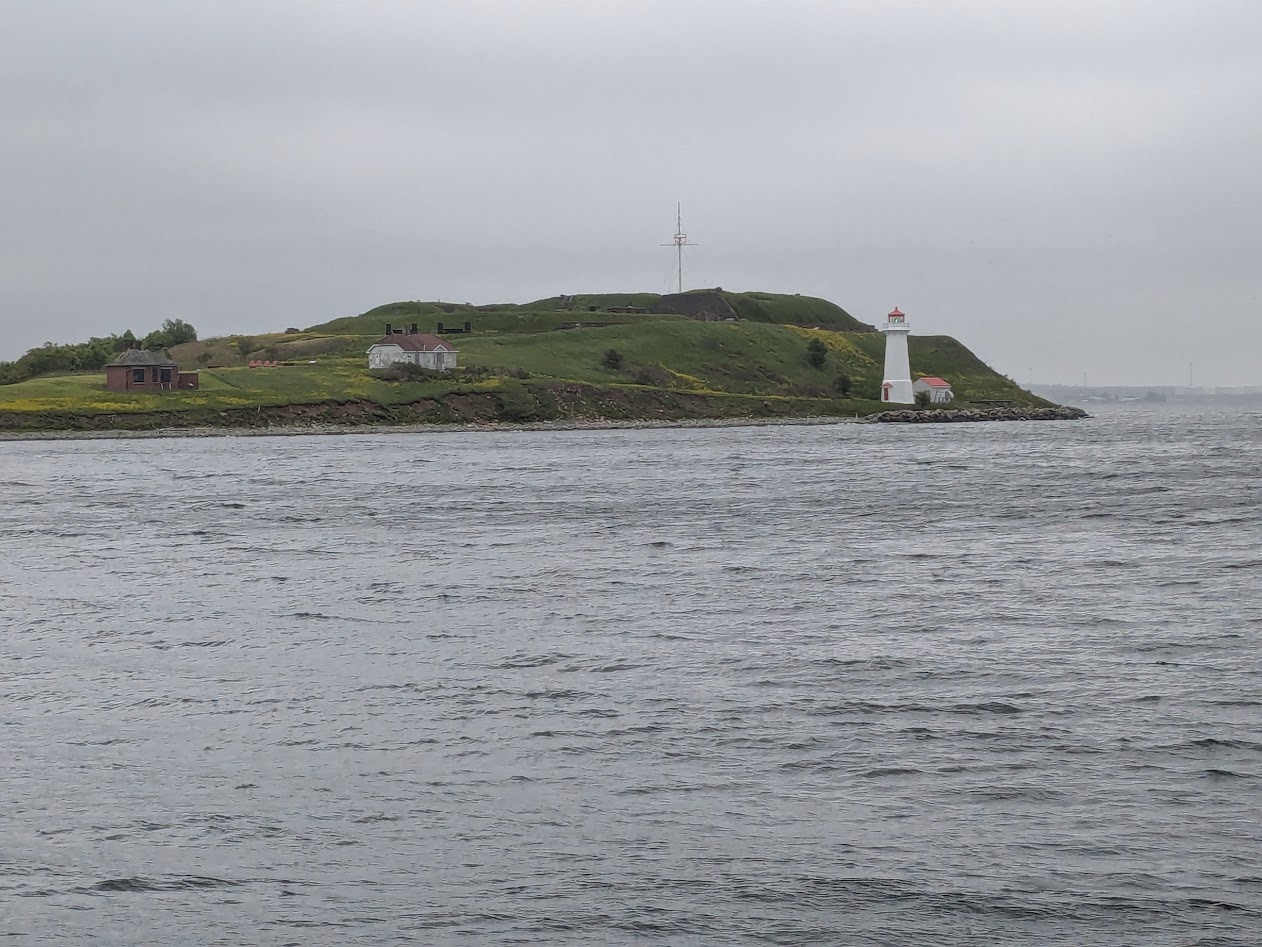
On our last day, we explored Halifax. They have their own Citadel there, in the center of the city…

Yep, that’s a citadel, all right.

…but we had had our fill of forts, so we just peeked over the fence, then spent our time walking from waterfront…
or “harbour,” as they spell it

…to public gardens…

Too cute! (no, I don’t just mean The Mate)

…enjoying Halifax’s many murals…

I’d like a butterfly on my house!

…and back to our hotel, which was full of Europeans.

On our ride to the airport next morning, our cab driver told us he never picked up Americans from that hotel, which made us oddly happy.

I’m sure I needn’t explain that statement either.

Road Trip XI, Days 17-21: We Interrupt This Travel Blog…

…for a special promo for a special person, and a special book. My friend and writing buddy Iris Graville is about to launch her book of essays, Writer in a Life Vest, and when you’re done reading this, I think you’ll want to order a copy or two.

Coming soon to a (hopefully independent) bookstore near you, IF YOU ORDER IT!

Just in case you’re wondering, “But Gretchen, aren’t you still on the road? Has nothing happened during the past week?” the answer is, Yes, and No. We’re happily ensconced at Tierreich Farm (“Kingdom of the Animals”), a.k.a. the home of my Amazing Parents.

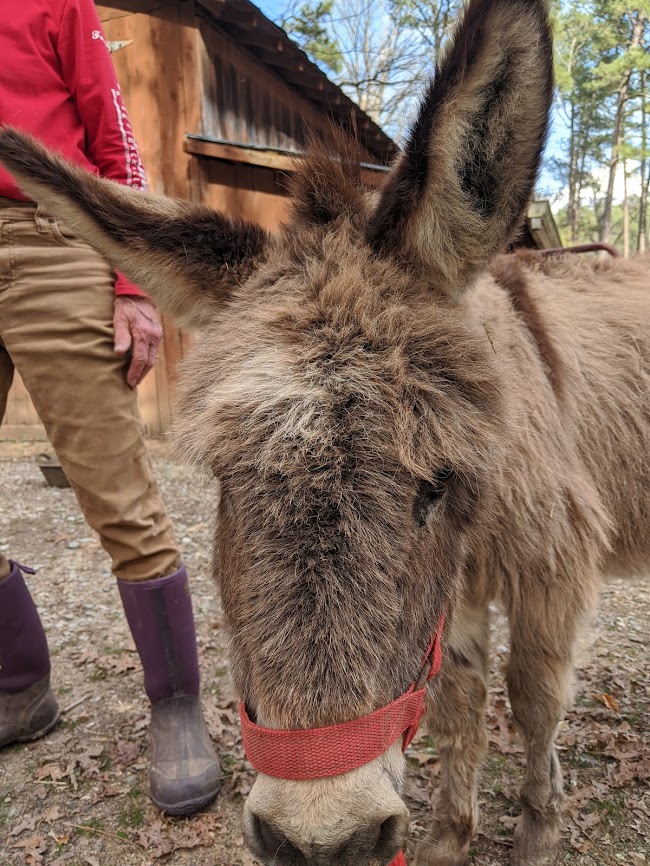
And Stevie, World’s Cutest Donkey

We’ve seen a ton of ACC basketball, eaten a ton of Mama Dip’s fried chicken and Allen & Son BBQ, walked and ridden our bikes through what’s left of the country woods of my youth (this place sure has grown in 30 years), and caught up with many of our Far & Dear.

We suspect the new owners of tweaking the recipe–easy on the vinegar, guys!

But since that’s always been the purpose of these road trips, I don’t feel the need to re-describe the above. Check out any of my old blog posts from the second week of March and you’ll find it there.

Instead, let me introduce you to Iris. As her Author Page on Homebound Publications puts it,

Iris Graville has lived in Washington State for four decades, after childhood and early adulthood in Chicago and small towns in Southern Illinois and Indiana. A long-time Quaker, an environmental and anti-racism activist, and a retired nurse, Iris believes everyone has a story to tell. She’s the author of two collections of profiles—Hands at Work and BOUNTY: Lopez Island Farmers, Food, and Community. Her memoir, Hiking Naked, was a 2019 recipient of a Nautilus Award. 

…but as I put it, Iris is also a remarkable example of a writer at her most humble, hard-working, and creative. To start with, she created the post of “Writer in Residence” for the Washington State Ferries–just came up with the idea, got in touch with the Ferry Powers That Be, and made it happen! Then she rode the ferry at least once a week for the year, writing–you can read about that fascinating “job” here while you wait to read about it in her book.

And humble? As a member of her writing critique group, I was privileged not only to read many of this book’s essays in their early form, but also to listen to Iris grappling with the challenge of learning as much about the Salish Sea and its inhabitants as she possibly could, in order to interact with the experts she was meeting and interviewing…in order to tell the story of the Salish Sea’s glories and vulnerabilities without setting herself up as an “expert” herself. She was a public health nurse, for goodness’ sake–but thanks to all her work, Iris can now write like Rachel Carson! (Fun fact: Ms. Carson actually makes an imaginative appearance in one of Iris’s essays.)

So that was also the “hard-working” part. But back to “creative” for a moment: in case you’re turned off by the word “essay” (apologies on the part of English teachers everywhere for possibly ruining that word for everyone), Iris’s pieces are all over the place! This book “contains multitudes,” as Whitman said: narratives, interviews, poetry, letters, even a playful messing-around with keyboard symbols (one of my faves). It features whales (and whale poop!), gorgeous marine descriptions, vessels, statistics, and challenging questions. Its pieces are dire, funny, heart-wrenching, hopeful, and above all, inspiring.

When you read Writer in a Life Vest, you will want to do more to protect whatever fragile environment you feel connected to. And who knows? You may feel inspired to invent your own Writer-in-Residence program at a place of your choosing–Farmers’ Market? Train Station? Dunkin’ Donuts? (j/k–that might kill you)

Hey Iris–you go, girl!

The book will be launched on March 24 at 5:30 pm, and will feature Iris in conversation with Lorna Reese, Lopez writer and founder of SHARK REEF Literary Magazine. They’ll discuss Writer in a Life Vest and Iris’s desire for the essays to promote resilience, inspiration, and hope. Register here to join the program in-person at the Lopez Library. There is a limit of 20 seats. Register here for online the program.

So, my friends…order two copies, one for yourself and one for a whale-loving friend. Then take a moment to marvel at the hard work behind such writing. Then maybe go do some yourself! (Or just get outside for a good, long, grateful walk.)