This is going to be one of those participatory posts. Ready? Show of hands: who’s familiar with the term Opportunity Cost?
That’s a term I had to learn about 35 years ago, when I took my first public school teaching job, in North Carolina. I was sentenced to given five sections of the same class: 9th Grade ELP, or Economic, Legal and Political Systems. Thanks to my undergrad classwork, I was pretty up on the Legal & Political part, but Economics? I studied hard to keep a step ahead of those kids.
And I learned about opportunity cost, a.k.a. “the loss of potential gain from other alternatives when one alternative is chosen.” (Thanks, Oxford Dictionary Online.)
In other words: you do one thing; what you don’t do = opportunity cost.

Obviously, for every action, there are a LOT MORE o.c.’s. So you don’t want to let them get the upper hand, right?
The trick is to recognize the opportunity costs, give ’em a friendly nod…and keep doing what you’re doing. That way they can’t blindside you with their secret weapon, regret.
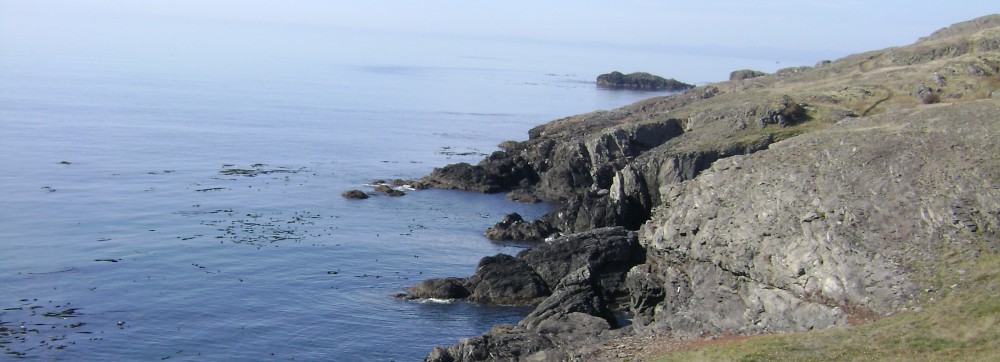
The other day while walking in my Big Backyard, part of the San Juan National Monument, I came upon this particularly beastly lovely flower arrangement:

Bull thistle, seed pods popping. Invasive as hell. I vaguely recalled writing a blog post about my personal war with these devils about a decade ago. Back then, I was actually optimistic about ridding this stretch of public lands from thistles by my own sheer persistence.
So what happened? Opportunity cost.
Choose to save your back & knees by withdrawing from the Thistle Wars? The opportunity cost is living with thistles.
The more I think about it, the more I see opportunity cost at work in my life. Move across the country for the beauty of the Pacific Northwest?

Fine–but your o.c. is a full (expensive) day’s travel away from your folks.

For that matter: move onto an ISLAND? OK…but you better be ready to give up HOURS, waiting in ferry lines.

I chose to devote time (and money) to pursuing an MFA in fiction, so I can write a better novel…

…but my songwriting Muse has taken these past two years to decide to visit some other songwriter. THAT was one o.c. I hadn’t considered.
[not pictured: my songwriting Muse. “Hmph. I can tell when I’m not wanted.”]
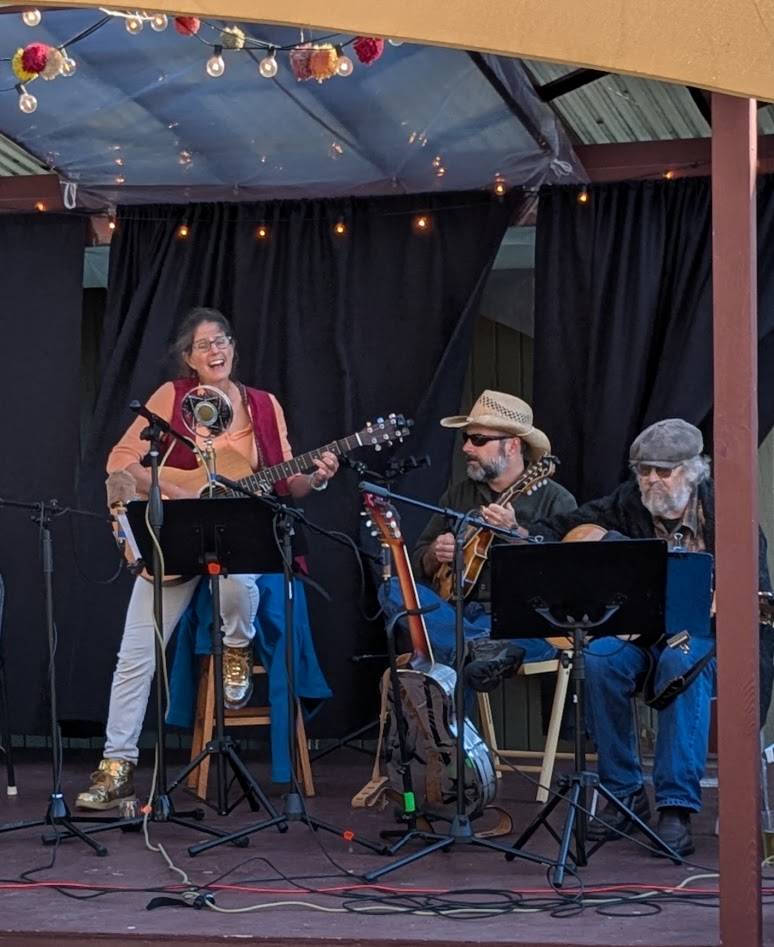
On that music theme: I only get to play with friends who are willing to be informal & flexible, rather than join an ongoing band…
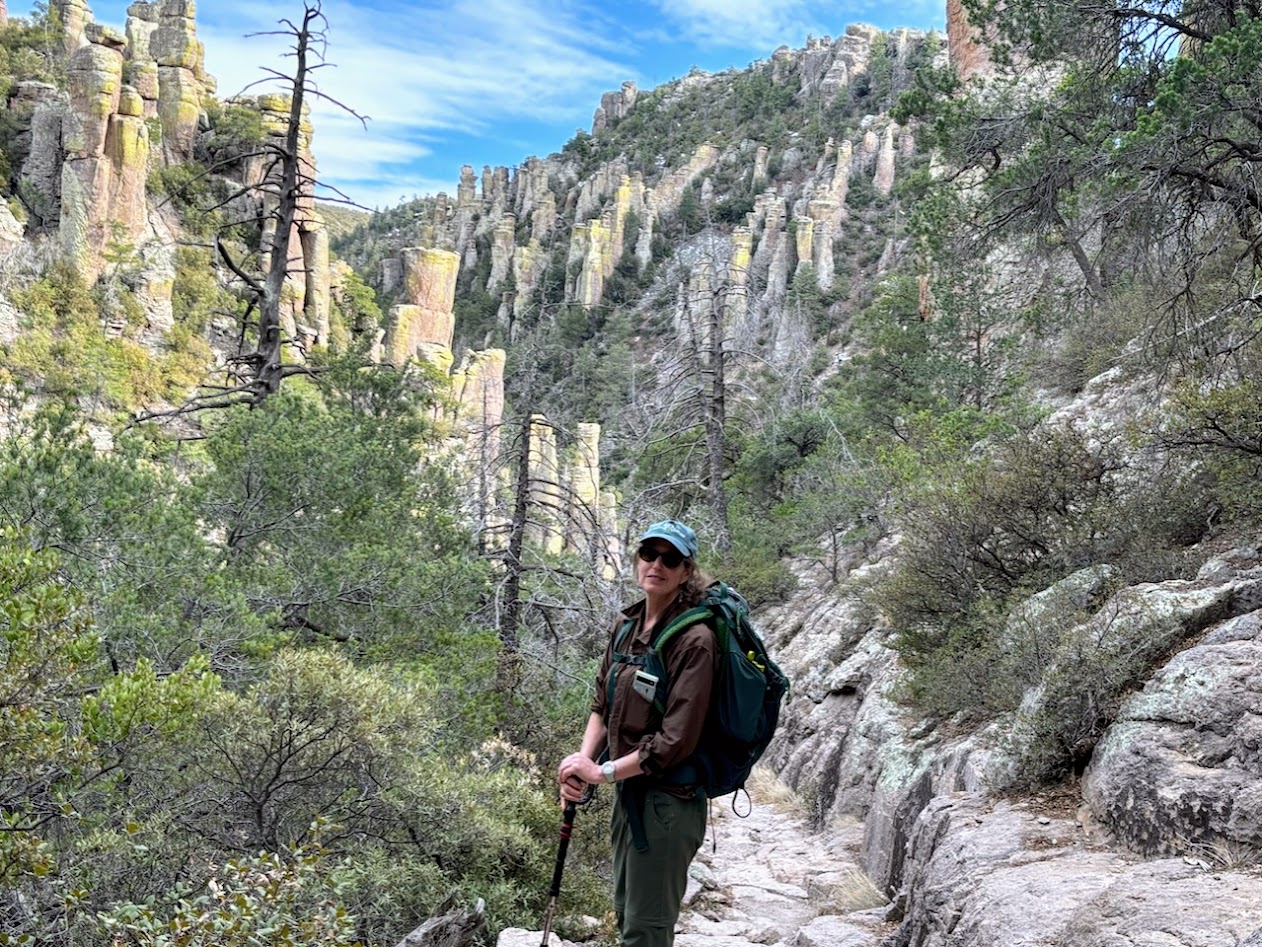
…because I leave the island WAY too often, for places like this:
I’ve had to give up Spanish lessons because of (pick one): bakery work/neighborly commitments/ political phone-banking/spending down time with The Mate
Choosing not to plant an organized garden gives me extra time, and saves my back…and my o.c. is a Kale Forest (vale of kale) masquerading as a garden.

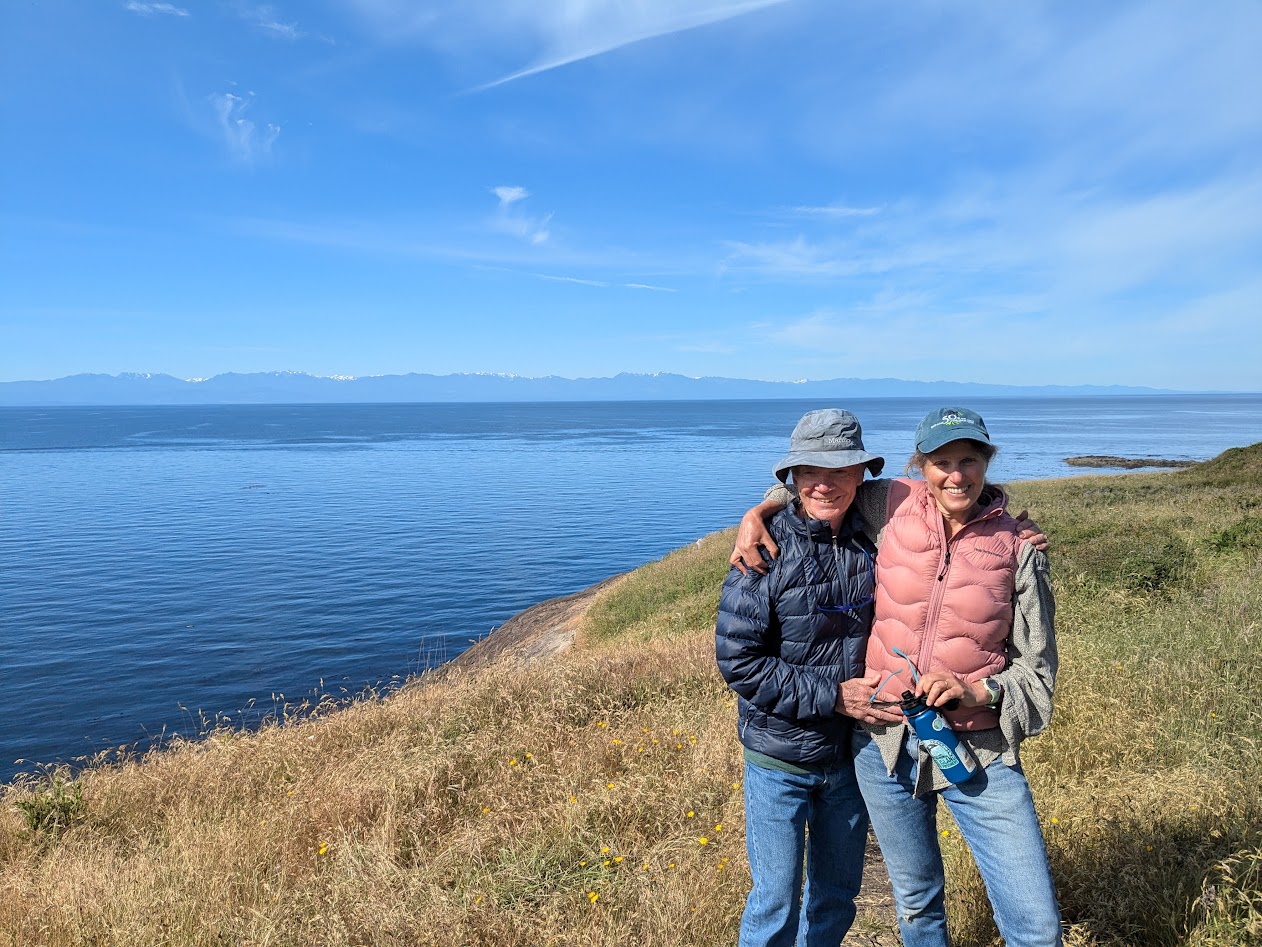
Getting exercise means I’m always moving around this beautiful corner of the world at TOP SPEED…which means I’m not LINGERING.
That last one really caught my attention. So the other day, I took my journal, my lumbar support pillow, and a peach with me out to the Point, and we LINGERED.

What did I journal about? Opportunity cost. I duly noted a long list of things I haven’t been doing, making, accomplishing or experiencing lately, because of all the other things I’ve been doing, etc. I read the list. I thanked it. I whispered promises to a couple of the o.c.’s on there that I might be back at a later time, so don’t give up on me.
And on we go. No regrets. (Or at least none that I feel like sharing in a blog. 🙂 )

So here comes the participatory part again. What are some of the opportunity costs you’re currently noticing in your life? How about acknowledging them here? Then wave ’em adieu.
So
S

 Wing's World