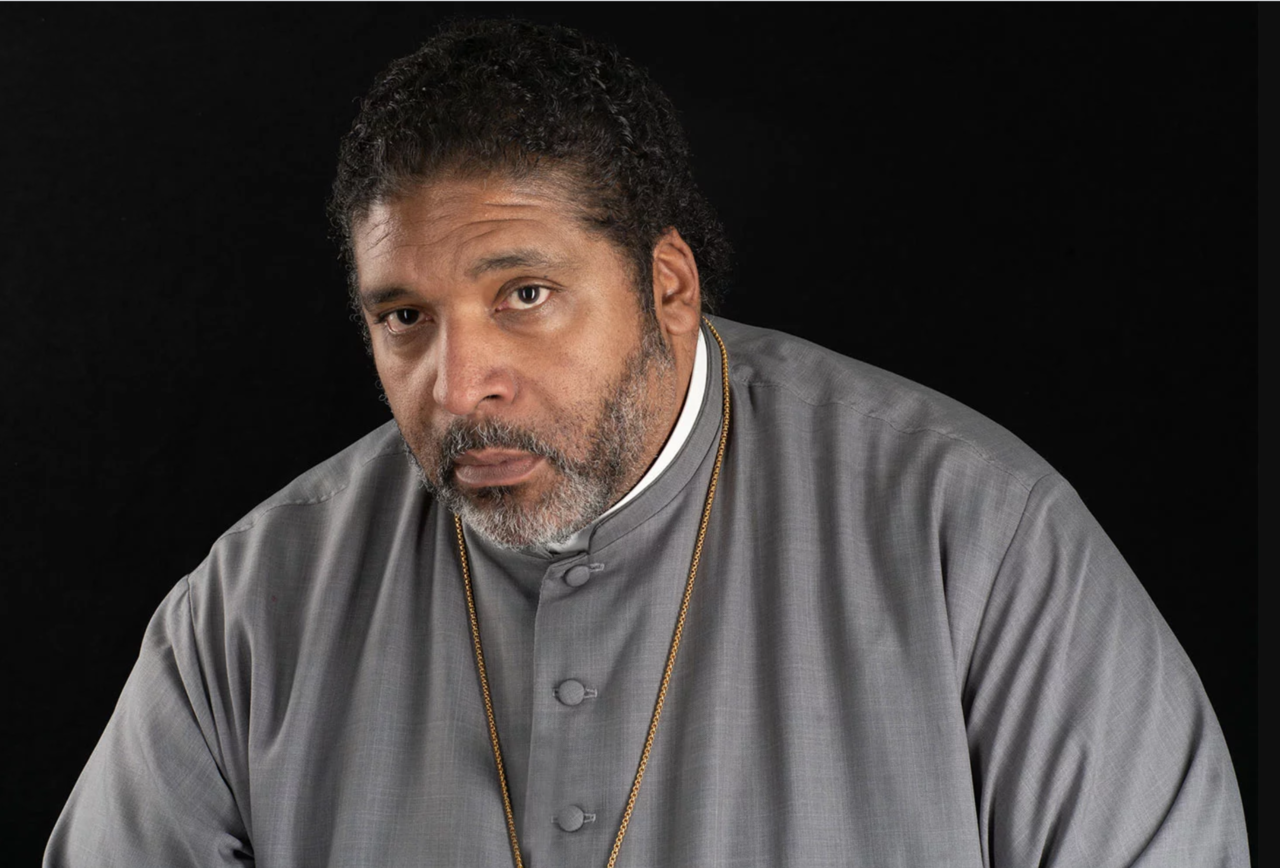
Rev. Dr. William Barber [photo courtesy Wikimedia]
If we were back in my childhood of the 1960s-70s, all watching the same 3 or 4 channels, everyone would know this preacher. Everyone would have seen him preaching, heard him cajoling or roaring from the pulpit. Though his accent is eastern Carolina, not Atlanta, we would have known him the way we knew that other Rev. Dr., the one whose birthday is now a federal holiday.
But we’re all in our separate media silos now; separate channels, separate apps. Rev. Barber is back on the east coast (managing to pastor a congregation at Yale even while doing all this political work), and here on the west, I RARELY meet anyone who’s heard of him.
I’m trying to change that.
One of my very earliest memories is of the civil rights movement in my hometown of Durham, NC: holding hands and swaying in a demonstration, singing “We Shall Overcome.” I learned later that Duke students and faculty–including my dad–came out in support of Duke’s all-Black custodians, probably 1965.
Out here in the Pacific Northwest, all that history feels remote. Or it did until Trump, the Supreme Court and Project 2025 started attacking voting rights again. Now here we are, right back in the mid-60s, fighting to maintain what we thought we’d won.
The only difference? “We” is more than Black Americans now. “We” is we.
If you find yourself thinking, “We sure could use Dr. King now,” then
a) you’re not alone, and
b) meet Rev. Barber.
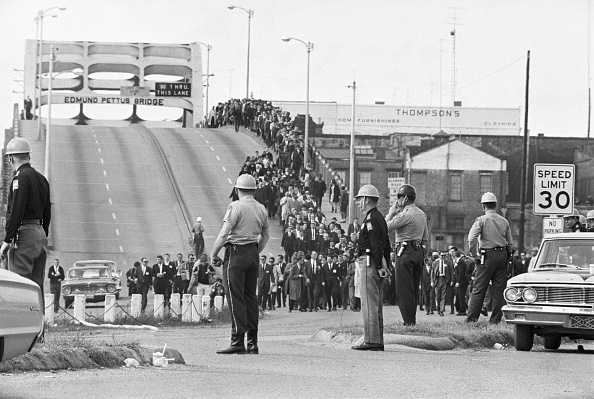
State troopers watch as marchers cross the Edmund Pettus Bridge over the Alabama River in Selma, Alabama as part of a civil rights march on March 9. Two days before troopers used excessive force driving marchers back across the bridge, killing one protester. [Courtesy Legal Defense Fund]
This February, Rev. Barber’s group, Repairers of the Breach, will be leading a march modeled on the famous Selma to Montgomery March of 1965. They’ll start in Wilson, NC on Feb. 11 and walk almost 50 miles (15 miles/day), finishing in Raleigh on Valentines Day. How I wish I could be there! I can’t…but I plan to support the march financially. And I plan to tell everyone I can about it.
Starting here. Because, who knows? Maybe you can be there. Maybe you can be part of that history.
Can you? And if not…can you send this post to someone who might be able to join, or support the marchers?
And if you do that, will you tell me about it?
PS: For more information, or to contact Rev. Barber & the Repairers of the Breach directly, click here.
“I’ve tuned out,” your adult son, your cousin, your sister-in-law tells you. “Politics is too f**cked up for me bother. And there’s nothing I can do anyway.”
I hope the first thing you do is to support your loved one for prioritizing self-care. But then I have a question for you to ask them.
What does the word “harvest” mean to you?
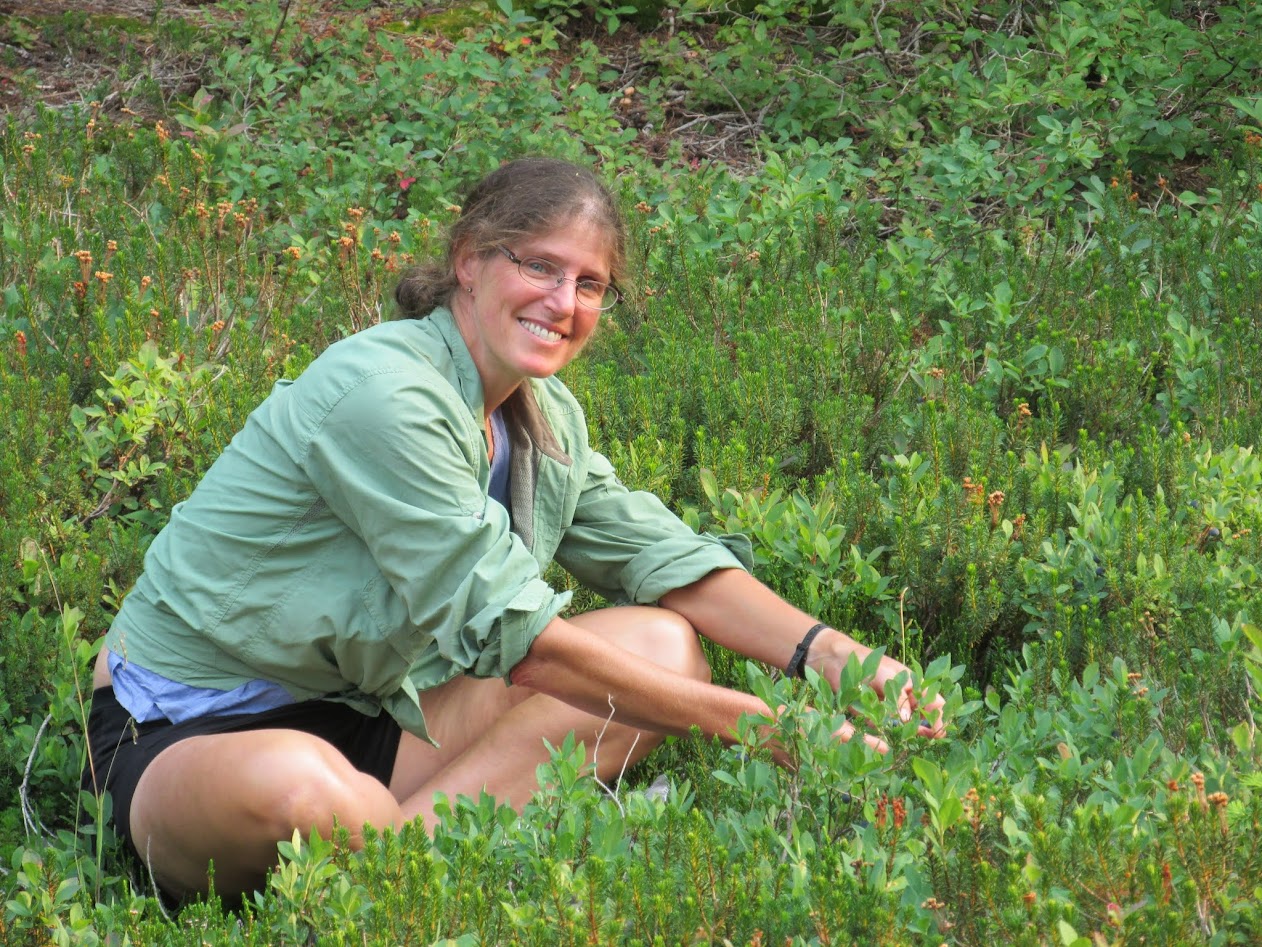
Wild blueberries? (Yes, this photo’s OLD. My knees don’t let me sit that way these days.)
That question popped into my mind last night while reading Joyce Vance’s Civil Discourse on Substack. She was asking legal expert Marc Elias (a lawyer who’s argued before the Supreme Court five times and counting) about what voters should be concerned about in 2026. Marc’s answer jolted me:
“According to Democracy Docket’s case tracker, there are about 170 active voting and election cases nationwide. Unfortunately, the majority of those cases (roughly 55%) are anti-voting cases that seek to make it harder to vote…”
Wait–who are these Bad Guys trying to keep Americans from voting? Will the feds crack down on them?
Nope. The Feds ARE the Bad Guys now. Says Marc:
“…One of the most important new developments this year is the Trump DOJ’s emergence as one of the most prolific sources of anti-voting litigation. In less than a year, the Department of Justice has filed 25 anti-voting lawsuits. While pro-democracy attorneys often found ourselves allied with the DOJ in the past, we are now forced to oppose them to prevent the federal government from trampling on voting rights.”
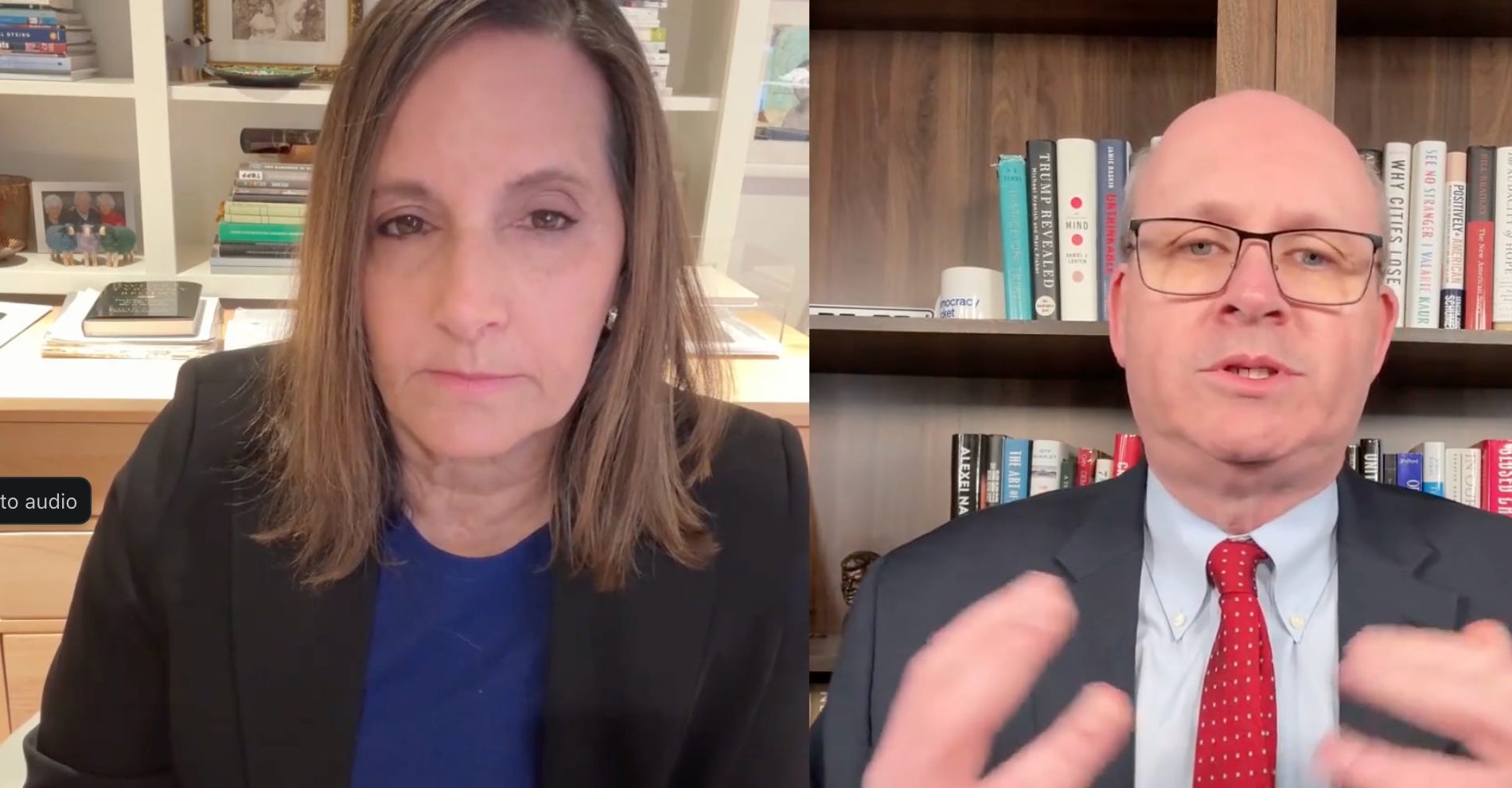
Joyce and Marc talking [Courtesy Civil Discourse]
“Okay, Gretchen,” you say, “What does this have to do with harvesting?”
Glad you asked. Because here’s the part that made me realize, even someone’s apolitical son, cousin or sister-in-law might want to know this.
When Joyce asked Marc how our federal government is going about the nitty-gritty of voter suppression, here’s what he told her:
“Trump’s Department of Justice is seeking a comprehensive database of sensitive personal information on virtually every person who might vote in 2026 and 2028. This includes names, addresses, Social Security numbers and dates of birth. In some states, it includes a voter’s race. In most places, it includes party registration, which elections a person has voted in, the method of voting they used, and whether they have moved.“
In other words: they’re harvesting our data. ALL of it. Not this kind of harvest…
…but this:
[image courtesy Wikimedia Commons]
Marc Elias goes on:
“Never before has the federal government sought all this information from nearly every state. Never before has the DOJ sued more than 20 states (most of which lean Democratic) to obtain it...We are seeing the weaponization of federal power against American voters, and I think this voter data collection effort by Trump’s DOJ could become the major story of the 2026 election cycle.”
So, ask your disaffected son, your cousin, your sister-in-law: “Is that what ‘harvest’ means to you? Are you comfortable with your own government harvesting your voting data in order to keep themselves in power?”
Harvest kale, not my proclivities.
If their answer is No…maybe suggest they look into Civil Discourse, or any other site that relies on lawyers, teachers and historians.
If YOU want to know more, join Substack and tune in to Joyce’s upcoming conversation with Marc, January 15th @ noon EST, where they will dive further into the questions of what’s going on with the data harvest, and what we can do about it.
They may not appreciate the question. But politics is choosing them, regardless of whether they choose politics. And as Leonard Cohen wrote, “There is a crack, a crack in everything. That’s how the light gets in.“
And as Joyce Vance says, “We’re in this together.” Let’s try to keep the conversation going.
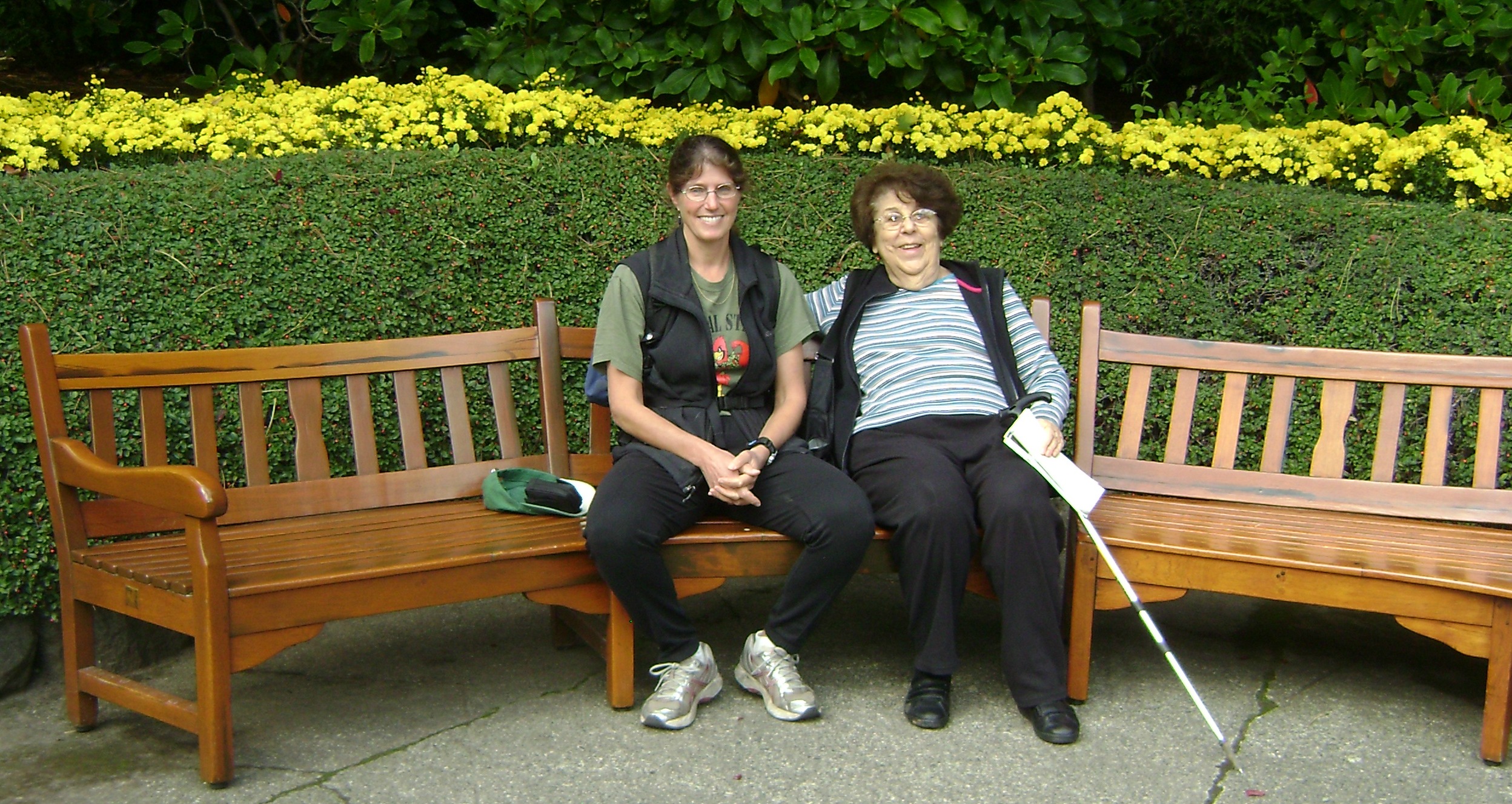
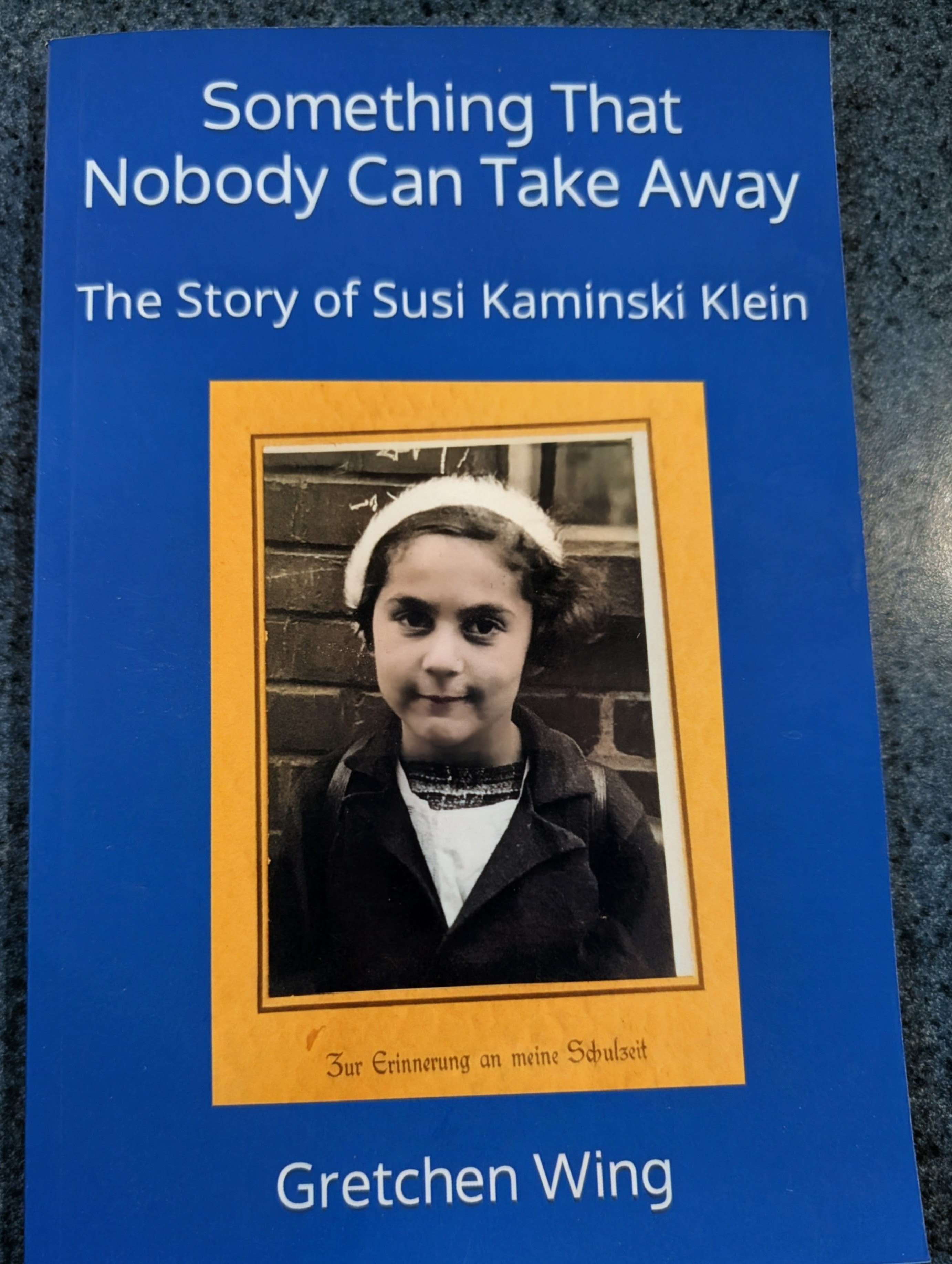
Fifteen years ago, I interviewed my LA-based cousin, Susi Kaminski Klein, about her experiences as a child survivor of the Holocaust. Over the course of four days, hanging out here on Lopez Island and visiting beautiful Victoria, BC, I recorded Susi narrating her story.
Susi & I taking a break from history in Butchart Gardens, 2010
Nine years ago, I blogged about Susi’s story as depicted in Jewish Journal of 2016. You can read that here.
Five years ago, with some urging, and a TON of formatting, research and illustration help from my cousin Helen (Susi’s daughter), we turned those notes into a book.
Helen should’ve gotten co-author billing!
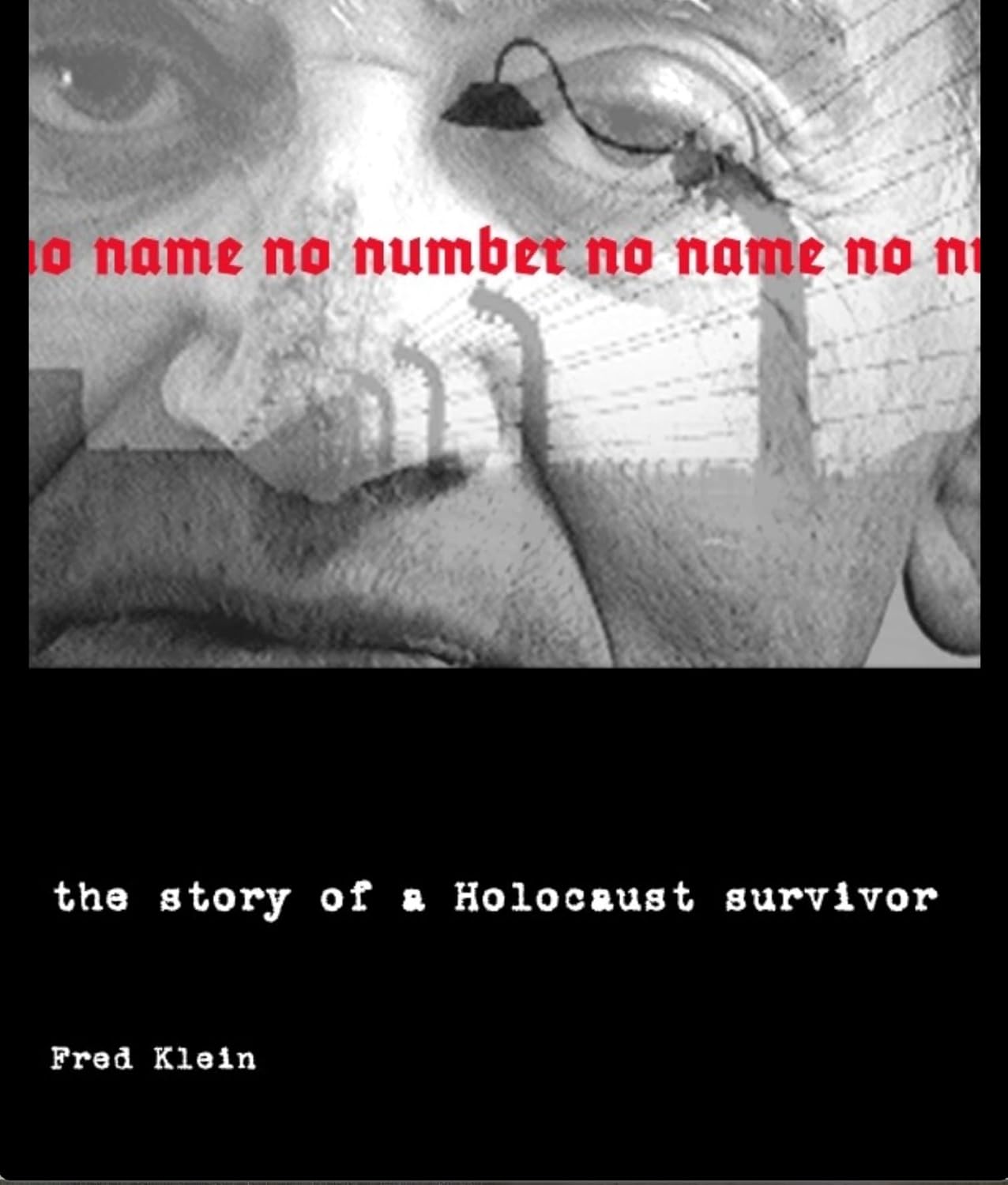
But the lede I’m burying here is this: COUSIN HELEN WAS WAYYYY AHEAD OF ME! In 2011, four years earlier, she had already published the story of her father, Fred Klein. Here it is:
Something you have to understand: back then, self-publishing was HARD WORK. I’ll get to that part in a moment.
What I wanted to know was how Helen’s experience interviewing her father compared to mine, interviewing her mother, and…well, I’ll let Helen tell it. Cuz?
“This will be a short and possibly unexpected answer. I never interviewed my father to capture his story. My father started writing his book, believe it or not in 1997! He went through a number of iterations. During the process he found several people who were willing to edit his work and give him ideas on organization, grammar, etc. I was not involved in that process at all.”
Fred and Helen in 2015
Well, that tracks. Susi had separated and Fred by the time we met, so I never got to meet Fred. From what I’ve learned, I think he must have been an impressive man. Maybe daunting to interview? Not really, Helen said, but…
“I think I would have found it extremely challenging to interview my father. Not because he would not be willing but it is such a vast subject, I would really have had to figure out where to begin, how to organize and structure the questions etc. so honestly I am grateful my father wrote his story on his own and got some guidance from others on organization and structure.”
Keep in mind, my cousin’s working full-time during this entire period. When I interviewed Susi, I had just left my teaching job, so I had the time I needed to organize her story after capturing it on tape.
Helen and Fred in 2006
Also…as Fred Klein’s book cover intimates: he survived Auschwitz. While Susi’s story was horrific and traumatic, including her father being sent to the concentration camp Theresienstadt…it did not involve Auschwitz.
Full disclosure, I’m only partway through No Name, No Number, which is written as a mix of personal account and history lesson. History, I think, is more and more necessary these days when precious little Holocaust history is taught. But personal stories are the most poignant.
Here’s an excerpt from Ch. 7, where, in 1941, still living “freely” in Prague, teenage Fred is forced to labor on a collective farm. I have bolded sentences that especially capture the personal reality of the horror.
“For me, the worst part about the camp was the strenuous physical effort required. I was in extremely bad shape, not accustomed to the job, never having learned to push myself. Sometimes the grueling twelve-hour workday seemed like hell to me. I thought I would never last through them. I had to shovel some three hundred times earth up to a little metal wagon. Sometimes I had to carry very long tree-trunks with a fellow forced laborer. Most of my fellow inmates were in better shape than me and enjoyed teasing me. They had me carry the thick end of the tree-trunks which was so heavy that I almost collapsed, whereas the other fellow had it easy. Had I been in better shape, the work would have been exhausting, but tolerable.”
Fred as a still very young man, after the war, now living in Argentina
Here’s another excerpt, from Ch. 11, where in 1944, 22 year-old Fred is unloaded at the dreaded camp. Notice the detail in the middle of the passage:
“I jumped out of the cattle car. Barracks, barracks, barbed wire, gleaming lights. SS men with police dogs, wielding whips. Pajama-clad figures – kapos – and other prisoners, something I had never seen before. This place was cold, frightening, there was nothing soft to humanize it. I stared briefly at the hellish scene, and then I took off my glasses. Shouting and shoving, the kapos and prisoners herded us into rows five men deep and made us stand still. The dogs of the SS were poised to attack us. Somehow the pajama-clad prisoners got us moving forward in a single file.”
“I took off my glasses.” To me that act says, I will not look at this. I will get through it.
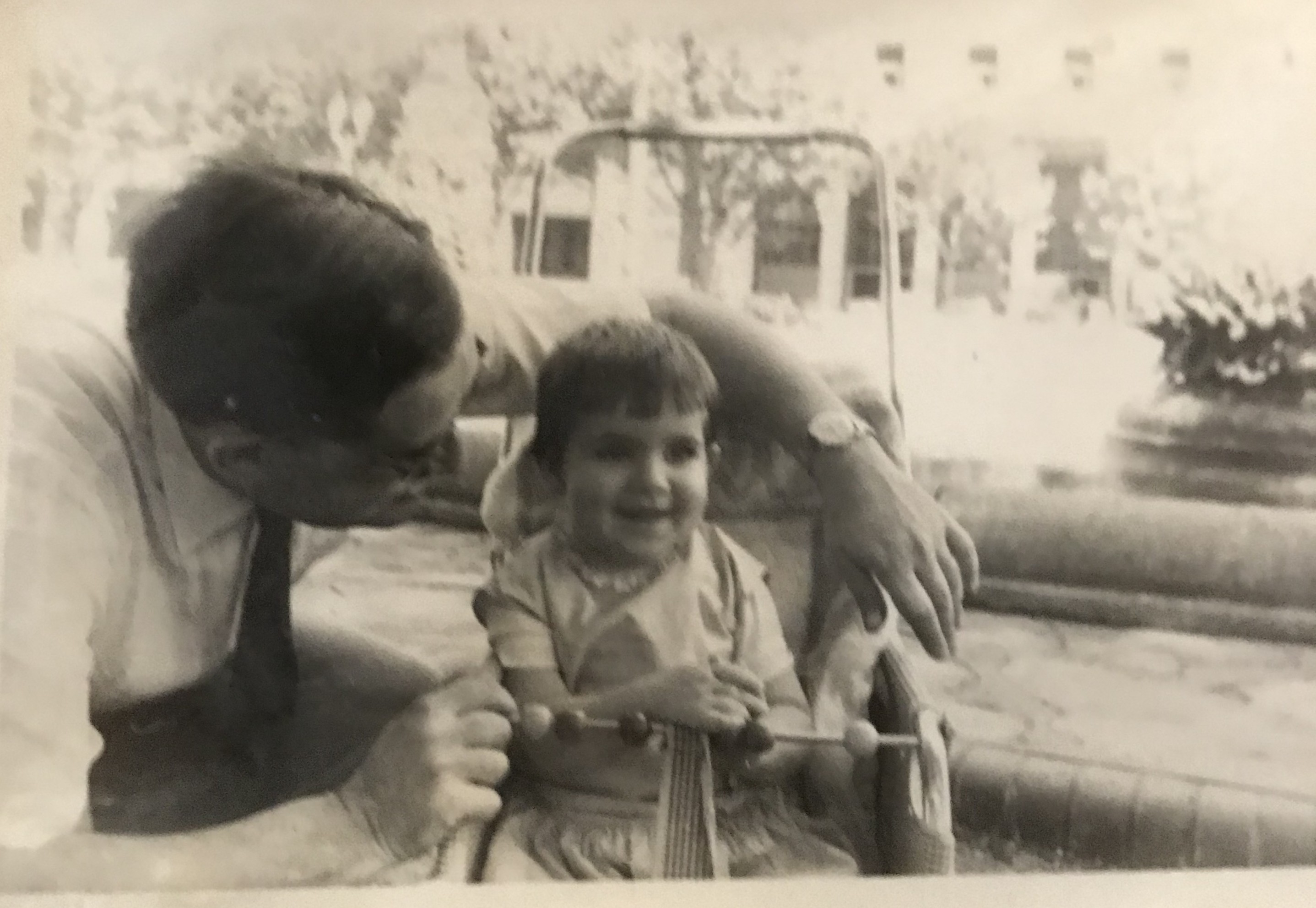
Fred with baby Helen in Buenos Aires, 1958
So, Helen– your dad wrote out his own book. Why was it not published right away?
“What I can tell you is that my father tried very, very hard to get his book published. He wrote lots of letters to a variety of publishers, but none of them seemed interested. I don’t even know if he ever got answers.”
It’s painful to reflect on this answer. There are so many Holocaust stories. The simple truth– that the sheer quantity of such traumatic stories affects their “marketability”–hurts my stomach.
Helen finishes:
“He finally gave up looking for a publisher, and sadly resorted to literally going to Kinkos, making copies of his book, getting the books comb-bound, and then trying to distribute his book that way.”
Ouch. But then here comes my cousin, to ease her father’s pathway:
“Originally, I published my father’s book in 2007 using Blurb.com. That process was long and tedious, but I pushed through it as I really, really wanted to get it done while my father was alive. Little did I know back in 2007, when I completed the publishing on Blurb, that my father would live to 100, something I am ever so grateful for!”
Helen & Fred in 2018
Which brings us back to this moment. Blurb.com no longer exists. Fred Klein passed away in 2022 (at the age of 100, as Helen said). But thanks to his daughter, Fred’s story lives on…easily available on Kindle!Click here to download and read No Name, No Number, for free.
I would like to thank my cousin Helen for her perseverance (not to mention all the photos!)…and my cousin Susi for hers. They are both role models for me.
And, in this season of deepest darkness, please say an extra prayer for the Fred Kleins of the world. May their stories find resonance.
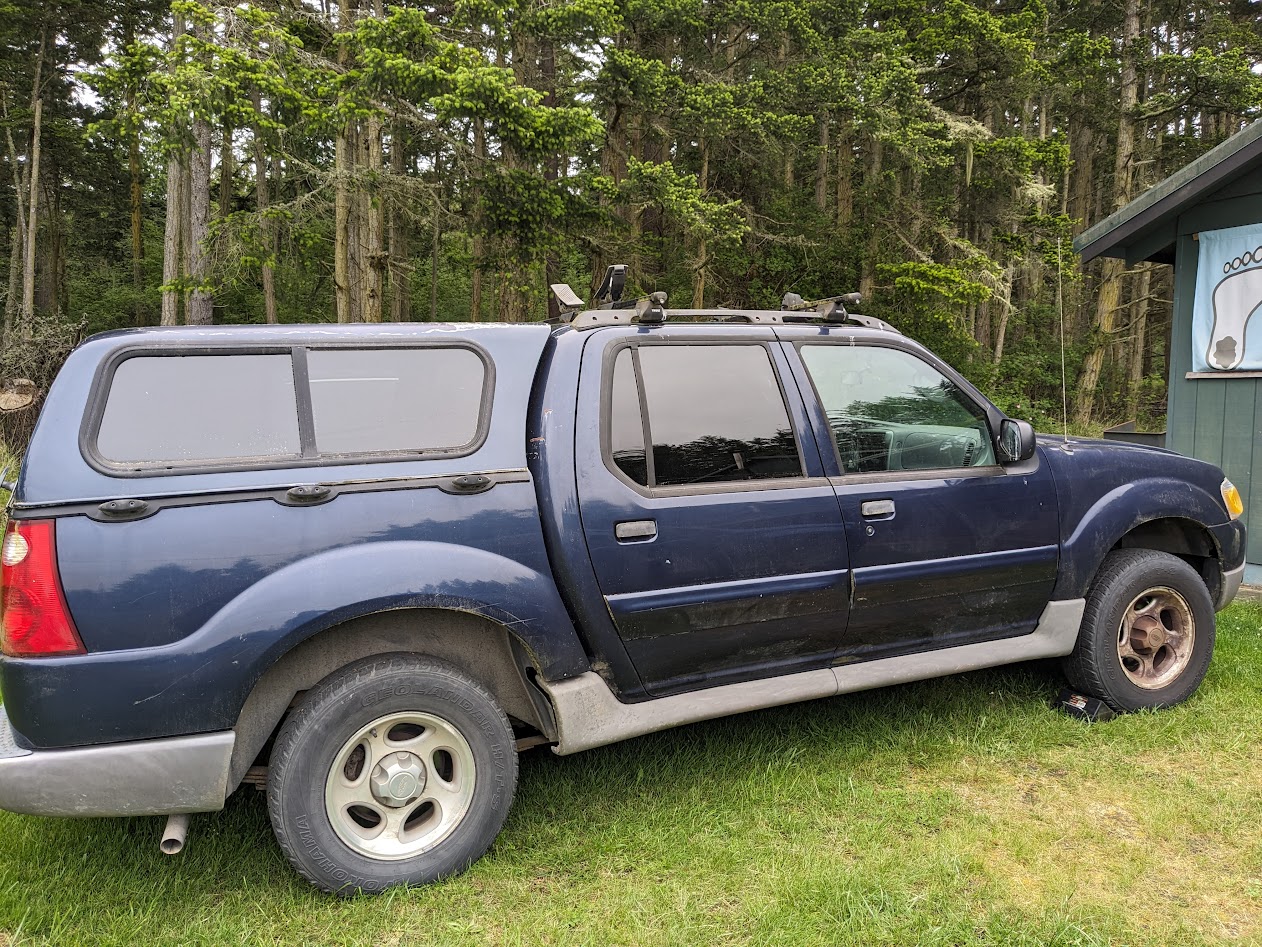
I’ve asked one of my humans to write this letter for me, as writing is a challenge–me being an SUV and all. After what happened in the Oval Office on December 4, my humans wanted me to tell you they’ll “never buy another Ford!” But I just wanted to ask you, CEO Jim Farley…
“The Somalians should be out of here. They have destroyed our country.”
Or this:
“Most of those people” — meaning the Somali immigrants — “have destroyed Minnesota” and made it a “hellhole.”
Or this, about a woman who moved all the way to America from across the sea, got so much education and respect that she was elected by other Americans to represent them in their Congress:
Congresswoman Ilhan Omar “shouldn’t be allowed to be a congresswoman…and she should be thrown the hell out of our country.”
Omar “should not be — and her friends shouldn’t be allowed — frankly, they shouldn’t even be allowed to be congresspeople, okay? They shouldn’t even be allowed to be congresspeople because they don’t represent the interests of our country.”
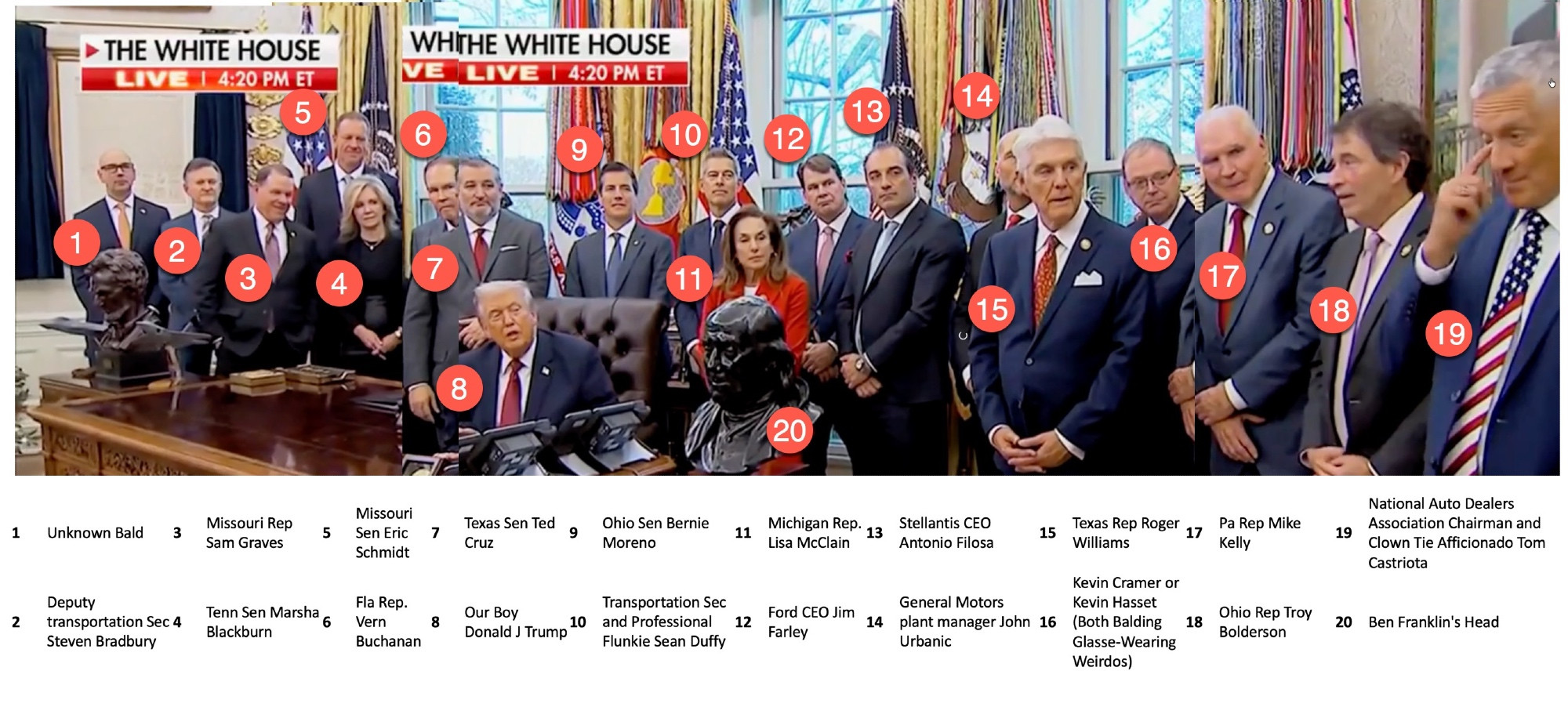
You were right there, CEO Jim Farley of Ford Motor Company, MY company. My humans saw your picture. You are #14–not real visible in this shot, but don’t worry: it’s you.You were all nodding and laughing as the President said horrible, dangerous things about his fellow American humans. Things that could get them attacked–maybe even run into by SUVs like me. You should know that, Mr. Jim Farley.
(Picture ID’s by “Carlg1000” on BlueSky, as shared by Helen Kennedy on BlueSky)
You should have spoken up, Mr. Jim Farley. Said SOMETHING. You’re not an elected official. You’re a guy who makes cars. But you you just laughed and nodded away.
So you agree with the President, Mr. Jim Farley, CEO of Ford? You think Somali immigrants are “garbage”?
Do you have the guts to admit that to all the people who drive Fords like me?
Or do you just hope Ford drivers like my humans don’t notice?
[Note from Ol’ Blue’s human, Gretchen: Please share this photo as widely as possible. And if you have any connection to any of the other humans shown here cheerfully standing by for the President’s evil, racist rant–if they are your representative!–PLEASE call them on it. Literally.]
[As Joyce Vance says, “We’re all in this together.”]
This was my birthday present to myself, fresh from my Virginia-canvassing-and-family trip, and amped up–only a week later–by democracy’s powerful showing in the November 4 elections.
Notice I didn’t say Democrats (though they did well, and I’m glad). Nine months in to this presidency, people on all sides of politics–including no politics at all!–are starting to coalesce around the basic idea that things should work. And democracy, as Churchill famously said in 1947, is “the worst form of Government…except for all those other forms that have been tried from time to time.…” [ellipses added for emphasis]
In other words, for things to work (fairness, food, airplanes–that sorta thing), we need democracy. And when you look at election results more focused on immediate outcome than on party, here are some promising signs:
Maine anti-mail voting measure loses
Progressive DAs in Philly and NYC win
Colorado funds free school meals and SNAP support with taxes on the rich
Detroit elects first woman mayor
Cincinnati rejects JD Vance’s brother after endorsement
GOP Redistricting in Kansas failed
Charlotte approves transit tax
Maine passes gun control
Turnout in blue district US House election in Texas higher than 2024 Pres (thanks to Common Power for this compilation)
See what I mean? I have a lot of company in thinking, the IDEA of democracy is having a moment right now. And for democracy to work, we need all hands on deck.
“Wait a minute,” I can hear you saying. “I loathe phone-banking, and I’m donating all I can to things like food banks and my church. And now you want me to do take on ‘democracy’ too? I am SO not that person.”
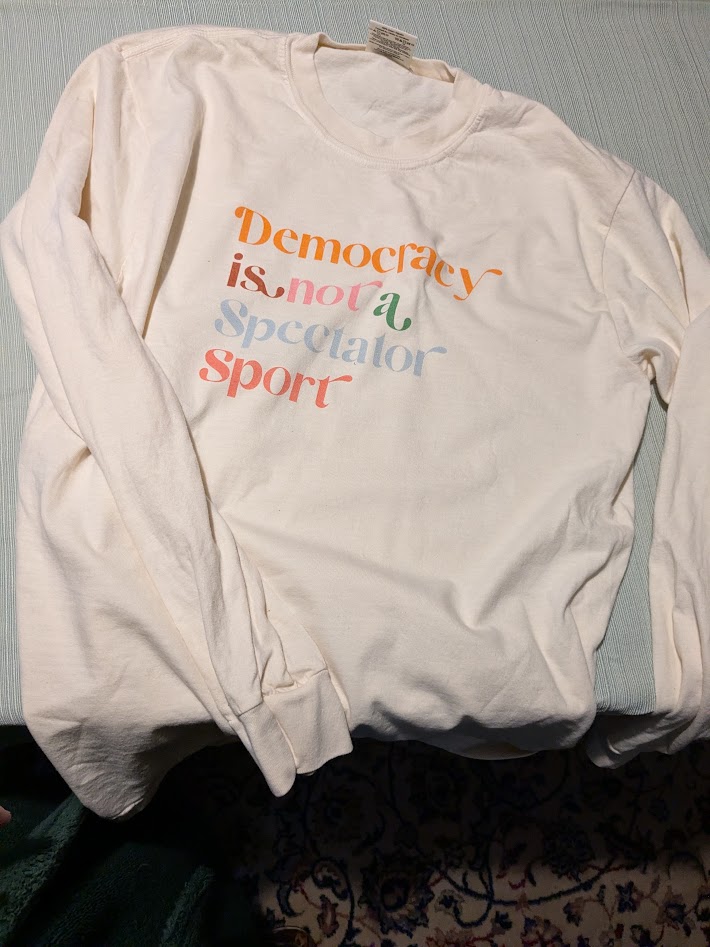
Au contraire. I maintain that if you are looking out for vulnerable people; if you are protecting green spaces or animals; if you are reading to kids, or making art to share, or donating to organizations that multiply those values, you ARE a democracy standard-bearer.
I mean–don’t forget (or underestimate!) voting! Do all you can to keep your loved ones from feeling that voting’s not worth it. Point them to this book if they need a little inspiration…
I’m giving this book to everyone who’ll take it!
On my walk today I stopped to make a roadside bouquet. November in Washington State = pretty limited wildflowers. But the low-rent, multicolor assemblage I collected reminded me, there’s so many ways to be a flower!
You can be bright, demure, prickly, robust, delicate, complex or simple–and you can still call it democracy. Just do SOMETHING, keep doing it, and keep talking about it.
As Joyce Vance says, we’re in this together. And as Gretchen Wing says, “For things to work, we need democracy.”
What are some of your ways of participating? Anything new, anything especially challenging or rewarding, or both? Please share as many as you feel like.
Not that Joyce. Nothing against Dubliners or Ulysses; I just don’t think they’ll help get you through another week of our current presidency. I mean Joyce Vance, author of this book that was waiting for me, hot off its October 21st release, when I got home from my canvassing trip this week:
Mine’s autographed! 🙂
To judge a book by its cover, this one looks boring. To me, though, it looks like mental health. I thought I’d take a minute to explain why.
In 2022 and 2024, I canvassed in my home State of North Carolina, where my folks still live. This year Virginia has some important elections, so I went there (visits to sister & niece a bonus).
Part of Team Fredericksburg on the canvass trail
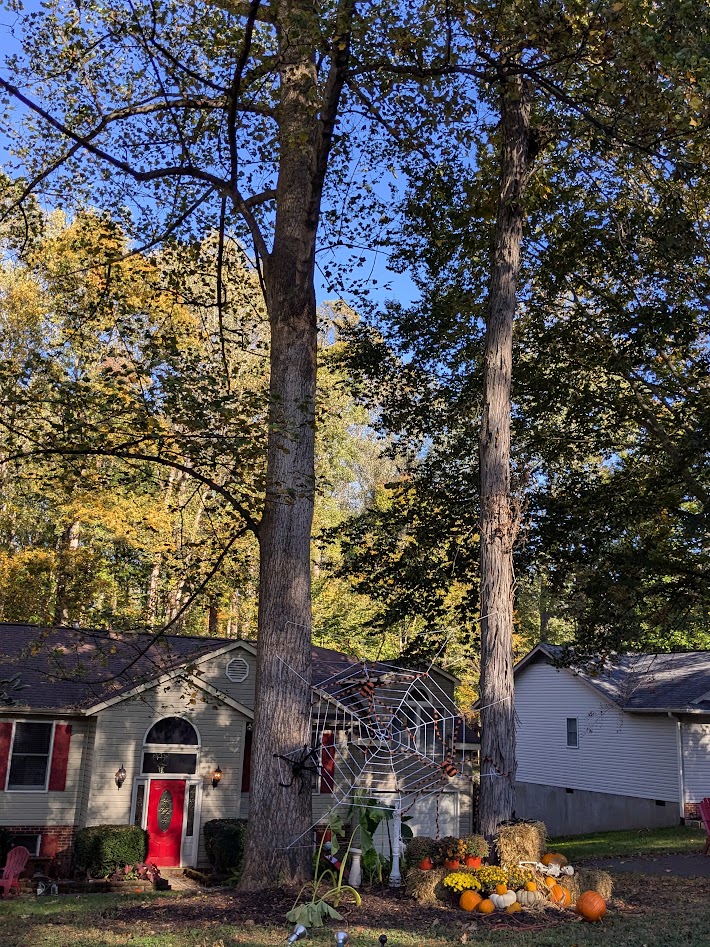
Between doors (we knocked on about 2,000 during the days I participated in Fredericksburg, then Richmond), I split my awe between the lovely big deciduous trees of the east…
O oaks, how do I miss thee!
…and creative Halloween decorations.
(sometimes both!)
But the best part of CP work, to me, isn’t actually the conversations on voters’ doorsteps (though those can be quite moving). It’s the TEAMWORK, the FELLOWSHIP.
especially at a dumpling restaurant at the end of a long day
Which brings me back to Joyce’s book, whose opening line is, “Could I have picked a worse time to write a book about saving democracy?”
My answer is: no, this is EXACTLY the right time. Because now more than ever, we need to know we “have friends everywhere” (as they say on Andor), and we need to get our hands on some how-to.
However, if podcasts are what your life has room for, Joyce is all over that landscape. I first discovered her via Substack, where her Civil Discourse unpacks the week’s latest legal WTF?!! as only a former U.S. Attorney (and current law professor) can. Each post ends with, “We’re all in this together.”
Or you might just as easily find her on the brilliant panel-pod, Sisters in Law…
While I’m only halfway through Vance’s book, I’m happy to report that the final chapter–titled We Are the Cavalry–is chock-full of options for resistance, participation, finding community, pointing yourself towards hope…or, as one heading puts it, “Understand That Protecting Democracy Comes in a Lot of Flavors.” (146)
This is Fredericksburg’s Rappahannock River at sunset. Not a flavor; it just looks like one, eh?
In this moment when the bad guys want us to despair and give up, Vance offers this uplifting reminder:
“Although we may be on our own, we are not all alone. We truly are in this together. We have one another, a community of like-minded people across the country who care about democracy. That may seem to be a slender thread, but it’s how we, like others who have faced similar challenges in the past, are going to get through this.
So, gather your resources and take courage.” (138)
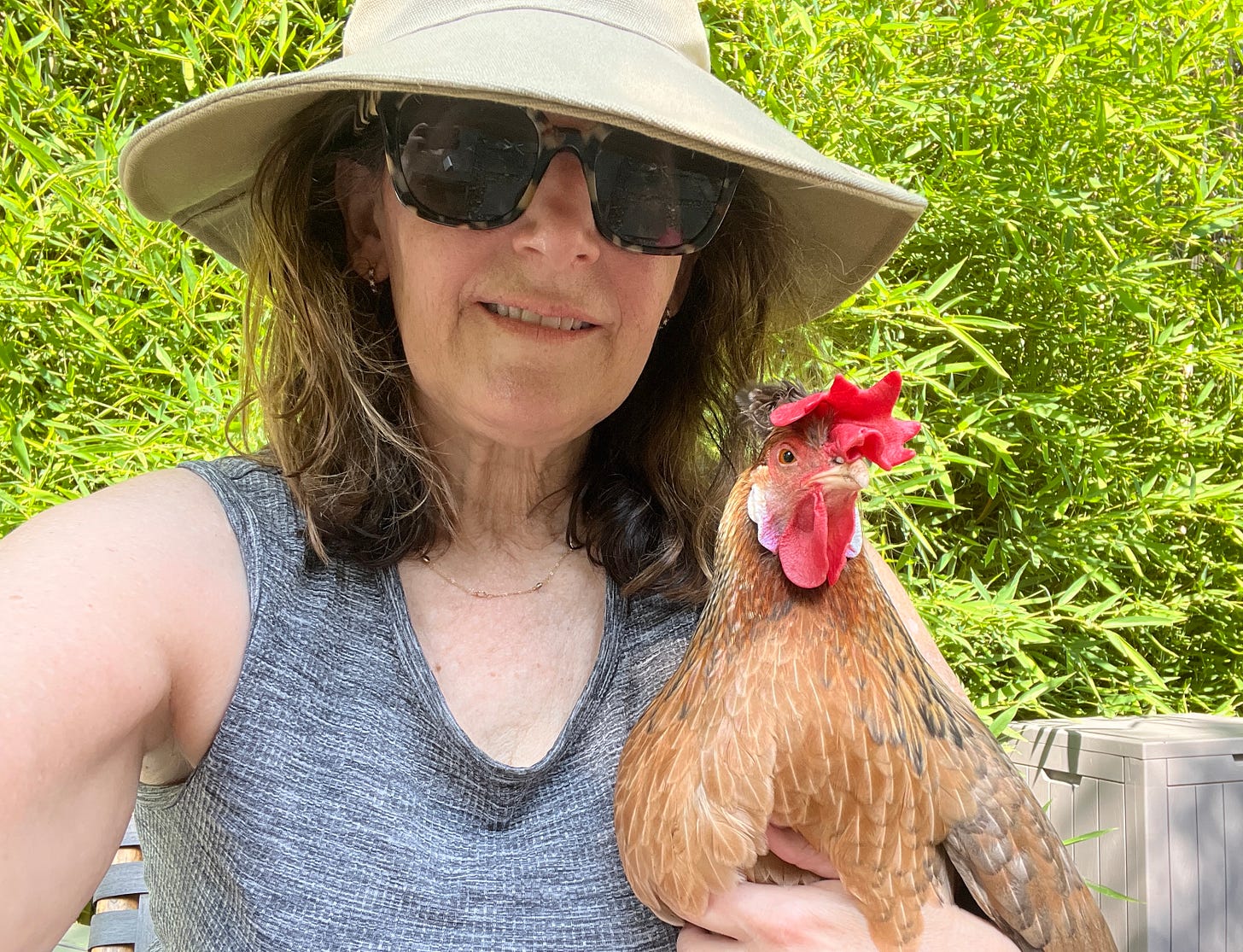
Joyce’s chickens also make appearances on her Substack, so I’ll close with this:
[photo by Joyce Vance]
Do yourself a favor: Read Joyce. [Support her by clicking here to buy her book!] You will feel empowered–because, as she says, we’re all in this together.
No, The Mate and I were not touring a college campus in a fit of nostalgia for our parenting days. We had someone to visit.
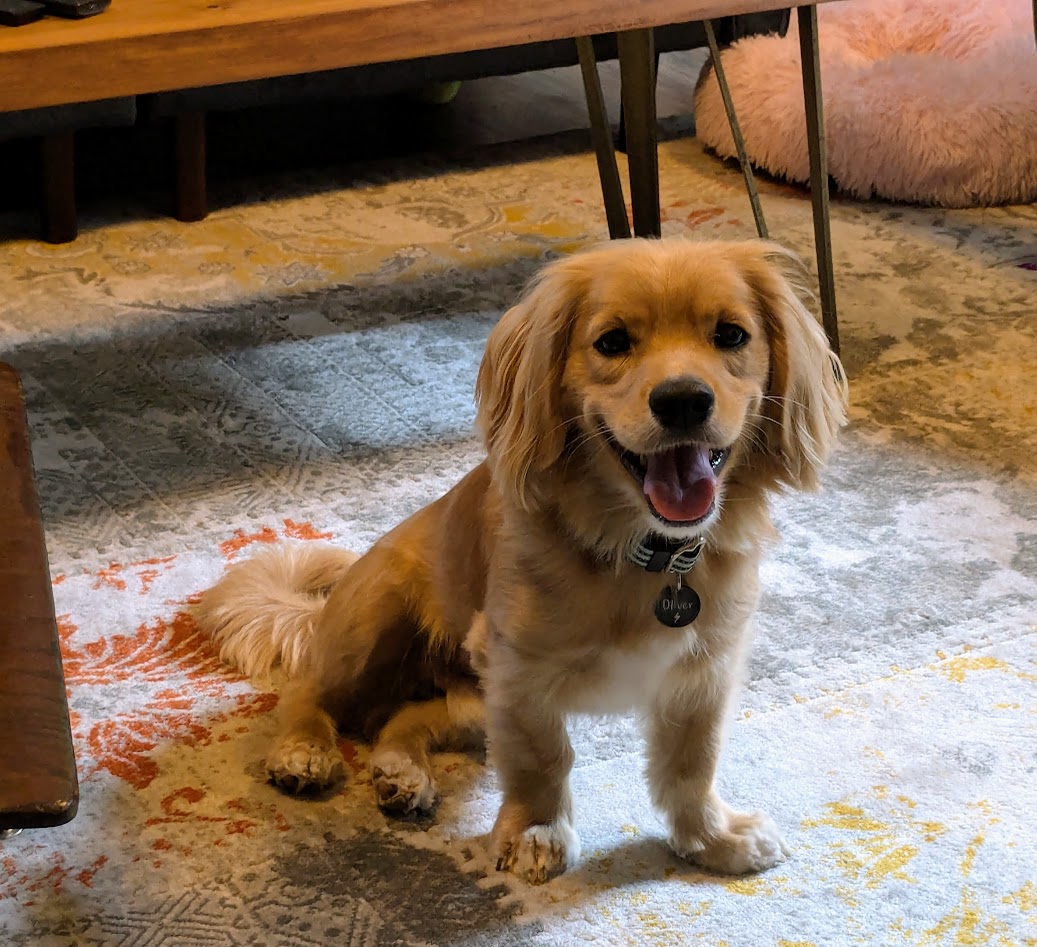
Meeeee!
No, Oliver–Ollie to his friends, which we now are!–did not invite us to Vancouver. But Ollie’s “dad”, a former student of The Mate’s, now practically family–just took an important job @ UBC. Apart from all the other good reasons to, um, get away to Canada just now…we couldn’t WAIT to come visit and see firsthand the new Canadian life of our friends.
…Exhibit A
But of course we HAD to wait. Bust in on a newly-hired student dean in the first week of his new job? Eh…we’ll go visit Bella Coola and Vancouver Island and come back, OK?
So we did that (see 2 previous posts). Now: UBC.
Thanks to their University connections (and their small apartment), our friends housed us in UBC’s own on-campus hotel.
View of campus, from up on the 8th floor!
In case you don’t know–as I did not–UBC is ENORMOUS. 60,000 undergrads, 30,000 grads. A beautiful tapestry of (mostly youthful) humanity to walk through every morning. We only had two days, but I made the most of it, re-visiting two sites I’d spent time in, lo, nearly 30 years ago, when I took our small kids up to Vancouver for a visit.
I well remembered their famous Anthropology Museum…
A wry note: on a nearby trashcan I found these words spray-painted: “Land Back!”
Back then, since my kids’ museum stamina lasted barely an hour (and frankly, that’s about all I can usually manage before sloowwwwing dowwwwwnnn), we went outside to explore. Found a mysterious staircase disappearing down the side of a forested bluff.
“Ooh, where does this lead?” It led to a nude beach–right on the edge of campus! I was so impressed by that, I had to see if the place was still there.
Yep
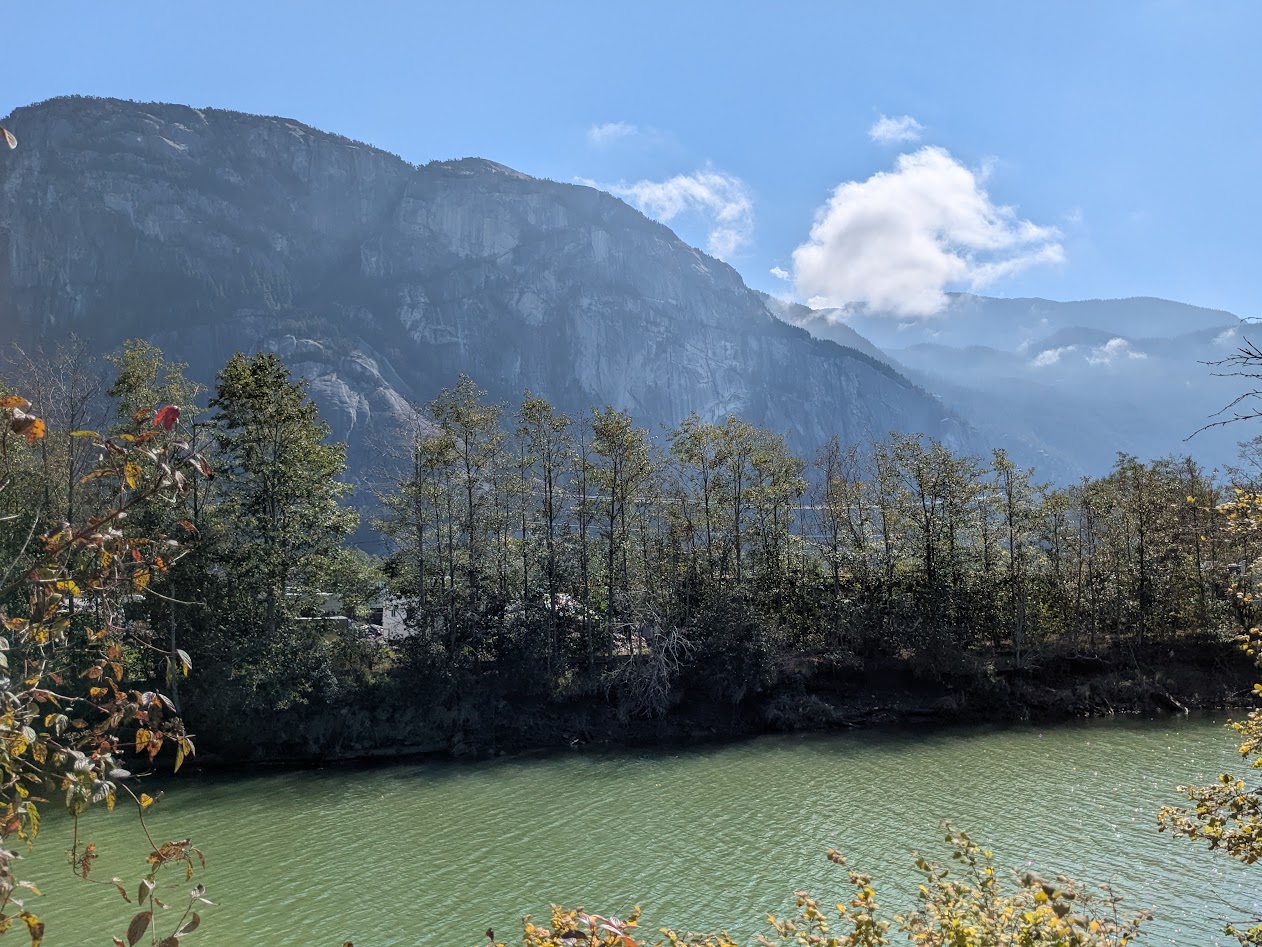
Of course, being brand-new British Columbians, our friends were as eager to explore Vancouver’s environs as we were. So we planned a half-day trip up the road to the town of Squamish, which is halfway between the city and the Whistler ski area. But that description doesn’t do the place justice.
Hopefully this does. The parking lot just shows how integrated this mountain is to the town.
We didn’t do much there–just ate lunch, took a walk to the base of the inlet…
Mountain. Construction lot. Inlet. Y’know, just regular town stuff.
…remembering to turn around occasionally to appreciate the town’s background:
Behold Mt. Garibaldi
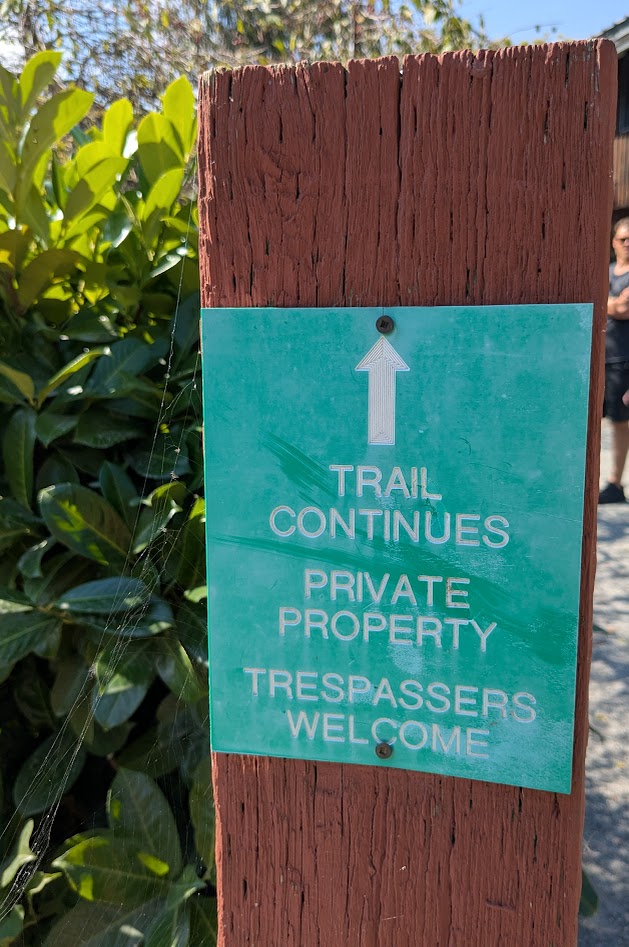
…and noticing inviting little quirks, like this sign:
Canada, you are so stinkin’ adorable!
Don’t know if this will be the death of that cute little town or just its next iteration, but I do have to note the presence of an ENORMOUS development of apartments (or condos?) just getting going, behind this pretty mural…
CanNOT blame anyone who wants to live here!
Back in Vancouver, we spent one last evening with our friends, feeling SUCH gratitude for being able to sip from their overflowing, British Columbian cup.
Me, right? I’m the cup!
Yeah, Ollie, you kind of are. But I feel like I should close this final B.C. post with something a little more…conclusive-feeling, eh?
like this
So that’s it for BC, this time around! The Mate & I are applying for Nexus, though, so we can travel back & forth more often to see Ollie our friends.
You’re halfway up Vancouver Island. You only have a few days before heading back to the mainland–not enough time to get out to the Wild West Coast, nor down to Victoria. Where do you go?
How ’bout here?
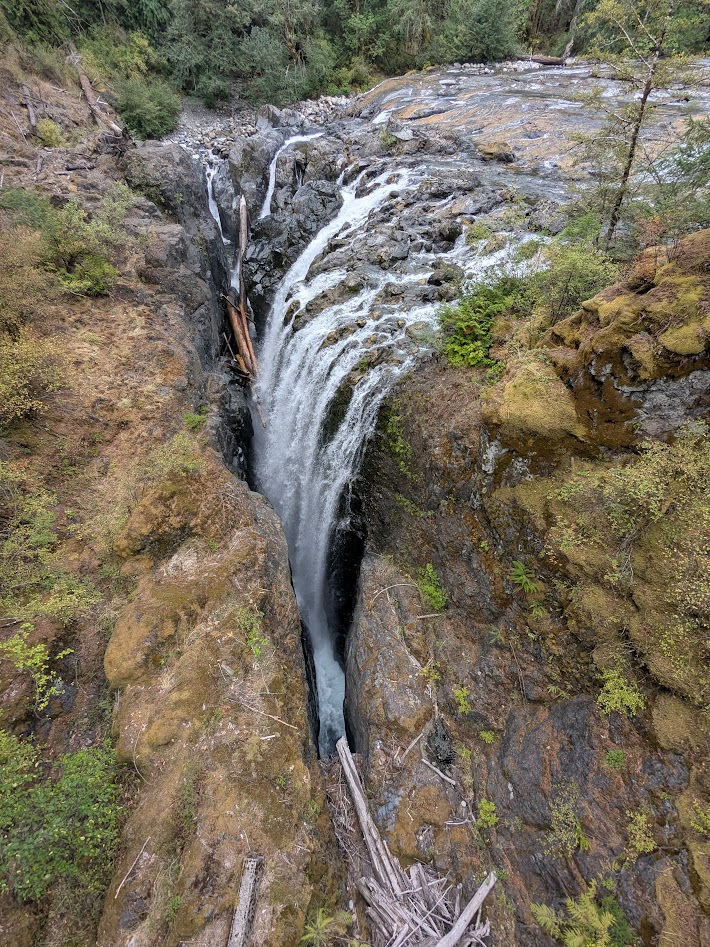
This is Englishman Falls Provincial Park, just a hop & skip off the main highway between Campbell River and Nanaimo. And yes, that disappearing waterfall is even more insane in real life. Here’s what it looks like face-on:
Hold up–WHERE is that river going??
…and from the top, just above the drop:
Who, me? Just a boring old clear Canadian river…
That little park was one of several blips on the map of east-central Vancouver Island that, in classic Canadian fashion, fail to call attention to themselves…until you are standing there with your jaw a-drop.
Campbell River–the actual river for which the town is named–is dammed, but not only does it offer the salmon a big side-channel to bypass the dam, it provides guardians for those fish on their passage:
Not as good as a wild, free river–but way better than nothing
Further inland, Strathcona Provincial Park certainly shows up on the map, but this little waterfall? We only found it when directed there by a volunteer docent we happened to meet.
No one else was around. Just me and that pool.
We’d intended to camp in Strathcona, but the weather went sideways. No problem backpacking in the rain, but wet car camping? That just feels stupid. So we got in a short hike…
(I can just imagine that trail repair crew going, “Eh…good enough! Let ’em climb.”)(forcing myself to resist the biggest Chicken-of-the-Woods mushrooms I’ve ever seen!)
…and rode our bikes along the 14-mile long (and unfortunately-named) Buttle Lake…
Bit wet; still pretty
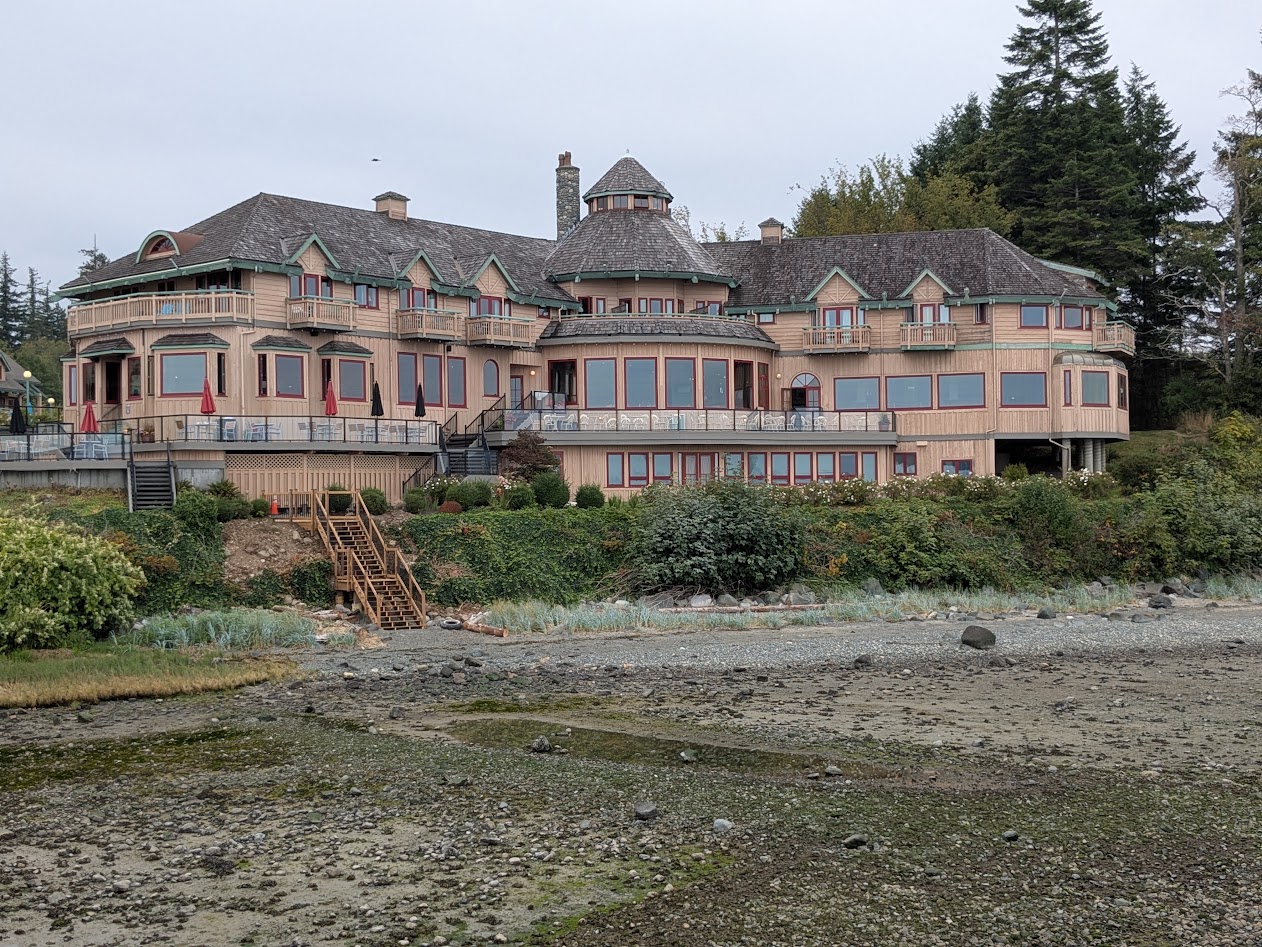
…before heading back to Campbell River, where we’d scored one of those cheap hotel deals at a NOT-cheap hotel, Painter’s Lodge.
as seen from the lodge’s dock, at very low tide
On that dock we found this map–WONDERFULLY helpful for orienting ourselves in BC’s bewildering array of islands:
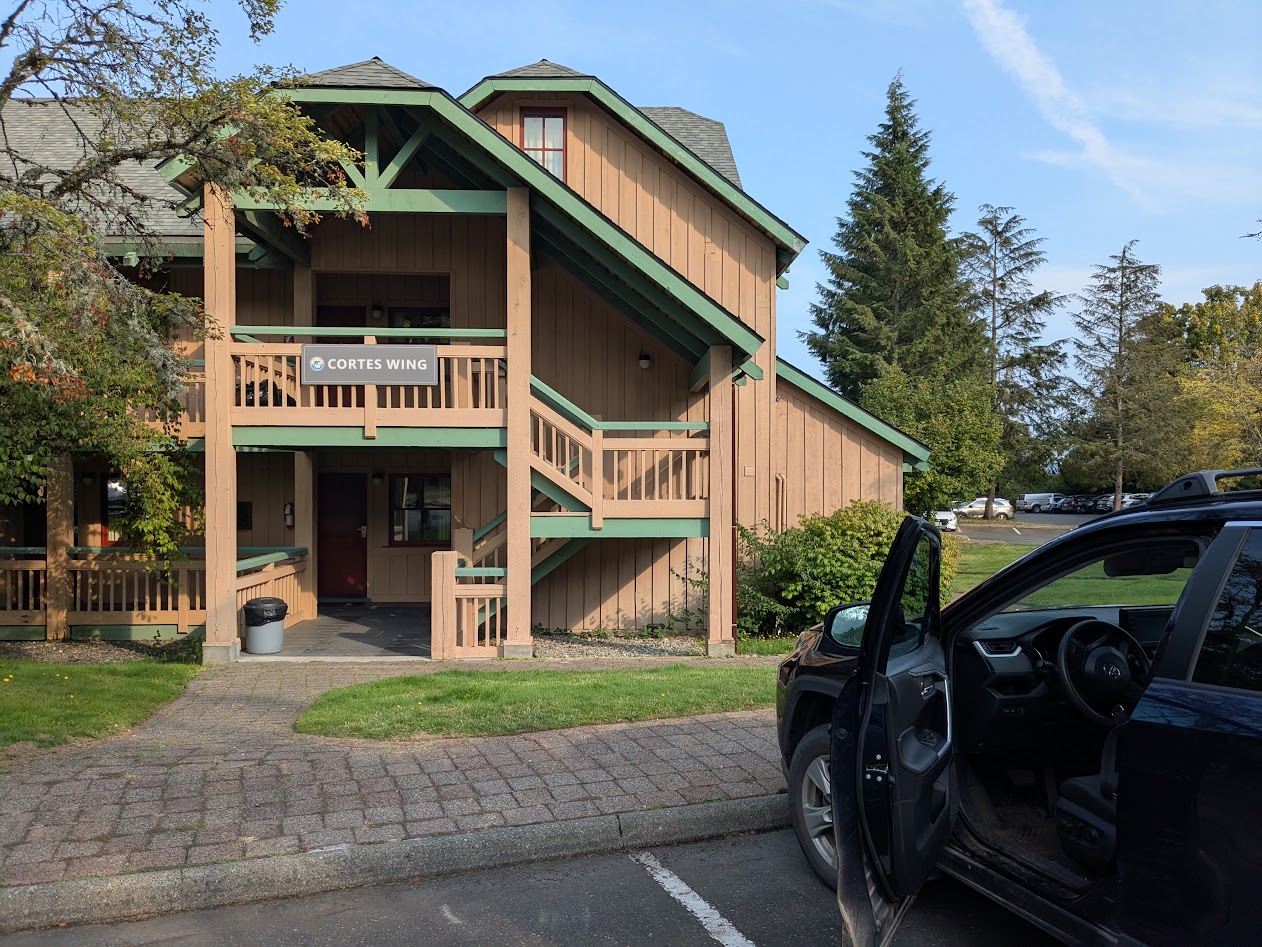
Not our usual type of stay, but we took full advantage. Especially because the part we stayed in seemed to be a mashup of our last name & our favorite BC island:
Of course the rain stopped when we got there. But then it came back. Phew.
Luckily for us, they let us cook our cheeseburgers out in the patio area!
“This counts as camping, right?” (Quadra Island in the background)
Our last day, after those amazing Englishman Falls, we found a very cool bike path–along the highway, yes, but screened by bushes & trees, with plenty of curves and hills giving it a very adventurous feel.
Some of those bushes had blackberries on them, and I was shocked at how sweet they still were, in September! So: lunch.
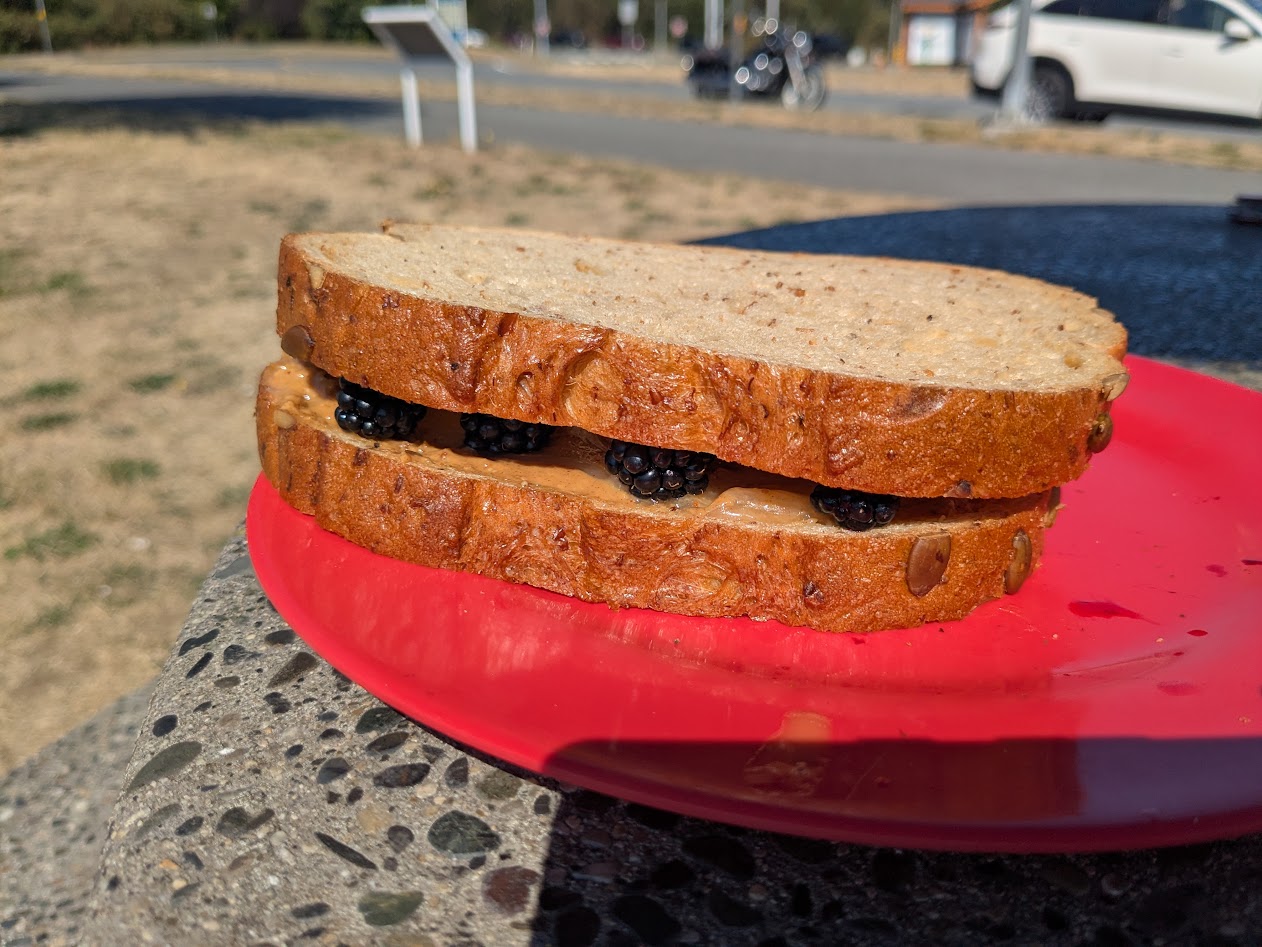
Peanut Butter, Honey & Blackberry Sammy!
Our final night on the Big Island (move over, Hawai’i–actually, never mind, you’re already pretty far over) we spent in Nanaimo, in order to catch our ferry next morning. I walked all over, discovering the best kind of quirks, like this Flower Wall:
Just an apartment building, far as I could tell
Along with flowers, Nanaimo boasted its own poster-of-random affirmations, because I found a number of these type of signs, here and there:
Why thanks, Nanaimo. I’ll try!
Next week, the exciting BC conclusion: University of! Thanks for riding along.
Actually, Cortes Islanders would probably prefer that “quirky” label, while we found Quadrans (Quadrants?) plenty cordial. Either way, both islands, between BC’s mainland and big Vancouver Island, became big highlights of our British Columbia wanderings in 2018, and we were overjoyed to wander back.
Whale-com back to Quadra!
With a week to spend, between our Bella Coola adventures and our visit with our friends in Vancouver, we headed over to Horseshoe Bay for the big ferry to Nanaimo. BC ferries are SO nice. And, unlike Washington State’s they run on time. And they actually run! (#ferryEnvy).
In Horseshoe Bay I was thrilled to see a healthy batch of young purple sea stars.
Since these critters have been suffering through a terrible die-off in the Salish Sea, I was super encouraged by these guys.
…and super thrilled by these Horseshoe Bay treats: seriously the best doughnut I’ve ever eaten!
After our 90-minute ride to Nanaimo, we drove a couple of hours north to Campbell River for groceries, then a much shorter crossing on a much smaller boat to Quadra Island. The We-Wai-Kai Campsite there is run by the First Nations People of the same name. Pleasant place, and pleasantly close to Rebecca Spit, a Provincial Park perfect for short bike rides and strolling.
Why do we call long, skinny points of land “spits”? Anyone?
Much of Quadra, we came to remember, is a bit steep for biking, at least for a couple whose combined age is edging close to 143 years. Since we’d be passing back from Quadra automatically on our return from Cortes…
(Courtesy Wikimedia) Ferry goes: Vancouver Is. to Quadra, then from the opposite side of QI to Cortes
…we put a pin on some hikes for our return , and headed over to our old Cordial friend…
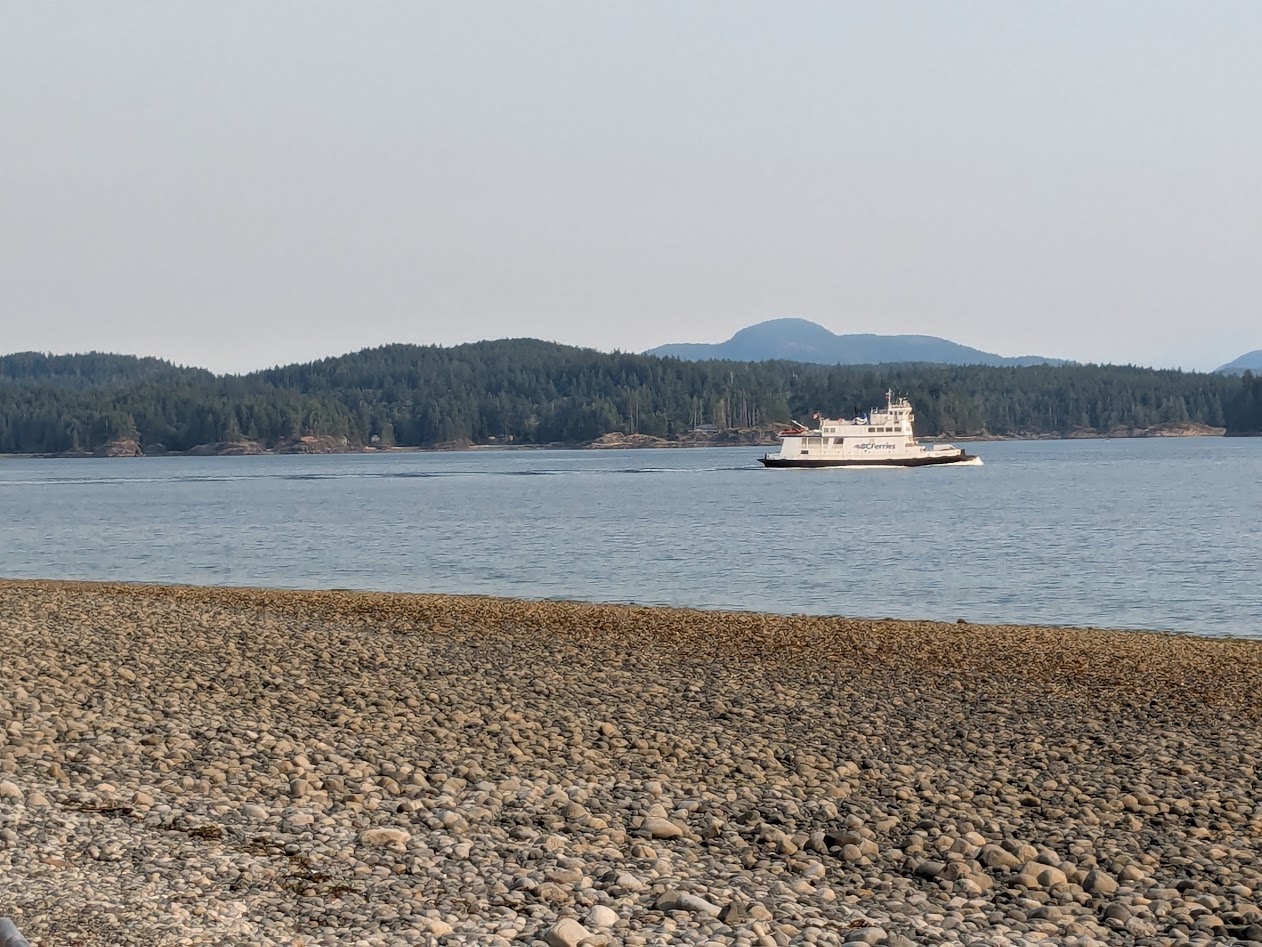
…on an even smaller ferry!
On this 40-minute ride (reminiscent of our Lopez Island commute), we were treated to a pair of humpback whales. (Too far for good photos, but great views through binoculars.)
For our picnic lunch, we defaulted back to Manson’s Landing, remembered from 7 years ago.
This time the tide was out. WAY out.
Such healthy-looking tidal creatures! No sea stars…
…but I’ll settle for sand dollars. Worth every sand penny.
This trip, instead of springing for the extraordinary, but expensive Hollyhock Retreat Center, The Mate and I stayed in a modest motel with a kitchen. It was a stone’s throw from a set of community trails we’d missed last time…
Steep but worth it!
…not to mention an enormous, clear lake, shallow & warm enough for real swimming.
not pictured: swimming Wings
That huge log and those background cliffs, speak of Cortes’ drama. But its Friday Market, complete with music, homemade treats and upcycled clothing, speaks of its community. “Cordial” indeed. I didn’t want to interrupt the vibe by taking photos.
…we found purple sea stars! So many healthy specimens!
Recovering from Pisaster Disaster (#LatinNamePun)
Returning to Quadra–the ferry workers kindly squeeeeeezed us onto the boat–
Phew! Thanks!
…we determined to find an extra-special way to spend the day, because it was our wedding anniversary.
#38, since you asked! 🙂
First we found a fairly level hike to a lake; later, we drove to a deserted cove for another picnic. I could write a whole blog post about Peanut Butter & Honey sandwiches…
…but I won’t. This maple leaf caught my eye, though–emblematic of all the Canadian flags we saw flying across BC (#IWouldTooIfIWereThem)
We’d hoped to spend our anniversary night at the sweet inn we stayed in in 2018, but they were full. So we settled for dinner there.
Happy #38, babe.
Meanwhile–on that quirkiness question? Look what we found lurking around the parking lot of our Quadra motel!
“Clever girl.”
There were about a dozen of these, obviously by the same artist who made that campground whale…
…not quite life-size, but close! That’s a LOT of driftwood.
The final piece of “quirk” that caught my eye on Quadra was this sign outside an ice cream parlor:
When you consider that Bowie died in January 2016…well…hard to argue w/ this, eh?
Thanks for traveling along! Next time: back to the Big Island–Canadian version. Keep those maple leaves flying!
For those of you who read my 2023 post on the various meanings of “BC”–don’t worry, I won’t subject you to more of that. I just couldn’t resist a nod to one more extraordinary BC discovery.
This place: Bella Coola, BC
Since The Mate & I learned that a close friend got an amazing admin job at UBC in Vancouver–just up the road from us–we’ve been itching to go visit. Of course, since said friend’s job is just starting, we realized we needed to give him a little time before popping by…but by then our fires were lit. Maps were out. Venues were calling.
So we heeded the call.
Yes, that’s a glacier, as seen from an airplane. I’ll explain.
Bella Coola is accessible three ways: by ferryboat–if you go to Vancouver Island, drive all the way up to Port Hardy, and ride the ferry for 16 hours. By car–if you drive 350 miles north from Vancouver, then turn left and drive another 250, 60 of which is gravel, including a super-sketchy portion known as “The Hill.”
photo courtesy Wikimedia, by some driver braver than I am!
Or you can fly. That’s the option we chose, and, despite the expense, we were SO glad we did. The sight of so many still-healthy-looking glaciers filled me with joy (despite my very scratchy window). And our descent…!!!
Not for the faint of heart…but worth the ticket if you love thrills. And peaks.
I grabbed this shot of the cockpit of our 20-seater plane, just to show the narrowness of the valley we descended into:
Green = safe. Yellow = LOOKOUTFORTHATMOUNTAIN!!!
Once down, The Mate and I looked around, then looked at each other and said the same thing: “Didn’t we just see this in Yosemite?”
Only this is no national park; this is where folks LIVE. That building? It’s an elementary school.
The town of Bella Coola is at one end of a loooooong inlet, giving way to a looooong, skinny valley, which ends in Tweedsmuir Provincial Park, and The Hill. One thing we quickly realized: with so little flat ground, hiking trails for our aging bodies were somewhat limited. But we managed.
This one included extra perks: suspension bridge, whee!
A couple of them I did alone, like Lost Lake:
Found it!
But we didn’t let the lack of long hikes interfere with our awe and delight about the place, from large features…
…to small:
I even got to enjoy a fun cultural scavenger hunt, thanks to a Lopez Island friend who told me her Norwegian great-grandpa was buried at a Lutheran church in Bella Coola. I told her I’d try to find his grave, but all I found was an old-looking church, not Lutheran, with no cemetery, and this (closed) cultural center:
Anybody? Anybody?
“Sorry,” I told my friend, “I’ll keep looking.” But meanwhile–forget humans, we had bears to find! September is full salmon-run season, so we hoped to see both fish, and fishing bears. Not in the Bella Coola River, which is thick with glacial silt…
(still lovely, especially at sunset)
…but in its clearer tributaries. Nor were we disappointed.
Salmon on the left: alive. Huge, upside-down salmon in the center: Thank you for your service. RIP.
Our first morning, we drove Up Valley to Tweedsmuir PP, and were promptly rewarded by seeing a pretty black fox (not pictured; I was driving), followed by a mama bear with 2 cubs.
I managed to pull over fast enough to capture Cub #2, following her fam into the forest.
The best bear-viewing spot, that first morning, yielded no bears.
Still a pretty good spot to hang out. No complaints!
But the next morning, as everyone was looking upriver at the most obvious fishing spot, a gravel bank, I happened to glance the other direction and spotted this fella, soundlessly swimming from OUR side of the river.
I repeat: he was on OUR side. Just behind us.
We all did like this person here, and activated our cameras. Most of what I took were videos–I wanted to capture sound and movement–but I did get a few stills (apologies for my lack of zoom).
Pointy ears; no hump; flat face = Black, not grizzly. Still a big guy!
Actually, during the salmon run, it’s obvious the bears have zero interest in attacking humans. Nice, oily fish are what they crave. What a gift, to be able to sit and watch them move, without feeling like we should be backing away.
We saw one other bear during our 4 days in the valley. But plenty of other wonders too, especially when we signed up for a boat tour…which also, surprise! solved the mystery of my friend’s great-grampa’s missing grave.
Our boat captain was full of history, with photos. Turns out the Norwegian families who arrived in the late 1800s built their settlement at the north end of the inlet…I’m guessing to get as far away as possible from the Nuxalk People who lived there.
See the old settlement? Nope. Because it’s gone.
Joke was on the white folks. In 1936, about 40 years after building their settlement, the Norwegians saw the whole place flooded away and destroyed by a king tide. All they could save was their church, which they pushed with canoes over to the road, then carried Up Valley…where it sits today.
Photo courtesy of Captain Daniel
No longer Lutheran, and no cemetery, but this was the church I’d been looking at! I was able to share this story with my friend, both of us agreeing her forebear’s bones now rest “full fathom five” in the inlet.
Capt. Daniel also stopped at the site of the Norwegians’ old school, explaining how the kids had to hike along the bluffs above the inlet twice a day to attend.
Far left: site of old school. Far right, not quite in the frame: site of village where kids lived. Yikes.
Capt. Daniel, by the way, had the most awesome First Mate: Buck, the Golden Retriever.
Ahoy! Who’s a good boy?
When we arrived at a site, no ramp was lowered: Daniel simply butted the prow against any handy rock…
…and off we clambered. Gingerly.
Buck did it a little quicker.
Our first stop was a hot spring. Have you ever sat in one that didn’t smell like sulphur? We hadn’t. It was MAGNIFICENT.
The big curvy thing above me is a cedar branch.
Here’s the view from Nature’s Best Hot Tub:
ahhhh…
Wait. Is that First Mate Buck, asleep on the job?
Tough life.
When we got to the next drop-off site, our guides stayed in their roles: Daniel dropped us off and went fishing; Buck led us to the Big Cedar Tree.
Seriously. Not a guide dog–a dog guide.
“Wait up, Buck!”
Turns out Buck knew the way, all right.
“You’re not even capturing the whole tree in this frame.”
How about this?
That’s better.
Oh, that boat trip. We had waterfalls…
Can we get a little closer?OK, close enough!
…ancient Nuxhalk pictographs…
See that reddish part of the rock?That’s supposed to be a person. Telling visitors this land is OCCUPIED, thanks.
…and more glaciers, this time from below.
Still can’t get enough.
Before we left the valley, we spent some time in and around the town of Bella Coola itself, where the Nuxhalk culture felt pretty vibrant, at least to us outsiders.
I only wish I could have learned to pronounce that.
A nearby grove of cedars, some ancient, bears the marks of age-old cultural harvesting, both bark…
Thank you!
…and even wood, all without damaging the tree:
So much to learn here.
The last two days of our trip, the wind shifted and the valley grew smoky. We learned of uncontrolled wildfires to the east; Rt. 20 (The Hill) was closed. When it came time to fly out, this time we stopped in the tiny town of Anahim Lake, and got a good look at the fire-threatened sky for ourselves:
Not pictured: the ash falling from the sky
So after that sobering glimpse of what our planet’s facing, it was doubly gratifying and relieving to see those glaciers from above.
Restraining myself from quoting Robert Frost here…I’ll just say, “Hang in there.”
Next up: More BC! Islands, this time–the littler ones. Thanks for coming along.