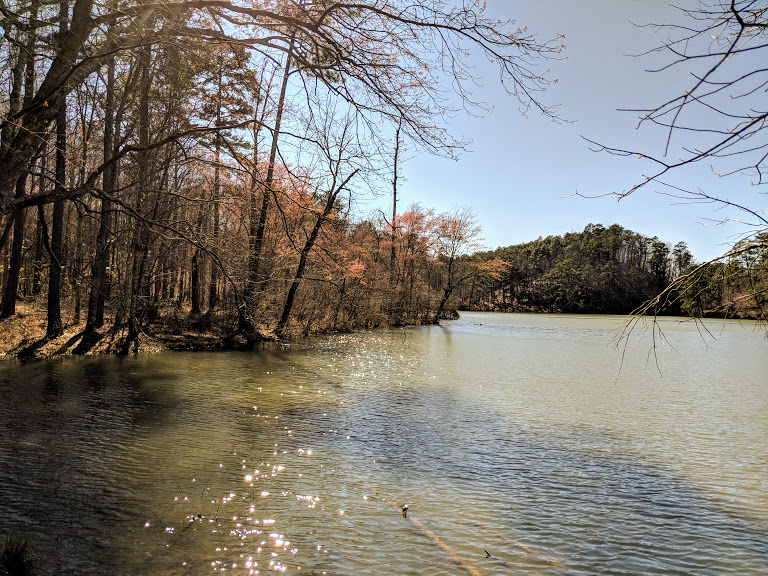
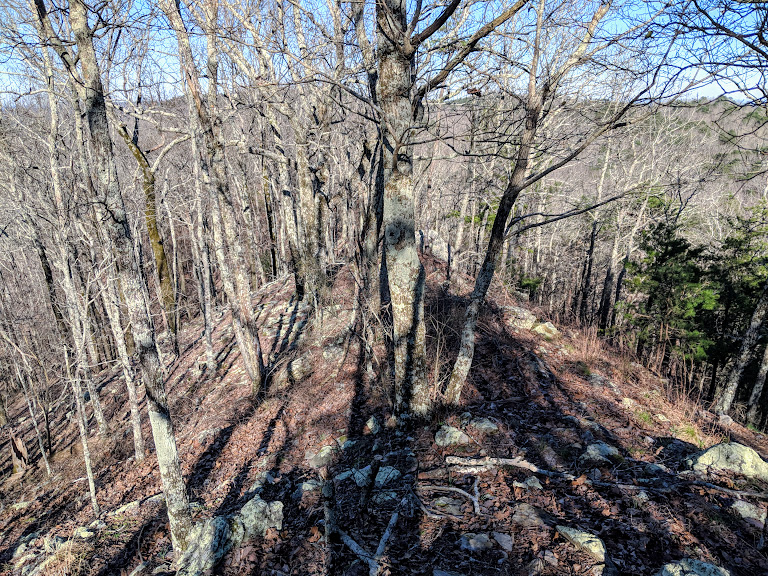
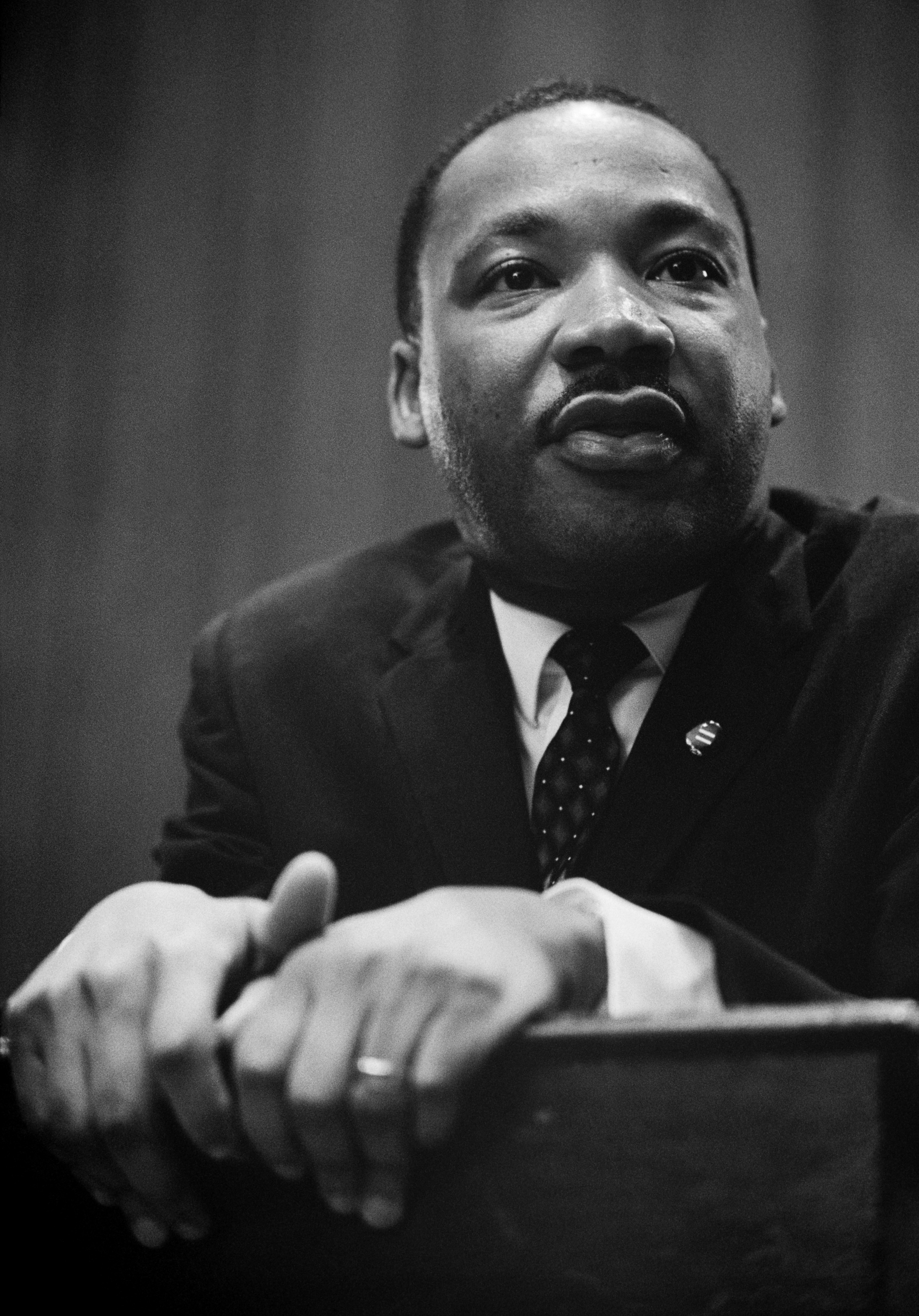
Alabama Shade: My Mini-Civil Rights Pilgrimage

“Throwing shade” on someone is bad. So is calling something “shady.”

But in July in Alabama, the shade is where you want to be.

Once my Amazing Mom had finished her track meet and we’d all gone out to brunch (at Waffle House, where else?), the five of us–me, parents, sister, brother-in-law–found ourselves with several hours of free time before their flight back to North Carolina, and nowhere in Huntsville’s 95-degree humidity that we wanted to be.

We’d already gone to see the big rockets. The local botanical garden looked pretty online, but most of its pathways were out in full sun. No thanks.

Then my sister found us Monte Sano State Park–a little mountain just outside downtown Huntsville.

complete with Japanese tea house!

There’s nothing like a mature hardwood forest for real shade, and this one was up a thousand feet or so–easily 10 degrees cooler than town. The park even boasted those wonderful New Deal-era CCC cabins The Mate and I always loved to discover on our Road Trips.

Not pictured: all the birdsong in these woods

We strolled; we lingered. We sweated a LOT less than we would have, anywhere else in Alabama that day…

…some of us stretched our hamstrings…

…thanks to the shade.

Mid-afternoon, well satisfied, I dropped my fam off at the Huntsville airport and continued on an errand of my own. Yes, I could have booked my flight from there, but the connection via Birmingham worked better for me. And Birmingham carries a weight of history that I wanted to feel again.

Except it was Sunday: all museums closed. So I made another plan. I decided to take a 90-minute detour through the small town of Anniston, where I knew the Freedom Riders Memorial would still be accessible, Sunday or no.

Not pictured: the beautiful, green, rolling lushness of the Alabama hills I drove through alone, wishing I could take photos with my eyes.

Also not pictured: the Sisters in Law podcast I was listening to, in honor of Professor Joyce Vance, my favorite legal explainer, who lives and teaches in Birmingham. (Click her name to follow her “Civil Discourse” Substack!)

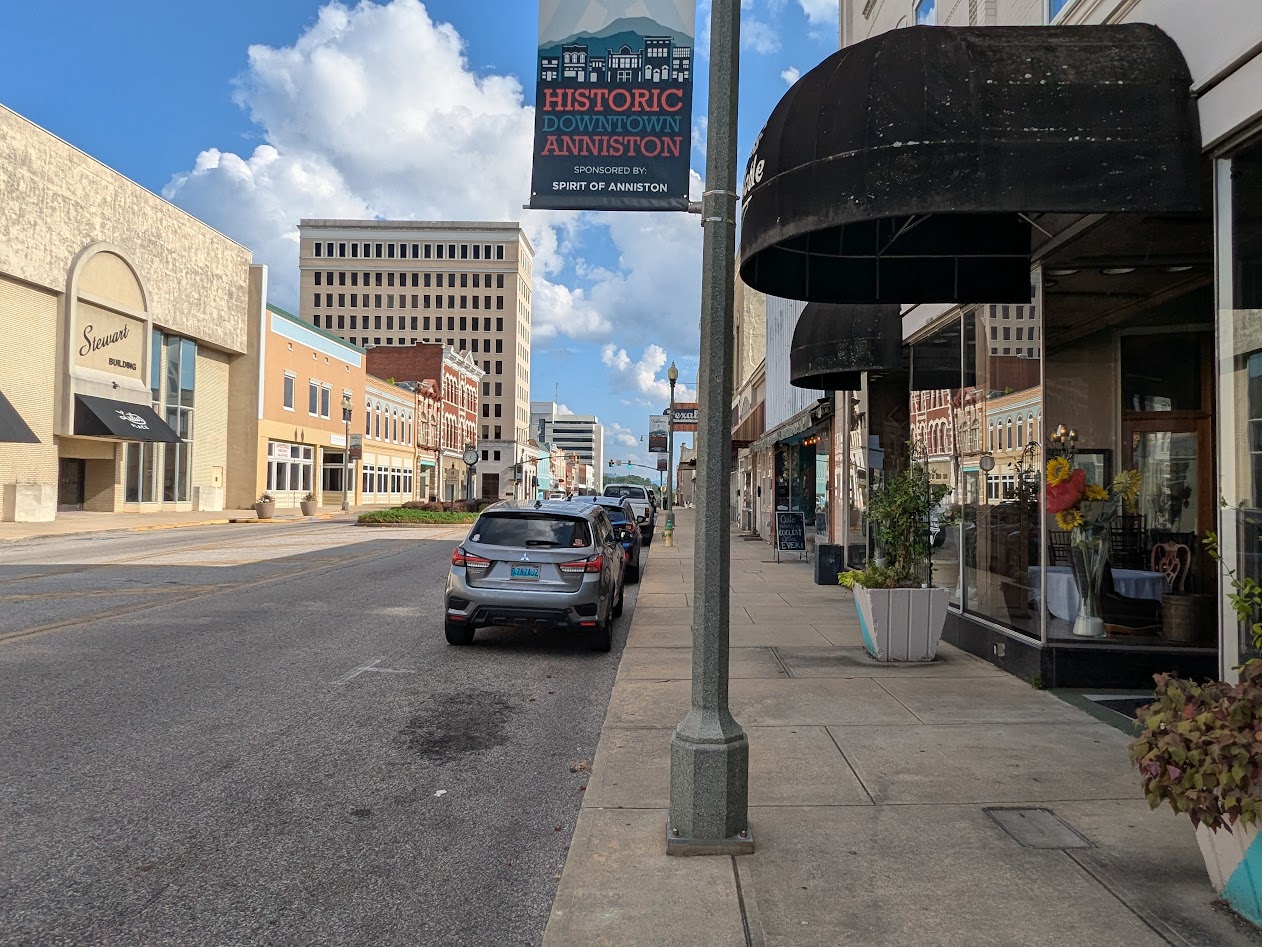
My first view of Anniston reminded me of the narration in To Kill a Mockingbird: “an old town…a tired old town.”

Hopefully the emptiness was mostly due to it being Sunday…but I wasn’t so sure.

The memorial was tucked into an inconsequential alley, next to what had once been the bus station.

Note my giant rental car parked across the street.

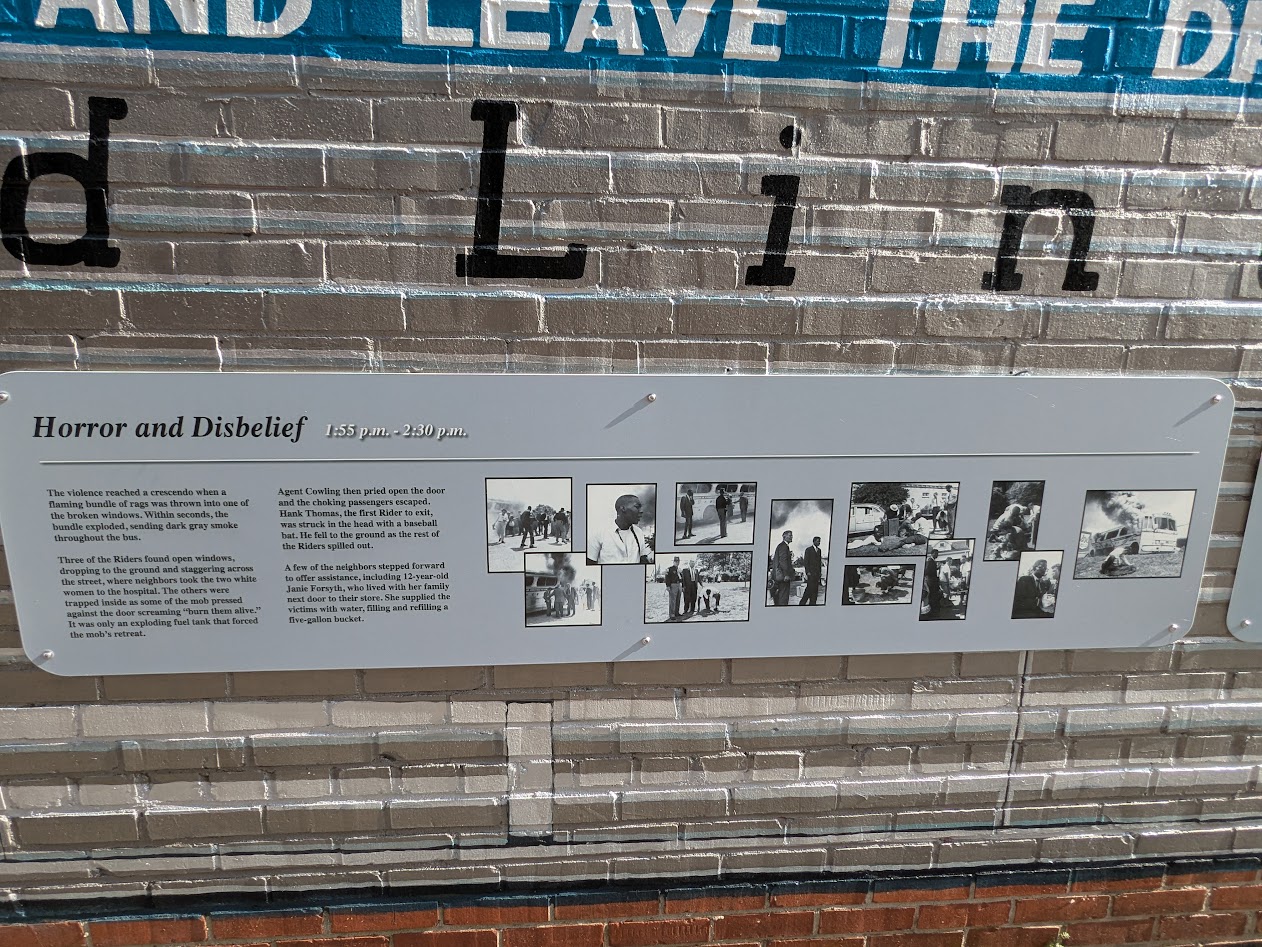
Inside the alley, the exhibit came to life.

Each panel of the bus explained the events leading up to that spring day in 1961. I read them all, but for purposes of brevity, didn’t include the whole background to the event, which you can read about here.

I’ll let the panels speak for themselves, assuming you can expand them on your device.

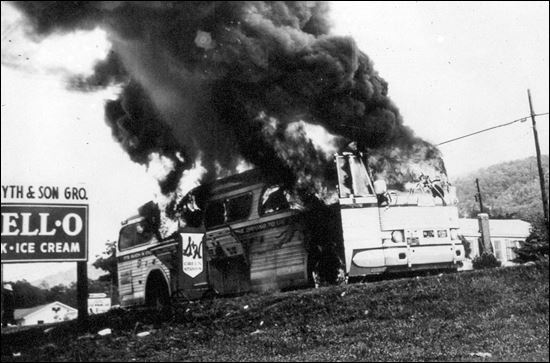
Did I learn anything new from this exhibit? Only the small fact that the actual firebombing of the bus had occurred a few miles outside of town–after the local cops made the KKK mob let the bus leave, only to abandon driver and passengers to their fate as the KKK followed.

They had already slashed the bus’s tires. They knew it wouldn’t get far.

I still can’t comprehend how no one died that day.

(Photo courtesy Wikimedia)

But who, in the moment, is really ready to die by violence?

I needed a walk in the woods.

Such beauty. Such peace. Such irony in these Iron Hills.
“This little light of mine, I’m gonna let it shine…”

Of Moose and Meaning: When Politics Meets Mountains…Mountains Win

Hmmm. Turns out I’m feeling a little conflicted about this getting-back-to-blogging thing.

Seriously? After just two weeks? Why?

Because…I went on a road trip.

So?

So, I’ve always blogged about my road trips! I loved sharing pictures and stories. I think I’m secretly a travel blogger at heart.

What’s wrong with that? You love travel blogs.

Yeah, but I just made a commitment to blog regularly about some of the social causes I care about…making amplification my this-is-all-I-can-do-right-now “contribution.” I can’t just interrupt that for travel photos, can I?

Why can’t you do both?

Nah. It’d be weird.

How d’you know until you try?

*sigh*

Yeah, you’re probably right. Forget I suggested it. I don’t think you could handle the balance. I mean, it’s not like you’re studying writing right now or anything…

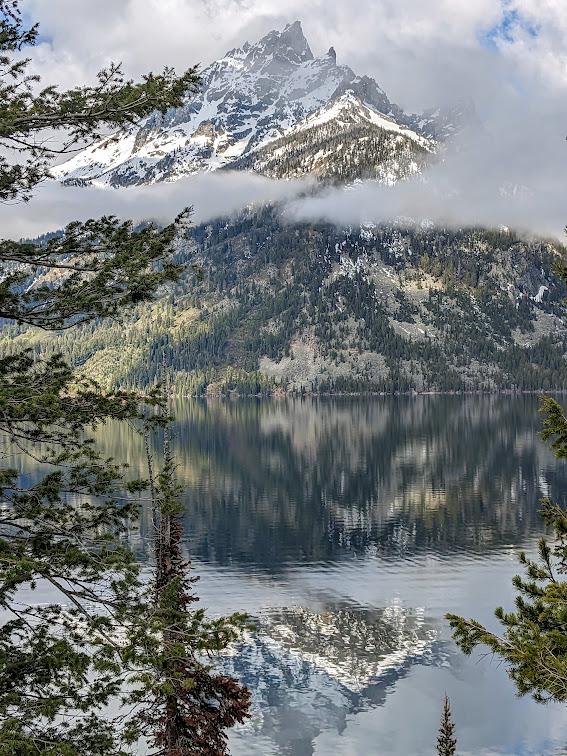
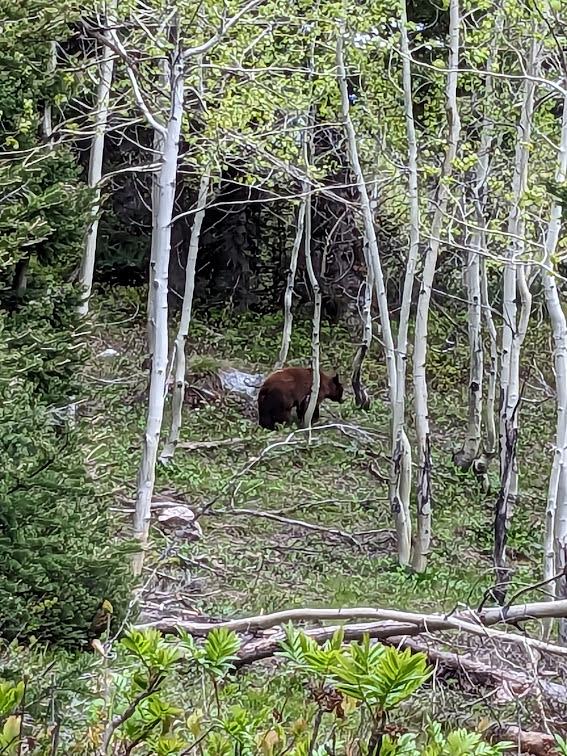
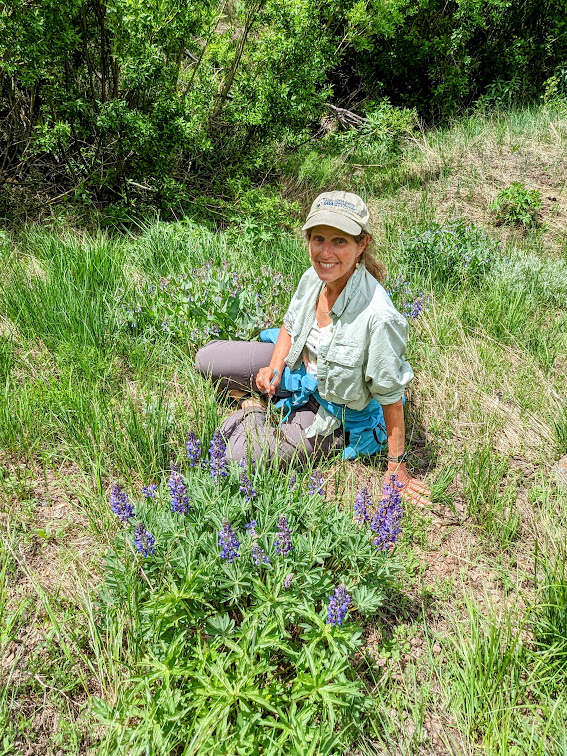
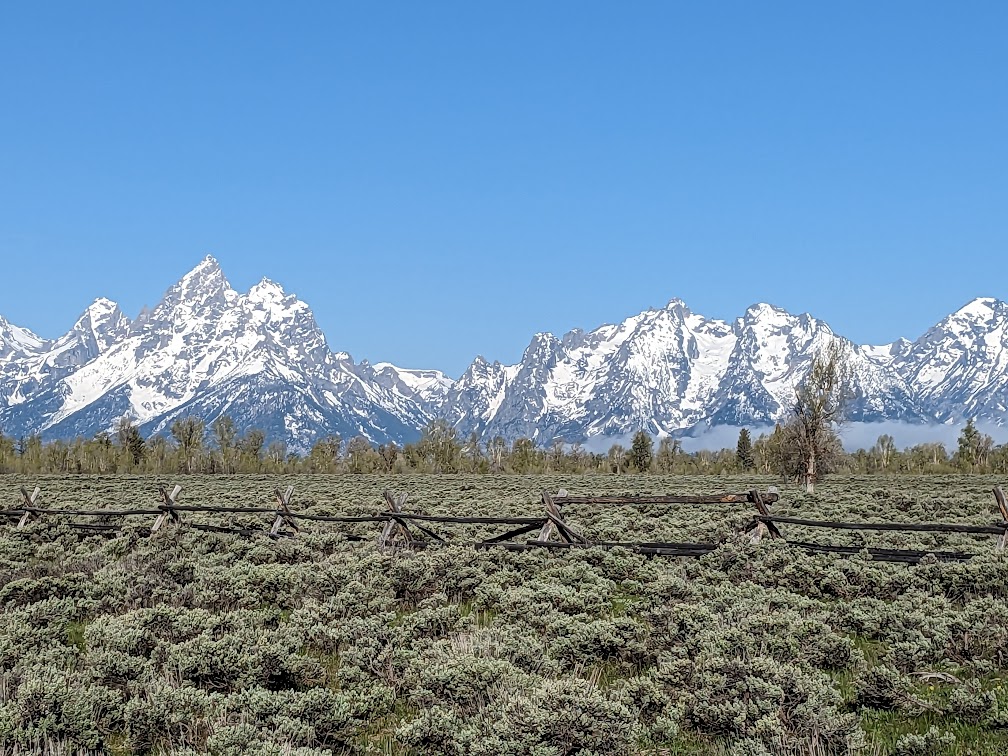
FINE. *deep breath* Listen up, people! The Mate and I just took a 2-week discovery jaunt through Wyoming and Idaho, two states that don’t tend to support the progressive political agenda I support. But they do have three things I DO support, wholeheartedly: mountains…

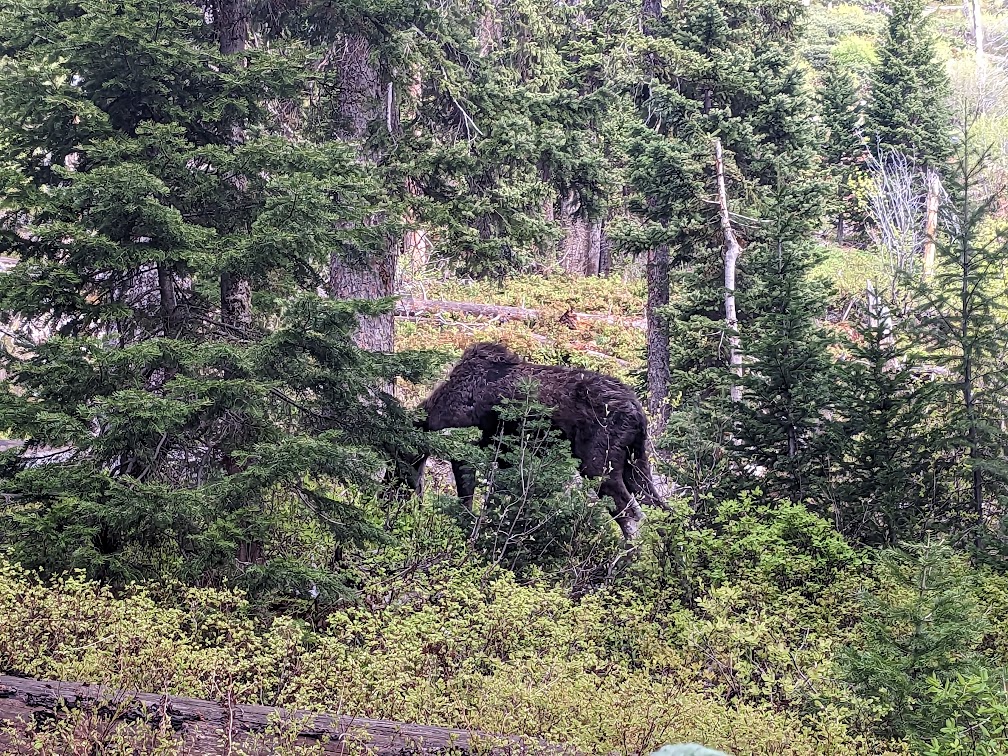
…wild critters…

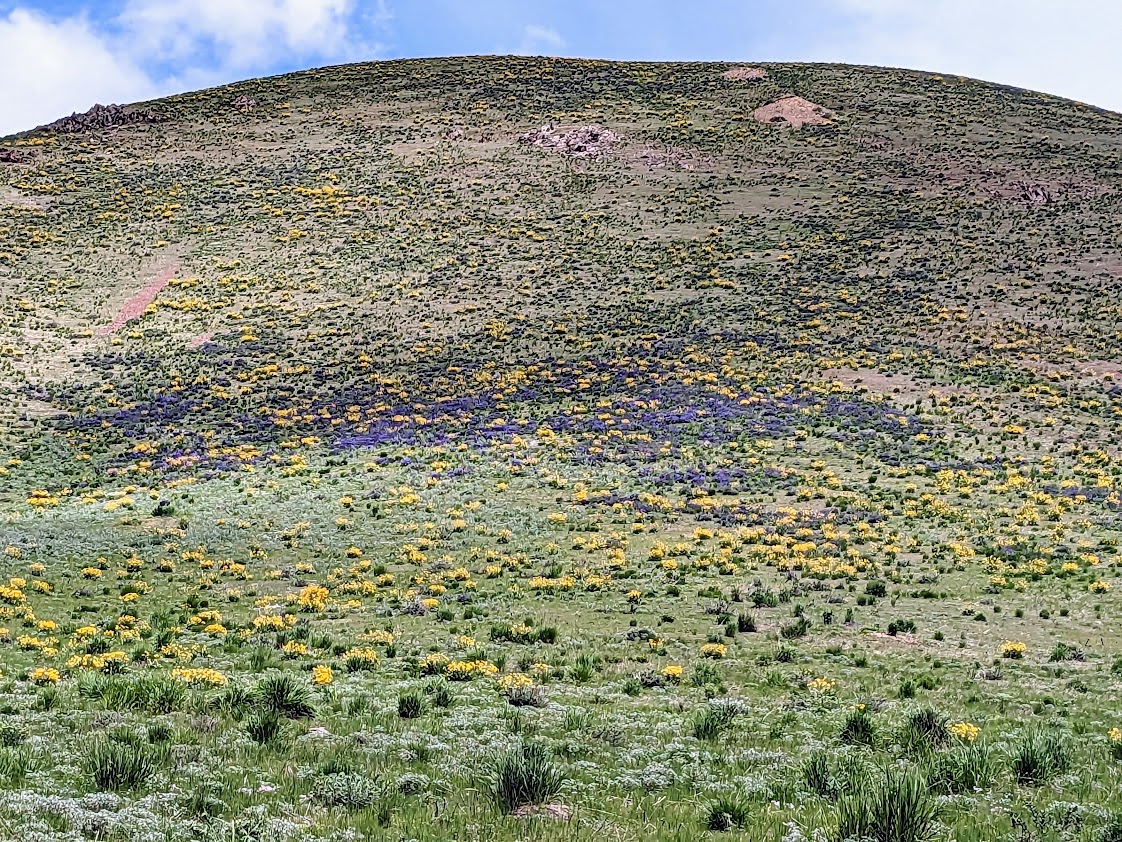
…and flowers:

OK so far. Now let’s see you tie that promo in with your “progressive political agenda.”

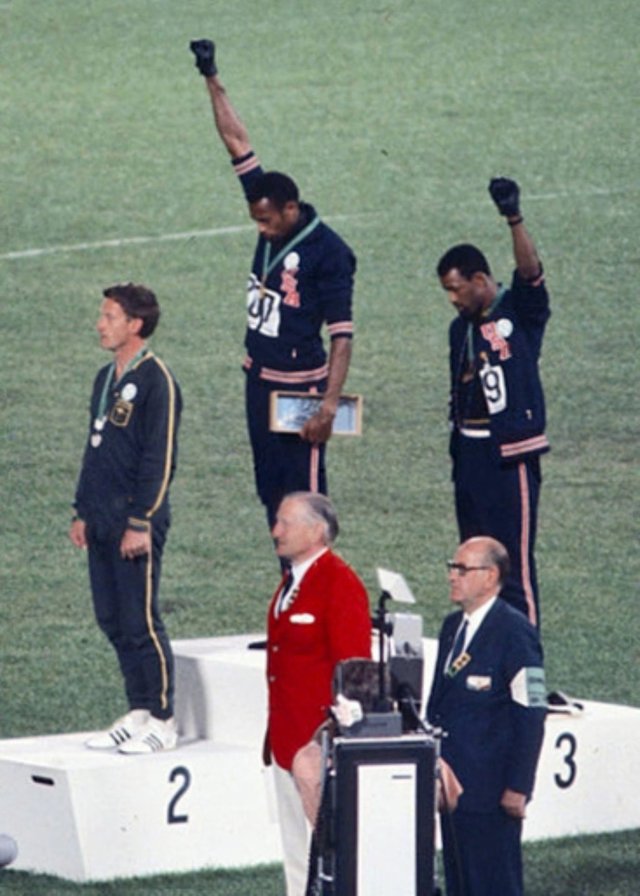
Okay…See, along our camping, driving, and motel-ing way, I stayed in touch with the Common Power Institute. Wherever we had wifi, I was catching up on videos I’d missed during its May 17th 24-hour Teach-in on Truth in Education. This talk by Dr. Harry Edwards especially caught my attention, as he was the mastermind behind the 1968 Mexico City Olympics protest that got Tommie Smith and John Carlos stripped of their medals.

(photo courtesy Wikimedia)

Seriously? You’re just gonna shove Dr. Edwards’ talk into your post like that, then go back to the nature pics? Who’s gonna watch it?

You’d be surprised. I think there are a ton of folks out there like me, folks who love mountains, critters & flowers just like I do, but who also want to keep educating themselves about how to be effective anti-racists, like I do. They may not get to this video right away; I didn’t. But when they have time, they might come back and learn more about “history with eyes wide open”, as Dr. Edwards says.

If you say so. Can we see some trip pics now?

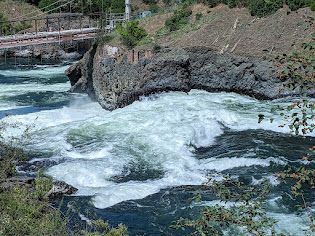
Oh, twist my arm. Ahem. On our way out of Washington, The Mate and I stopped to ride our bikes in Spokane, and marvel at the majesty that is Palouse Falls.

I was SO sad that the bike path bridge was closed for construction!

Our main destination was Grand Tetons National Park. But it turns out, one of the best ways into GTNP is through this place…

Yep, the Grandmother of all NPs: Yellowstone herself

We’ve both been to Yellowstone several times over the decades, and I’m embarrassed to admit I don’t even bother taking photos of their bison and elk any more. (Here’s an old blog post to cover that.) But I COULDN’T stop taking pictures of those prismatic pools.

No diving!
No words.

As planned, we only spent a day in Yellowstone, which was so crowded we remembered why we love traveling during the shoulder seasons (not Memorial Day weekend, for goodness’ sake! Who planned this trip?!) But when we drove across the park border into the Tetons, it was time for us to sit up and take special notice. THESE mountains were something NEW, at least to us.

Nary a foothill in sight. Just a sagebrush plain and then…BAM!

After a fews days of (rather WET) camping, we moved into a motel in Jackson, finally answering the question: what’s the difference between Jackson Hole and Jackson?

Answer: Jackson’s the town…
…whereas Jackson Hole refers to the entire region, the valley filled by the (not pictured) Snake River.
Now you know. But if you’re from Wyoming, you probably don’t give a shit what the rest of us think.

The Mate & I were very favorably impressed by two other aspects of Jackson (besides its proximity to GTNP): its community bike path system…

We saw a TON of bikes at all the public schools. Kids and parents really use these paths!

…and its bakery, Persephone. (Aren’t bakeries and bookstores the best tests of a town, really?)

Just doing research for my own employer, Holly B’s on Lopez Island! 🙂

One more way-cool thing in Jackson: this vertical, rotating greenhouse built into the side of a very tall parking garage. Never seen anything like it!

The company’s called Vertical Harvest. The lettuces looked happy!

Our most prized hike of the trip came on a day when we got up early in order to be the first on the Tetons trails, and were rewarded with a moose AND a bear, in the same video! (You’ll have to take my word for it; it’s not YouTube quality so I didn’t bother uploading.) But here’s the moose:

Not pictured…barely!…is the bear that’s actually lurking just behind and to the right of Ms. Moose

Leaving Wyoming’s western side, we passed into Idaho and took a quick tour of Craters of the Moon National Monument.

I found the dead trees as entrancing as the dead lava.
Anyone else see a monster here?

Thunderstorms were forecast, so we decided against camping and added a night to our motel in Hailey, which is the cheap(er) town 10 miles from swankier Ketchum and swankiest Sun Valley. The Mate & I were pleased to find all three towns connected by bike path…

Heading over the Wood River, which was running HIGH

...and Liza and I rode pretty much every inch of it, including up & around a ski hill.

Definitely helps that Liza’s an e-assist bike! My knees are grateful.

But it wasn’t bike paths that led Liza and I to bumble into the most amazing “superbloom” of wildflowers I’ve ever seen outside the Cascades–it was a plain ol’ dirt road.

Are you for real, Idaho?!
Yes. Yes you are.

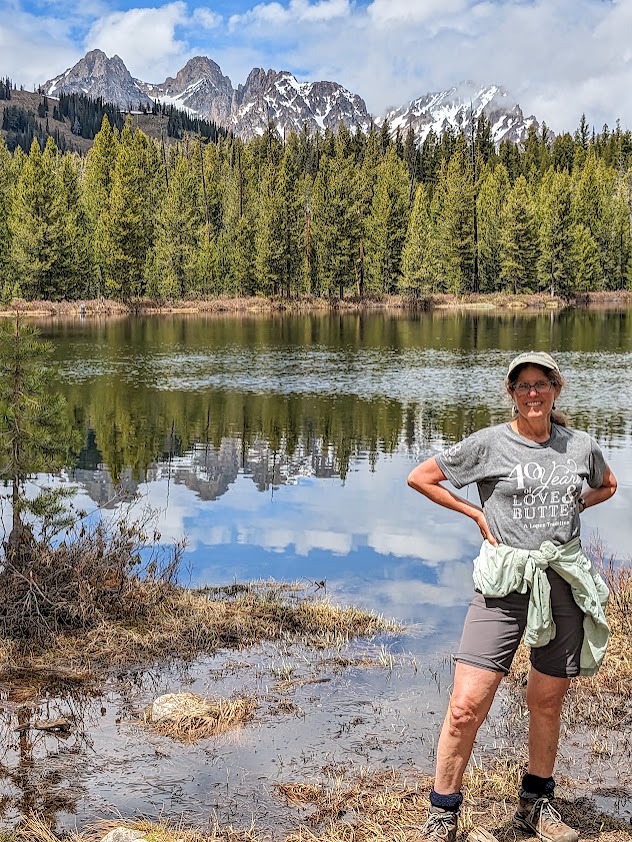
Those flowers? They followed us into the Sawtooth Wilderness, our last spate of camping right smack in the middle of the state. I mean, yes, the mountains were just as striking as the Tetons…

Still reppin’ Holly B’s!

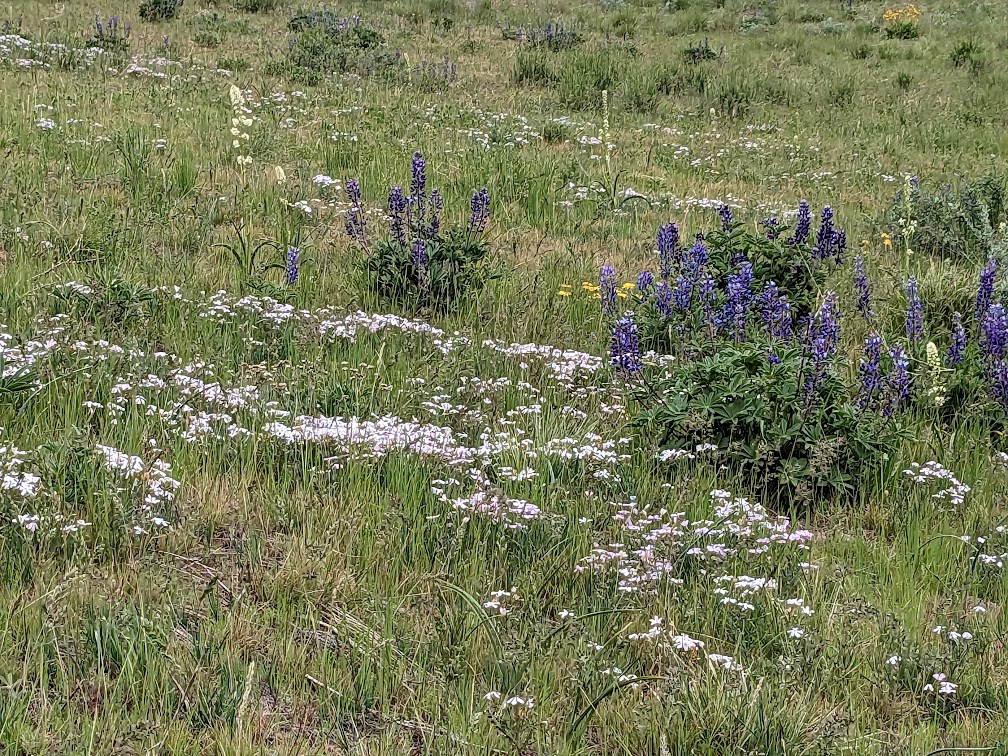
…but the FLOWERS!!!

I didn’t know Larkspur came in so many shades of blue!

We had more adventures than pictured, of course: elk and antelope and lakes and crags. But I think you got the idea. And I want to leave you enough time to go back and dip into that lecture of Dr. Edwards’, if you feel so moved. But whether you do or not–thanks for bearing with me all this way (or moosing with me). Here–I got you flowers.

Be the Challenger II: Yes, Virginia, You Can Be a White Civil Rights Activist

“I was a typical young Southerner, born and raised in LA—Lower Alabama.” Meet Bob Zellner.

I got to do just that, last October, when Bob and his activist wife Pamela joined my Common Power Team NC canvassing group. Over big plates of BBQ, I got to ask Bob questions about events I’d read about in his book, The Wrong Side of Murder Creek. Like the time Bob was beaten badly on the steps of the town hall of McComb, Mississippi, in a march led by Black high school students. But in the New York Times article, they called Bob “the leader” of the march–because he was the only White guy there.

You could call Bob the White counterpart of Representative John Lewis; they grew up quite close to each other in Alabama, both poor, both country–but on either side of the color line. Which explains why Bob started life from a KKK-supporting family, before becoming the first White field secretary of the Student Nonviolent Coordinating Committee (SNCC) in the 1960s.

In Bob’s interview by Dr. Hasan Kwame Jeffries (History Professor at The Ohio State University, and, incidentally, brother of Congressman Hakeem Jeffries), you can hear him explain how, “That was the way you got accepted in SNCC–you go to the dangerous places and do what the people were doing.”

Bob’s a folksy guy; like a lot of Southerners, he’s not into drama. Just tells it like it was–and is. His mission today, he says, and for the rest of his life, is to tell young people: “You can be White, and you can be a Civil Rights activist, and you can survive.”

Come to think–that’s a pretty good message right there. Reading Bob’s story, not to mention rubbing shoulders with him, reminded me how ordinary these extraordinary “ACTIVISTS” can be. Maybe a teensy bit braver than I am…

I hope you listen to Bob or check out his book. Pass it on!

If Hope Is A Muscle, Purpose Is Its Workout: Introducing Common Power

When it comes to the state of the world, be it locally, nationally or globally, everyone I know–and probably most I don’t–has felt like this a good deal of the past five and a half years:

I…give…up.

Most folks I know–and even more I don’t–have also found sources of inspiration to get themselves up off the floor and stay positive, or at least productive. Staying within my immediate circle of control is my go-to: cooking a meal for someone; spending time with an elder or a child; sometimes just contributing money.

But for me, real hope takes larger-scale action, and I would like to share my personal “hope-workout” of the last few years: Common Power.

Originally named Common Purpose and founded by UW Communications professor David Domke, “CP”s goal is “to foster, support and amplify a democracy that is just and inclusive.”

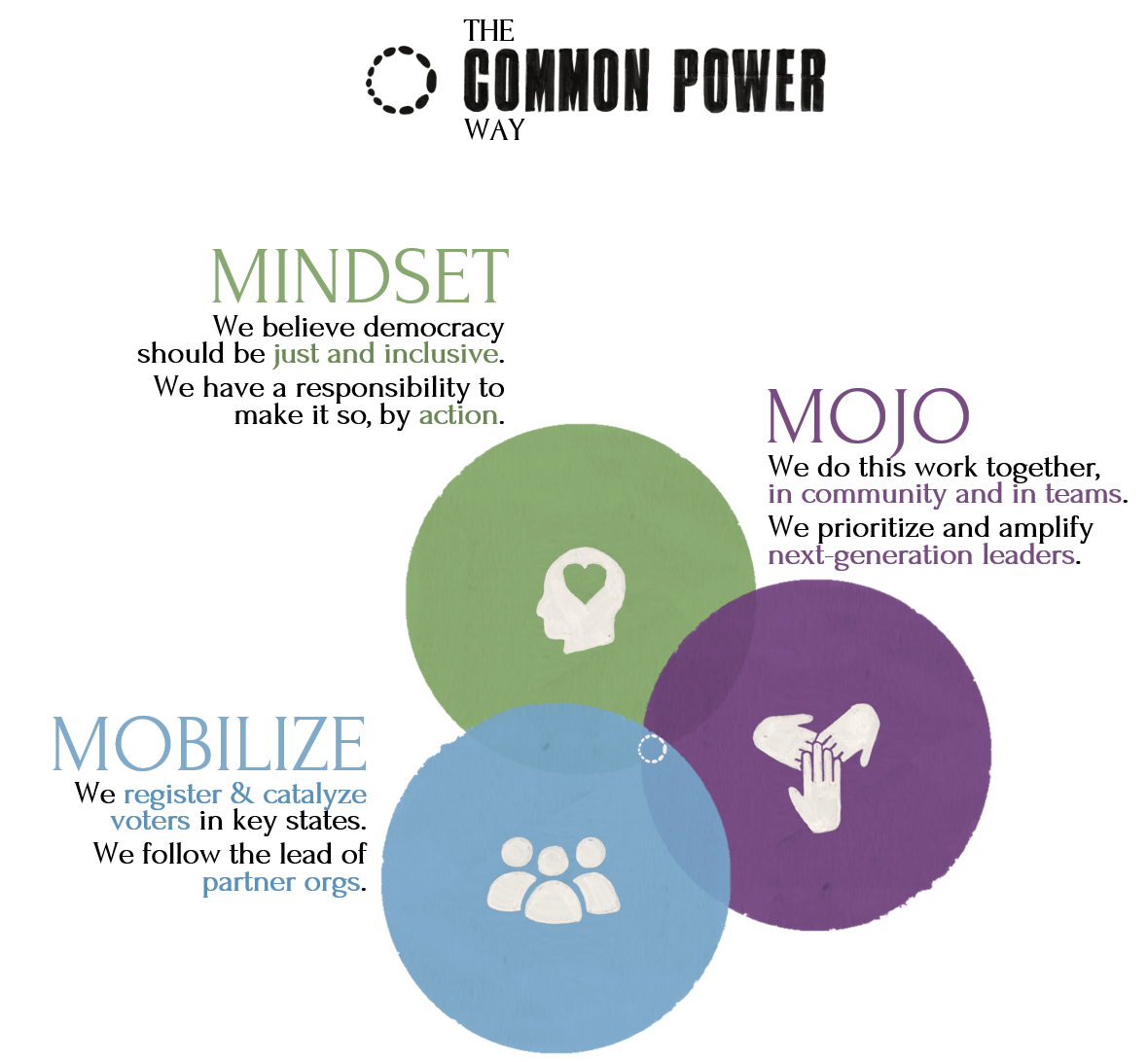
Even better, in my book, is the way CP goes about their work. I was first introduced to their three-part mindset when I attended a standing-room-only (obviously pre-pandemic) meeting in Seattle back in…2018, I think. This image speaks for itself:

Since joining, most of my “work” has been calling elected officials or phone-banking in “red” or “purple” states, which, no, I do not love. (Who does?) But most of that calling hasn’t been about trying to convince people to vote a certain way. It’s simply been working with in-state, non-partisan organizations (like NC’s You Can Vote) to give folks information they need to register, or to get their ballot accepted, or find their polling place. Do we target traditionally sidelined or disadvantaged voters? Of course. That’s the point. And as a result, those folks we do reach are, often as not, more grateful than grouchy.

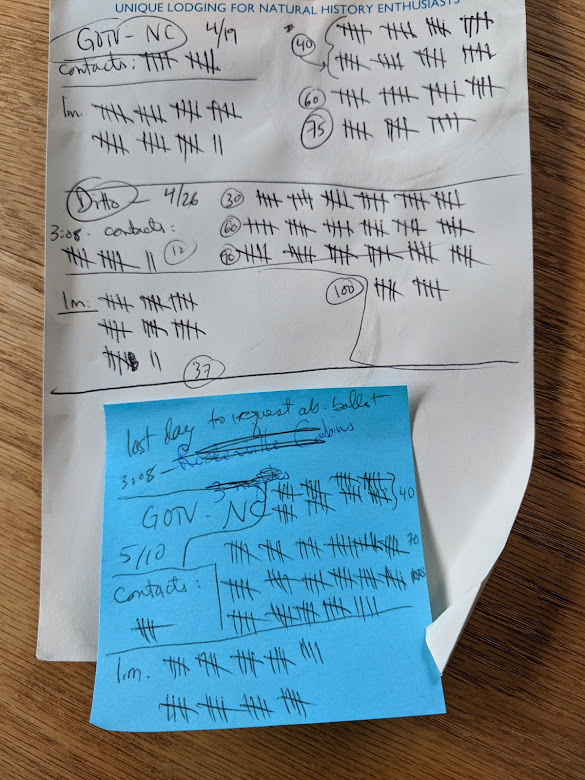
My recent tally sheets from NC calls. GOTV = Get Out The Vote

Besides providing me with an escape ladder from the Pits of Helplessness, CP has also become a source of inspiration, learning, and even joy.

Close to home, when I can, I attend AJ Musewe’s Lunch and Learn series midweek, where the delightful AJ explores themes like the history of redlining, or little-known democracy pioneers. (When I can’t attend live, I listen to them recorded.)

the delightful & wise AJ Musewe (photo by CP)

The monthly meetings (fully accessible now–no more trips to Seattle!) begin with music and good news, and always leave me pumped up about the next event, like…the inauguration of the newly-expanded Institute for Common Power, coming up June 4! That one’s in-person, so I don’t know if I can go, but maybe you can go, and personally mingle with some civil rights heroes, compatriots of the late Rep. John Lewis, who survived the campaigns of the 1960s.

Dr. Terry Scott will be the new Director of the Institute for Common Power in Seattle (photo by CP)

CP enthusiasts are also encouraged to join state “Teams” to focus their energy on one of seven states where democracy is both imperiled but also salvageable. Of course I chose Team North Carolina. And while I’ve limited my participation to online and phone work so far, I intend to travel next fall with Team NC to my home state to do the most effective GOTV work of all: knocking on doors, connecting with people. I CAN’T WAIT.

I’m coming, NC!

Best of all, for my teacherly soul, CP’s emphasis on next-generation leadership means that my NC fieldwork will be directed by leaders younger than my own kids. They’ve all been through CP’s Action Academy–a completely rad organization in itself; maybe you’d like to contribute, or recommend a youth to attend?–and I also CANNOT WAIT TO WORK WITH THEM.

Can you hear that hope-muscle working? Does your own hope need a workout? I invite you to check out Common Power.

Defending What the (Chicago) Defender Defended: The Need For a Non-Dominant Lens

The Chicago Defender, legendary Black newspaper, has ceased printing after nearly 115 years.According to today’s story in the New York Times, by Monica Davie and John Eligon, 

…the demise of The Chicago Defender’s print editions represented a painful passage for many people who grew up in Chicago and for those with memories of its influence far beyond this city. Of its many significant effects over many years, The Defender told of economic success in the North, and was seen as a catalyst in the migration of hundreds of thousands of black Americans from the South.

The article goes on to say,

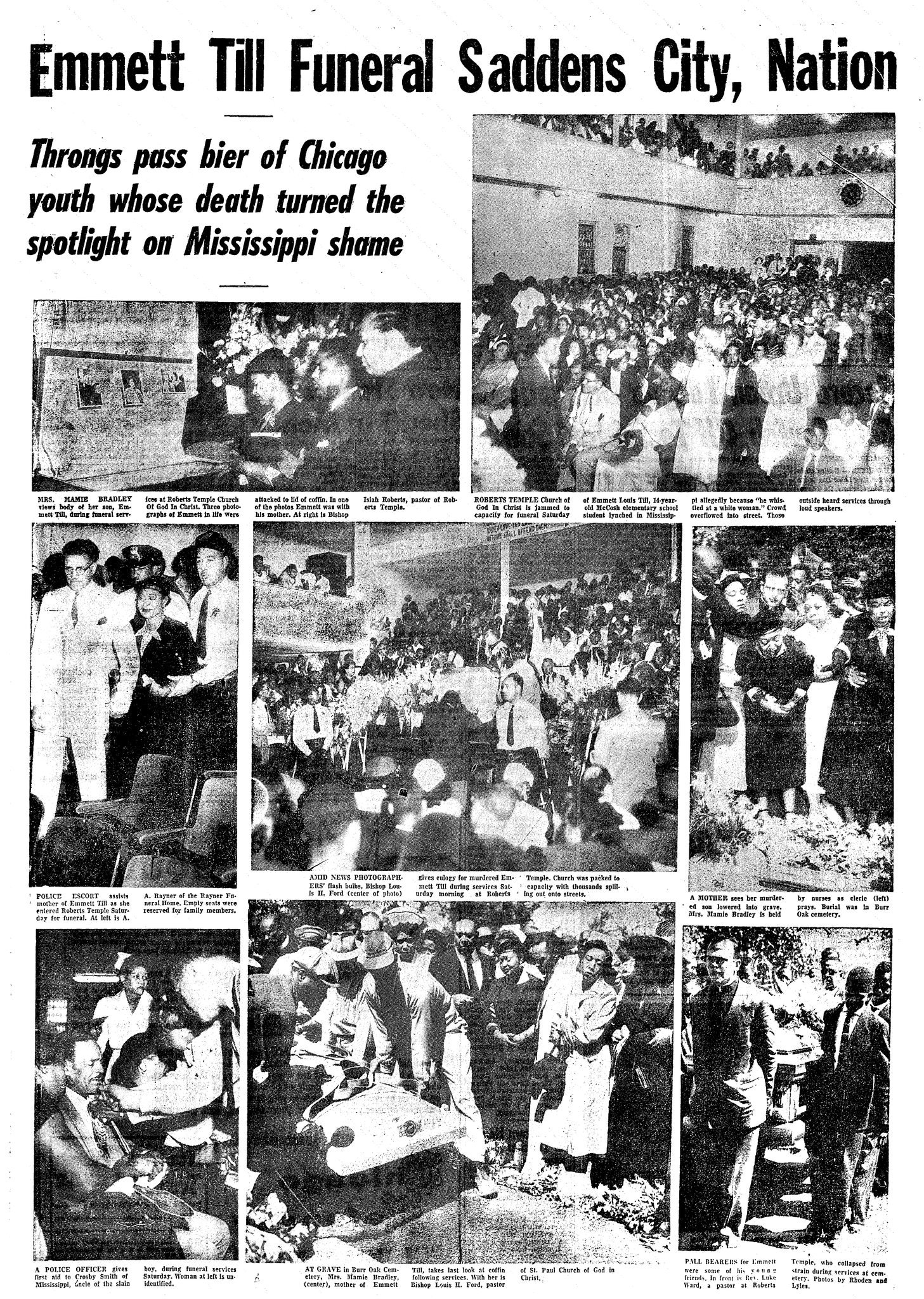
The Defender delivered news of monumental events — the funeral of Emmett Till, the death of the Rev. Dr. Martin Luther King Jr., the election of Barack Obama — but also of everyday life for black Americans, the Rev. Jesse Jackson said.

“We never saw ourselves listed other places in weddings, funerals, debutantes, so this became a real frame of reference for activities,” Mr. Jackson said. “My career would not be what it is today if not for The Defender.”

Images courtesy of New York Times and Chicago Defender

I won’t say “R.I.P.” because the Defender will continue–and, I hope, thrive–in its digital form.  But the article caught my attention because the news hits in a moment when I, like many White liberals, am scrutinizing what it means to be a part of white supremacist society that benefits me even while I criticize it.

One thing it has meant, over the years, is a comforting sense of “Yep, I’m America,” while minorities, no matter how much I support their rights, remain just that: minorities. Not fully people with their own lenses, lenses which might cast me in a view I’d rather not face up to.

To battle this default, given that I live in a very White community, I’ve been reading and listening to challenging words. My current book is Claudia Rankine’s Citizen: An American Lyric.

Image courtesy Indiebound.com

Part poetry, part essay, part lament, part witness, filled with art and filled especially with pointed pain, this small book skewers any notion of White righteousness with passages like this one:

Someone in the audience asks the man promoting is new book on humor what makes something funny. His answer is what you expect–context. After a pause he adds that if someone said something, like about someone, and you were with your friends you would probably laugh, but if they said it out in public where black people could hear what was said, you might not, probably would not. Only then do you realize you are among “the others out in public” and not among “friends.” (p. 48)

Or this:

At the front door the bell is a small round disc that you press firmly. When the door finally opens, the woman standing there yells, at the top of her lungs, Get away from my house! What are you doing in my yard?

It’s as if a wounded Doberman pinscher or a German shepherd has gained the power of speech. And though you back up a few steps, you manage to tell her you have an appointment. You have an appointment? she spits back. Then she pauses. Everything pauses. Oh, she says, followed by oh, yes, that’s right. I am sorry.

I am so sorry, so, so sorry. (p. 18)

Reading Citizen is painful. That’s why I’m doing it. I know The Chicago Defender was not written for me. That’s why I need it to exist. If I think about this a little longer, I’ll probably end up subscribing. 

Yes. I think I will. Because if I’m okay with my lens being the only lens offered to Americans, aren’t I complicit in pushing everyone else out of the frame?


Road Trip IX, Days 17-22, Dallas to North Georgia: Crossing the South While Reading U.S. History

If I had titled this post, “The Confederates Actually Won,” I wonder how many of my white readers would be shocked?

I’m a Southerner born and bred—a Tarheel, as many of y’all know. But by true Southern standards, I’m also not. My mom was born and raised in LA, my dad born in Germany and raised in a weird immigrant/Quaker/Jewish/freethinking mishmash in Philadelphia and LA. They created their own mishmash of Quaker education/ back-to-the-land farm life/ world travel for me to grow up in. So…not REALLY a Southerner.
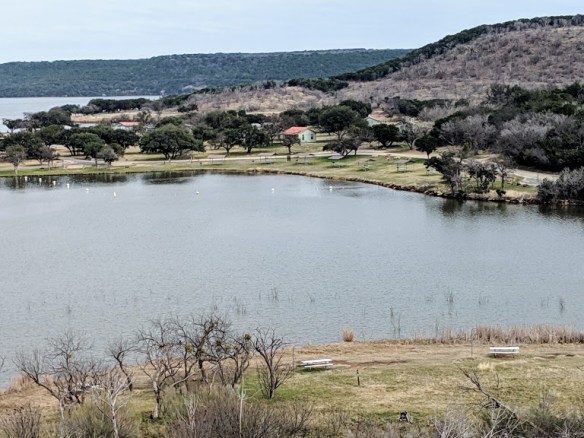
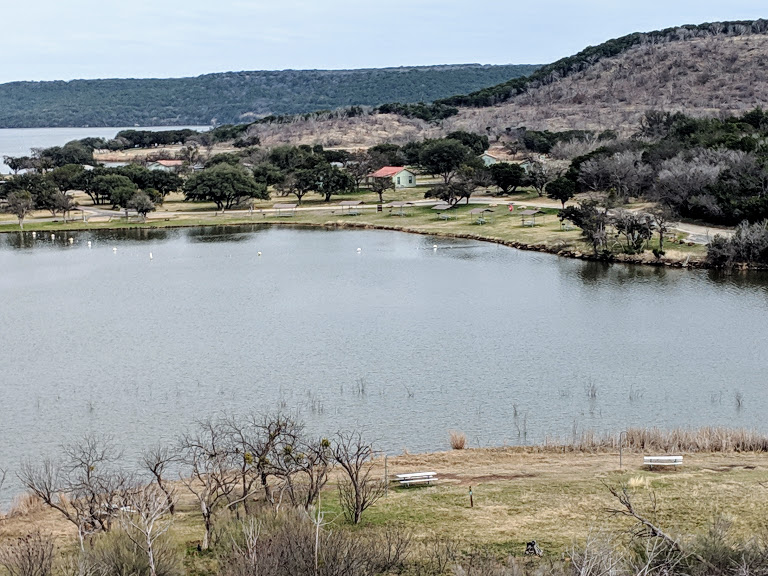
Our first night in one of the original 7 states of the Confederacy: Texas…in the wonderfully-named Possum Kingdom State Park

Except when I’m not in the South. Starting with college, up north, that’s when the nostalgia kicked in–and living now in the northwest, it still kicks. I find myself longing for the soul food my mom never cooked; when I speak to a fellow Southerner, my vowels lengthen on words like, “I’m fine.”

And that’s not even to mention the great passion The Mate and I share for the Carolina Tarheels.

But now we’re here, crossing the Lower South on our way to NC. And I’m reading These Truths by Jill Lepore.
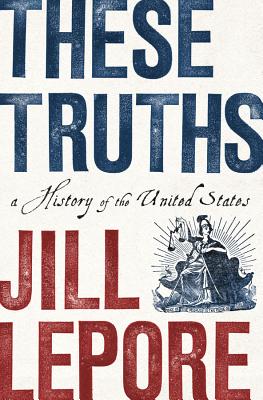
Even thicker than it looks.

Hold that thought for a sec. First I have to give a shout-out to Dallas, or rather, to the Dallas neighborhood of Oak Cliff, where we spent three days with friends. This part of Texas is really into Mardi Gras.
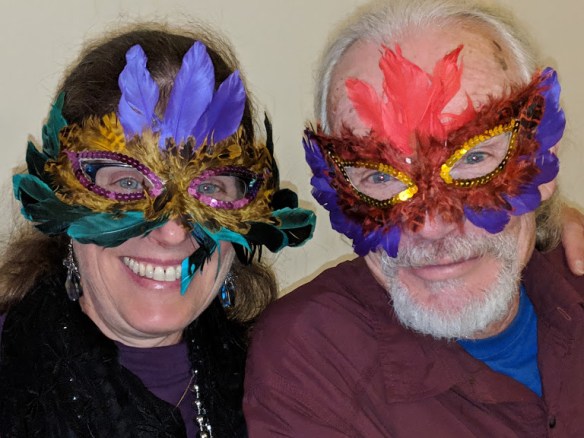
Masked dinner! Not pictured: dinner (jambalaya, cheese grits & greens, etc…)

Maybe it always was, maybe the influx of New Orleans refugees from Hurricane Katrina played a role, but whatever–laissez les bon temps roulez!

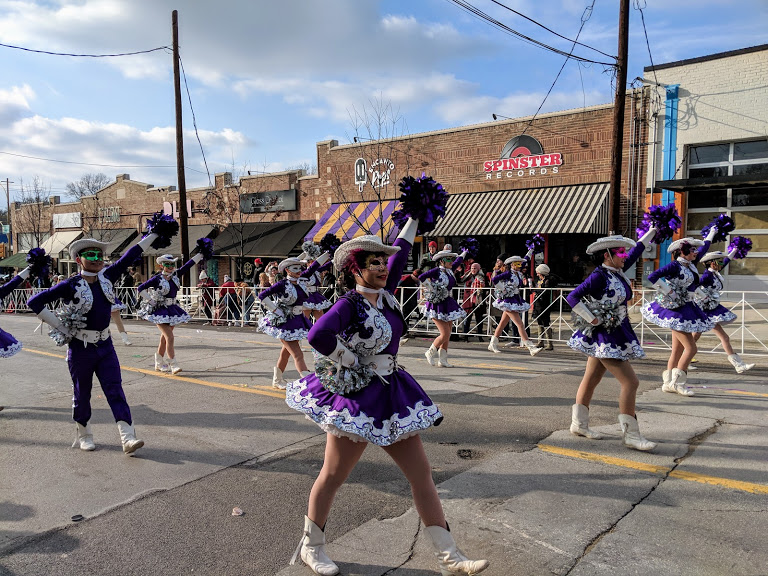
Really fun parade, despite near-freezing temps

I was touched and heartened by the mix of races and ethnicities out celebrating together.

“Old” Texas lives…
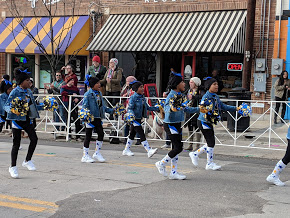
…with “New” Texas!

And don’t forget Pomeranian Texas! (These guys were part of a whole group of “Recycled Poms”!!)

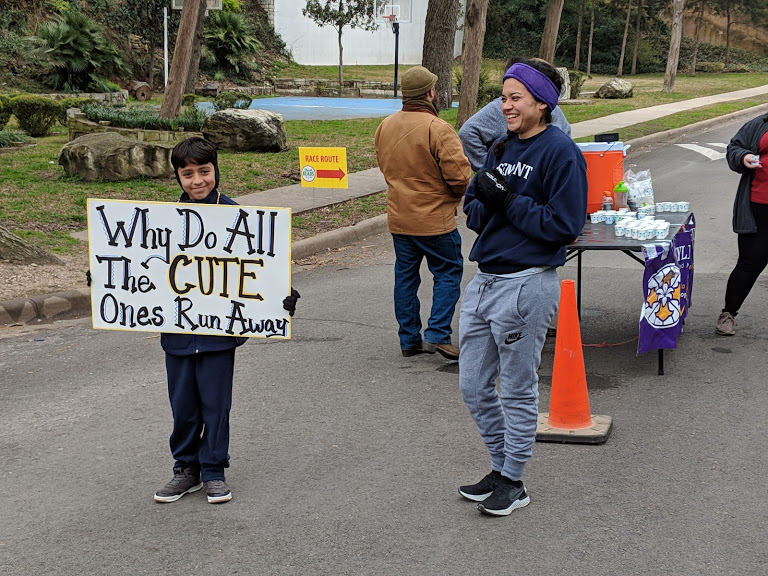
With my friend, I also walked the Fun Run (note to self: Fun Runs really are fun when you’re not racing! Who knew?). These adorable girls spontaneously danced in front of the start line when their favorite song came on…
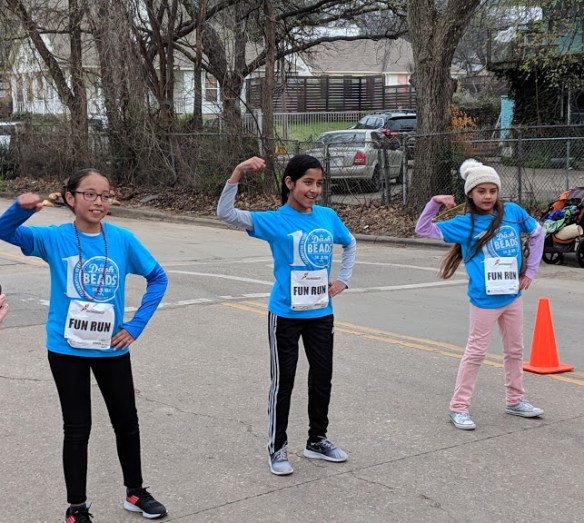
They had great moves!

And then there was this little guy, along the course:
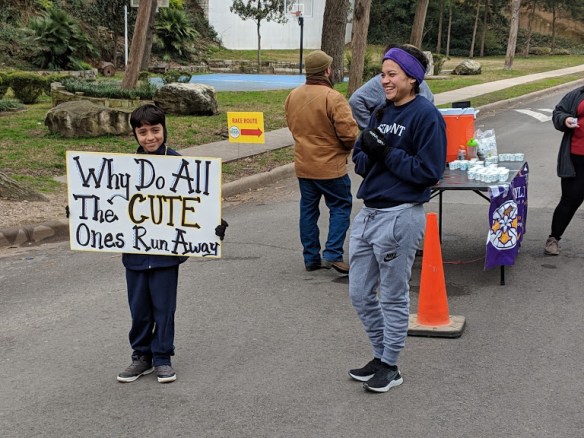
Why, indeed? Love it!!!

But the day after we left oh-so-cool Oak Cliff, we found ourselves in Vicksburg. Not often drawn to historical attractions on our road trips, we decided to pay our respects to the Vicksburg National Military Park–site of the Union’s 18-month campaign to capture this all-important center of control over the Mississippi River.

Monument to fallen Confederate soldiers–both sides have many monuments, but I only captured this one’s image

In the past, such a reminder of the viciousness of the Civil War (nearly 4,000 men died on these hills and vales, with thousands more wounded, captured or missing) would just reawaken all the complexity of my feelings about being Southern. As I’ve written in the past, I’m very conflicted. One of my songs tries to express that conflict:

If my old neighbors have their way, I’ll be burning down in Hell

But just ’cause I’m a sinner–it’s nothing personal.

They hate everything I stand for, but I know who they are

So don’t you ridicule their accent when they talk about hellfire.

But, as I mentioned, I’ve been reading Jill Lepore’s book. Let’s get back to that, shall we? It’s a comprehensive history of this country. I have a Master’s in U.S. History, and I’ve taught it to teenagers. These Truths both reminded me of things I knew, and taught me things I didn’t.

Things I knew: 

–The Supreme Court–of the whole country!–ruled in Dred Scott, 1857, that “a black man has no rights that a white man is bound to respect.”

–The Radical Republicans’ compromise with the ex-Confederates to end Reconstruction left millions of Southern Blacks at the mercy of Southern Whites..who showed none. (Radical Republicans were NORTHERNERS.)

–The Supreme Court–of the whole country!– in Plessy v. Ferguson, 1896, ruled that “separate but equal” was constitutional.

–Following the Great Migration of Black Southerners to the North and West to escape Southern terrorism, NORTHERN real estate laws and other restrictions trapped them into segregated neighborhoods

Things I didn’t know, or at least didn’t know enough:

–The People’s Party (the most successful third party in US history), “rested on a deep and abiding commitment to exclude from full citizenship anyone from or descended from anyone from Africa or Asia.” (p. 343)

–“By one estimate, someone in the South was hanged or burned alive every four days” in the first few years of the 20th century (p. 369)

–The 50th anniversary of the Battle of Gettysburg included none of the Black soldiers who had fought there. (p. 389)

–The enlightened Woodrow Wilson? “…like other Progressives, Wilson not only failed to offer an remedy of racial inequality; he endorsed it…’Mr. Wilson bears the discreditable distinction of being the first President of the United States, since Emancipation, who openly condoned and vindicated prejudice against the Negro.'” (James Weldon Johnson, quoted on p. 389)

.Given that the entire country ended up committing itself, legally, to the values the Confederacy fought for, Lepore concludes, “the Confederacy had lost the war, but it had won the peace.” (p. 360)

LOOKING AT OUR COUNTRY TODAY, I CAN’T HELP BUT AGREE. 

But then we spent a day and a night in Alabama, at Oak Mountain State Park, near Birmingham.
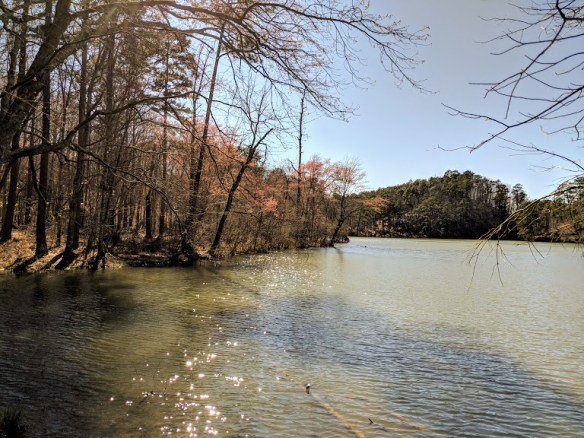
Lake Tranquility, with blooming maple

Can’t get more Southern than that. We rented a cabin.
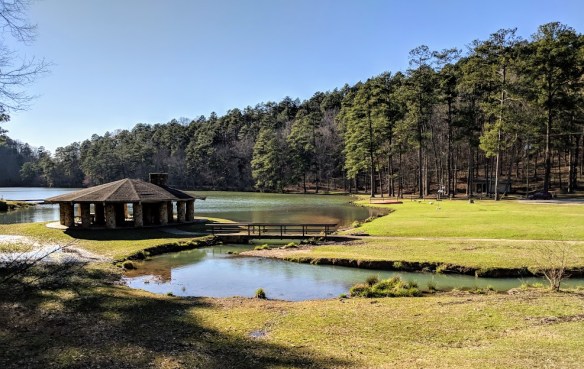
You can just barely make out our cabin & car in the trees.

It came with our very own ducks on the doorstep.

Got any bread you’re not using?

We went for a hike. The winter woods were starkly beautiful.
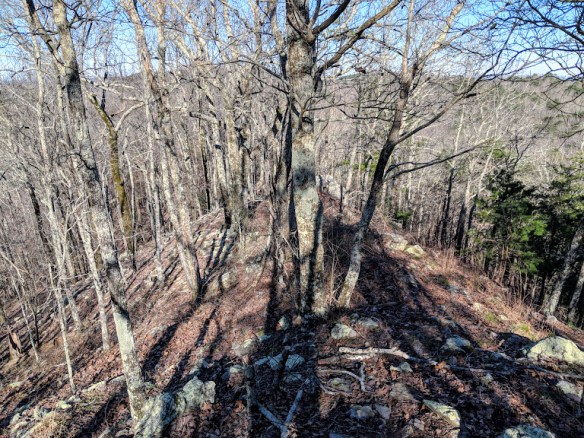
Steep ridges!

The rocks were craggy.
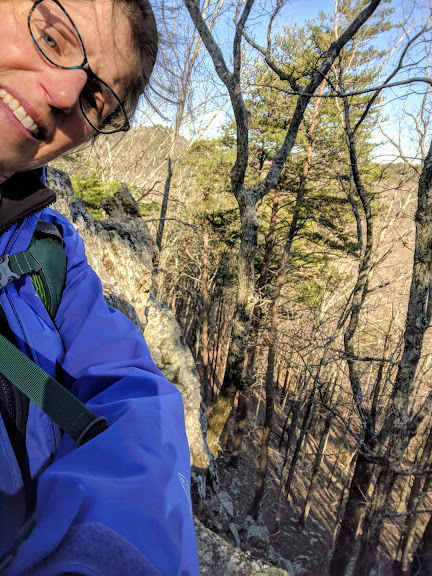
Me trying to show how steep the drop is

The crags were rocky.

You get the idea.

And my soul was full. Because, as my song goes,

It’s another song about the South, y’all–

trying to sort my feelings out, once and for all.

How can someone feel so in and out of place?
That sweet, sunny South where I first saw the light,

if she’s my ol’ Mama, I’m a teenager in flight:

do I want to hug her neck, or slap her face?

I am a Southerner, even if I’m not. I get it. People love their culture. That Confederate statue, above? When you zero in on it, you see the soldiers’ suffering. You understand.

Notice the dead man at lower right. Not too glorious.

I hate the white supremacy the South stood for, and I hate that a lot of the South still stands for that. But I also know that our WHOLE COUNTRY stands for exactly the same–de facto. So I guess it’s my whole country I want to hug and slap at the same time.

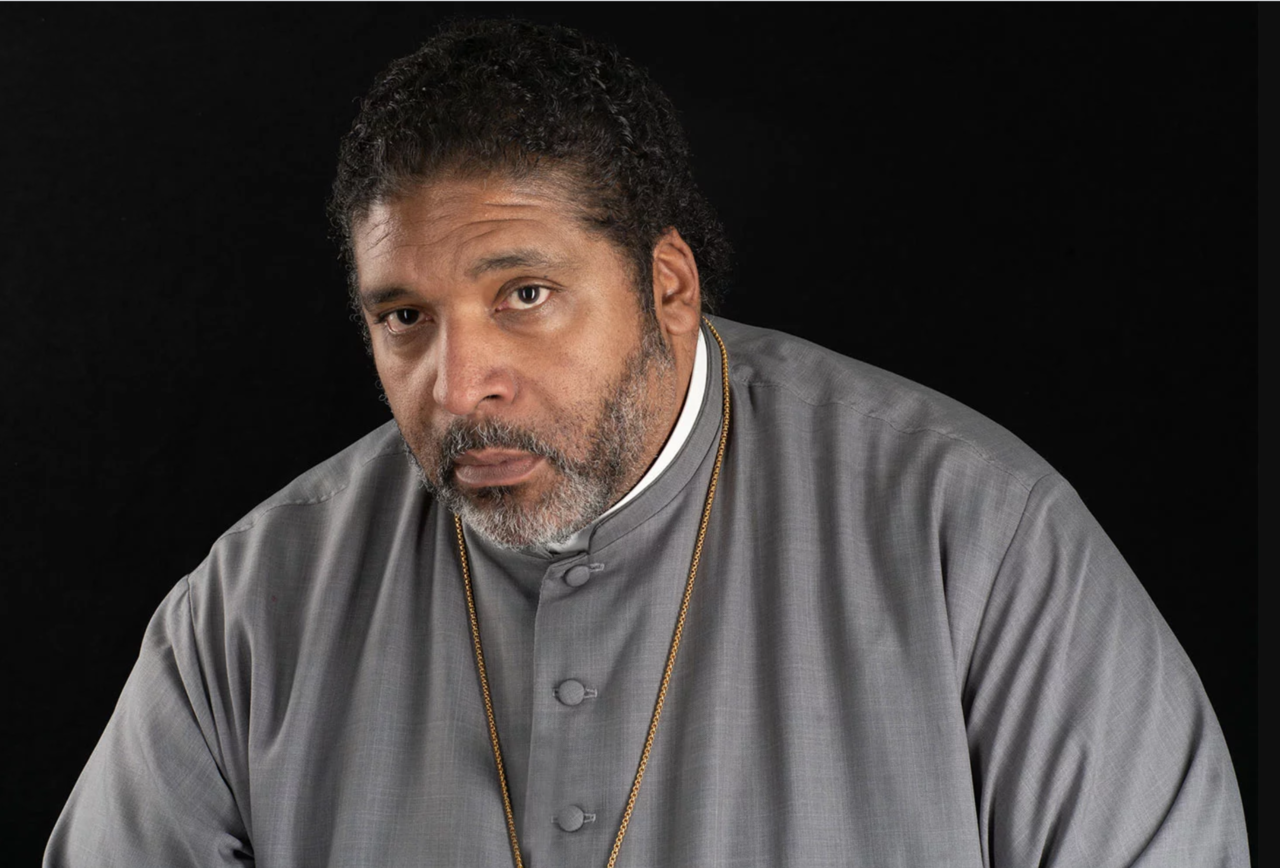


Darkness Cannot Drive Out Darkness: “The Jewish Nurse” Shares His Story

“Darkness,” Dr. Martin Luther King Jr. wrote, “cannot drive out darkness. Only light can do that. Hate cannot drive out hate; only love can do that.”

Case in point: Ari Mahler. A friend recently shared the story of the nurse who treated the killer who had just shot up the Pittsburgh synagogue. In following up, I found this original story by Angelina Gibson on Nurse.org. I can’t tell it better than she can:

“In a country that is no longer shocked by mass murders and random shootings at places that should feel safe, from schools to synagogues to yoga studios, there is one act that has risen out from amongst the violence that is perhaps the most shocking act of all:

Kindness and compassion. 

Ari Mahler, an ER nurse from Pittsburg, was one of three Jewish doctors and nurses who cared for Robert Bowers, the shooter who killed 11 Jewish worshipers and injured 6 at the Tree of Life Congregation on October 27th. After Bowers, who had a long history of anti-Semitism and posted “I’m going in,” stormed into the synagogue and began shooting, a police shoot-out occurred and it’s thought that Bowers was shot by officers

As a result of his wounds, he was taken to Allegheny General Hospital to be treated, where Bowers continued his tirade against Jewish people, even reportedly shouting, “Death to Jews” as he was wheeled into the hospital. And it was at that moment, when a man so filled with hate that he murdered, that Mahler could have chosen so many paths in his role as a nurse. He could have declined the patient assignment, he could have hurled cruel words back, or he could have taken the patient but failed to care for him properly. 

Instead, Mahler chose to rise above hate and instead, cared for Bowers, in his own words, with “empathy.” 

In a revealing Facebook post, Mahler described how he was the Jewish nurse who cared for one of the country’s most hate-filled shooters and how the interaction with Bowers was a deliberate one meant to honor the lives that had been lost, not add to the hate that took them.

“I am The Jewish Nurse,” Mahler began his post. “Yes, that Jewish Nurse. The same one that people are talking about in the Pittsburgh shooting that left 11 dead. The trauma nurse in the ER that cared for Robert Bowers who yelled, ‘Death to all Jews,’ as he was wheeled into the hospital. The Jewish nurse who ran into a room to save his life.”

From Ari Mahler’s Facebook page

Mahler went on to describe how he was nervous for writing up a post on what happened with Bowers, noting his past growing up Jewish, with a father who was a Rabbi, and experiencing anti-Semitism. 

“I found drawings on desks of my family being marched into gas chambers, swastikas drawn on my locker, and notes shoved inside of it saying, ‘Die Jew. Love, Hitler.’,” Mahler explained. “It was a different time back then, where bullying was not monitored like it is now. I was weak, too. Rather than tell anyone, I hid behind fear. Telling on the people who did this would only lead to consequences far worse.”

He then stated that sadly, he was not shocked by the fact that this shooting took place, mentioning today’s climate as one that “doesn’t foster nurturing, tolerance, or civility… I don’t know why people hate us so much, but the underbelly of anti-Semitism seems to be thriving,” he added. 

“ I WANTED HIM TO FEEL COMPASSION. I CHOSE TO SHOW HIM EMPATHY.”

And despite the fact that Mahler has been lauded a hero for his care of Bowers, he challenged the public sentiment who praised him because he is Jewish. 

‘I’m sure he [Bowers] had no idea I was Jewish,” he wrote. “Why thank a Jewish nurse, when 15 minutes beforehand, you’d shoot me in the head with no remorse? I didn’t say a word to him about my religion. I chose not to say anything to him the entire time. I wanted him to feel compassion. I chose to show him empathy. I felt that the best way to honor his victims was for a Jew to prove him wrong. Besides, if he finds out I’m Jewish, does it really matter? The better question is, what does it mean to you?” 

HE DIDN’T SEE “EVIL”

Citing HIPPA, Mahler also added that he couldn’t reveal the specifics of his interaction with Bowers, but did say that when he looked into his eyes, he didn’t see “evil” and like the professional nurse that he is, he didn’t base his care for Bowers on who he was or what he had done. 

“I can tell you that as his nurse, or anyone’s nurse, my care is given through kindness, my actions are measured with empathy, and regardless of the person you may be when you’re not in my care, each breath you take is more beautiful than the last when you’re lying on my stretcher,” he went on to say. 

LOVE

In the comment section of his post, Mahler received an outpouring of love and support for his actions and his care of the mass murderer, including from his fellow Jewish nurses. “As a Jewish nurse I applaud you for doing the right thing,” wrote Janet. “It is what we do. We may crumble later but we do our job and do it well.” 

For those who are wondering just why Mahler acted the way he did and chose to go public with his decision to treat a murderer with any shred of kindness at all, the nurse minced no words in explaining exactly why he did what he did:

“Love,” he said. “That’s why I did it.”

“Love as an action is more powerful than words, and love in the face of evil gives others hope. It demonstrates humanity. It reaffirms why we’re all here. The meaning of life is to give meaning to life, and love is the ultimate force that connects all living beings. I could care less what Robert Bowers thinks, but you, the person reading this, love is the only message I wish instill in you. If my actions mean anything, love means everything.”

Amen. And thank you, Ari.

Remembering An Awful Day: The Murder of Dr. King

April 4, 1968. I was six. I remember looking down from the top of the stairs to see my mother looking up. She was crying.

Courtesy Wikimedia

If you are old enough to remember the day Martin Luther King died, where were you?

If you are too young to remember…here’s a song for you. It’s about Coretta, because April 4, 1968 was worse for her than for any of us.


Coretta


Every city in this land got a street named for your man;

We celebrate his birthday, we sing and hold hands.

But sometimes I wonder if we’d ever be here

If you hadn’t stood beside him for all of those years.

                        All of those years…imagine the tears.

                        Coretta Scott King, your name hardly appears.


Lovely young soprano, Alabama to Ohio:

Your music could’ve carried you even further, you know.

But Martin sweeps you off your feet, or you sweep him,

And you’re swept into the movement, sink or swim.

                        Sink or swim…opposition is grim.                     

                         Montgomery Bus Boycott is the first big win.


Martin’s filling up the jails, says that love will never fail              

And you’re right there with him, center of the gale.

But your four little children can’t be left alone

And Martin says their mama needs to stay at home.

                        Stay at home, keep the children calm.                          

                        Thank the Lord you are out when your house gets bombed.


Klan don’t need to wait for dark; Selma’s like their personal park.           

Cross the Pettus Bridge to face Sheriff Clark.

On that Bloody Sunday you can hear the cries

With your hands in the laundry and your eyes on the prize.

                        Eyes on the prize…when a martyr dies                                  

                        Best step aside, feel the power rise.


Martin goes to Memphis town; hand of hate cuts him down.          

Now they’re looking to you to lead ’em to high ground.

You’re still in shock, you don’t know what to feel

But just like Martin, you’re made of steel.

                        Made of steel…Lord, this is real:               

                        41 year-old widow of a slain ideal.


So you take up Martin’s cross, learn to be a movement boss         

And you march and you rally and you  pay the cost.

You tell your fellow women to embrace their role:

“If you want to save the nation, you must become its soul.”

                        Become its soul…it took its toll.    

                        But Coretta, look around, we’re approaching the goal.*


For over thirteen thousand days, you walked those weary ways      

Speaking out against the war, supporting the gays.

For the poor and persecuted you carried the flame

And never got a monument. Ain’t it a shame?

       Ain’t it a shame? No one’s to blame.                              

                        But Coretta Scott King, we remember your name.

                        Ain’t it a shame? No one’s to blame.

                        But Coretta Scott King, we remember your name.          


G. Wing, March 2013

*I wrote this song in a more optimistic time. Not sure I still believe that goal’s getting any closer

A Frayed Knot: Picking Our Way Through The Need

So this piece of string walks into a bar. (Stop me if you’ve heard this.) Bartender growls, “Hey, you. We don’t serve your kind in here. Beat it.” Hurt and angry, the string heads home to her apartment. There she ties herself into complicated loops, and frizzes her ends till she’s nearly unrecognizable. Then she goes back into the bar and orders a beer.

“Hmmm,” says the bartender suspiciously. “Aren’t you that same piece of string I just threw outa here?”

“Oh, no,” the string says innocently, “I’m a frayed knot.”

Ba-dum-bum.

Not the best bar joke ever…but close!

This joke popped into my head recently after reading these lines from Kim Stafford’s book of post-election poems, The Flavor of Unity,

“By writing, thinking, and talking, clarify your vocation, so you can enter the fray without being frayed.”

Copyright 2017 Kim Stafford. Thanks, Kim!

During the Civil Rights Movement, and more recent movements who use nonviolent resistance, participants had to learn to conquer their fear–of prison, of violence, even of death. The most famous freedom song, We Shall Overcome, contains the lyric, “We are not afraid.” Not being currently on the front lines of any struggle, but instead struggling to choose among the many, many causes calling for support since Trump’s inauguration, being AFRAID is not my issue–but being FRAYED? Yes. ‘Fraid so.

My email box and Facebook feed fills daily with calls to contact my congressional reps about the environment, or health care, or immigration, or…you know. If you’re an American, you’re probably getting the same emails. Sign this. Send money to that. Attend this meeting. Join that march. There is too much need out there to do it all.

Which is why I’m very much looking forward to the online course I’ve signed up for with Quaker writer and teacher Eileen Flanagan, entitled, “We Were Made For This Moment.” The intro to her course reads, 

In this time of tumult, fear, and hatred, the world needs the gifts that you were born to share. You may not be sure where to use them. You may not know how to use them to greatest effect, or even if you can make a difference at all, but you know you need to do something to work for a more just and loving world. You are not alone! The purpose of this online course is to help you to meet this moment.

Finding one’s purpose, to me, means finding my path. This means, of course, choosing some paths NOT to take. It’s never easy; we all want to contribute, be supportive, “be there” for each other, or vulnerable people, or the planet. But when we try to be everywhere, we fray…and–mixed metaphor alert–we burn out.

I want to walk a path and stick to it. I look forward to some guided discernment. I also look forward to hearing how you might have dealt with this same issue. How do you keep yourself in the fray without fraying?


Road Trip VI, Days 28-32, in my hometown, Durham, NC: My German Grandmother’s Take on Civil Rights Martyrs

Everyone who enjoys the privilege of time spent with aging parents knows this pattern: touch an object, hear a story. It could be an oil painting or a plate with cows on it; if it’s been held onto for decades, it has something to tell.

This week I’ve been roaming through my parents’ house in North Carolina, touching things and letting them talk to me. I’m especially lucky here, since my paternal grandma, my German Oma, was a sculptor. This house is bursting with her work. Today I’m going to let one of her pieces tell its story.
June 21, 1964. Philadelphia, Mississippi. The bodies of James Chaney, Andrew Goodman, and Michael Schwerner were discovered buried in an earthen dam.

Chaney, Goodman and Shwerner (courtesy Mississippi Civil Rights and Delta Blues Bookstore)

Chaney, Goodman and Shwerner (courtesy Mississippi Civil Rights and Delta Blues Bookstore)

Actually that’s incorrect. Civil Rights activists Chaney, Goodman and Schwerner disappeared that Freedom Summer, having left their base in Meridian, Mississippi to investigate some church burnings in the eastern part of the state. According to Curtis J. Austin in The Civil Rights Movement in Mississippi, “The Ku Klux Klan had burned Mount Zion Church because the minister had allowed it to be used as a meeting place for civil rights activists. After the three young men had gone into Neshoba County to investigate, they were subsequently stopped and arrested by Neshoba County Deputy Sheriff Cecil Price. After several hours, Price finally released them only to arrest them again shortly after 10 p.m. He then turned the civil rights workers over to his fellow Klansmen. The group took the activists to a remote area, beat them, and then shot them to death.” It took several weeks for their bodies to be found.
My grandmother, Edith Brauer Klopfer, moved from California to North Carolina in 1965, to help take care of baby me. Thirty years before, she had moved with her husband and young sons from Germany to Philadelphia–temporarily, she thought, to give that pesky Herr Hitler a wide berth. The Klopfers were Jewish.

My parents have not been able to tell me exactly what my grandmother thought of the Civil Rights movement she walked into when she moved to the South. But they don’t need to. This sculpture says it all. She called it Three Martyrs. It’s Chaney, Goodman and Schwermer.

Three Martyrs

Three Martyrs

Most historians agree that, because Schwerner and Goodman were White, the federal government’s response left earlier responses to murders of Black activists in the dust. If you’ve seen Mississippi Burning, you know they established an FBI office in Jackson and called out the state’s National Guard and U. S. Navy to help search for the three men. Freedom Summer organizers weren’t dumb–they had hoped for exactly this kind of attention when they asked for White volunteers.

Austin continues,

After several weeks of searching and recovering more than a dozen other bodies, the authorities finally found the civil rights workers buried under an earthen dam. Seven Klansmen, including Price, were arrested and tried for the brutal killings. A jury of sympathizers found them all not guilty. Some time later, the federal government charged the murderers with violating the civil rights of Goodman, Schwerner, and Chaney. This time the Klansmen were convicted and served sentences ranging from two to ten years.

This is as moving to me as it probably is to you. What moves me even more, though, is thinking of my German Jewish Oma, wielding her chisel to coax these figures out of the wood…figures which still testify, 50 years later, to the darkness from which our country is still hauling itself. Did she think of her homeland and its six million martyrs? Was it a work of despair or hope, sorrow or rage, or honor?

I think it was all of those. I run my fingers over the grooves her chisel made, thinking of her strong arms, and I pay homage to the three, to all they represent, and to her–and all she represents.