The new shoots of spring are an ancient metaphor of life and renewal, from the earliest human literature. Spring equals hope. Even the word, “spring,” connotes energy and forward movement.
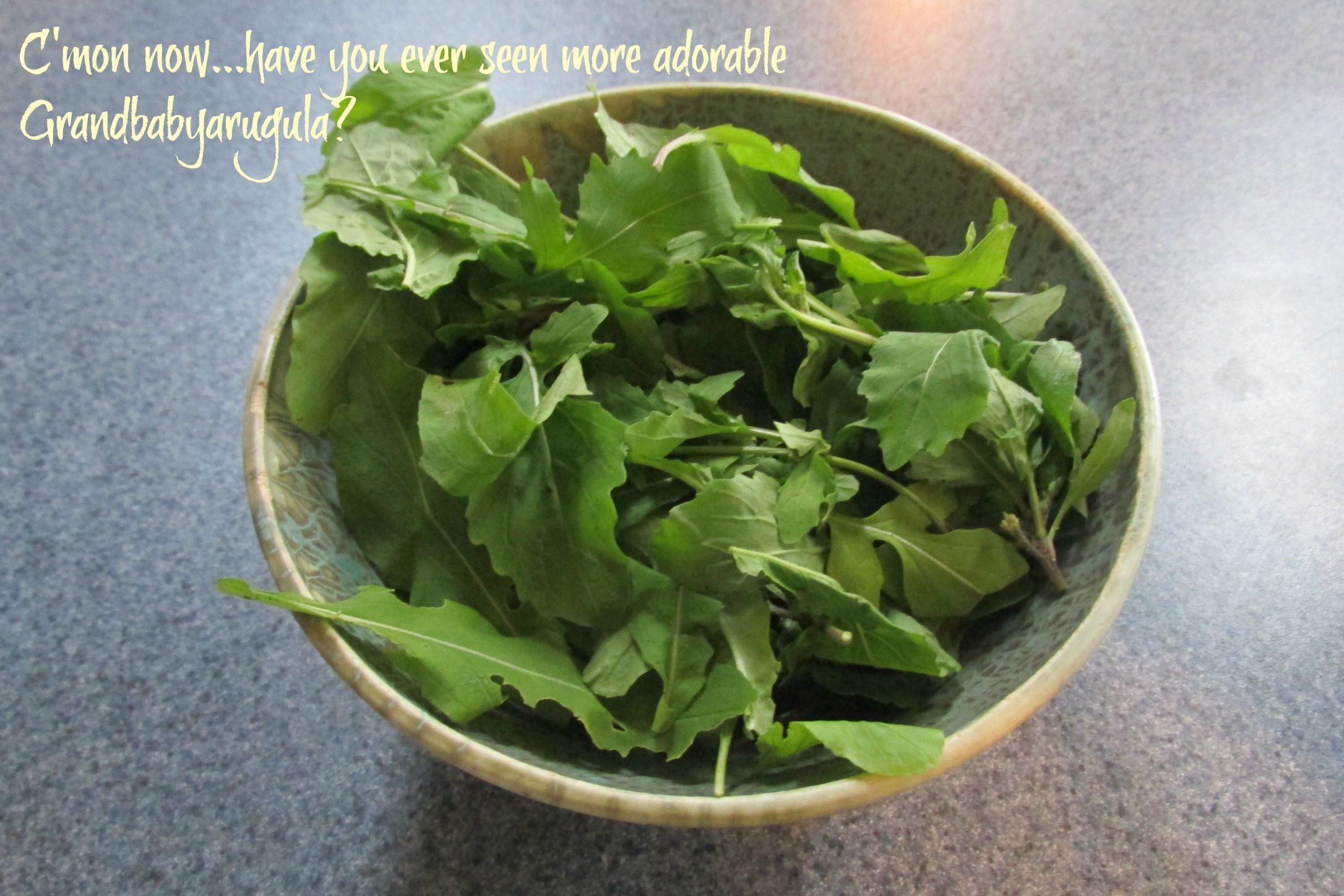
What gardener doesn’t feel the joy of new produce, fresh from the earth? Or what eater, for that matter? Even now, when I’m not currently gardening (although I am enjoying the garden my son planted, my “grandgarden,”), I feel that rush of excitement. “Ooh! Baby greens!”
Now imagine what that means in wartime. In the middle of a besieged city. Last week I read this story in Al Jazeera online, and I knew I had to share it.
The Damascus neighborhood of Yarmouk, according to the Al Jazeera story by Annia Ciezadlo, was established in 1957 as a refugee camp for displaced Palestinians, taking on a sad permanence as the Palestinian non-homeland issue calcified. But with the “Arab Spring” of 2011, Yarmouk stepped into a horrible new role:
When the rebellion against Assad began, in March 2011, displaced Syrians flooded into Yarmouk. Opposition groups like the Free Syrian Army began to clash with local pro-regime militias. On Dec. 16, 2012, the government sent Mig fighter jets to bomb a mosque, a hospital and four schools where displaced people had sought shelter.
From then on, the siege tightened every day. The government checkpoints in and out of Yarmouk would close for four days, then five, then six. Soldiers would confiscate any amount of food over a kilo. They would open bags of bread and count the pieces to make sure there were no more than 10.
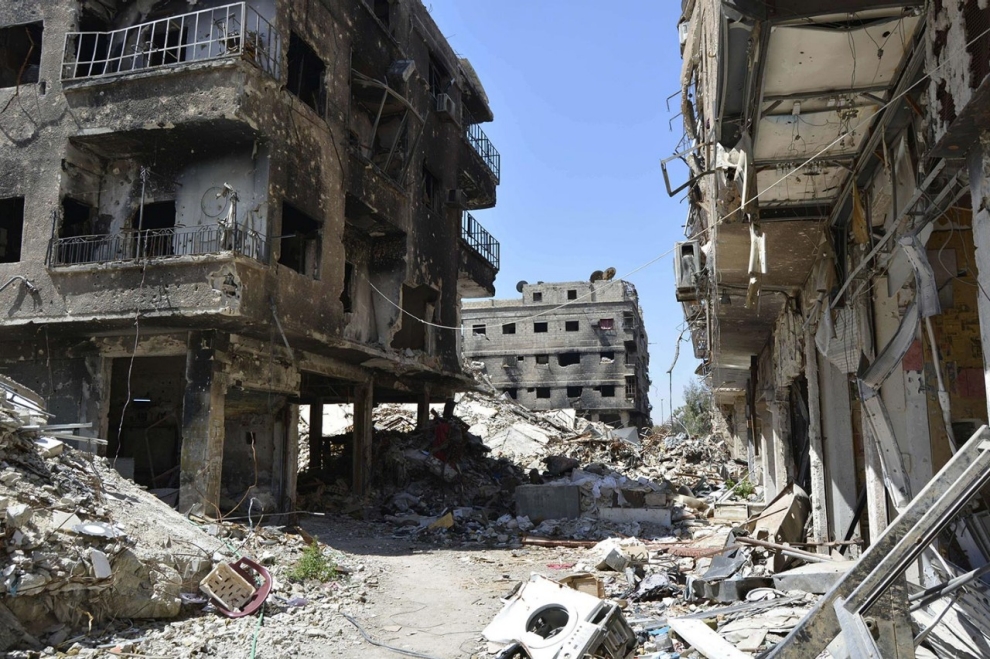
Here’s what Yarmouk looked like, thanks to Assad’s fighter jets:
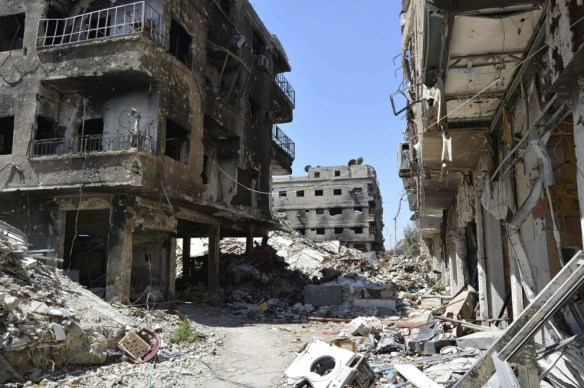
(Courtesy AFP/Getty Images)
Into this desperate situation stepped the gardeners. According to the story, rooftop siege gardens were planted gradually, secretly, and communally. I’ll let Annia Ciezadlo tell it in her words:
“You can say that this was something psychological,” says Osama Jafra, the alias of an organizer for the Jafra Foundation, a community development group that started several of Yarmouk’s large communal gardens.
About six months into the siege, around the end of June 2013, a neighbor hailed Jafra on the street. Since Jafra worked for a charity group, the man asked, could he get him money to buy seeds?
“Why?” Jafra asked.
“Come. I’ll show you,” the man replied.
He took Jafra to one of the schools that warplanes had bombed six months earlier. In the abandoned courtyard, a playground was alive with flowers and greenery. With seeds, they could transform it into a vegetable garden.
Jafra made a deal with his neighbor: I’ll get you $50 for seeds if you agree to share them. The next day, Jafra recruited staffers and volunteers to cleaned up the camp to cultivate the abandoned play area. Neighbors saw what they were doing and began to help. Even children pitched in. They finished in four hours.
“When the people and the children started to work with us, everybody was so happy,” says Jafra. They planted dandelions, parsley, tomatoes, eggplants and lentils. They called it the Palestine Garden.
And so a transformation began among the urban inhabitants of Yarmouk. They discovered the secrets of farming, like the best time to water the garden — at night, so the precious water would not evaporate. They learned how certain plants, like fava beans, can renew exhausted soil. They found seeds and farming skills among the rural farmers who had fled to Yarmouk when drought and later war engulfed the Syrian countryside.
This story of hope and redemption has a terrible dark side.
In besieged Yarmouk, gardening is a matter of life or death. In June 2014, a government shell killed three men just outside one of the neighborhood gardens. At least two people have been shot and killed by snipers while foraging for wild greens. And anyone providing food, water or medical care is especially at risk of being assassinated, kidnapped by armed groups or disappeared by the government. In the first three months of 2015, as fighters from ISIL and Jahbat Al-Nusra were infiltrating the camp and preparing to take over, at least 10 nonviolent activists were killed.
That’s right. In Syria, gardening can get you killed. And yet…people garden.
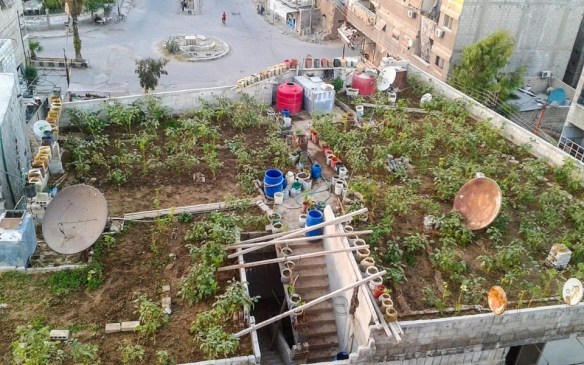
(Courtesy Lens Young Yeidani, Al Jazeera)
I cannot think of a more powerful emblem of hope. Stories of war usually make me feel helpless, and this one no less so. I wish I could send these people some seeds, or money for equipment–anything to ease their task. But at the same time, reading this, I feel something more: gratitude and awe for these folks in Yarmouk, fighting a dictator one lettuce at a time.



 Wing's World