My Democracy Anti-Panic Medicine: Read Joyce, Read Joyce, You Have No Choice/But to Carry On

Not that Joyce. Nothing against Dubliners or Ulysses; I just don’t think they’ll help get you through another week of our current presidency. I mean Joyce Vance, author of this book that was waiting for me, hot off its October 21st release, when I got home from my canvassing trip this week:

Mine’s autographed! 🙂

To judge a book by its cover, this one looks boring. To me, though, it looks like mental health. I thought I’d take a minute to explain why.

I’ve written in some detail about Common Power, the Seattle-based organization I’ve been teaming up with since 2019 to phone-bank and canvass in “red” or “purple” states.

Part of Team Fredericksburg on the canvass trail

Between doors (we knocked on about 2,000 during the days I participated in Fredericksburg, then Richmond), I split my awe between the lovely big deciduous trees of the east…

O oaks, how do I miss thee!

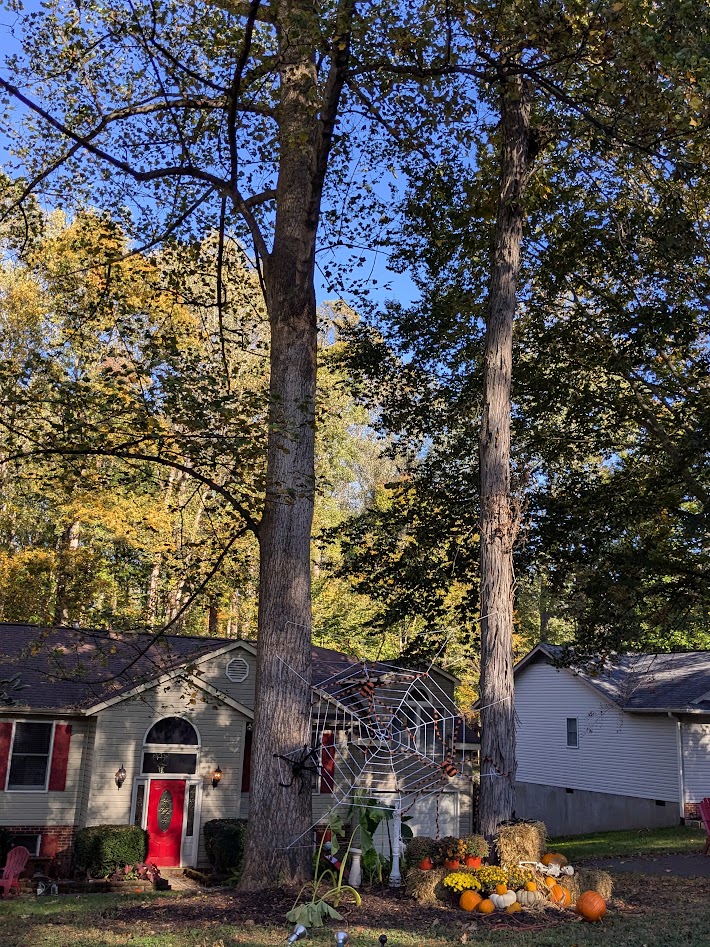
…and creative Halloween decorations.

(sometimes both!)

But the best part of CP work, to me, isn’t actually the conversations on voters’ doorsteps (though those can be quite moving). It’s the TEAMWORK, the FELLOWSHIP.

especially at a dumpling restaurant at the end of a long day

Which brings me back to Joyce’s book, whose opening line is, “Could I have picked a worse time to write a book about saving democracy?”

My answer is: no, this is EXACTLY the right time. Because now more than ever, we need to know we “have friends everywhere” (as they say on Andor), and we need to get our hands on some how-to.

However, if podcasts are what your life has room for, Joyce is all over that landscape. I first discovered her via Substack, where her Civil Discourse unpacks the week’s latest legal WTF?!! as only a former U.S. Attorney (and current law professor) can. Each post ends with, “We’re all in this together.”

Or you might just as easily find her on the brilliant panel-pod, Sisters in Law

Joyce is second from right

…or untangling legal threads with her former U.S. Attorney boss Preet Bharara. I recommend ALL these pods as a way to feel a little more on top of things…a little more prepared for what’s coming, because–

[Shoutout to another GREAT, whom you might already have discovered: historian Heather Cox Richardson.]

While I’m only halfway through Vance’s book, I’m happy to report that the final chapter–titled We Are the Cavalry–is chock-full of options for resistance, participation, finding community, pointing yourself towards hope…or, as one heading puts it, “Understand That Protecting Democracy Comes in a Lot of Flavors.” (146)

This is Fredericksburg’s Rappahannock River at sunset. Not a flavor; it just looks like one, eh?

In this moment when the bad guys want us to despair and give up, Vance offers this uplifting reminder:

“Although we may be on our own, we are not all alone. We truly are in this together. We have one another, a community of like-minded people across the country who care about democracy. That may seem to be a slender thread, but it’s how we, like others who have faced similar challenges in the past, are going to get through this.

So, gather your resources and take courage.” (138)

Joyce’s chickens also make appearances on her Substack, so I’ll close with this:
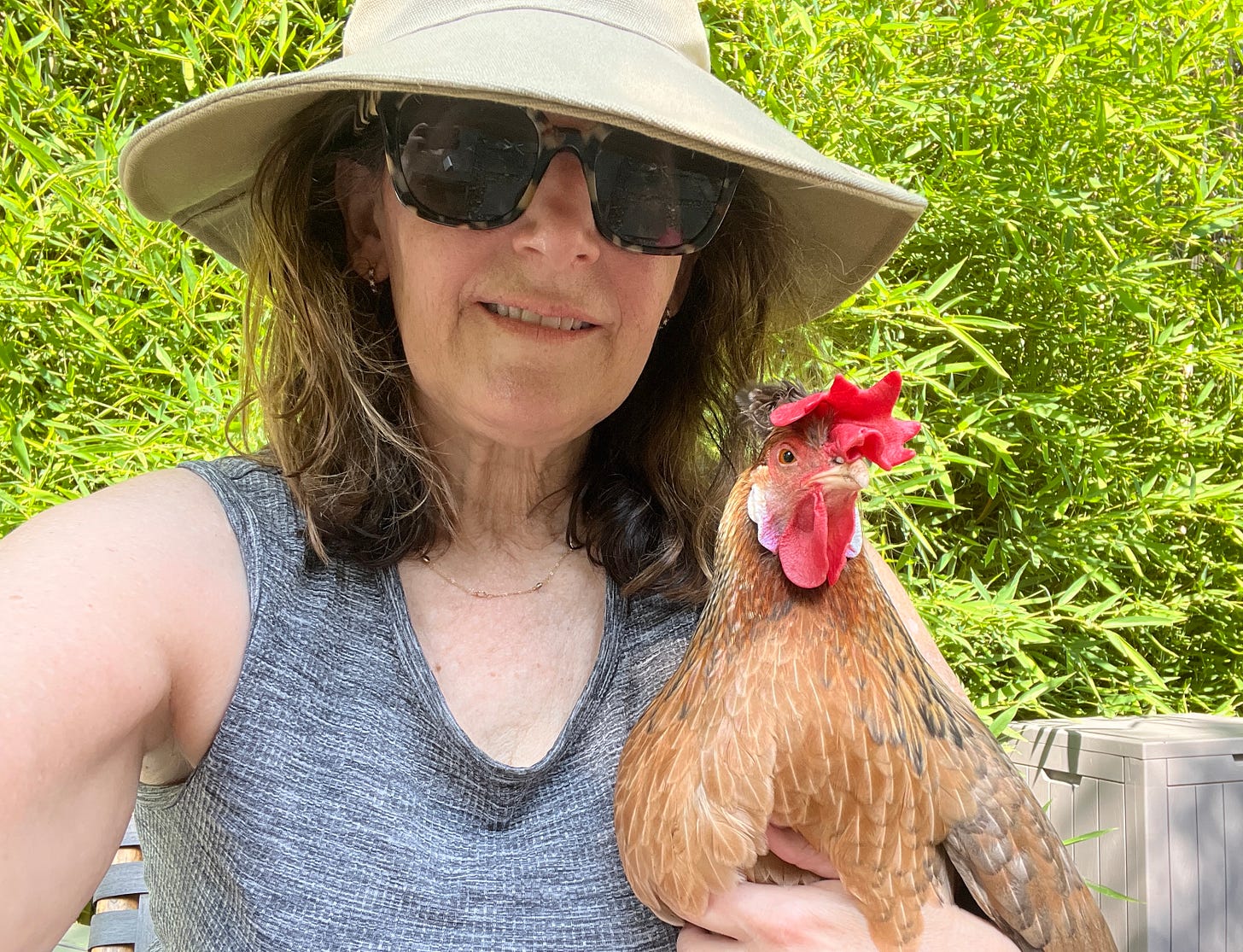
[photo by Joyce Vance]

For Hope, Solidarity and a Little Awe: Go See The Red Dress (Here’s How)

A small article in our regional online journal, Salish Current, caught my eye, its headline much like the title of this post you’re reading.

The Red Dress? A worldwide exhibit making its US west-coast debut at the Pacific Northwest Quilt and Fiber Arts Museum in the tiny town of La Conner, Washington? Just 30 minutes from our mainland ferry terminal? Here, in my backyard?

I read the article (by Ava Ronning, reprinted from The Skagit Valley Herald). And I had to go see it for myself.

Overwhelming. And that’s only at first glance.

The museum itself is housed in a breathtaking old dwelling on a hill overlooking the Swinomish Channel. I was so excited about the exhibit I forgot to photograph the museum, so here’s a shot I stole from their website:

Photo by Wendell Hendershott

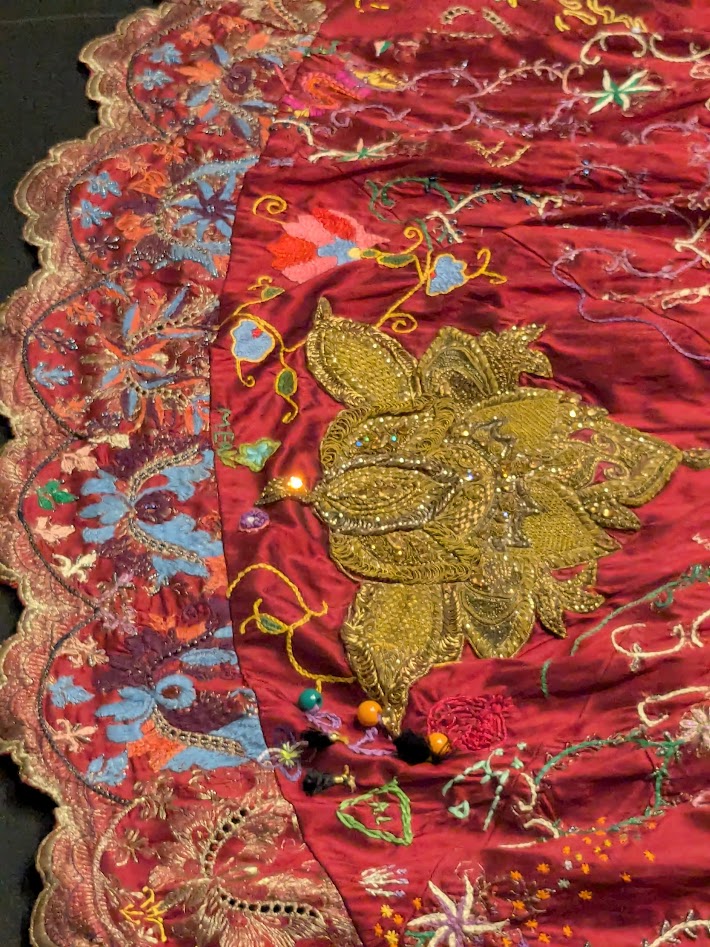
The dress occupies one small room…and I mean occupies. It fills the space, drawing you in to examine every fold, every flounce.

The border is the only part embroidered by machine, commissioned by the dress’s creator

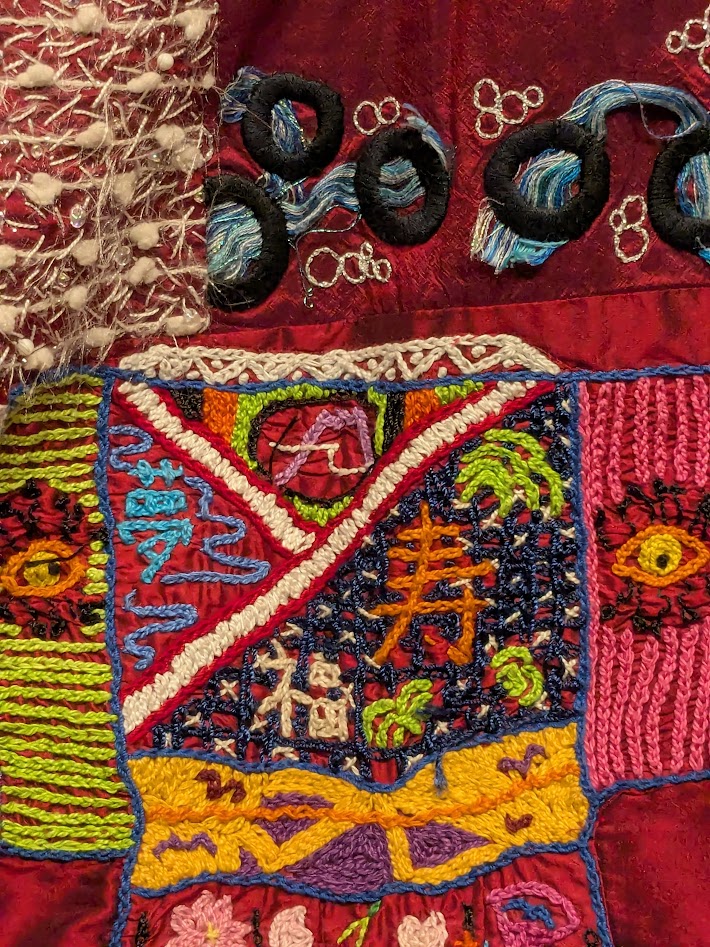
And that’s before you watch the video in the next room, which unpacks the dress’s stories (in part–there are too many for a 12-minute video). That’s where I learned that the white doves on this panel, sewn by survivors of the Kosovo war, represent their longing for peace.

Notice the contrast with the colorful images from (I think) Rwanda. Two communities of survivors, side by side on the dress: white and color; same medium, same message.

The Red Dress Project began with UK artist Kirstie MacLeod, as the website says, “as a sketch on the back of a napkin in 2009.” Since then, it “has grown into a global collaborative project involving and connecting with thousands of people all over the world.”

Through the video, I learned the story of this small piece from an artisan in Colombia. She started with traditional symbols–hibiscus, toucán–but after being shaken by a bombing in Bogotá, she added this word in English:

She could have written “esperanza,” but she preferred to make her message more universal.

The same word appears in a section from…somewhere else in the world:

The video didn’t say where. But how many places it could be from!

like this bit from India

The website goes on to explain,

Initially the project sought to generate a dialogue of identity through embroidery, uniting people around the world across borders and boundaries. However, over the 14 years it was created, The Red Dress also become a platform for self-expression and an opportunity for, often marginalised, voices to be amplified and heard, initiating vital dialogues on important and frequently uncomfortable issues.

A panel from Chiapas, Mexico. This section of the video was one of the most moving.

The website estimates the number of stitches in the dress from one to 1.5 billion. It reports: “Some of the artisans are rebuilding their lives with the help of embroidery, using their skills or being trained in embroidery to earn a consistent living to support themselves and their communities.”

In other words, these women are paid for their work. From the video, I learned that 50 Bedouin women had been able to achieve financial independence from the embroidery work the Red Dress Project engendered.

This one’s from Japan, not Egypt. I didn’t learn its story.


The most heartening part of the video is where creator Macleod explains, “The importance has shifted from the dress as an art piece to the creators of the dress.” One country at a time, she is traveling with the dress to allow each embroiderer to see (and in some cases wear!) the entire dress, in most cases for the first time. Seeing that wonder on the face of the 19 year-old artisan in Mexico choked me up.

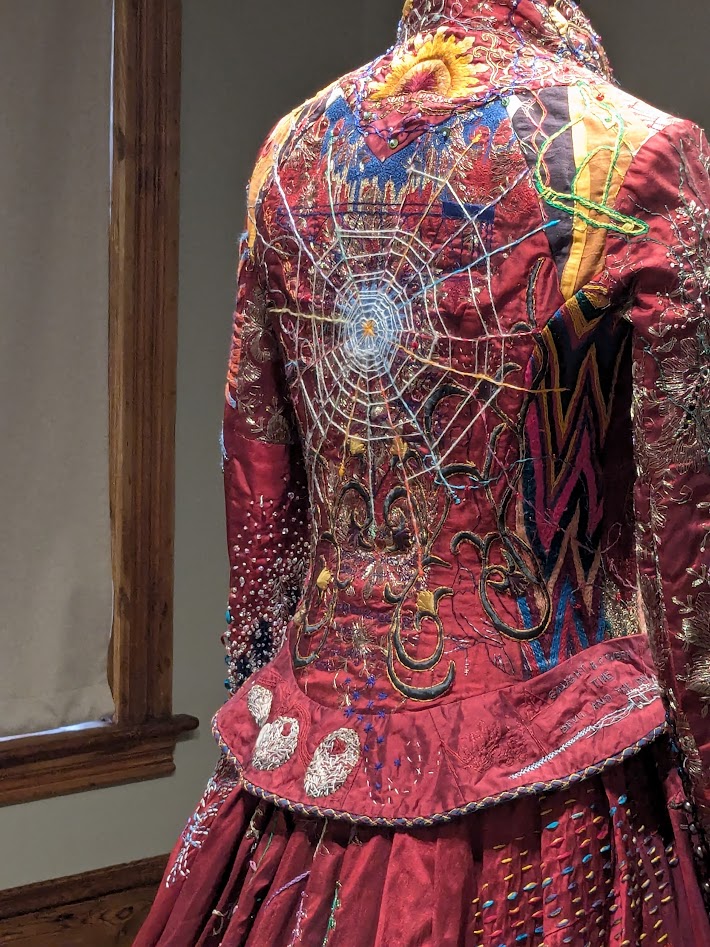
Macleod herself stitched the web on the back of the bodice, representing connection.

Speaking of choking up: this image from Ukraine: their national colors expressed in a flower:

May it be so

Only after leaving the exhibit did it occur to me to consider the word “redress”: it means, “to remedy or set right (an undesirable or unfair situation).” As Kirstie Macleod says, in the video, “The voices of the women are just crying out to be heard.”

And in an era of increasing division, borders, walls, aggression and suspicion, this dress is a community object “without prejudice, without boundaries, without borders…”

So many stories to absorb. So much solidarity to learn from.

So, you want to see the dress yourself? Here’s how.

According to the website, after its La Conner visit (La Conner! Not Los Angeles! That still blows me away), the dress will travel back to the UK, and thence to Asia and Australia.

modest little La Conner, and the Swinomish Reservation on the opposite side of the channel

So unless you can go to those places, here’s what I recommend. Go to the website. Watch the video (under “Media”). Then use their really cool Digital Red Dress tool for a DIY tour: https://reddressembroidery.com/DIGITAL-RED-DRESS

You will also find wonderful worldwide examples of projects similar to, often inspired by, the Red Dress Project.

Every time I look at it, I want to learn more.

If Hope Is A Muscle, Purpose Is Its Workout: Introducing Common Power

When it comes to the state of the world, be it locally, nationally or globally, everyone I know–and probably most I don’t–has felt like this a good deal of the past five and a half years:

I…give…up.

Most folks I know–and even more I don’t–have also found sources of inspiration to get themselves up off the floor and stay positive, or at least productive. Staying within my immediate circle of control is my go-to: cooking a meal for someone; spending time with an elder or a child; sometimes just contributing money.

But for me, real hope takes larger-scale action, and I would like to share my personal “hope-workout” of the last few years: Common Power.

Originally named Common Purpose and founded by UW Communications professor David Domke, “CP”s goal is “to foster, support and amplify a democracy that is just and inclusive.”

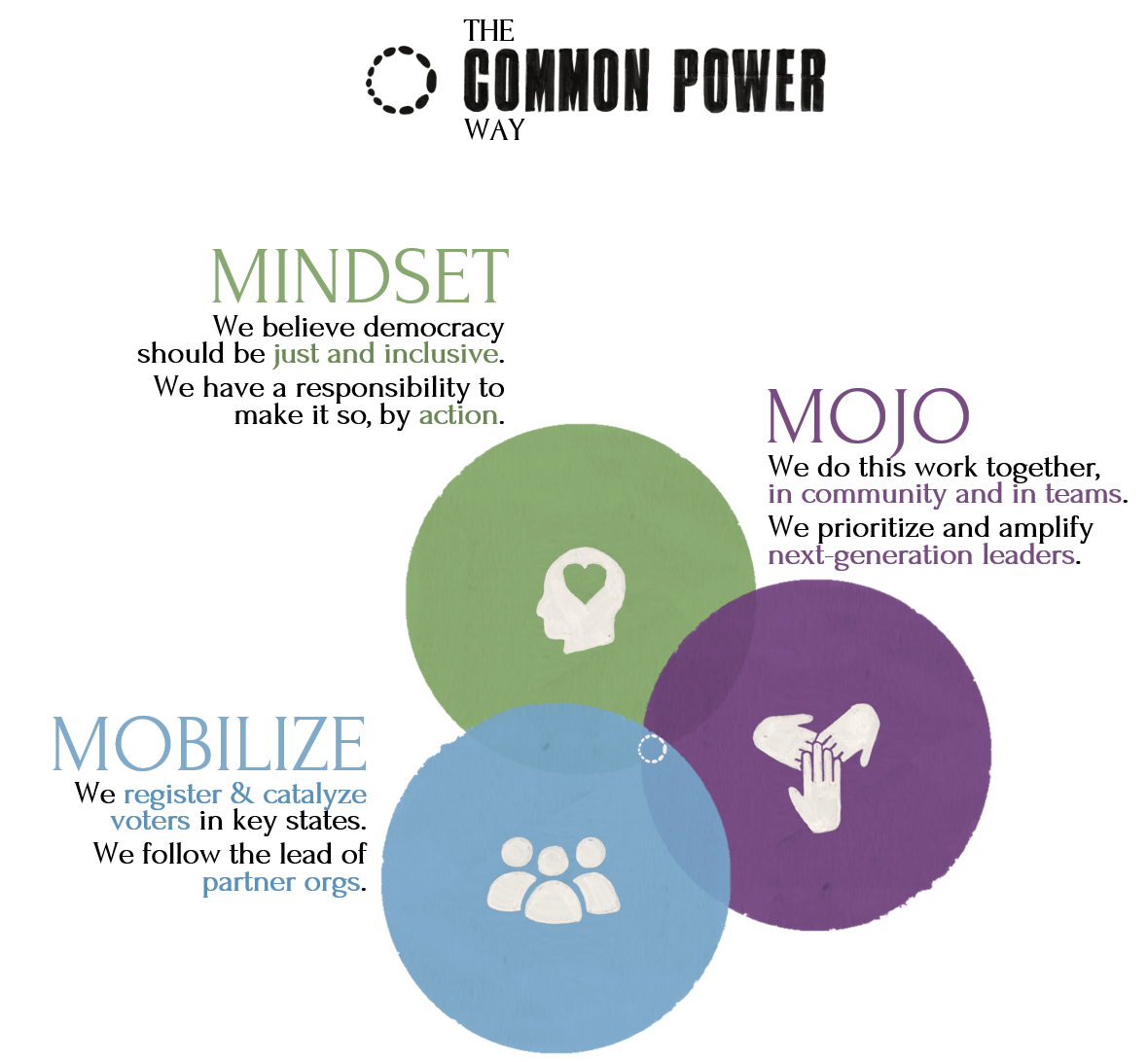
Even better, in my book, is the way CP goes about their work. I was first introduced to their three-part mindset when I attended a standing-room-only (obviously pre-pandemic) meeting in Seattle back in…2018, I think. This image speaks for itself:

Since joining, most of my “work” has been calling elected officials or phone-banking in “red” or “purple” states, which, no, I do not love. (Who does?) But most of that calling hasn’t been about trying to convince people to vote a certain way. It’s simply been working with in-state, non-partisan organizations (like NC’s You Can Vote) to give folks information they need to register, or to get their ballot accepted, or find their polling place. Do we target traditionally sidelined or disadvantaged voters? Of course. That’s the point. And as a result, those folks we do reach are, often as not, more grateful than grouchy.

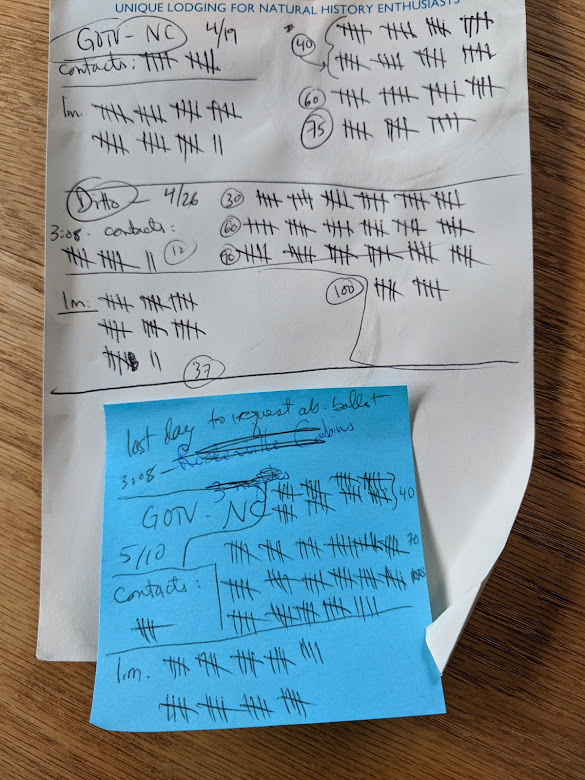
My recent tally sheets from NC calls. GOTV = Get Out The Vote

Besides providing me with an escape ladder from the Pits of Helplessness, CP has also become a source of inspiration, learning, and even joy.

Close to home, when I can, I attend AJ Musewe’s Lunch and Learn series midweek, where the delightful AJ explores themes like the history of redlining, or little-known democracy pioneers. (When I can’t attend live, I listen to them recorded.)

the delightful & wise AJ Musewe (photo by CP)

The monthly meetings (fully accessible now–no more trips to Seattle!) begin with music and good news, and always leave me pumped up about the next event, like…the inauguration of the newly-expanded Institute for Common Power, coming up June 4! That one’s in-person, so I don’t know if I can go, but maybe you can go, and personally mingle with some civil rights heroes, compatriots of the late Rep. John Lewis, who survived the campaigns of the 1960s.

Dr. Terry Scott will be the new Director of the Institute for Common Power in Seattle (photo by CP)

CP enthusiasts are also encouraged to join state “Teams” to focus their energy on one of seven states where democracy is both imperiled but also salvageable. Of course I chose Team North Carolina. And while I’ve limited my participation to online and phone work so far, I intend to travel next fall with Team NC to my home state to do the most effective GOTV work of all: knocking on doors, connecting with people. I CAN’T WAIT.

I’m coming, NC!

Best of all, for my teacherly soul, CP’s emphasis on next-generation leadership means that my NC fieldwork will be directed by leaders younger than my own kids. They’ve all been through CP’s Action Academy–a completely rad organization in itself; maybe you’d like to contribute, or recommend a youth to attend?–and I also CANNOT WAIT TO WORK WITH THEM.

Can you hear that hope-muscle working? Does your own hope need a workout? I invite you to check out Common Power.

Celebrate January 6…By Reading a Good Poem

For a good portion of this country–I like to think–the insurrection of January 6, 2021, was a horrifying event. That means January 6, 2022, will be a horrible anniversary. But I’ve found a soaring bridge of words to carry me over.

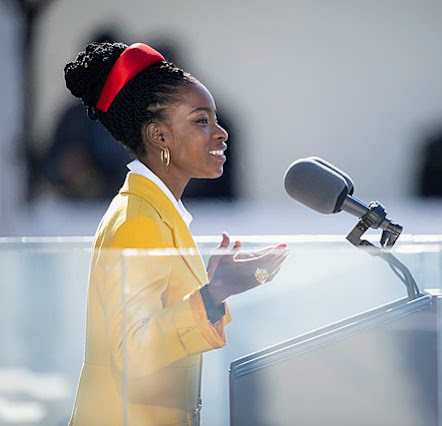
Remember Amanda Gorman, the incandescent young poet who helped inaugurate Joe Biden just two weeks after the insurrection?

Warms me up just to look at her

A friend of mine just loaned me her book, Call Us What We Carry. And while my usual routine is to read one poem every morning, before looking at any news headlines, Ms. Gorman’s words just keep calling me along. At this rate I’ll be looking for new poetry next week.

Image from Indiebound.org

I can open this book almost at random and find pain to connect with and hope to move forward with. This young woman understands COVID pain: …“March shuddered into a year,/Sloshing with millions of lonely,/An overcrowded solitude…”

She understands historical pain: “We might not be fully sure of all that we are/& yet we have endured all that we were.”

As I peek ahead toward the pages at the end, I see this young woman also understands form and fancy, playing with shapes and types of poetry new to me, but still inviting. There is DARK stuff here, like the poem “Anonymous”, printed in white upon a black face mask:

We stumbled, sick with shame, groping for each other/in that heaving black. We were mouthless for months./We could’ve been grinning. We could’ve been grimacing./We could’ve been glass.& so, we must ask: /Who were we beneath our mask./Who are we now that it is trashed.

But then comes the hope. A fierce, determined, Maya Angelou-style hope. I’ll leave you with a ray of that hope, for January 6 and beyond–Amanda Gorman’s poem “The Shallows”:

Touch-deficient &

Light-starved we were,

Like an inverted flame,

Eating any warmth down to its studs.

The deepest despair is ravenous,

It takes & takes & takes,

A stomach never satisfied.

This is not hyperbole.

All that is gorgeous & good & decent

Is no luxury, not when its void

Brings us to the wide wharf of war.

Even as we stand stone-still,

It’s with the entirety of what we’ve lost

Sweeping through us like a ghost

What we have lived

Remains indecipherable.

& yet we remain.

& still, we write.

& so, we write.

Watch us move above the fog

Like a promontory at dusk.

Shall this leave us bitter?

Or better?

Grieve.

Then choose.

One Month Till the Election? Mountains Please!

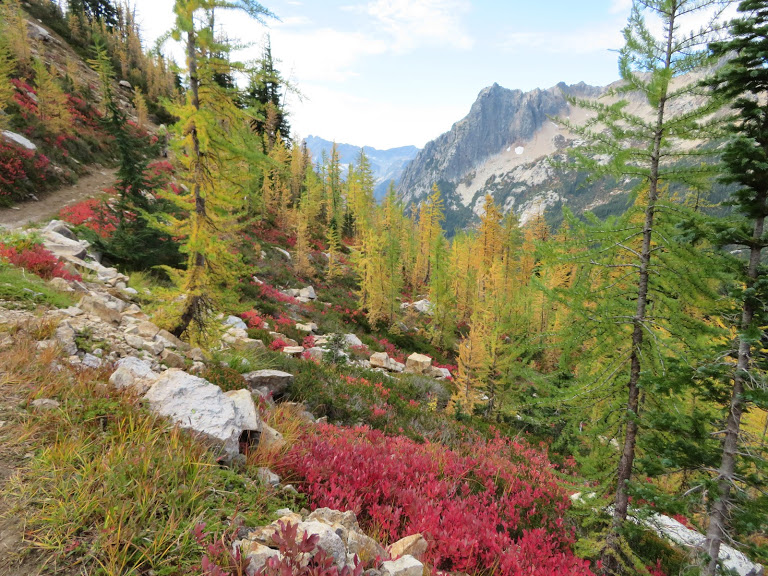
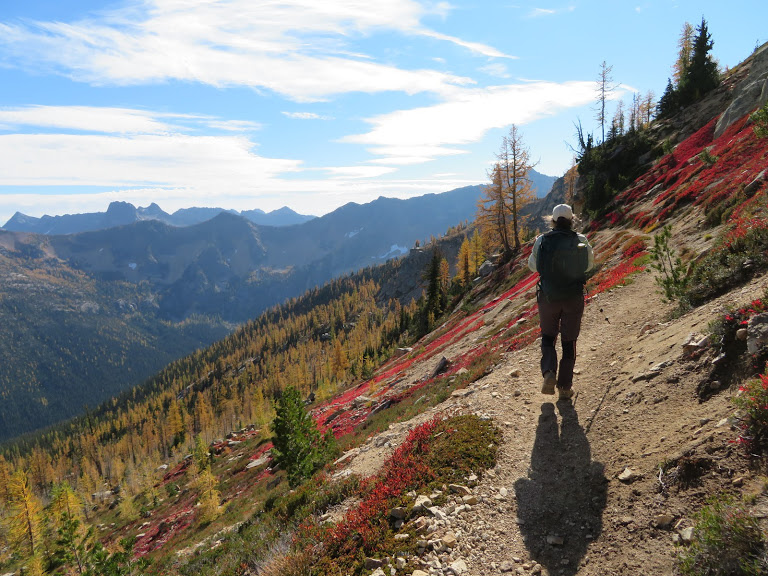
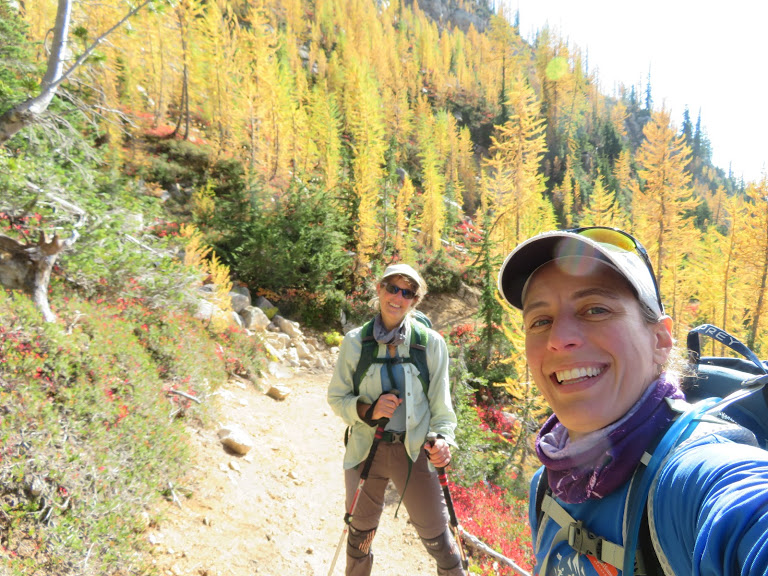
Full disclosure: this post has nothing pithy nor deep to add to your thoughts today. This is full-on escape. I was able to take last Sunday with my overworked Ironwoman Goddaughter to drive, then hike up to nearly 7,000 feet on the Cascades’ Pacific Crest Trail to breathe some clear air and see some fall color.

Keep trekking long enough and, with luck and faith, just mayyyybe some beauty will reward you.
Yes! Not all uphill walks are this glorious, so I’ll take ’em where I can.
Pretty much muted by joy and gratitude at this point.
This kind of scene actually hurts to behold.
Not forgetting the trees for the forest…
****celestial music****
Time to head back down…still keeping thoughts at bay.
In a month this color should be blanketed by snow. But it’ll stay with me when I need it most, in the coming dark months.
Thanks, Ironwoman Goddaughter. We needed this. God knows we all need something LIKE this.

May you all be well and find some inspirational beauty where you can. Till next time…

All I Want For Christmas: Hope, Very Simply

This is my symbol for my Merry Christmas wish:

img_2673

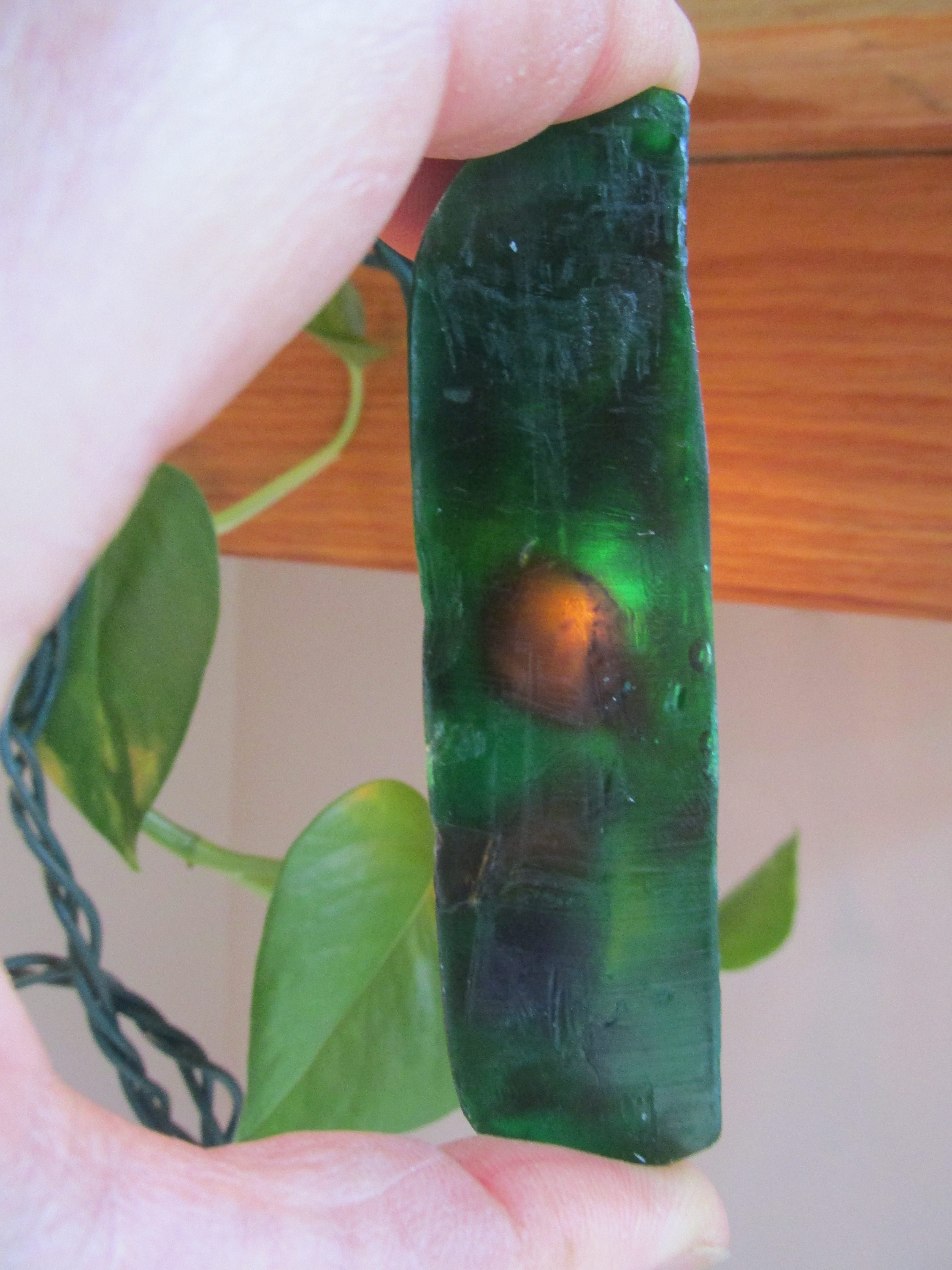
It’s a piece of soap. It makes dirty things clean, and makes them smell like lavender.

It was made by me and a child, for fun.

It reminds me of those models of cells biology teachers assign in high school. (See the nucleus? “Life finds a way.”)

It’s green. We all need more green.

It’s backlit by a Christmas light. We all need more light too.

Merry Christmas, everyone, if that means something to you. And if it doesn’t–here’s to green, and light, and children, and sweetness.