Parents Gone Feral: Peter and Martha’s Excellent Aldabra Adventure

Having colorful parents who raised you and your siblings in unorthodox ways is considered, these days, a piece of literary luck. Hey, look at you—you have memoir material! (Thinking Jeanette Walls’ Glass Castle, Tara Westover’s Educated, or, casting farther back, My Family and Other Animals by Gerald Durrell—which my own father read aloud to us.)

Don’t worry, this isn’t a pitch to buy my memoir; I’m not writing one. But if I did, the Aldabra Winter would fill a good chapter. And since it really is a good stand-alone story, what better place to share it?

I’ve blogged about my marathoning, Civil Rights activist, lemur-studying, poetry-writing, horse-riding, Quaker school-founding—oh, heck, colorful parents before. But I’ve never written about the Aldabra Winter of 1976-77, when my parents abandoned my sister and me for ten weeks to disappear into the Indian Ocean.

Okay, that was unnecessary drama. I just enjoy thinking of the story that way. In reality, I was 15, my sister was 17 (with the all-important driver’s license), and we had both a Duke student living with us and my grandmother living adjacent. Hardly “abandoned.” But still. These were the days LONG before internet, and Aldabra did not do phones.

So where is Aldabra, and what were Martha and Peter Klopfer doing there? For that I’ll turn to my parents’ Aldabra Journals, which they kept back then, written longhand, and which my dad is now digitizing one by one, a kind of 42-years-later blog. Take it away, Dad.

“Among students of animal behavior, it is commonly believed that if one concentrates ones studies on a particular species, one comes to resemble it.  Doesn’t Konrad Lorenz remind you of an arrogant gander, Niko Tinbergen of a graceful gull, and Karl von Frisch of a preoccupied honey bee?  Given such Noble [Nobel?] examples, we could be forgiven for accepting this belief and thus diversifying our interests so that, by switching from ducks to deer to damselfish, we could avoid a resemblance to the goats which had been our primary subjects.  However, insofar as the U.K.’s Royal Society was concerned, we were still goat-people, so when they and the Smithsonian decided to deal with the depredations of the goats on Aldabra Atoll, we were the ones they called.  The goat population on that isolated island had increased considerably in the past several decades and the fear was that this would adversely impact the large land tortoises, a threatened species, that shared the atoll.

We had been looking at the process by which newborn kids bonded to their mothers, a process that depended on events that were limited to a very short period of time: if bonding did not occur within 5-10 minutes after parturition it would not take place at all. We had reasons to believe these events were mediated by the pituitary hormone, oxytocin, but caprine oxytocin was not commercially available, and we were unwilling to sacrifice animals merely to obtain extracts from their glands.  But, if the goats of Aldabra were due to be slaughtered anyway, harvesting their pituitaries would be a sensible act.  The Royal Society proposed to allow this if, in return, we would document the impact of goats on the tortoises.  With Meg Gould (now Dr. Meg Burke), a doctoral student who was prepared to spend a year in the field, we agreed to undertake the task.

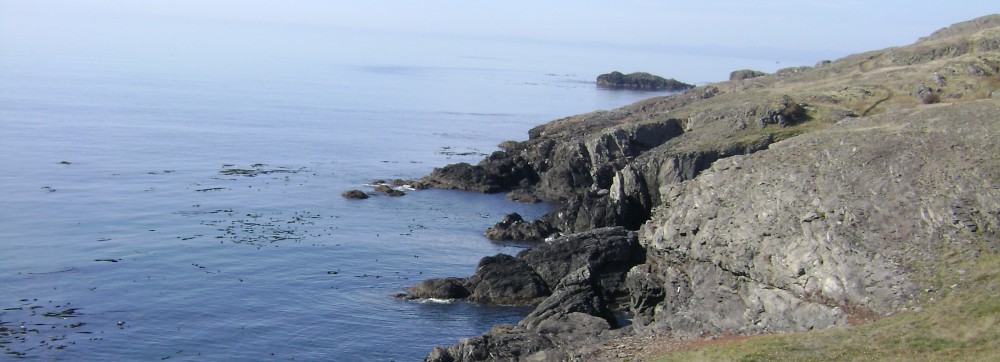
Aldabra is a fly speck in the Indian Ocean, some 400 kilometers northwest of the giant island of Madagascar.  The atoll resembles a flattened doughnut, 30 kilometers long, its width varying from 5 to 10 km.  Most of the interior, the doughnut hole, is a shallow lagoon that connects to the sea through three channels that dissect the rim of the doughnut, dividing it into 4 separate islets.”

Dad and Mom, ready for some serious goat-watching action

Let me take the mic back here to explain, in case you haven’t picked up on it: my dad is an academic, and both his speech and his writing tend toward the, shall we say, multi-syllabic. So let me zip through this next part to say that simply getting to Aldabra was an odyssey in itself. Starting in December of 1976, they left from L.A.–three hours after completing a marathon race!–flew to London, then Nairobi, and finally to Mahe, the main island of the Seychelles. Can you imagine how cramped and sore they must have been? Then they discovered their luggage was missing. OK, back to Dad.

“10 December. – Mahe

The day began with a desperate search for clothing to replace what was in our lost luggage, a search that was largely unsuccessful as local stores only offered sizes appropriate for the local population, who are considerably smaller than we.  But, miraculously, before the day was out, our wandering suitcase was located and we could turn our attention to confirming the arrangements for the final leg of our journey, a three day boatride on the freighter that, twice each year, resupplies the garrison on Aldabra.

The boat in question was an ancient 500 ton tub, the Nordvaer, which plies the Indian and South Pacific Oceans.  We clambered aboard and were escorted to the Captain.  “Sorry”, was how he greeted us, “my First Mate is sick and must be hospitalized.  Maritime law in the Seychelles forbids freighters lacking a Mate to carry passengers”. With the next available trip a full six months distant, we were stunned.  Somehow, in the lengthy discussions that followed, someone came upon the idea of enrolling us in the seamans’ union and then signing us on as members of the crew.  We dashed to the relevant maritime offices, signed various forms, and were officially listed as “supers” aboard the Nordvaer.  The title seemed a bit exalted to us, until, later, we learned “super” stands  for “supernumerary”, and meant we need not stand watches nor handle the engines, but at least we could ignore signs that read “no admission except for crew”.

Mom with the freighter Nordvaer

Stay tuned for the next installment of Aldabra Journals! (Or, as I like to call them, “Where In The World Are Peter And Martha Klopfer?”)



Defending What the (Chicago) Defender Defended: The Need For a Non-Dominant Lens

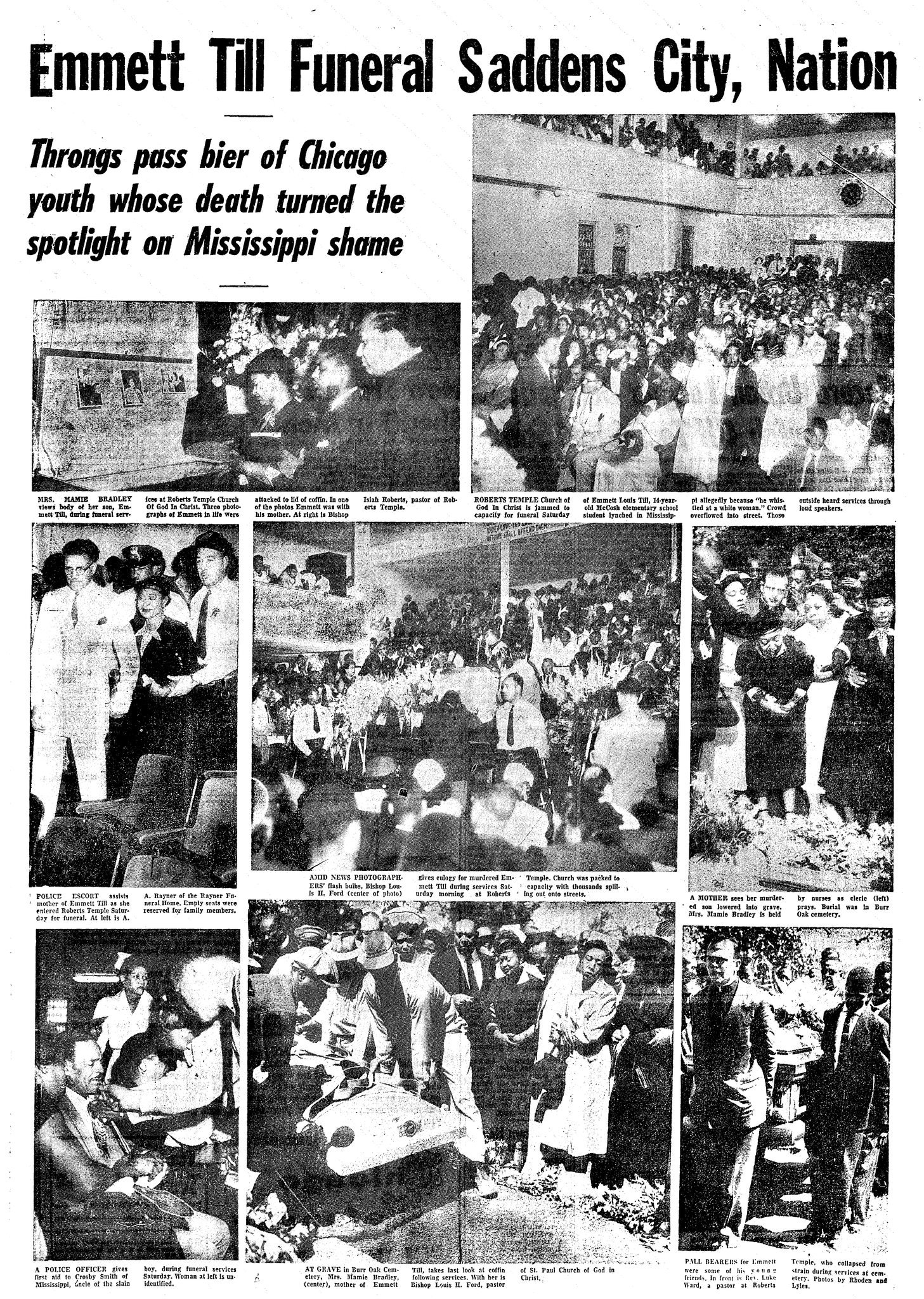
The Chicago Defender, legendary Black newspaper, has ceased printing after nearly 115 years.According to today’s story in the New York Times, by Monica Davie and John Eligon, 

…the demise of The Chicago Defender’s print editions represented a painful passage for many people who grew up in Chicago and for those with memories of its influence far beyond this city. Of its many significant effects over many years, The Defender told of economic success in the North, and was seen as a catalyst in the migration of hundreds of thousands of black Americans from the South.

The article goes on to say,

The Defender delivered news of monumental events — the funeral of Emmett Till, the death of the Rev. Dr. Martin Luther King Jr., the election of Barack Obama — but also of everyday life for black Americans, the Rev. Jesse Jackson said.

“We never saw ourselves listed other places in weddings, funerals, debutantes, so this became a real frame of reference for activities,” Mr. Jackson said. “My career would not be what it is today if not for The Defender.”

Images courtesy of New York Times and Chicago Defender

I won’t say “R.I.P.” because the Defender will continue–and, I hope, thrive–in its digital form.  But the article caught my attention because the news hits in a moment when I, like many White liberals, am scrutinizing what it means to be a part of white supremacist society that benefits me even while I criticize it.

One thing it has meant, over the years, is a comforting sense of “Yep, I’m America,” while minorities, no matter how much I support their rights, remain just that: minorities. Not fully people with their own lenses, lenses which might cast me in a view I’d rather not face up to.

To battle this default, given that I live in a very White community, I’ve been reading and listening to challenging words. My current book is Claudia Rankine’s Citizen: An American Lyric.

Image courtesy Indiebound.com

Part poetry, part essay, part lament, part witness, filled with art and filled especially with pointed pain, this small book skewers any notion of White righteousness with passages like this one:

Someone in the audience asks the man promoting is new book on humor what makes something funny. His answer is what you expect–context. After a pause he adds that if someone said something, like about someone, and you were with your friends you would probably laugh, but if they said it out in public where black people could hear what was said, you might not, probably would not. Only then do you realize you are among “the others out in public” and not among “friends.” (p. 48)

Or this:

At the front door the bell is a small round disc that you press firmly. When the door finally opens, the woman standing there yells, at the top of her lungs, Get away from my house! What are you doing in my yard?

It’s as if a wounded Doberman pinscher or a German shepherd has gained the power of speech. And though you back up a few steps, you manage to tell her you have an appointment. You have an appointment? she spits back. Then she pauses. Everything pauses. Oh, she says, followed by oh, yes, that’s right. I am sorry.

I am so sorry, so, so sorry. (p. 18)

Reading Citizen is painful. That’s why I’m doing it. I know The Chicago Defender was not written for me. That’s why I need it to exist. If I think about this a little longer, I’ll probably end up subscribing. 

Yes. I think I will. Because if I’m okay with my lens being the only lens offered to Americans, aren’t I complicit in pushing everyone else out of the frame?


That’s Dirt, Not Blood on My Hands–But Yes, I Perpetrated a Mossacre :(

If you are about to de-moss your roof, OR about to read Robin Wall Kimmerer’s book Gathering Moss: A Natural and Cultural History of Mosses, please, by all means, go ahead and do either one. But for your own sake, I beg you not to do what I did: both simultaneously.

It all started innocently enough, with me trying to keep up with The Mate and pull my weight in outdoor chores. With our barn roof doing its best to become a forest floor, I joined in on the de-mossing project, 100% committed.

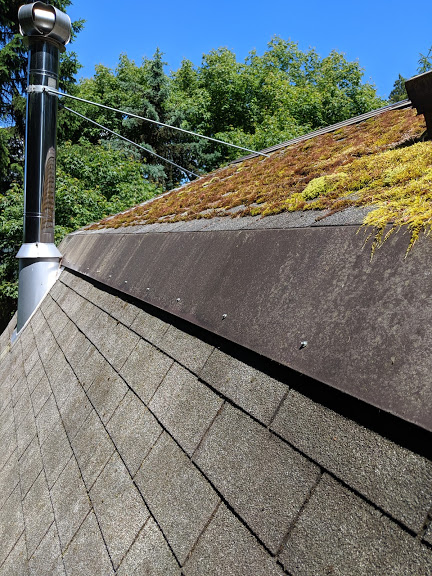
Committed to getting rid of THIS.

Of course we didn’t use any chemicals to remove the moss. Our only tools were a sort of vicious, giant metal ogre-toothbrush, and our own muscles.

Like so.

At first the job was actually pretty fun. Hard work, and–way up high, in a harness–a little scary, but fun.

Can’t call myself brave ’cause I’m not afraid of heights. But I did move…let’s say…cautiously up there.

But then, on Day 2 of Project Kill the Moss, I happened to pick up Dr. Kimmerer’s book on a recommendation. Dr. Kimmerer, as I mentioned in my last post, is a Bryologist–a moss expert. In the opening pages, I realized she was opening my eyes to a world I had always admired but knew NOTHING about. 

The “moss” is many different mosses, of widely divergent forms. There are fronds like miniature ferns, wefts like ostrich plumes, and shining tufts like the silky hair of a baby. A close encounter with a mossy log always makes me think of entering a fantasy fabric shop. Its windows overlow with rich textures and colors that invite you closer to inspect the bolts of cloth arrayed before you. You can run your fingertips over a silky drape of Plagiothecium and finger the glossy Brotherella brocade. There are dark wooly tufts of Dicranum, sheets of golden Brachythecium, and shining ribbons of Mnium. The yardage of nubbly brown Callicladium tweed is shot through with gilt threads of Campylium. To pass hurriedly by without looking is like walking by the Mona Lisa chatting on a cell phone, oblivious. (p. 10)

That last line? She could have been talking about me. And I LIKE moss! I mean, mosses. Sorry.

You can tell where this is going, right? I stared noticing the different types of mosses I was murdering, wondering which was which. I realized the importance of names, as she mentions in a passage I quoted last post:

…Often, when I encounter a new moss species and have yet to associate it with its official name, I give it a name which makes sense to me: green velvet, curly top, or red stem. The word is immaterial. What seems to me to be important is recognizing them, acknowledging their individuality. In indigenous way of knowing, all beings are recognized as non-human persons, and all have their own names. It is a sign of respect to call a being by its name, and a sign of disrespect to ignore it. (p. 12)

Bad enough, I thought, to be scraping away at these works of Nature’s art, these tiny, persistent beings. But how much worse not even to acknowledge them by name!

Fare thee well, ye feathery and ye silky-fronded alike!

To make matters worse, around Day 4 of the project, I ran into this passage:

Allegedly, the moss rhizoids penetrate tiny cracks in the shingles and accelerate their deterioration. However, there is no scientific evidence to support or refute this claim. It seems unlikely that microscopic rhizoids could pose a serious threat to a well-built roof. One technical representative for a shingle company acknowledges that he’s never seen any damage by mosses. Why not let them be? (p. 95)

Wait, what? I’m perpetrating all this murder and mayhem and it might even be FOR NOTHING?

But I wasn’t about to talk myself into stopping 2/3 of the way through the project, let alone The Mate.

Coming for ya, whether you like it or not. Me–I don’t like it anymore.

I pushed on. But the joy was gone from the job. All I felt was guilty. Well, and a bit sweaty and dirty too.

But you tough little rhizoids? Kinda cheering for ya now.

The barn roof is free of mosses now, and if Dr. Kimmerer is right, it might be years before they’re fully back. When they are, I think I might argue to let them be this time. Meanwhile, as penance, I’m noticing their individuality as much as possible on my walks, and talking up Gathering Moss to whomever will listen.

And I’m thinking about the importance of names: how we name what we value, and value what we name.

Maybe, as part of my penance,  I could learn those Latin names. Or even, God help me, turn my attention to those other unnamed companions of my spring and summer walks…the grasses.

Oh dear God, not the grasses!


A Lance-Leafed Stonecrop By Any Other Name Would Smell As Sweet…Maybe

“What IS that flower? Is that Small-flowered Lupine or Bicolor?”

“Why do you need to know? What possible difference does it make?”

“It makes a difference to ME.”

“Why? So you can show off your rad amateur naturalist skills?”

“No! I don’t need to tell anyone else. I just want to get it RIGHT.”

“Pfff.”

I have this same conversation with myself, on nearly a daily basis, during wildflower season. Wildflower season in the San Juans lasts about 9 months, so that’s a lot of conversations.

Point is, whether it SHOULD matter or not, to me–it does. Supposedly, I go for walks as exercise. Power walks. But gods help my fitness regimen should I venture out with a camera.

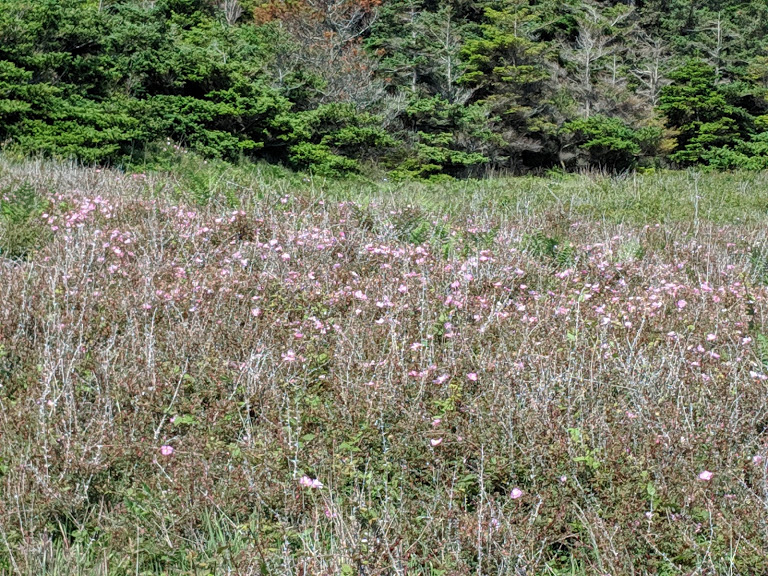
It starts as appreciation. “Oh wow, look at those wild roses go.”

The rest of the year, they’re just brambles.

“Let’s just take a closer look. Mmm, sweet!”

Ready for my close-up.

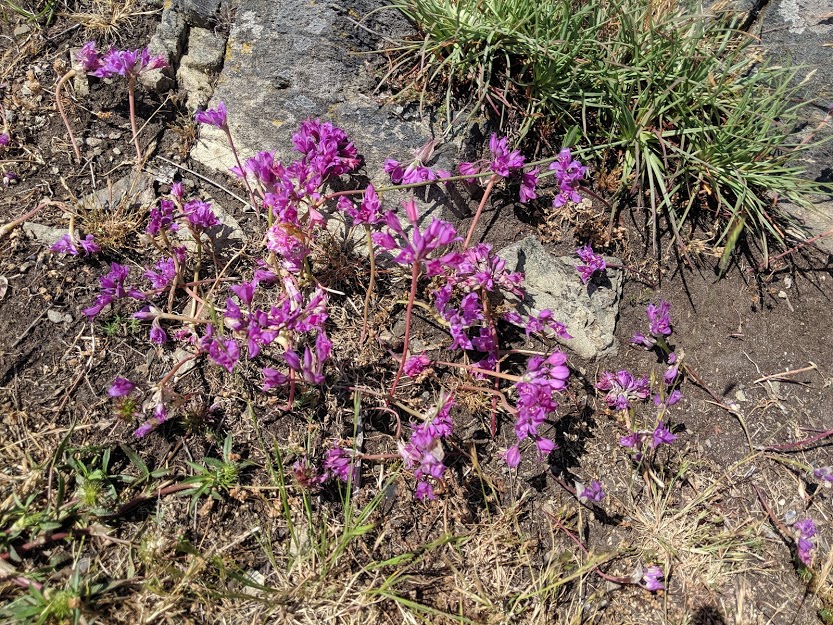
“Okay, walking fast again. But–oh my, have you ever seen such a THICK clump of Hooker’s Onion?”

Seriously, Mr. Hooker? Couldn’t you have named this flower after your wife or something?

By now my “walk” is a goner. “Ooh, wonder what the world looks like from the perspective of one of those Harvest Brodaeia?”

Not a bad life down here.

“PRICKLY PEAR’S IN BLOOM! ALERT THE MEDIA!”

Or better yet–don’t. Let’s just keep this rarity to ourselves, shall we? Cactus in the Northwest!

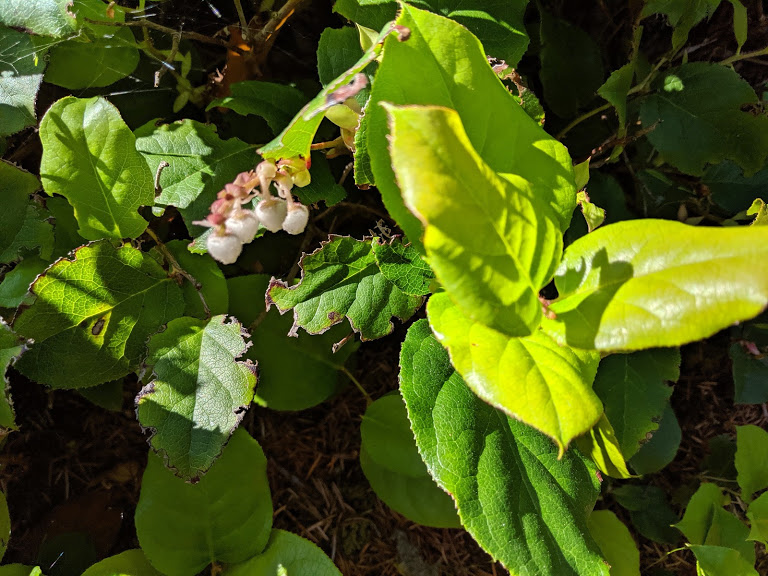
For that matter, why should the flowers have all the attention? Aren’t the new leaves of this Salal just as eye-catching as its blooms?

Caught MY eye, anyway. Silky-soft too.

And the new fronds of the Grand Fir? Good enough to eat!

Some people–and lots of deer–actually do.

Even Madrona bark looks floral in the sun.

Photo credit: My Special Tree

But the worst are those darn ID’s. “What IS this one? Gotta remember to look it up when I get home!”

Non-native, I’m pretty sure. Do I care? Nope. Just wanna KNOW ITS NAME.

Recently, however, my annoying need to NAME plants received a vote of confidence from a well-respected source: botanist and author Robin Wall Kimmerer. I started reading her book, Gathering Moss: A Natural and Cultural History of Mosses. Dr. Kimmerer is a Bryologist–a moss expert–and a member of the Potawatomi Nation. And right off the bat, she has this to say about the importance of names:

…Often, when I encounter a new moss species and have yet to associate it with its official name, I give it a name which makes sense to me: green velvet, curly top, or red stem. The word is immaterial. What seems to me to be important is recognizing them, acknowledging their individuality. In indigenous way of knowing, all beings are recognized as non-human persons, and all have their own names. It is a sign of respect to call a being by its name, and a sign of disrespect to ignore it. (p. 12)

Yes! Right?! Yes. That part that I highlighted in red…THAT is what drives me to name flowers, to get their names “right.” I want to recognize them, call them out, respect them. Would it matter if I got those names “wrong”? Of course not. I might as well call them Fred or Cindy. But taking the time to look up those names, talk about them with other flower nerds, think about where those names came from and whether they fit or not…THAT matters. To me, and, I like to think, to the flowers.

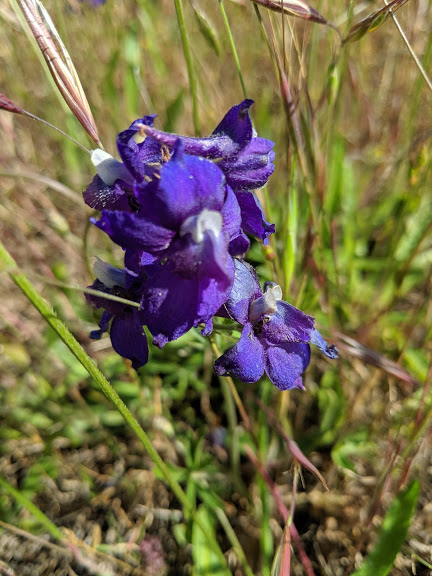
Hello, Fred. Or Cindy. (Or Menzie’s Larkspur, actually. No, I am NOT showing off.)

As for mosses, and Robin Kimmerer’s book…more on that, next post.

Are you a wildflower nerd like me? Care to weigh in on what drives you to NAME?

“People Are Hard to Hate Up Close. Move In”…And Eat Lunch.

I experienced two things last month that had nothing and everything to do with each other. I listened to a podcast. And I ate a potluck lunch.

The podcast was one of my favorites, On Being with Krista Tippett. This particular episode caught my attention with its title: “Strong Back, Soft Front, Wild Heart”–an interview with Brené Brown, a research professor at University of Houston’s Graduate College of Social Work. 

Right away I knew Prof. Brown was speaking my language when she talked about the damage being done by our increasingly polarized culture in America.

And I talk about this high lonesome culture that we’re living in right now, where we are the most sorted that we’ve ever been…we’ve sorted ourselves into ideological bunkers. And so I would argue that…nine times out of ten, the only thing I have in common with the people behind those bunkers is that we all hate the same people. And having shared hatred of the same people or the same — I call it “common enemy intimacy” — is just an intimacy created by hating the same people, is absolutely not sustainable. It’s counterfeit connection.

And so this first practice of true belonging is, “People are hard to hate close up. Move in.” When you are really struggling with someone, and it’s someone you’re supposed to hate because of ideology or belief, move in. Get curious. Get closer. Ask questions. Try to connect. Remind yourself of that spiritual belief of inextricable connection: How am I connected to you in a way that is bigger and more primal than our politics?

That part I highlighted in red? That’s something I’ve been challenging myself with ever since the election of 2016 made me feel like I hated half of America. So far that challenge has taken the form of reading and listening to the words of bridge-builders and people whose life experiences are very different from mine. But because I now live in a very small community (worlds away from my previous life as a public school teacher in Tacoma), I hadn’t yet pushed myself to “move in” toward people of different political views who are my actual neighbors.

Last month, that changed. Along with about 69 other people, I sat down to an Interfaith Potluck for people of all faith-based groups on Lopez–Lutherans, Buddhists, Catholics, Quakers, Seventh Day Adventists, you name it–and ate lunch.

Nothing like breaking bread…or deviled eggs, or salad, or brownies…together!

Actually, the “moving in” part started for me back in January, when I pulled together, via email, a small group from various churches to help organize the event. Even though the idea originated with me and was approved through the Quaker Meeting I attend, it was important that it not be a “Quaker thing” (which most people would read, correctly, as politically left-leaning), but completely inter-faith from the get-go. And so, after sitting down several times to organize with people from some churches with very different approaches to both faith AND politics (which we did not get into), I was already feeling the benefits of that “hard-to-hate” thing by the time lunch was served in May. (Hate, are you kidding? I LOVE these people!)

I can’t show too many pictures without violating people’s privacy; just enough to give an idea. And to encourage others. Do you live somewhere that feels divided? Your town, your neighborhood, your block, maybe even your street or your building? Try this:

  1. think of a handful of folks who you KNOW are very different from each other and from yourself
  2. invite them to sit down with you somewhere neutral (like a cafe) to discuss the possible benefits of some kind of event
  3. as a group, create a rough vision of that event: lunch? tea? BBQ? Indoors? Outdoors? When?
  4. craft a statement of purpose to share with others; designate a larger group that each of you will “report back to” or “recruit”
  5. set a date for your next meeting to work out the next level of details: logistics, activities, responsibilities, etc.
  6. And you’re off!

    Look at all these folks leaning in!

At your event, you get to decide how programmed you want to be. We went with the very minimum–icebreaker questions in jars on every table–so as to keep the comfort level high. Some folks used the questions, others didn’t. But it felt good having them there.

We also had feedback forms on every table so people could let us know what was well done and what to work on next time. And should there be a next time? Our folks all said Yes!!!! …but could we find a meeting hall with better acoustics?

Oh, you mean so you can listen to each other better? Yes. Yes. I can lean in to that. 

Sisters Weekend. Not Pictured: Sisters.

You would think my two sisters and I don’t get along. Not only do we live in three of our continent’s four edges–Michigan, Washington and Texas (also equally distant from our parents in North Carolina, whom we also like a good deal, by the way)–we stay in touch only fitfully, rarely calling or emailing or, now, texting. 

Can I just say we’re not a very touchy-feely family?

But we DO get along. We like and admire and enjoy each other. And, as the youngest sister and the designated Sentimental One, I borrowed the idea from a friend of mine of the Sisters Getaway, to honor the occasion of our 60th birthdays, one at a time.

Our agreements: the getaway did not have to be on the actual birthday. Convenience was paramount. So was sun (especially for my winter-stricken Michigan sister). And we would gather in a place none of us knew well, so that no one had to play host.

Two years ago, we spent three days together in San Diego. This year, our middle sister picked Denver. Denver in May–hurray! Bring on that Rocky Mountain sunshine!

Or…not.

Oh, silly girls. Denver in May does what it likes.* Luckily for us, we had decided in advance that we wouldn’t be doing any serious hiking, since one of us is in the process of setting a date for hip replacement surgery. (Did I mention we are all getting older? Funny about that.)

*I did, however, prevail on my sisters to swing by the local REI so I could plunder their sales rack for a warm extra layer–having seriously under-packed.

So what should proceed now is a montage of of us out enjoying the sights of Denver, right? Group selfies, snapshots of delicious food and drinks. Glorious, happy vacation pics.

But my sisters are more private than I am, and that is only one of the things I love about them. So I won’t be sharing any of the pictures I took of us. I could have taken a picture of the living room of our Air B ‘n’ B house, which is where we spent most of our time. Or of a Denver bus–we rode them all over town. Or of the interior of Union Station, which, it turns out, is an extremely cozy place where you can hang out for hours for free, just gabbing and people-watching, as long as you don’t lie down on the couches.

But again…sorry. This getaway was about each other. The only real touring we did was of memory; the only real exploration of feelings; the only real adventure was peering into our mutual futures.

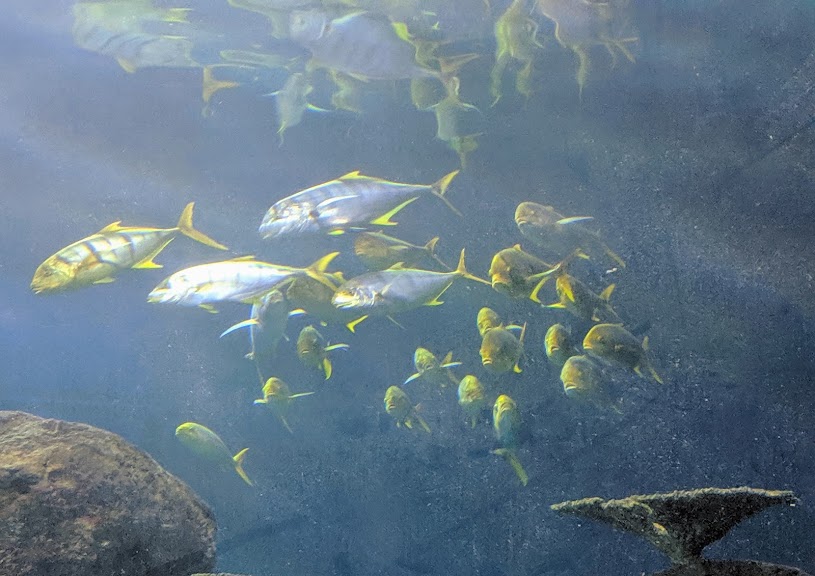
Still, I’m blogging about it, so SOME pictures would be useful, eh? We did wander through Denver’s not-exactly-downtown Downtown Aquarium, which was exceedingly noisy for an aquarium, but also yielded some extraordinary beauty.

Mesmerizing.

I’ve been in many aquariums. (Aquaria?) Never saw anything like this anemone before.

Another slow wander: the Botanical Gardens. (See, we do know how to tourist!)

I think these crazy giants are from South Africa…

And for good measure, one quirky photo from downtown:

I completely support this statement.

But that’s it. That’s the whole post. What I’m saying here is–love your family in your own way. Do it with, and for, the camera if you want to. Or don’t. Call or text or email, or don’t. But love ’em. Life is short. One day you’ll turn around and be 60. Or, if you’re so blessed, 80.

Me, I hope to re-post this when we’re celebrating each other’s 90th. Inshallah!

“Pen” Is a Verb Too–But “Addiction” Is Only a Noun

Back when my sons were young enough to go shopping with me, they used to work together to protect me from myself. Especially at places like Office Depot.

“Stay out of the pens section, Mom,” they would warn. “You know you don’t need more.”

Ahhhh…pens! Ink pens, in rainbow colors! How do I love thee? Let me count the ways brands.

When I was little, maybe 7-9, I loved those felt-tipped Flairs the best. I used them to draw. My drawings tended to feature the four Queens and Kings from the Narnia series–Lucy, Edmund, Susan and Peter Pevensie–with myself drawn in for good measure. Queen Gretchen. Every one of us outfitted in rich, royal colors. Sorry, I didn’t keep any of those drawings, but here are the Flairs…

Back then I bought these pens one at a time. A pack like this would have sent me into paroxysms.

Then I started journaling. As I’ve blogged about in the past, “journal” may not be an official verb yet, but it is to me! I started in 1975, and now, 44 years later, I’m still going.

A couple years of my life in here…

Flairs, I decided, weren’t as great for writing as they were for drawing. That’s when Sheaffer cartridge pens entered my life.

Remember these beauties? (Photo courtesy of Harvey Levine, MyAntiquePens.com)

Oh, those colors! Peacock Blue, Emerald Green…that delicious, chocolately Brown. My favorite journaling moments in those days involved switching colors when one cartridge ran empty, then watching the gradation of hues cross the page with my thoughts.

But boy, did I have some inky fingers in those days. And I doubt my teachers were too thrilled with my peacock-blue blots.

Somewhere along the line, though, the Sheaffers’ negative outweighed their glorious positives. Too many leaks, ink explosions, stained fingers. I got practical.

In my post on Journaling from 2013, I sang the praises of the Uniball. I still love those, but for more uniform, blot-free, downright sexy flow across the page, I now pledge my allegiance to the Pilot P-700.

Purple, and green? Be still, my heart!

After buying myself this multicolor pack, I had to go get my latest notebook and write. Did I have anything profound to say? Nope. I just lusted after the feel of that inky page-skating. And guess what? I got to capture that moment, if for no other reason than to laugh at myself a few years hence.

Don’t we all need a little more self-mockery in our lives?

Yeah…but now I’m gonna need a bigger steamer trunk.

Do you have a favorite pen, or paper for that matter? What writing implements speed up your heart?

Athletes and Other Workers During Ramadan: This Non-Muslim Woman Takes Her Hat Off To You

“Come in here and take a look at this,” The Mate called from the living room where he was watching the NBA finals from the seat of his exercise bike.

“That guy,” he indicated one of the Toronto Raptors jockeying for a shot, “is Muslim. He’s doing all this while fasting. He’s not even drinking water!”

“That guy” is Enes Kanter, a Turkish player born in Switzerland, who’s been playing in the NBA since 2011. Kanter is a devout Muslim. This time of year, that fact carries extra meaning.

The holy month of Ramadan began on May 5. During Ramadan, devout Muslims refrain from eating or drinking anything, even water, from before dawn to after sunset. Since Ramadan is a celestially-based holiday, its dates rotate around the calendar. Sometimes Ramadan falls in the winter, and the fasting period is relatively short. But sometimes–like now–it falls in spring or summer, when daylight can last up to 18 hours.

Eat up! This has to last you 18 hours.

I watched, fascinated. All the athletes were sweating profusely, as athletes do. During breaks, they sat on the bench sucking from their Gatorade bottles. All but one. 

I’ve often wondered about people who work in the hot sun at jobs like construction, landscaping, or road work. How do they get through their challenging work days, day after day, for a month?

I haven’t yet taken the time to pursue the question as it relates to workers per se. But since I started with professional athletes, this article by Shireen Ahmed for Buzzfeednews.com, “Here’s How 15 Hardcore Athletes Train During Ramadan,” provided some answers. 

All the athletes focused on preparing their bodies carefully during suhoor, the pre-dawn meal, and iftar, the post-sunset meal. Protein and potassium were the main components, along with necessary sugar. Hydration was, as you might imagine, absolutely essential.

Get in there, vitamins! I need you!

Take a moment and think about that: not only are you going about your day of hot, sweaty, exhausting work with zero drinking, you are also getting up at four a.m. in order to prepare your body.

Besides the actual diet, however, the most striking theme from the 15 interviewed athletes was the power of their faith to get them through each work day.

Ahmed’s article features Indira Kaljo, a former Division 1 NCAA basketball player, describing the difficulty of playing while fasting:

“The biggest challenge was waiting through the water breaks. Those minutes were very difficult. The second [most difficult] thing was the late nights and then having to practice daily feeling exhausted.” The most powerful thing that helped her get through the month? “Prayer. I used prayer.”

Nadia Nadim,  a professional soccer player in the National Women’s Soccer League (NWSL) with the  Portland Thorns FC, who also plays for Denmark’s national women’s team, :fasts on training days but not on match days. ‘I know my body can’t handle it,’ she says, because hydration and nutrition dictate her performance.”

I KNOW, right??!!

And yet: athletes do fast on game days. Workers do fast on work days. Instead of nutrition and hydration each day, they take prayer, and faith. And they give faith back to the rest of us who watch in awe.

Manal Rostom, a professional mountaineer from Egypt,

“sees Ramadan as a month to push through with a positive mental attitude. She says that colleagues praise her efforts to teach and work out during Ramadan, but she remains grounded. ‘[They] don’t get how easy it becomes once you reset your mind to literally just do it. You will survive. Fasting trains you to become a better human being.'”

You guys are my heroes. Need some pie for iftar?

I’m not Muslim. But I recognize strength and goodness when I see it. And I mean this with all intended ironic humor when I say, “My hat is off.” Thanks for the example.

On Hugs: Embracing Ambivalence

I live in a very huggy place. S.O.P. for greeting folks you know is a good, solid hug, and even if a first-time intro miiiiight include only a handshake, by the time you’re saying goodbye to your new acquaintance, welcome back to Hugsville.

This happens to be fine with me. But I can’t help but wonder, what about people for whom hugging is NOT fine? I know a few who, in a group, go along with the hugs, but I can feel that their body isn’t into it.

Why, I ask myself, should it have to be?

Hugs are supposed to be a physical demonstration of mutual affection.

Like this. [Photo by Edward Eyer, courtesy Pexels.]

But if someone’s preference for affection-demonstrating takes other forms than physical;

if, gods forbid, they might not be feeling all that affectionate;

or if they have ANY other reason that’s nobody else’s business why they don’t want someone’s arms wrapped around them in that moment–

shouldn’t they have a right to excuse themselves without being uncomfortable?

I don’t have a specific solution to this situation, except perhaps this: When thinking of hugging someone you’re not sure wants to be hugged…

…use the ancient, tried-and-true handclasp as default.

While clasping, make eye contact.

Use those ol’ windows-to-the-soul to look for clues: encouragement to move into full hug-mode? Or keep it right there?

“Oof…I wish she’d stuck with the handshake!” [Photo by Amanda44, Courtesy Wikimedia Commons]

What do you guys think?

“Sleeping Cuties:” When Your Scientist Father’s Life Work Makes You Go “Wow!” But Also, “Awww…”

I’ve written before about my father’s work at the Duke Lemur Center. But never before has the mainstream media captured that work so clearly for us laypeople. And I have to say, I’m feeling a little conflicted.

On the one hand, my dad is a Serious Scientist who’s spent his life doing Serious Science. His past subjects have ranged from elephant seals to domestic and feral goats to reef fish to, yes, lemurs. (Which is why he is a co-founder of the Duke Lemur Center in my hometown, Durham, North Carolina.) His work has taken him all over the world, most notably to Madagascar, where lemurs live. This particular study has to do with understanding primate brains, with an eye to everything from surgery to long-range space travel. SERIOUS STUFF.

But on the other hand…these animals are really stinkin’ CUTE!

Now, thanks to this episode of Science Friday, created by Luke Groskin and Johanna Mayer, his research is easy to explain…and it’s also ridiculously adorable. I don’t really know what to do with that. But I guess if Dr. Serious Scientist Peter Klopfer can handle his subjects’ cuteness, so can I. Enjoy!