New Year’s Intention: Spend Time With Bridge-Builders

You know who I mean. People who challenge me, gently, if I start to rant, instead of saying, “I know, right?” People who aren’t afraid of talking with folks who disagree with them. People who are only afraid of what happens if we all stop talking with folks we disagree with.

I am not a bridge-builder by nature. Truth be told, I don’t know many in person. So my 2020 intention is to spend regular time with them through books and articles and poetry and podcasts and blogs and movies. 

I intend to read, listen, watch learn–and spread the word. So here’s a start: “My Semester With The Snowflakes,” by James Hatch. This former Navy SEAL  enrolled as a freshman at Yale this past year, at the age of 52.

I should give a bit of background information. I was an unimpressive and difficult student in public schools. I joined the military at 17 and spent close to 26 years in the US Navy. I was assigned for 22 of those years to Naval Special Warfare Commands. I went through SEAL training twice, quit the first time and barely made it the second time. I did multiple deployments and was wounded in combat in 2009 on a mission to rescue an American hostage.

Every single day I went to work with much better humans than myself. I was brought to a higher level of existence because the standards were high and one needed to earn their slot, their membership in the unit. This wasn’t a one-time deal. Every time you showed up for work, you needed to prove your worth.

The vetting process is difficult and the percentage of those who try out for special operations units and make it through the screening is very low.

In an odd parallel, I feel, in spite of my short time here, the same about Yale.

(photo by Roger Kidd, courtesy Wikimedia Commons)

Hatch goes on to address the notion of “liberal snowflakes.” (Yep–folks like me.)

Let me address this “snowflake” thing. According to the Urban Dictionary, a “snowflake” is a “term for someone that thinks they are unique and special, but really are not. It gained popularity after the movie Fight Club from the quote ‘You are not special. You’re not a beautiful and unique snowflake. You’re the same decaying organic matter as everything else.’ ”

I hear the term occasionally from buddies of mine who I love. They say things like, “How are things up there with the liberal snowflakes?”

Let me assure you, I have not met one kid who fits that description. None of the kids I’ve met seem to think that they are “special” any more than any other 18–22-year-old. These kids work their assess off. I have asked a couple of them to help me with my writing. One young woman volunteered to help me by proof-reading my “prose” and, for the record, I believe she will be the President someday. I recently listened while one of my closer pals, a kid from Portland, Oregon, talked to me about the beauty of this insane mathematics problem set he is working on. There is a young man in our group who grew up in Alaska working on fishing boats from a young age and who plays the cello. There is an exceptional young woman from Chicago who wrote a piece for the Yale Daily News expressing the importance of public demonstrations in light of a recent police shooting. She and I are polar opposites. I am the “patriarchy” at first glance, and she is a young black woman who is keen on public protests. Not the type of soul I generally find myself in conversation with. We come from different worlds and yet we both read classic works with open hearts and minds.

We recently met with a prominent writer from a think tank who is researching the state of the humanities in the university setting. There were four of us students: two young men, the young woman from Chicago, and me, the old guy. As the younger students started to express their thoughts, the young woman (truly a unicorn of a human) used the word “safe space” and it hit me forcefully. I come from a place where when I hear that term, I roll my eyes into the back of my vacant skull and laugh from the bottom of my potbelly. This time, I was literally in shock. It hit me that what I thought a “safe space” meant, was not accurate. This young woman, the one who used the phrase, isn’t scared of anything. She is a life-force of goodness and strength. She doesn’t need anyone to provide a comfortable environment for her. What she meant by “safe space” was that she was happy to be in an environment where difficult subjects can be discussed openly, without the risk of disrespect or harsh judgment. This works both ways. What I mean is, this young woman was comfortable, in this university setting, wrestling with things like the Aristotelian idea of some humans being born as “natural slaves.” She was quite comfortable in that space. The question was, how comfortable was the 52-year-old white guy in that discussion? Did it make me uncomfortable? Yes. I’m grateful for the discomfort. Thinking about things I don’t understand or have, for most of my life, written off, is a good thing.

That, my friends, is the sound of brick and mortar. A bridge. Thanks, James Hatch. Here’s to more voices like yours in the year to come. And Happy 2020, everyone!

Bridges, please!

But Wait! I Have One More Gift Idea! Just…Give! OK? Merry Christmas.

Before I sign off for the holiday week (I know, I’m not a teacher anymore, but I still think of Christmas/New Year as one lengthy holiday. That’s still better than the corporations, who seem to think it starts after Halloween.)–sorry, where was I? Right. The holidays. I know it’s late, but I have ONE MORE EXCELLENT GIFT IDEA, and it requires NO driving, NO wrapping, and very little time. But lots of thought, and heart.

Why not give the gift of giving? My best find of 2019 was the Americans of Conscience Checklist, a weekly message in my inbox full of suggestions of political phonecalls to make or letters to write (including thank-you notes to people who’ve taken good or brave action). AoCC is a regular part of my week now–usually 20 minutes’ worth.

And now, AoCC offers a curated list of causes to donate to, based on your passions–or those of the person you wish to gift. Click here to see the list.

Categories for giving include:

Migrant justice: give to an organization which collects airline miles to help re-unite separated migrant families.

Prison reform: support an organization dedicated to providing books for prisoners, while educating Americans about the prison crisis.

Election integrity: give to a non-partisan group which oversees elections at all levels, in our own country. And there’s one particular group that focuses on enfranchisement in Indian Country.

I can’t think of a better way to show your love for someone than to donate to a cause they love.

Of course, it’s not all about money. If you want to gift someone with the feeling I’ve been enjoying these past few months–the feeling of empowerment–just send them the AoCC link and let them feel it for themselves.Merry happy!

Merry, happy Everything, people! See you in 2020.

My Conscience Speaks In Joan Baez’s Voice. And I Don’t Care If That’s Weird.

A friend once offered some questions she’d brought back from a writing retreat. I can’t remember them verbatim, only that they were mind-opening. Especially the one that went something like this:

“Give your Inner Critic a persona and a voice. What does s/he say?”

I didn’t have to think at all. My Inner Critic–sometimes self-doubt, but more often simply my conscience–sounds like Joan Baez. She IS Joan Baez. And she usually wants to know, in her beautiful, stripped-down, poetic but peremptory way, why I’m not making more out of my time on Earth.

Do I need to explain this foible of mine, or defend it? Maybe I will, someday. But right now all I want to do is celebrate and share Joan singing, “The President Sang Amazing Grace.”

The song, written by Zoe Mulford, captures in song the moment Barack Obama did just that, in June 2015, while giving the eulogy for Reverend Clementa Pinckney, who was shot in his own church along with eight other worshippers by a young man in the depths of hate. But it also captures…amazing grace. The kind that turns hopeless grief into hopeful action. The kind that speaks, decade after decade, in Joan Baez’s voice, asking me if I’m living the best life I can lead.

That’s all I think I need to say. If the hatred of our age is getting to you…just listen to Joan. Then comment and/or share as you feel moved.

Americans of Conscience Checklist: For Those Of Us Who Can’t Keep Up

I admit it. I hate calling my Congressperson. I actually have to ASSIGN myself a time to call, or a number of calls to make, depending on the issue. But after calling, I always feel good, and wonder why I had to fight so much inertia.

If this sounds at all like you, you might be interested in this website I was just introduced to by my friend Iris, the Americans of Conscience Checklist.

I signed up to receive the weekly Checklist via email. It’s pretty much exactly what it sounds like. As it tells you on the home page,

the AoC Checklist features clear, well-researched actions for Americans who value democracy, equality, voting, and respect. To stay engaged through challenging times, we practice gratitude, self-care, and celebration.

So I get the best of both worlds: a definitive, time-based reminder that’s done all my legwork for me. All I have to do is choose one thing–boom, done. I can go deeper if I want, but that’s entirely up to me.

My own little bit for America (photo by SweetShutter, courtesy Wikimedia Commons)


Take this week’s list, for example. It offers actions to take if you are concerned about…

…advocating for a crucial safeguard against election fraud:

[h/t Verified Voting]Call: Your two state legislators (look up).

Script: Hi, I’m calling from [ZIP] because I want security around [STATE]’s elections to be public and trustworthy. Nonpartisan experts agree that a specific type of post-election oversight called a risk-limiting audit (RLA) is the strongest and most cost-effective defense against malfunctioning or hacked voting systems. Can I count on [NAME] to support mandatory RLAs in [STATE] beginning with the 2020 presidential primaries? Thank you.

…the rights of vulnerable people, like Native American women:

 [h/t National Indigenous Women’s Resource Center] Call: Your two senators (look up).

Script: Hi. I’m calling from [ZIP] to express my deep frustration that the Senate still has not acted on the Violence Against Women Act, lapsed now for more than a year. As a result, Native American women in particular are even more vulnerable to assault and rape. I’m asking [NAME] to support the complete House version (H.R. 1585) and call for an immediate vote on it.

The checklist goes on to offer a name of someone worthy of thanking. This week, it suggests: “Thank NBA Commissioner Adam Silver for affirming employees’ individual rights to freedom of expression.”

And of course it provides Mr. Silver’s address.

Then comes my favorite part, the Good News section. Don’t know about you, but I need this stuff to keep me hopeful! There’s national good news…

A federal court issues a temporary injunction against the administration’s “public charge” rule, which would limit aspiring Americans’ ability to receive green cards should they need to utilize public assistance. 

…as well as state-by-state, like this from Vermont:

VT will allow young adults aged 18-20 with criminal charges to remain in the juvenile court system, providing them with age-appropriate services and allowing them to avoid a life-altering criminal record.

Way to go, Vermont! I doubt I would have learned that news from any other source.

Point is, my inertia doesn’t stand a chance against this kind of easy, hand-picked list of ways to weigh in on things I do care about, even if you wouldn’t know it from my laziness. If you can relate to this at all, I hope you’ll consider checking out the Americans of Conscience Checklist here.

Let’s go, America! (photo by finn, courtesy Wikimedia Commons)


“People Are Hard to Hate Up Close. Move In”…And Eat Lunch.

I experienced two things last month that had nothing and everything to do with each other. I listened to a podcast. And I ate a potluck lunch.

The podcast was one of my favorites, On Being with Krista Tippett. This particular episode caught my attention with its title: “Strong Back, Soft Front, Wild Heart”–an interview with Brené Brown, a research professor at University of Houston’s Graduate College of Social Work. 

Right away I knew Prof. Brown was speaking my language when she talked about the damage being done by our increasingly polarized culture in America.

And I talk about this high lonesome culture that we’re living in right now, where we are the most sorted that we’ve ever been…we’ve sorted ourselves into ideological bunkers. And so I would argue that…nine times out of ten, the only thing I have in common with the people behind those bunkers is that we all hate the same people. And having shared hatred of the same people or the same — I call it “common enemy intimacy” — is just an intimacy created by hating the same people, is absolutely not sustainable. It’s counterfeit connection.

And so this first practice of true belonging is, “People are hard to hate close up. Move in.” When you are really struggling with someone, and it’s someone you’re supposed to hate because of ideology or belief, move in. Get curious. Get closer. Ask questions. Try to connect. Remind yourself of that spiritual belief of inextricable connection: How am I connected to you in a way that is bigger and more primal than our politics?

That part I highlighted in red? That’s something I’ve been challenging myself with ever since the election of 2016 made me feel like I hated half of America. So far that challenge has taken the form of reading and listening to the words of bridge-builders and people whose life experiences are very different from mine. But because I now live in a very small community (worlds away from my previous life as a public school teacher in Tacoma), I hadn’t yet pushed myself to “move in” toward people of different political views who are my actual neighbors.

Last month, that changed. Along with about 69 other people, I sat down to an Interfaith Potluck for people of all faith-based groups on Lopez–Lutherans, Buddhists, Catholics, Quakers, Seventh Day Adventists, you name it–and ate lunch.

Nothing like breaking bread…or deviled eggs, or salad, or brownies…together!

Actually, the “moving in” part started for me back in January, when I pulled together, via email, a small group from various churches to help organize the event. Even though the idea originated with me and was approved through the Quaker Meeting I attend, it was important that it not be a “Quaker thing” (which most people would read, correctly, as politically left-leaning), but completely inter-faith from the get-go. And so, after sitting down several times to organize with people from some churches with very different approaches to both faith AND politics (which we did not get into), I was already feeling the benefits of that “hard-to-hate” thing by the time lunch was served in May. (Hate, are you kidding? I LOVE these people!)

I can’t show too many pictures without violating people’s privacy; just enough to give an idea. And to encourage others. Do you live somewhere that feels divided? Your town, your neighborhood, your block, maybe even your street or your building? Try this:

  1. think of a handful of folks who you KNOW are very different from each other and from yourself
  2. invite them to sit down with you somewhere neutral (like a cafe) to discuss the possible benefits of some kind of event
  3. as a group, create a rough vision of that event: lunch? tea? BBQ? Indoors? Outdoors? When?
  4. craft a statement of purpose to share with others; designate a larger group that each of you will “report back to” or “recruit”
  5. set a date for your next meeting to work out the next level of details: logistics, activities, responsibilities, etc.
  6. And you’re off!

    Look at all these folks leaning in!

At your event, you get to decide how programmed you want to be. We went with the very minimum–icebreaker questions in jars on every table–so as to keep the comfort level high. Some folks used the questions, others didn’t. But it felt good having them there.

We also had feedback forms on every table so people could let us know what was well done and what to work on next time. And should there be a next time? Our folks all said Yes!!!! …but could we find a meeting hall with better acoustics?

Oh, you mean so you can listen to each other better? Yes. Yes. I can lean in to that. 

National Poetry Month And Morning Meditations: A Happy Confluence

I agree with my friend, author Iris Graville: “EVERY month is poetry month.” But I especially appreciate her post, “30 Ways to Celebrate National Poetry Month,” for its reminder of a convention I’ve been trying to lure myself back into: memorizing a poem. (That’s #4 on Iris’s list.)

When I was a kid, my dad would pay me and my sisters a dollar for each poem memorized. Go ahead, ask me to recite “I’m Nobody” or “Jabberwocky”! I still got ’em.

No one’s offering cash right now, but the rewards of having poetry in your head are undeniable. It’s SUCH a better response to the daily noise of ugly news than going, “la la la, can’t hear you!”  And, as I wrote in my last post, I’ve been starting my day with a poem since the election of 2016. If reading poetry works, how much more so memorizing? What a glorious way to start your day, with words of beauty coming out of your own mouth!

How my brain feels when NOT insulated and reinforced by poetry.

Incidentally, my other response to the “daily noise” and its lure toward tribalism has been to immerse myself in the words of bridge-builders. Relying heavily on Krista Tippett’s podcast, “On Being,” I spend at least an hour a week listening to people talk about how they’ve bridged terrible divides in their lives, or healed themselves or others, or found practices that lead toward the community they envision.

So I love the serendipity of finding this poem by Pádraig Ó Tuama in last week’s “On Being.” It offers me all three prizes at once: a beautiful, heart-opening meditation with which to start the day; a way to turn my sights toward hope and away from cynicism; and a path toward the kind of bridge-building thinking I want in my own head.

Pádraig Ó Tuama is a good guy to listen to, regardless of any hoped-for outcome. According to his “On Being” bio, he’s “a poet, theologian, and extraordinary healer in our world of fracture. He leads the Corrymeela community of Northern Ireland, a place that has offered refuge since the violent division that defined that country until the 1998 Good Friday Agreement.”

He’s also extremely Christian, which I am not. But I’ve long since found a way to put my own meanings on the names “Jesus” and “God,” so they don’t stop me. If you find that they do, in this poem, I encourage you to substitute other words that work better. I’m sure Pádraig wouldn’t mind.

Here, then, is his poem.

“Neither I nor the poets I love found the keys to the kingdom of prayer and we cannot force God to stumble over us where we sit. But I know that it’s a good idea to sit anyway. So every morning I sit, I kneel, waiting, making friends with the habit of listening, hoping that I’m being listened to. There, I greet God in my own disorder. I say hello to my chaos, my unmade decisions, my unmade bed, my desire and my trouble. I say hello to distraction and privilege, I greet the day and I greet my beloved and bewildering Jesus. I recognize and greet my burdens, my luck, my controlled and uncontrollable story. I greet my untold stories, my unfolding story, my unloved body, my own love, my own body. I greet the things I think will happen and I say hello to everything I do not know about the day. I greet my own small world and I hope that I can meet the bigger world that day. I greet my story and hope that I can forget my story during the day, and hope that I can hear some stories, and greet some surprising stories during the long day ahead. I greet God, and I greet the God who is more God than the God I greet.

Hello to you all, I say, as the sun rises above the chimneys of North Belfast.

Hello.”

I don’t have a photo of the sun rising above the chimneys of North Belfast. But here’s a photo of the view from my own rooftop, which is a bit more apropos, isn’t it?

Hello.

I’ll be working on memorizing these lines for probably the rest of the month, maybe beyond. But who cares? Isn’t every month Poetry Month?

When Routine Is Anything But: Finding A Daily Path That Requires Open Eyes

Hey, welcome back to Wing’s World in its non-travel-blog iteration. If you’re hoping to read about travel adventures, sorry–you’ll have to wait till my next trip. THIS entry is about the art of staying home, one day after the next.

Home, for me, begins with a ferry ride.

If I were still teaching school, finding a daily routine would be no struggle; the struggle, as all teachers (and students, and parents) know, is keeping your head above water enough to teach/learn/communicate/eat/sleep/repeat with some minimal effectiveness. In my 20 years of teaching, I got all the news I needed during my commute.

As a former teacher, however, employed in one part-time, manual-labor job and one completely non-paying, artistic one, the idea of routine is usually just that: an idea. I gave up commuting, but I was fine with creating my own balance of baking and writing and keeping vague touch with the rest of the country for the first several years of my post-teaching life. Then came the election of 2016, and the real illusion was revealed: that America was on the right path, that Dr. King’s good ol’ Arc of Justice was bending appropriately.

Since that time I, like a lot of my White friends, have been working hard to re-educate myself in American reality, recognizing my own unwitting but comfortable complicity in helping make Trumpmerica possible. Routine is long gone as I cast about for the best way to make of myself a better instrument, a better citizen.

Going back to teaching is a decision I have moved beyond. I’m too deeply immersed in my writing career to be willing to sacrifice it, and too respectful of both jobs to be able to do justice to both at once. So I work at the bakery I continue to love, and fill my non-baking, non-writing time with a slew of different types of volunteer activity. This makes for a ragged schedule. I rather like the variety of my days…after breakfast. It’s that first hour that, since 2016, has really gotten to me.

See, my Mate is an early riser, and starts his day with a workout. Which he does in front of the TV, watching the news. He keeps the volume low, but our living room lies between our bedroom and kitchen. So by the time I’ve prepared my tea and sat down with my cereal, I’ve had, willy-nilly, an injection of CNN that makes my stomach hurt.

How I don’t want to start my day: angry, defeated, cynical, self-berating.

How I do want to start my day: hopeful, inspired, open-eyed, empathetic, challenged.

I’m lucky to live in a place where the scenery itself can inspire. But this view is NOT available to me first thing in the morning; it takes a 25-minute drive to the ferry dock. Not to mention clear skies.

Here are some steps I’ve taken to try to shape that first hour:*

  1. Hum to myself to drown out any CNN until my tea kettle does it for me.
  2. Before turning on my computer, re-read the poem I read yesterday from the collection of poetry I keep on the kitchen table. (Currently: Seamus Heaney.) Then read a new poem. (By this time CNN is a mumble in the background, nothing my brain cares about.)
  3. Turn on my computer, but before going to email, read some news stories. Lately, after finding myself turning to BBC, NPR and the Christian Science Monitor to escape CNN’s Trump focus, I decided to subscribe to the good old “failing” New York Times. The story that really got me today was about the escalation of violence against women in Honduras.
  4. Again, before email, I look at the weather forecasts, not just for Lopez Island, but for the whole country. I try to imagine how different people are being affected in different states and regions. (Road trips help with this–we know a lot of folks in a lot of different states and regions!)
  5. OK, now it’s time for email, Facebook, all that delicious focus on ME and my near-and-dear, or far-and-dear. But because I started with the bigger picture, it stays with me in perimeter even as my focus narrows. And because of the poetry, my brain feels brighter, my noticing muscles primed to do their job.

*on baking mornings, which start around 3 a.m., this routine is foreshortened, of course. I don’t need to worry about the Mate’s news habits; I’m actually up before him. But I spend the first ten minutes of my ride (if biking) or my drive, saying the names of people in need of special attention and love–anyone from an ill neighbor to, for example, the people of Puerto Rico.

I have tried, by the way, to internalize this kind of empathic meditation and make it part of my day when I’m not leaving for the bakery. But I haven’t yet found a place and time that feels natural. Still a work in progress.

“No man is an island, let that be my prayer/ no matter how alluring be the shore…”

Because of that, I would love to hear of other people’s routines. What special things do you do to start your day off on the right foot, for both brain and soul? 


Darkness Cannot Drive Out Darkness: “The Jewish Nurse” Shares His Story

“Darkness,” Dr. Martin Luther King Jr. wrote, “cannot drive out darkness. Only light can do that. Hate cannot drive out hate; only love can do that.”

Case in point: Ari Mahler. A friend recently shared the story of the nurse who treated the killer who had just shot up the Pittsburgh synagogue. In following up, I found this original story by Angelina Gibson on Nurse.org. I can’t tell it better than she can:

“In a country that is no longer shocked by mass murders and random shootings at places that should feel safe, from schools to synagogues to yoga studios, there is one act that has risen out from amongst the violence that is perhaps the most shocking act of all:

Kindness and compassion. 

Ari Mahler, an ER nurse from Pittsburg, was one of three Jewish doctors and nurses who cared for Robert Bowers, the shooter who killed 11 Jewish worshipers and injured 6 at the Tree of Life Congregation on October 27th. After Bowers, who had a long history of anti-Semitism and posted “I’m going in,” stormed into the synagogue and began shooting, a police shoot-out occurred and it’s thought that Bowers was shot by officers

As a result of his wounds, he was taken to Allegheny General Hospital to be treated, where Bowers continued his tirade against Jewish people, even reportedly shouting, “Death to Jews” as he was wheeled into the hospital. And it was at that moment, when a man so filled with hate that he murdered, that Mahler could have chosen so many paths in his role as a nurse. He could have declined the patient assignment, he could have hurled cruel words back, or he could have taken the patient but failed to care for him properly. 

Instead, Mahler chose to rise above hate and instead, cared for Bowers, in his own words, with “empathy.” 

In a revealing Facebook post, Mahler described how he was the Jewish nurse who cared for one of the country’s most hate-filled shooters and how the interaction with Bowers was a deliberate one meant to honor the lives that had been lost, not add to the hate that took them.

“I am The Jewish Nurse,” Mahler began his post. “Yes, that Jewish Nurse. The same one that people are talking about in the Pittsburgh shooting that left 11 dead. The trauma nurse in the ER that cared for Robert Bowers who yelled, ‘Death to all Jews,’ as he was wheeled into the hospital. The Jewish nurse who ran into a room to save his life.”

From Ari Mahler’s Facebook page

Mahler went on to describe how he was nervous for writing up a post on what happened with Bowers, noting his past growing up Jewish, with a father who was a Rabbi, and experiencing anti-Semitism. 

“I found drawings on desks of my family being marched into gas chambers, swastikas drawn on my locker, and notes shoved inside of it saying, ‘Die Jew. Love, Hitler.’,” Mahler explained. “It was a different time back then, where bullying was not monitored like it is now. I was weak, too. Rather than tell anyone, I hid behind fear. Telling on the people who did this would only lead to consequences far worse.”

He then stated that sadly, he was not shocked by the fact that this shooting took place, mentioning today’s climate as one that “doesn’t foster nurturing, tolerance, or civility… I don’t know why people hate us so much, but the underbelly of anti-Semitism seems to be thriving,” he added. 

“ I WANTED HIM TO FEEL COMPASSION. I CHOSE TO SHOW HIM EMPATHY.”

And despite the fact that Mahler has been lauded a hero for his care of Bowers, he challenged the public sentiment who praised him because he is Jewish. 

‘I’m sure he [Bowers] had no idea I was Jewish,” he wrote. “Why thank a Jewish nurse, when 15 minutes beforehand, you’d shoot me in the head with no remorse? I didn’t say a word to him about my religion. I chose not to say anything to him the entire time. I wanted him to feel compassion. I chose to show him empathy. I felt that the best way to honor his victims was for a Jew to prove him wrong. Besides, if he finds out I’m Jewish, does it really matter? The better question is, what does it mean to you?” 

HE DIDN’T SEE “EVIL”

Citing HIPPA, Mahler also added that he couldn’t reveal the specifics of his interaction with Bowers, but did say that when he looked into his eyes, he didn’t see “evil” and like the professional nurse that he is, he didn’t base his care for Bowers on who he was or what he had done. 

“I can tell you that as his nurse, or anyone’s nurse, my care is given through kindness, my actions are measured with empathy, and regardless of the person you may be when you’re not in my care, each breath you take is more beautiful than the last when you’re lying on my stretcher,” he went on to say. 

LOVE

In the comment section of his post, Mahler received an outpouring of love and support for his actions and his care of the mass murderer, including from his fellow Jewish nurses. “As a Jewish nurse I applaud you for doing the right thing,” wrote Janet. “It is what we do. We may crumble later but we do our job and do it well.” 

For those who are wondering just why Mahler acted the way he did and chose to go public with his decision to treat a murderer with any shred of kindness at all, the nurse minced no words in explaining exactly why he did what he did:

“Love,” he said. “That’s why I did it.”

“Love as an action is more powerful than words, and love in the face of evil gives others hope. It demonstrates humanity. It reaffirms why we’re all here. The meaning of life is to give meaning to life, and love is the ultimate force that connects all living beings. I could care less what Robert Bowers thinks, but you, the person reading this, love is the only message I wish instill in you. If my actions mean anything, love means everything.”

Amen. And thank you, Ari.

When Horizontal Space Disease Spreads to Your Calendar (It Isn’t Pretty)

The other day I went for a walk with a friend who has been spending time meditating and going to Buddhist retreats, and I felt a bit of envy. Inner peace? Yes, please!

(Courtesy IndiaMart.com)

But I know myself too well to think I’m going to take up any of those habits now, in middle age, when I can barely get myself to Quaker Meeting. Instead, I’m finding ways to turn my own weakness–Horizontal Space Disease–into a strength.

HSD is my #1 disorder, according to my Mate. Its symptoms: I see an empty horizontal space, and–according to him–I instantly need to cover it with something. Books. Laundry. Flowers. Little caches of rubber bands, paper clips, and batteries for guitar tuners. (Hey, that stuff is USEful.)

Over the years we’ve found a good compromise: certain areas of the house are fair game for my stuff, others are kept shipshape. So this is NOT a Wing house picture.

(…although they do have nice stuff…(Courtesy Sugar Pond, Wikimedia Commons)

But something of mine I’ve noticed is looking a lot like this photo these days: my schedule. It’s a cluttered mess.

A typical day generally involves the following:

2:30 or 3:15 a.m. rise, depending on whether I’m riding or driving to work

8 1/2 hour workday at the bakery

mini-power nap (20 minutes) before heading off to writing group, or music practice, or a meeting for some community organization

ride home, OR drive home to power-walk or do indoor workout

dinner/catch up with The Mate

study Spanish/practice music/catch up on correspondence/see how those spinning plates are doing–anything crashed yet?–good, keep spinning, and…time for bed so you can do it again tomorrow!

Understand, I am NOT complaining. Just noticing. Noticing that life feels a tad hectic these days. So the other morning, I used my starry morning bike commute to list all the ways I can keep myself feeling in charge of my schedule, instead of the other way around.

  1. Start the day with a poem, preferably about nature. It puts everything in perspective before little things start assuming too much importance.
  2. Use my drive or ride to air-journal about what’s on my mind, or to sing, or to call up memories that bring me joy.
  3. Use my power-walk to do the same, or, if I’m riding the indoor bike, listen to a thoughtful podcast like On Being.
  4. Even when I have a lot to do in a short time, I try to move my body deliberately. It’s amazing how un-rushed that makes me feel.

Could I clear my calendar, quit some groups, attend fewer meetings, do less? Absolutely! But I don’t WANT to. I like my full life. Just got to find a way to live comfortably with my “disease.”

Any HSD/Calendar fellow-sufferers out there? What are your remedies? Please share!


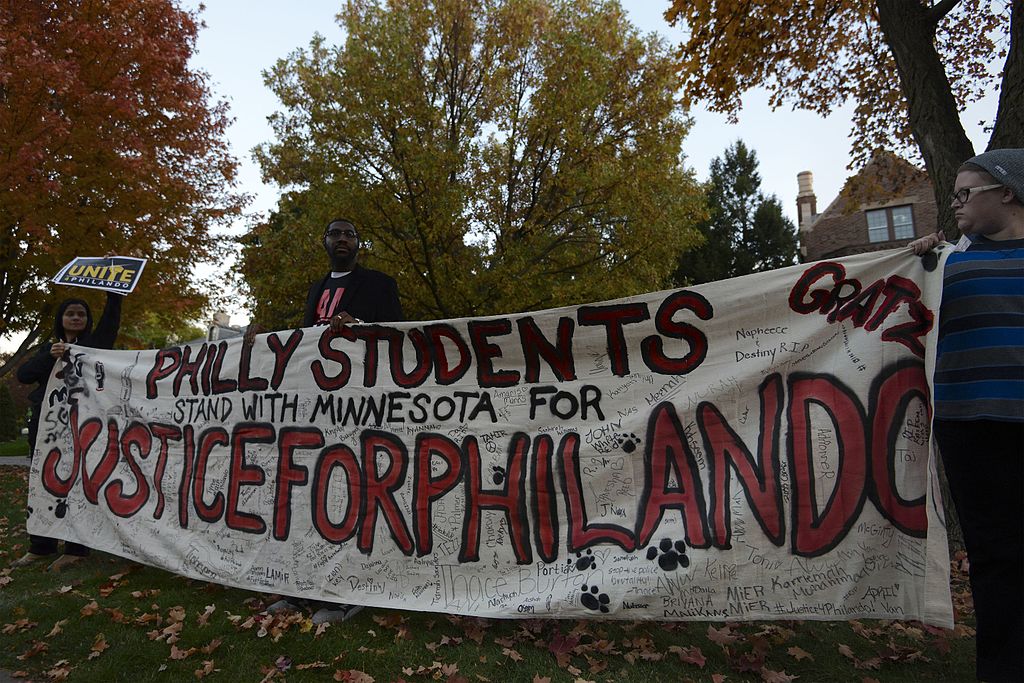
Celebrate America–by Remembering Philando Castile

Philando Castile died two days after Independence Day, July 6, 2016. Shot to death in his car, in a traffic stop in Minnesota, in front of his girlfriend and her young daughter, by a police officer who later swore he was in fear of his life. One year later, in July 2017, the officer was acquitted by a jury containing men and women of different races.

Courtesy Fibonacci Blue from Minnesota, via Wikimedia Commons

 This is not a post about guns, shooting, police, or even Black Lives Matter. This is a post about love. This is a signpost, showing a way forward.

According to a story by Michelle Krupa of CNN in March of this year, Philando’s legacy is still alive, helping children the way he used to, when he worked as a custodian at a public school in St. Paul:

One by one.That’s how Philando Castile, who was killed by a police officer during a 2016 traffic stop, used to help kids who couldn’t afford lunch. The school nutrition supervisor would dip into his pocket and pay the bill.

Now a charity run in his name has multiplied his mission by thousands, wiping out the lunch debt of every student at all 56 schools in Minnesota’s St. Paul Public Schools, where Castile worked.
“That means that no parent of the 37,000 kids who eat meals at school need worry about how to pay that overdue debt,” according to a post at the YouCaring fundraising page Philando Feeds the Children. “Philando is STILL reaching into his pocket, and helping a kid out. One by one.”
This July 4th, I’m going to celebrate my country, which I love, as much as anything, for its ability to rise from its own evil–slavery–and become better. And I’m going to remember Philando Castile, who died because the legacy of slavery has legitimized the idea of a black man being scary, even as he sits in his car with his family. I’m going to celebrate the fact that an American like Philando, held to one of the lowest jobs, chose to help children the way we all want adults to help children.
God bless America. God bless the example of Philando Castile. Let’s make ourselves and our country better.