MFA in LA, Part III: Intertwined Inspiration

One year ago, I was soaking up the sights and sounds of Culver City on my daily walks to the campus of Antioch University for the first residency of my MFA program in Creative Writing. Mostly I was dazzled by the Southern CA flowers.
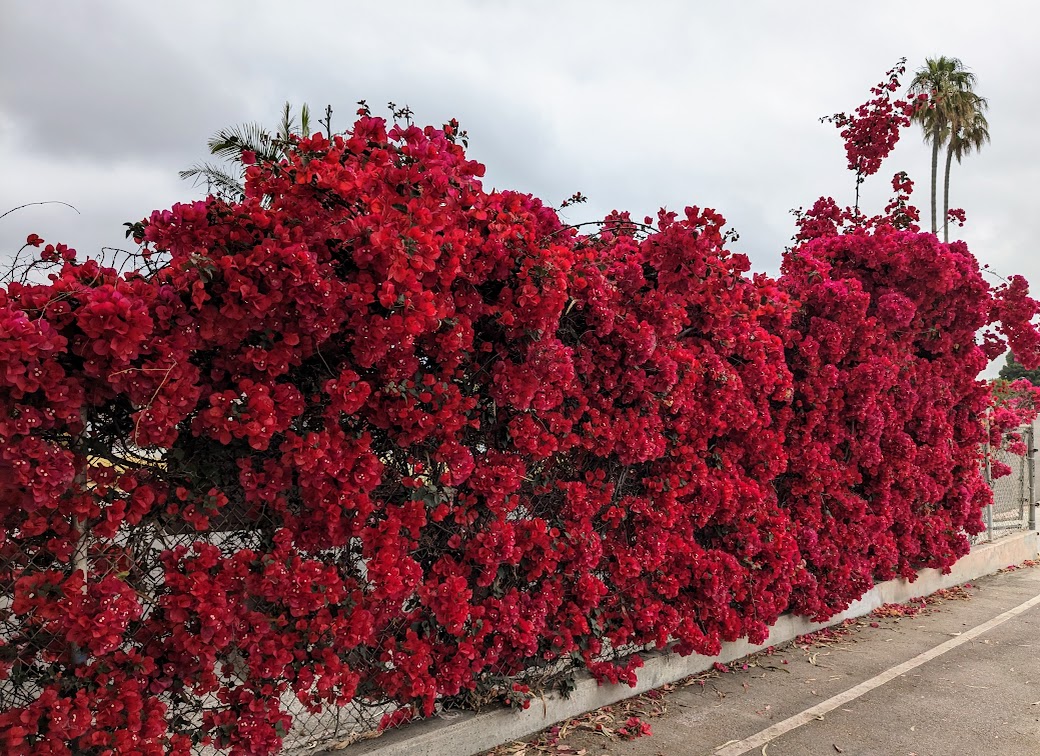
Oh, this old thing along the bike path? I just threw it on…

What I should have used as a photo was a full-blast firehose, because that’s what Residency #1 was like. Back home, I likened my new venture to a switch from hiking to rock-climbing. Not long after, I chose to step away from blogging altogether, devoting all my precious writing time to my most precious writing. Residency #2, last December, received no analysis.

But this summer, riding along that same bike path, I was stopped by a new metaphor: this rainbow tangle of flora:
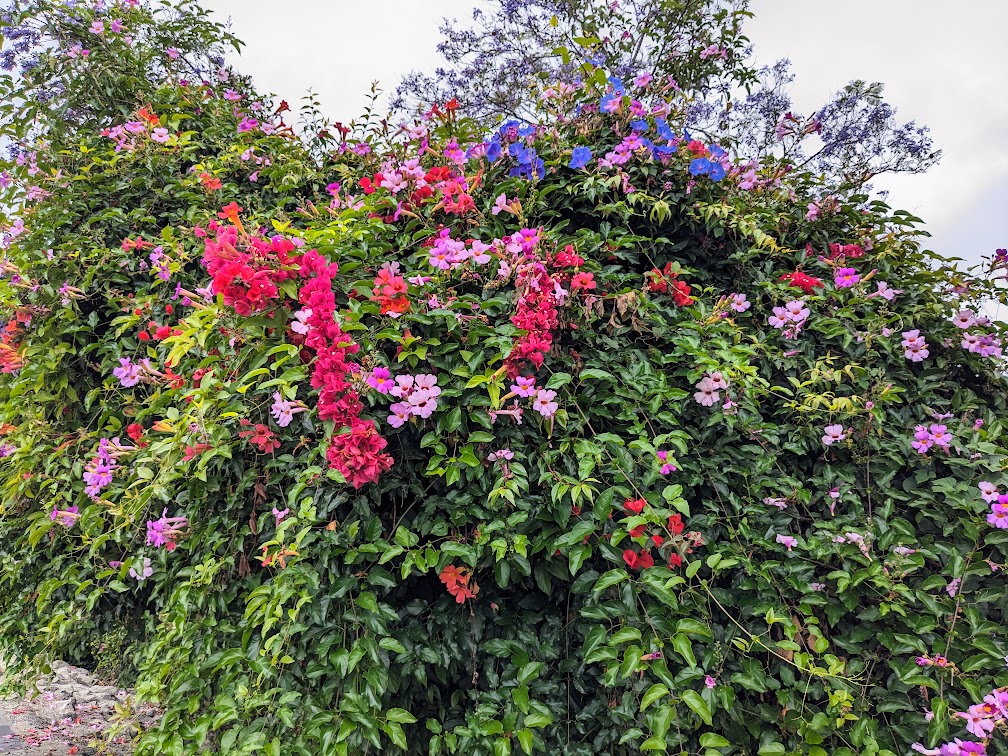
Whose story is this? Everyone’s! Whee!

You gardeners will spot pink and red oleaner, scarlet bouganvillea, orange trumpet vine and blue morning glory, all rampaging joyously over a substrate of purple jacaranda. What I see? A message to stay focused on more stories than mine.

YES, I am writing a novel. YES, it requires my time. But not so much to keep me from this blog’s renewed mission to AMPLIFY voices for justice and understanding. Which is why it felt so perfect, on the same day I took that picture, that I turned on a car radio and discovered House/Full of Blackwomen.

Nighttime Procession, March 2017, Photo by Robbie Sweeney

CreativeCapital.org describes the group this way:

House/Full of Blackwomen is conjure art, the insistence movement, activated in store fronts,  streets, houses, warehouses, museums, galleries and theaters of Oakland, California. House/Full began as a two-year project and morphed into an eight-year process of 15 public “episodes” which unexpectedly appeared as street processions, all night song circles, secret rituals of Black women resting and dreaming, sacred ceremonies on the track, and multi-media offerings. Black women gathered around a dining room table to recall, rage, rally and restore themselves, while creating ritual performance strategies towards shifting systemic evictions, displacements, erasure and the sex trafficking of Black women and girls: all driven by the core question, “How can we, as Black women and girls, find space to breathe, and be well in a stable home?”

Dreaming Blessing, March 2017, Photo by Robbie Sweeney

As I listened to Episode One of The Kitchen Sisters’ podcast on NPR, which describes the group’s mission, I was filled with excitement, hope, awe, empathy…and the immediate desire to share all those feelings.

So here you go! The above description, not to mention the podcast itself, says more than I could about the power of this group of 34 women. All I want to do is steer you toward them. Creative Capital says,

The final episode of HouseFull, Episode 15: this too shall pass will premiere March 4–12, 2023. Performance times, venues and details can be found hereAll events are sold out, but you can sign up for the mailing list to learn about future performances and project iterations.

And me? I still have a few more days in LA. I still plan to drink from that hose–a little more carefully now, sipping the drips, letting them soak in. Or, to go back to florals, I plan to gather some individual roses as they offer themselves…
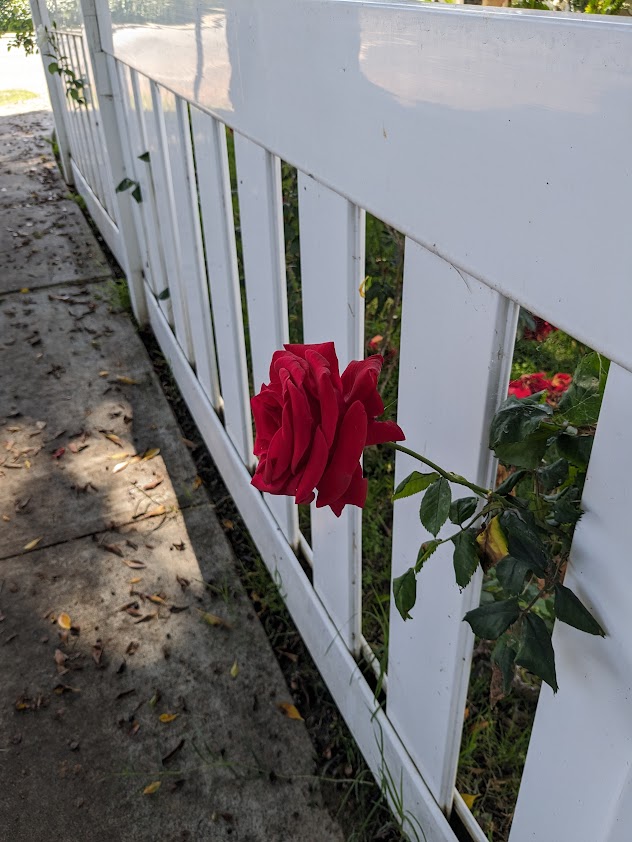
Stop and smell me.

…be they writing advice or part of the more tangled, brilliant stories around me. Please join me in discovering House/Full of Blackwomen!
Of Moose and Meaning: When Politics Meets Mountains…Mountains Win

Hmmm. Turns out I’m feeling a little conflicted about this getting-back-to-blogging thing.

Seriously? After just two weeks? Why?

Because…I went on a road trip.

So?

So, I’ve always blogged about my road trips! I loved sharing pictures and stories. I think I’m secretly a travel blogger at heart.

What’s wrong with that? You love travel blogs.

Yeah, but I just made a commitment to blog regularly about some of the social causes I care about…making amplification my this-is-all-I-can-do-right-now “contribution.” I can’t just interrupt that for travel photos, can I?

Why can’t you do both?

Nah. It’d be weird.

How d’you know until you try?

*sigh*

Yeah, you’re probably right. Forget I suggested it. I don’t think you could handle the balance. I mean, it’s not like you’re studying writing right now or anything…

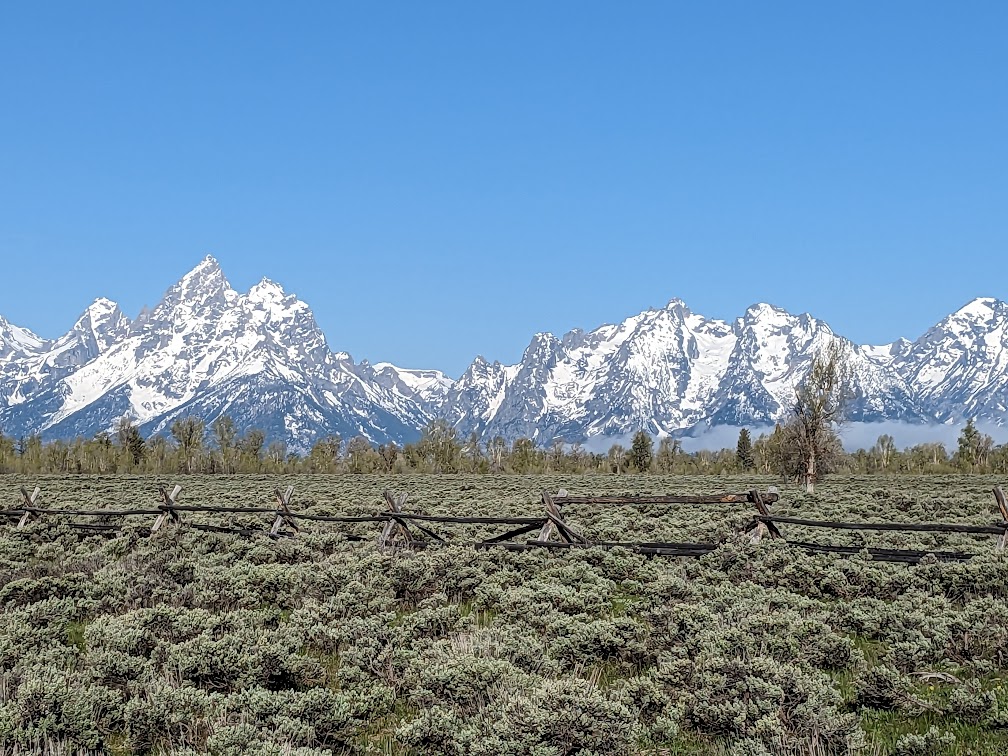
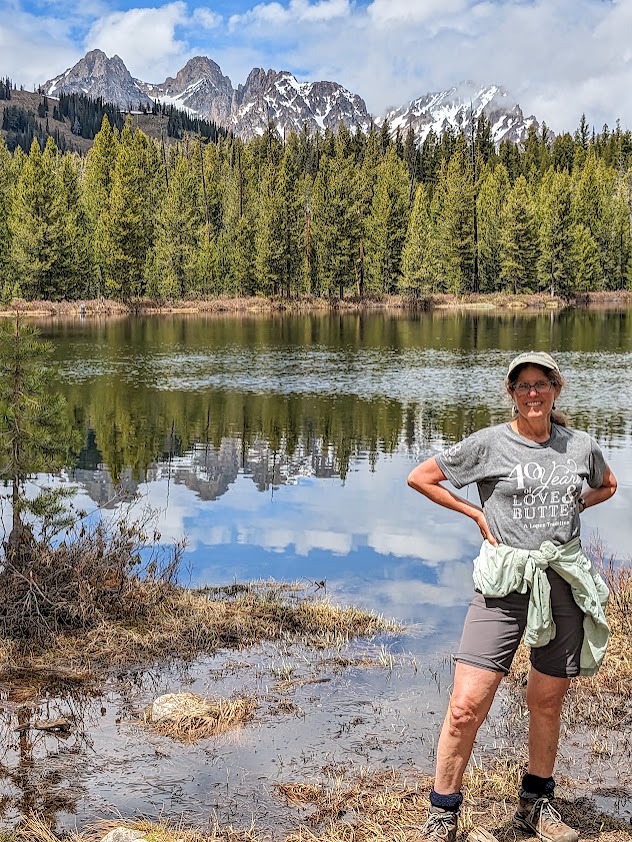
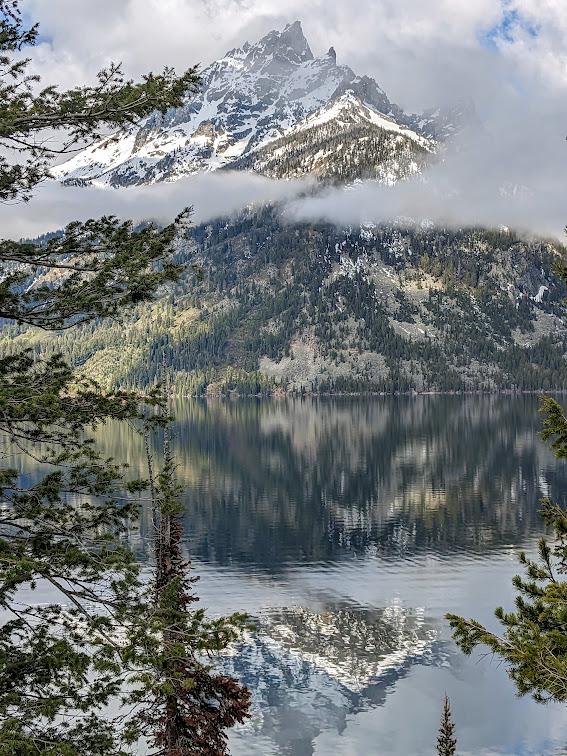
FINE. *deep breath* Listen up, people! The Mate and I just took a 2-week discovery jaunt through Wyoming and Idaho, two states that don’t tend to support the progressive political agenda I support. But they do have three things I DO support, wholeheartedly: mountains…

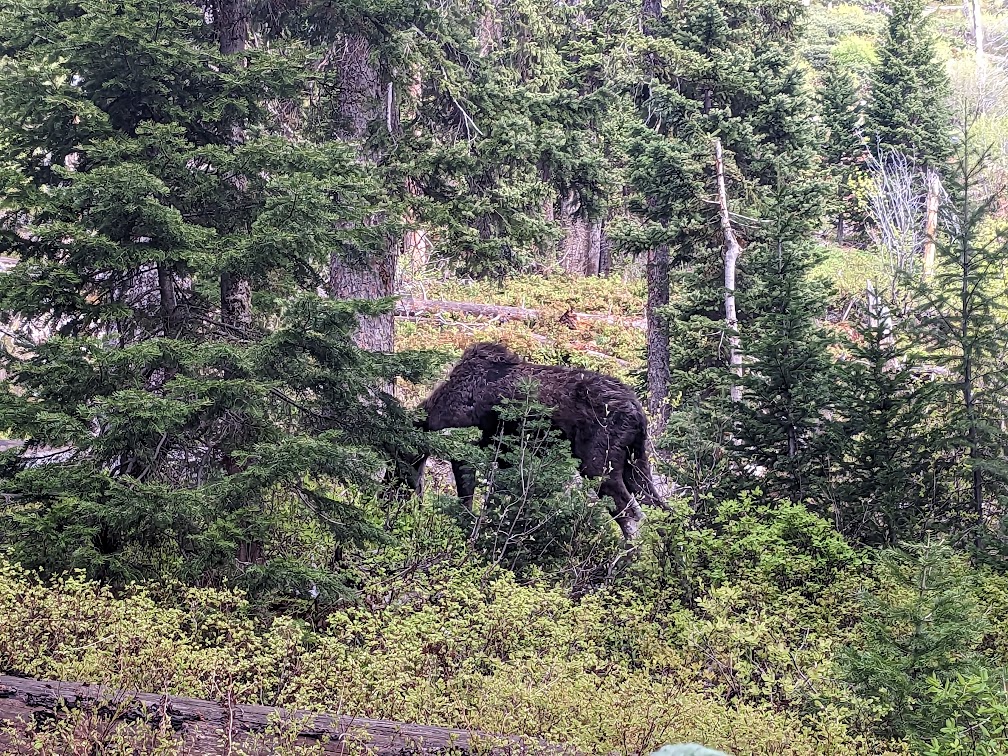
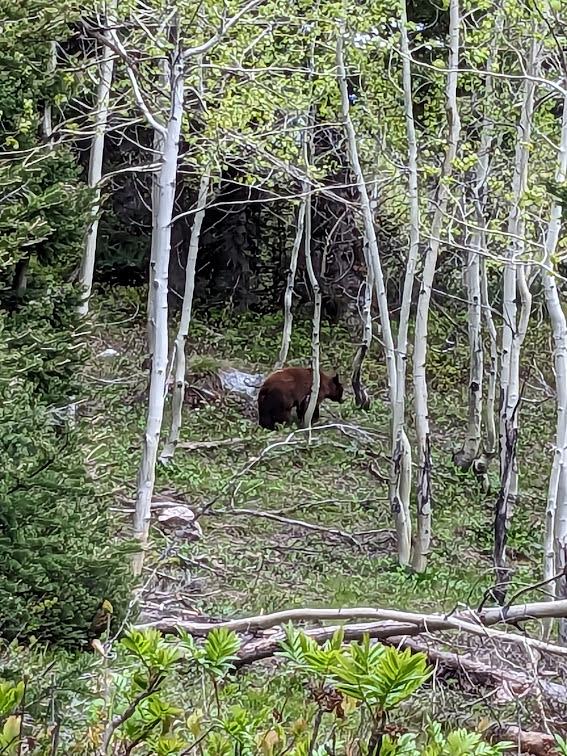
…wild critters…

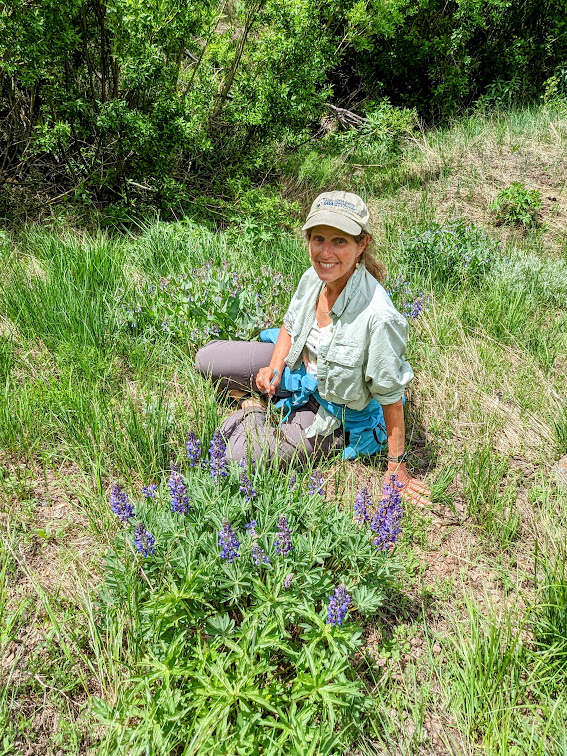
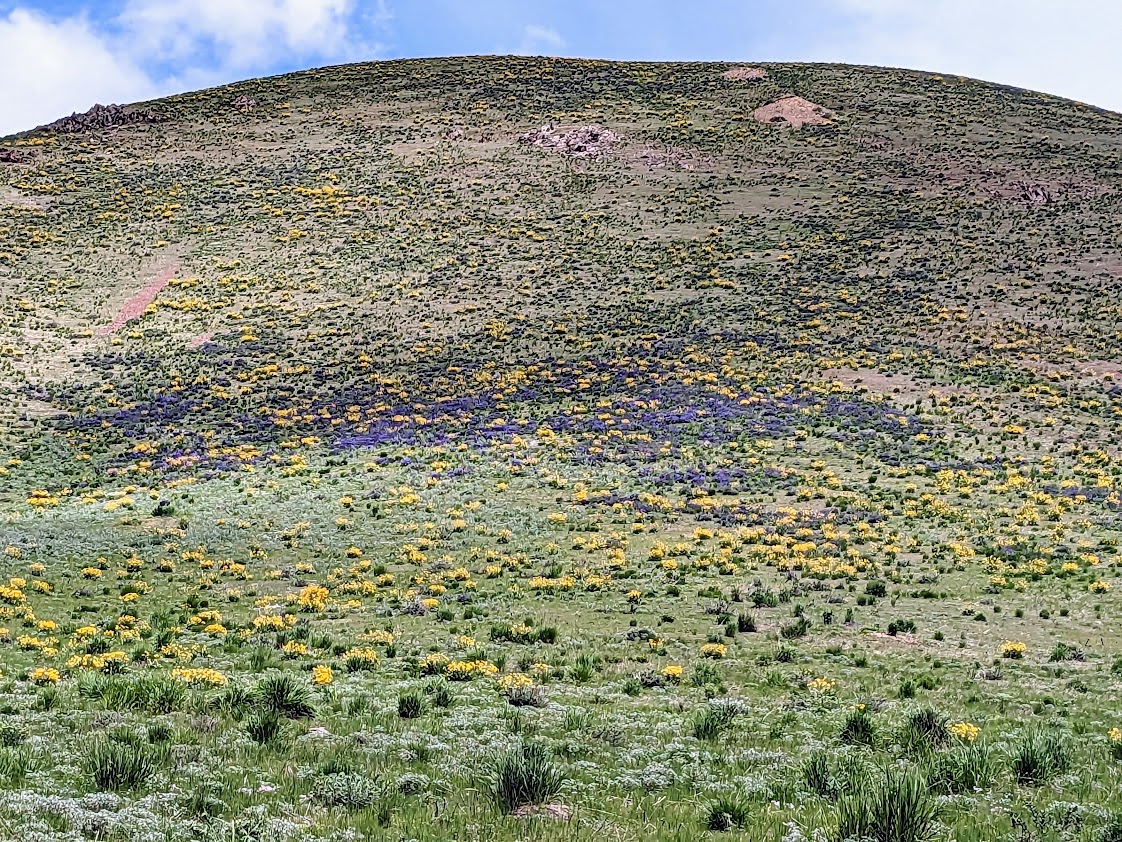
…and flowers:

OK so far. Now let’s see you tie that promo in with your “progressive political agenda.”

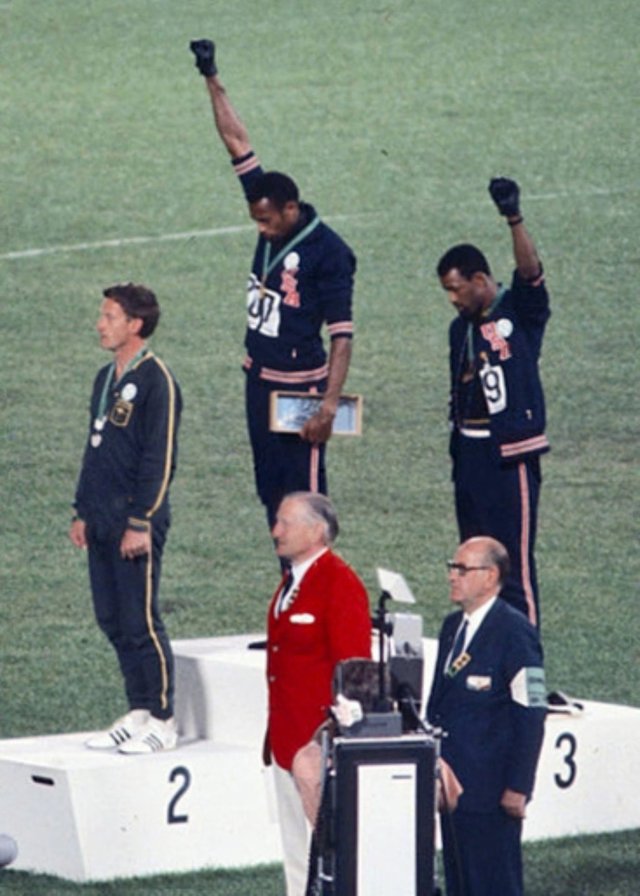
Okay…See, along our camping, driving, and motel-ing way, I stayed in touch with the Common Power Institute. Wherever we had wifi, I was catching up on videos I’d missed during its May 17th 24-hour Teach-in on Truth in Education. This talk by Dr. Harry Edwards especially caught my attention, as he was the mastermind behind the 1968 Mexico City Olympics protest that got Tommie Smith and John Carlos stripped of their medals.

(photo courtesy Wikimedia)

Seriously? You’re just gonna shove Dr. Edwards’ talk into your post like that, then go back to the nature pics? Who’s gonna watch it?

You’d be surprised. I think there are a ton of folks out there like me, folks who love mountains, critters & flowers just like I do, but who also want to keep educating themselves about how to be effective anti-racists, like I do. They may not get to this video right away; I didn’t. But when they have time, they might come back and learn more about “history with eyes wide open”, as Dr. Edwards says.

If you say so. Can we see some trip pics now?

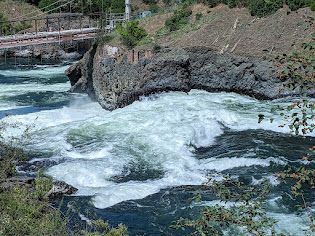
Oh, twist my arm. Ahem. On our way out of Washington, The Mate and I stopped to ride our bikes in Spokane, and marvel at the majesty that is Palouse Falls.

I was SO sad that the bike path bridge was closed for construction!

Our main destination was Grand Tetons National Park. But it turns out, one of the best ways into GTNP is through this place…

Yep, the Grandmother of all NPs: Yellowstone herself

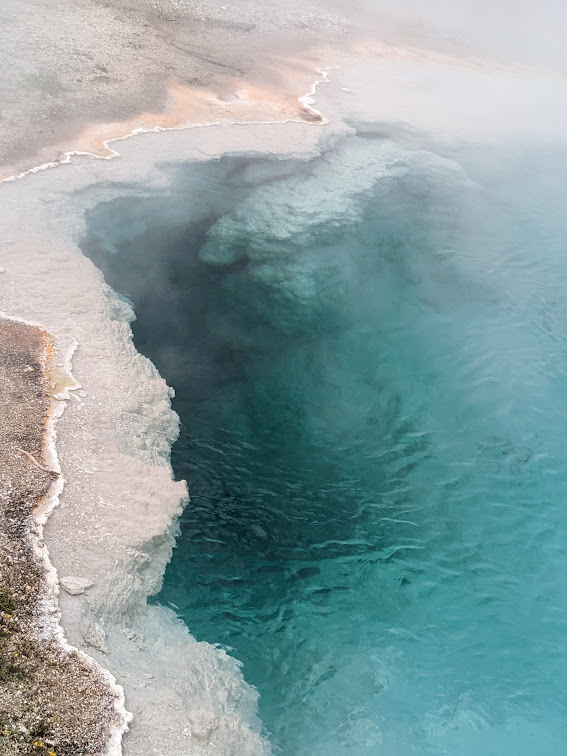
We’ve both been to Yellowstone several times over the decades, and I’m embarrassed to admit I don’t even bother taking photos of their bison and elk any more. (Here’s an old blog post to cover that.) But I COULDN’T stop taking pictures of those prismatic pools.

No diving!
No words.

As planned, we only spent a day in Yellowstone, which was so crowded we remembered why we love traveling during the shoulder seasons (not Memorial Day weekend, for goodness’ sake! Who planned this trip?!) But when we drove across the park border into the Tetons, it was time for us to sit up and take special notice. THESE mountains were something NEW, at least to us.

Nary a foothill in sight. Just a sagebrush plain and then…BAM!

After a fews days of (rather WET) camping, we moved into a motel in Jackson, finally answering the question: what’s the difference between Jackson Hole and Jackson?

Answer: Jackson’s the town…
…whereas Jackson Hole refers to the entire region, the valley filled by the (not pictured) Snake River.
Now you know. But if you’re from Wyoming, you probably don’t give a shit what the rest of us think.

The Mate & I were very favorably impressed by two other aspects of Jackson (besides its proximity to GTNP): its community bike path system…

We saw a TON of bikes at all the public schools. Kids and parents really use these paths!

…and its bakery, Persephone. (Aren’t bakeries and bookstores the best tests of a town, really?)

Just doing research for my own employer, Holly B’s on Lopez Island! 🙂

One more way-cool thing in Jackson: this vertical, rotating greenhouse built into the side of a very tall parking garage. Never seen anything like it!

The company’s called Vertical Harvest. The lettuces looked happy!

Our most prized hike of the trip came on a day when we got up early in order to be the first on the Tetons trails, and were rewarded with a moose AND a bear, in the same video! (You’ll have to take my word for it; it’s not YouTube quality so I didn’t bother uploading.) But here’s the moose:

Not pictured…barely!…is the bear that’s actually lurking just behind and to the right of Ms. Moose

Leaving Wyoming’s western side, we passed into Idaho and took a quick tour of Craters of the Moon National Monument.

I found the dead trees as entrancing as the dead lava.
Anyone else see a monster here?

Thunderstorms were forecast, so we decided against camping and added a night to our motel in Hailey, which is the cheap(er) town 10 miles from swankier Ketchum and swankiest Sun Valley. The Mate & I were pleased to find all three towns connected by bike path…

Heading over the Wood River, which was running HIGH

...and Liza and I rode pretty much every inch of it, including up & around a ski hill.

Definitely helps that Liza’s an e-assist bike! My knees are grateful.

But it wasn’t bike paths that led Liza and I to bumble into the most amazing “superbloom” of wildflowers I’ve ever seen outside the Cascades–it was a plain ol’ dirt road.

Are you for real, Idaho?!
Yes. Yes you are.

Those flowers? They followed us into the Sawtooth Wilderness, our last spate of camping right smack in the middle of the state. I mean, yes, the mountains were just as striking as the Tetons…

Still reppin’ Holly B’s!

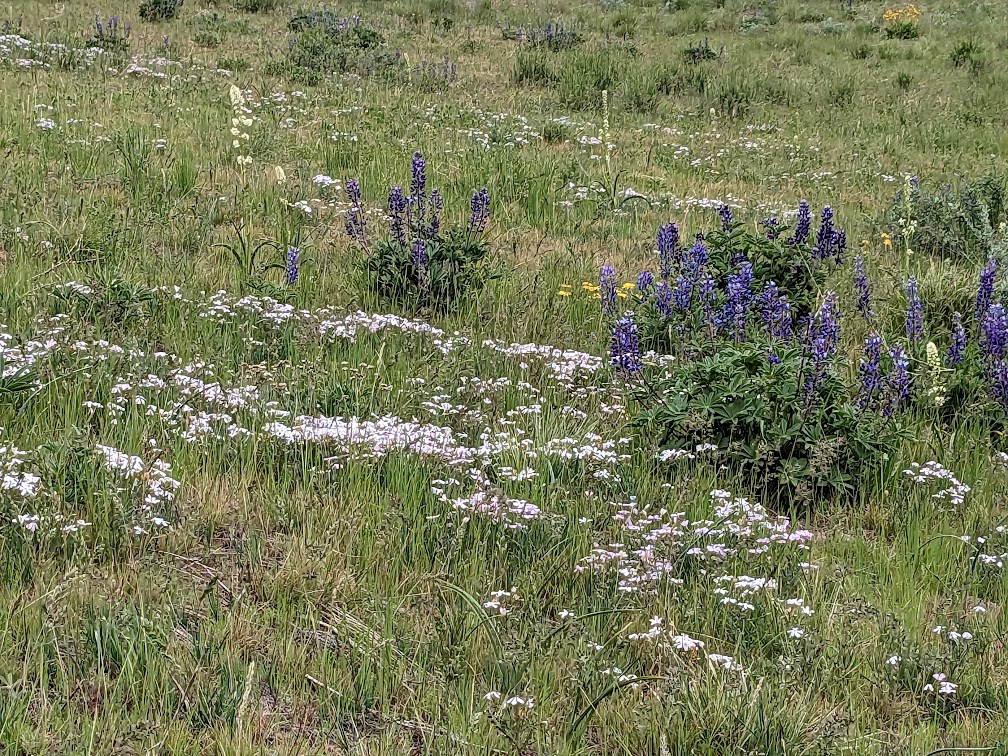
…but the FLOWERS!!!

I didn’t know Larkspur came in so many shades of blue!

We had more adventures than pictured, of course: elk and antelope and lakes and crags. But I think you got the idea. And I want to leave you enough time to go back and dip into that lecture of Dr. Edwards’, if you feel so moved. But whether you do or not–thanks for bearing with me all this way (or moosing with me). Here–I got you flowers.

Be the Challenger II: Yes, Virginia, You Can Be a White Civil Rights Activist

“I was a typical young Southerner, born and raised in LA—Lower Alabama.” Meet Bob Zellner.

I got to do just that, last October, when Bob and his activist wife Pamela joined my Common Power Team NC canvassing group. Over big plates of BBQ, I got to ask Bob questions about events I’d read about in his book, The Wrong Side of Murder Creek. Like the time Bob was beaten badly on the steps of the town hall of McComb, Mississippi, in a march led by Black high school students. But in the New York Times article, they called Bob “the leader” of the march–because he was the only White guy there.

You could call Bob the White counterpart of Representative John Lewis; they grew up quite close to each other in Alabama, both poor, both country–but on either side of the color line. Which explains why Bob started life from a KKK-supporting family, before becoming the first White field secretary of the Student Nonviolent Coordinating Committee (SNCC) in the 1960s.

In Bob’s interview by Dr. Hasan Kwame Jeffries (History Professor at The Ohio State University, and, incidentally, brother of Congressman Hakeem Jeffries), you can hear him explain how, “That was the way you got accepted in SNCC–you go to the dangerous places and do what the people were doing.”

Bob’s a folksy guy; like a lot of Southerners, he’s not into drama. Just tells it like it was–and is. His mission today, he says, and for the rest of his life, is to tell young people: “You can be White, and you can be a Civil Rights activist, and you can survive.”

Come to think–that’s a pretty good message right there. Reading Bob’s story, not to mention rubbing shoulders with him, reminded me how ordinary these extraordinary “ACTIVISTS” can be. Maybe a teensy bit braver than I am…

I hope you listen to Bob or check out his book. Pass it on!

Be the Challenger: How Muhammad Ali and NASA Reeled Me Back In

I’m not going to spend time talking about why I’ve stepped away from this blog for the past year. I’d rather talk about what brought me back.

Since Sandy Hook, since Trayvon, since Charlottesville, since [fill in your own moment of “whatthefuckishappeningtous”], I’ve been looking for people and ideas and groups which provide myself with hope and purpose. Along with my family; some dear friends; some small-but-mighty organizations within my community; music; nature, and writing, I found Common Power, and its educational branch, The Institute for Common Power, both of which I have written about.

For the last three years, I’ve gone deeper into action to protect and extend democracy, mostly through phone-banking and donations, but also writing letters to elected officials, and, last October, canvassing in my home state, North Carolina.

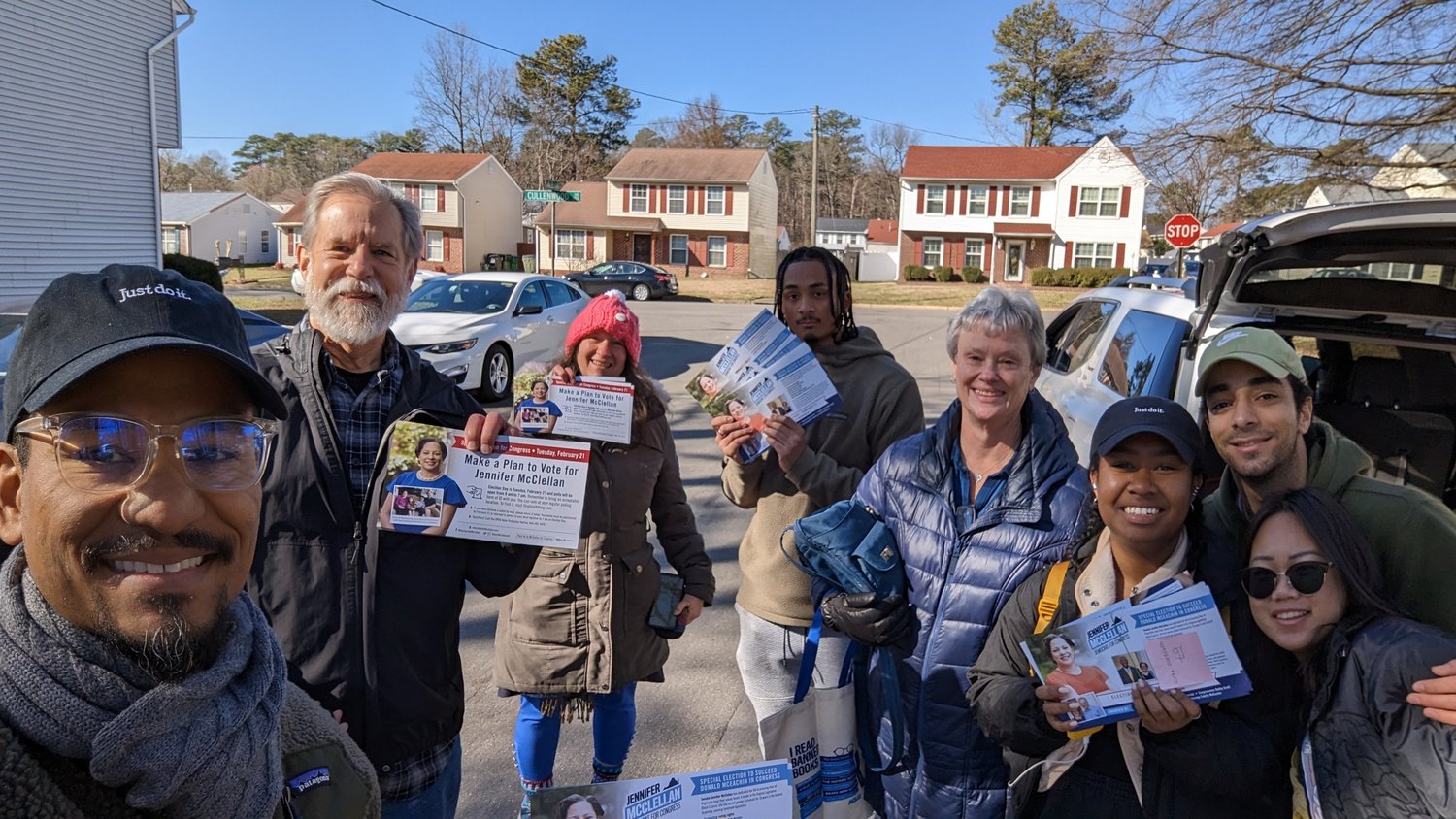
This is VA, not NC, but you get the idea–this kind of thing (photo by Charles Douglas, CP)

But canvassing requires travel, and phone-banking (besides being NO FUN) feels pretty limited. I was looking for other ways to plug in, when I tuned into Common Power’s 24-hour Teach-in for Truth in Education in Florida, and heard Dr. Yohuru Williams.

Dr. Williams is a History professor at the University of St. Thomas in St. Paul, MN, and founder of their Racial Justice Initiative. It was his part of that 24 hours of teaching that got me back to Wing’s World. He talked about two “challengers,” starting with NASA’s Challenger Space Shuttle, which exploded live on TV in 1986 (which many of us remember all too well).

R.I.P. (photo courtesy Wikipedia)

Dr. Williams reminded us how Ronald Reagan went on TV to tell American children the tragedy:

“We don’t hide our space program. We don’t keep secrets and cover things up. We do it all up front and in public. That’s the way democracy is, and we wouldn’t change it for a minute.”

His message: Ron DeSantis, anti-“woke” Republicans–are you LISTENING? Democracy means FACING UP TO BAD STUFF. Like, you know…U.S. History.

Dr. Williams closed by talking about Muhammad Ali, of whom actor/director Ed Begley Jr. said, “Ali’s secret was that he was always the challenger.”

Ali in 1976, filming The Greatest (courtesy Wikimedia Commons)

And this historian/activist then looked at the camera and asked us listeners to find ways to continue to be the challenger. To do more than what we’ve been doing to help our country be its best self.

And I thought: okay. At the very least, something I can do is to expand Dr. Williams’ message.

So in the next few weeks, I’ll be highlighting some of the talks from that incredible 24 hours. I’ll be sharing, amplifying, extolling the messages I’m absorbing about how to help our country. And if just a few of you reading this decide to do the same, consider yourselves challengers too.

“How To Love a Country”–With a Little Help From My Poets and Reporters

As part of my New Year Intention to spend more time with bridge-builders, I recently listened to an On Being podcast I’d stockpiled for moments like these (like, for example, when your country suddenly decides to go to war). I sure picked a good one. When Krista Tippett interviews civil engineer/poet Richard Blanco, these guys give me language to keep looking for bridges.

(Did you catch that? Poet AND civil engineer? How much bridgier can you get?)

Mr. Blanco celebrates what he’s noticing about this country, that whoever “we” are, we’re starting to pay attention to others at risk.

 I just love that we’re stepping up, and we’re realizing, no. OK, this is — I don’t have to go to that protest; it’s not about me. But that poem … you know, “First they came for the so-and-so”? Remember that poem? And I think we’re finally — we’re not doing that. We’re not waiting for them to come for us. We are stepping up and realizing that the quality of life, the virtue of this country, depends on every human being’s story, to a certain degree; that our happiness depends on other people’s happiness, and we’re moving from a space of dependence to realizing our interdependence.

And Krista agrees:

It becomes a discipline, almost like a spiritual discipline, to take that seriously, too. It’s a way of us, some of us, enough of us, collectively, living this phrase that you have at the beginning of the book, How to Love a Country: “Tell me with whom you walk, and I’ll tell you who you are.” So it’s us, expanding that sense of who we are.

As an American, I would prefer to walk in a wider lane than I have, historically, as a White woman. I want a richer sense of who “we” are. Since I moved from a very diverse town and job to an island that is…let’s say NOT diverse, I’ve been finding other ways to broaden my “we.”

The most significant step I’ve taken is to subscribe to the New York Times, and then sign up for its newsletter on the topic of “Race/Related.” That means I get stories right into my inbox that particularly relate to people NOT like me. The other day, for example, I read a wonderful story by Kurt Streeter about the WNBA star Maya Moore taking a sabbatical from basketball at the peak of her career to work on freeing a man from prison whom she believes to be innocent. What a story. What a gift.

Yes, the NYT costs money and CNN is free…but the NYT is doing work I actively want to support. Because it supports US.

Listening to the interview with Richard Blanco left me feeling choked up about my country. (Do you know how hard it is to ride your exercise bike hard while choking up? I had to slow down.) And this is the poem that did it. I’m passing it on to you now, hoping it both chokes you up and builds you up, as it did me. As it could us.

The poem is called Declaration of Interdependence, and is woven through with actual excerpts from the Declaration of Independence. Here’s the poet’s explanation of the title:

...finding language, finding another angle, finding another dialogue, and how easily stereotyped and typecast people can become in the news; and, also, how we do it to ourselves — “Oh, you drive a red pickup truck; therefore, you must be this person. You shop at Whole Foods; therefore, you must be this kind of person. You drive a Subaru; therefore, you must be this kind of person,” and realizing that that’s really something that’s been slowly chipping away at our brains, this sort of immediate — I won’t say “judgment,” but a typecasting that sometimes, we’re not even aware. So I just wanted to break down some of those stereotypes and create empathy across those stereotypes.

But it also, ultimately, comes from a saying, a greeting from the Zulu people, that was the real inspiration here…They don’t say “Good morning” like we do, like we did, this morning. “Good morning; I need coffee.” [laughs] They look at one another, right in the eyes, and say, “I see you.” And there’s an incredible power in seeing and being acknowledged. And if I’m not mistaken, the reply is, “I’m here to be seen. And I see you.” …We’re not seeing each other as clearly, and I think this poem was trying to let us see each other clearly.

And here’s the poem. Happy Interdependence Day!

“Declaration of Interdependence”

 Such has been the patient sufferance…

We’re a mother’s bread, instant potatoes, milk at a checkout line. We’re her three children pleading for bubble gum and their father. We’re the three minutes she steals to page through a tabloid, needing to believe even stars’ lives are as joyful and as bruised. Our repeated petitions have been answered only by repeated injury…

We’re her second job serving an executive absorbed in his Wall Street Journal at a sidewalk café shadowed by skyscrapers. We’re the shadows of the fortune he won and the family he lost. We’re his loss and the lost. We’re a father in a coal town who can’t mine a life anymore because too much and too little has happened, for too long.

A history of repeated injuries and usurpations…

We’re the grit of his main street’s blacked-out windows and graffitied truths. We’re a street in another town lined with royal palms, at home with a Peace Corps couple who collect African art. We’re their dinner-party talk of wines, wielded picket signs, and burned draft cards. We’re what they know: it’s time to do more than read the New York Times, buy fair-trade coffee and organic corn.

In every stage of these oppressions we have petitioned for redress…

We’re the farmer who grew the corn, who plows into his couch as worn as his back by the end of the day. We’re his TV set blaring news having everything and nothing to do with the field dust in his eyes or his son nested in the ache of his arms. We’re his son. We’re a black teenager who drove too fast or too slow, talked too much or too little, moved too quickly, but not quick enough. We’re the blast of the bullet leaving the gun. We’re the guilt and the grief of the cop who wished he hadn’t shot.

We mutually pledge to each other our lives, our fortunes and our sacred honor…

We mutually pledge to each other our lives, our fortunes and our sacred honor…

We’re the dead, we’re the living amid the flicker of vigil candlelight. We’re in a dim cell with an inmate reading Dostoevsky. We’re his crime, his sentence, his amends, we’re the mending of ourselves and others. We’re a Buddhist serving soup at a shelter alongside a stockbroker. We’re each other’s shelter and hope: a widow’s fifty cents in a collection plate and a golfer’s ten-thousand-dollar pledge for the cure. 

We hold these truths to be self-evident…

We’re the cure for hatred caused by despair. We’re the good morning of a bus driver who remembers our name, the tattooed man who gives up his seat on the subway. We’re every door held open with a smile when we look into each other’s eyes the way we behold the moon. We’re the moon. We’re the promise of one people, one breath declaring to one another: I see you. I need you. I am you.

–Richard Blanco

“I see you. I need you. I am you.” (Photo by TPapi, “Crowds on the Mall,” Jan. 9 2009)

Remembering An Awful Day: The Murder of Dr. King

April 4, 1968. I was six. I remember looking down from the top of the stairs to see my mother looking up. She was crying.

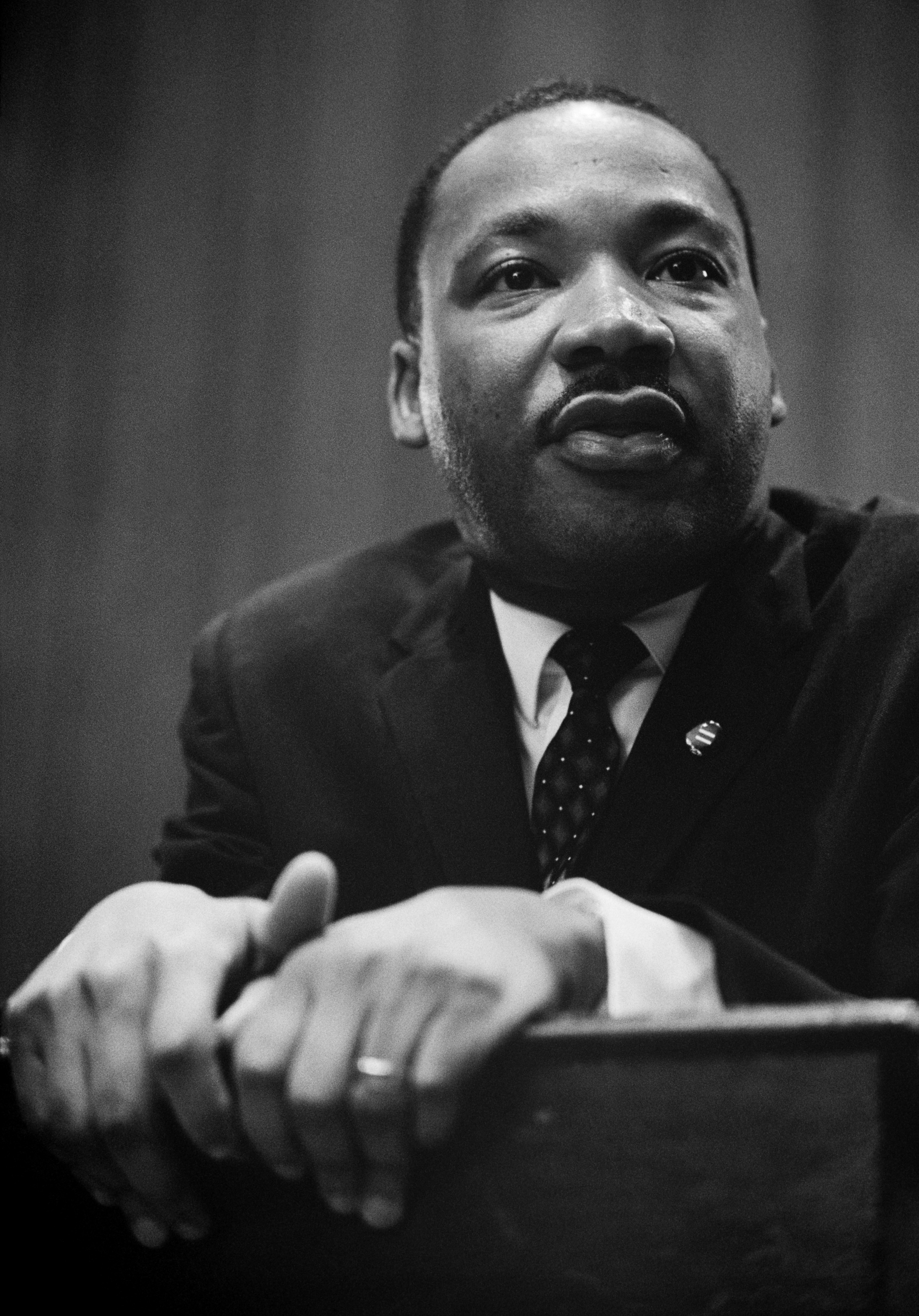
Courtesy Wikimedia

If you are old enough to remember the day Martin Luther King died, where were you?

If you are too young to remember…here’s a song for you. It’s about Coretta, because April 4, 1968 was worse for her than for any of us.


Coretta


Every city in this land got a street named for your man;

We celebrate his birthday, we sing and hold hands.

But sometimes I wonder if we’d ever be here

If you hadn’t stood beside him for all of those years.

                        All of those years…imagine the tears.

                        Coretta Scott King, your name hardly appears.


Lovely young soprano, Alabama to Ohio:

Your music could’ve carried you even further, you know.

But Martin sweeps you off your feet, or you sweep him,

And you’re swept into the movement, sink or swim.

                        Sink or swim…opposition is grim.                     

                         Montgomery Bus Boycott is the first big win.


Martin’s filling up the jails, says that love will never fail              

And you’re right there with him, center of the gale.

But your four little children can’t be left alone

And Martin says their mama needs to stay at home.

                        Stay at home, keep the children calm.                          

                        Thank the Lord you are out when your house gets bombed.


Klan don’t need to wait for dark; Selma’s like their personal park.           

Cross the Pettus Bridge to face Sheriff Clark.

On that Bloody Sunday you can hear the cries

With your hands in the laundry and your eyes on the prize.

                        Eyes on the prize…when a martyr dies                                  

                        Best step aside, feel the power rise.


Martin goes to Memphis town; hand of hate cuts him down.          

Now they’re looking to you to lead ’em to high ground.

You’re still in shock, you don’t know what to feel

But just like Martin, you’re made of steel.

                        Made of steel…Lord, this is real:               

                        41 year-old widow of a slain ideal.


So you take up Martin’s cross, learn to be a movement boss         

And you march and you rally and you  pay the cost.

You tell your fellow women to embrace their role:

“If you want to save the nation, you must become its soul.”

                        Become its soul…it took its toll.    

                        But Coretta, look around, we’re approaching the goal.*


For over thirteen thousand days, you walked those weary ways      

Speaking out against the war, supporting the gays.

For the poor and persecuted you carried the flame

And never got a monument. Ain’t it a shame?

       Ain’t it a shame? No one’s to blame.                              

                        But Coretta Scott King, we remember your name.

                        Ain’t it a shame? No one’s to blame.

                        But Coretta Scott King, we remember your name.          


G. Wing, March 2013

*I wrote this song in a more optimistic time. Not sure I still believe that goal’s getting any closer

Road Trip VIII, Days 24-27, Asheville to Durham, N.C.: The White Privilege of Road-Tripping

Like a lot of Americans, I’ve been trying to up my game since the election, using reading to deepen my understanding of the America experienced by People of Color. If you’re doing the same or just looking for a great read, I highly recommend Isabel Wilkerson’s Pulitzer-winning book, The Warmth of Other Suns: The Epic Story of America’s Great Migration.

Must-read.

One section of this book hits particularly hard at the moment, as it concerns a road trip…by a Black man—or colored, as he was called in 1953—crossing the desert  alone. Since we have recently, and frequently, traversed the region described in the book, I found myself sharply reminded of how even the simple act of driving contains an enormous racial divide.

Dr. Robert Joseph Pershing Foster, starting from segregated Louisiana, has crossed through Texas at last, and is ready to celebrate his escape from Jim Crow. But here’s what happens when, exhausted, he tries to get a motel room in supposedly un-segregated Arizona.

“I’d  like to get a room for the night, please,” he said.
The man looked flustered. “Oh, my goodness,” the man at the front desk said. “We forgot to turn off the vacancy sign.”
Robert tried to hide his disappointment.
“Oh, thank you,” Robert said.
He climbed back in the car and drove away fro the motel and the vacancy sign that continued to blink. He had been in the South long enough to know when he had been lied to…
…He drove to the next motel in the row, a hundred or so yards away.
“I’d like to get a motel room,” he said, stiffer than before. He was cautious now, and the man must have seen his caution.
“I’m sorry,” the man said, polite and businesslike. “We just rented our last room.”

A third motel owner turns him down, “sweetly.” By now night has advanced; his is the only car left on the road. The doctor is on his last legs.

“He didn’t want to make a case of it. He never intended to march over Jim Crow or try to integrate anybody’s motel. He didn’t like being where he wasn’t wanted. And yet here he was, needing something he couldn’t have. He debated whether he should speak his mind, protect himself from rejection, say it before they could say it…
…He pulled into the lot. There was nobody out there but him, and he was the only one driving up to get a room. He walked inside. His voice was about to break as he made his case.
“I’m looking for a room,” he began. “Now, if it’s your policy not to rent to colored people, let me know now so I don’t keep getting insulted.”
A white woman in her fifties stood at the other side of the front desk. She had a kind face, and he found it reassuring. And so he continued.
“It’s a shame that they would do a person like this,” he said. “I’m no robber. I’ve got no weapons…I’m a medical doctor. I’m a captain that just left Austria…and the German army was just outside Vienna. If there had been a conflict, I would have been protecting you. I would not do people the way I’ve been treated here.”

The woman listens sympathetically, so Robert continues to plead with her, in all his dignity. She calls him respectfully by his title, and goes to confer with her husband. Robert’s hopes rise. And then…

“We’re from Illinois,” the husband said. “We don’t share the opinion of the people in this area. But if we take you in, the rest of the motel owners will ostracize us. We just can’t do it. I’m sorry.”

Later in that interminable desert night, Robert stops for gas. The attendant asks him what’s wrong, and Robert breaks down.

“Yes, there was an evil in the air and this man knew it and the woman at the motel knew it, but here he was without a room and nobody of a mind to do anything had done a single thing to change that fact. And that made the pain harder, not easier, to bear.”  (pp. 207-210)

This was ARIZONA. Not a Confederate state. Yes, Dr. Foster’s experience happened in 1953. But Black families continued to be rejected by motels and restaurants well into the 1970s, in Arizona, New Mexico, California…and probably every other supposedly integrated state…states through which the Mate and I, two generations ago, could have been zooming without a care in the world about where to lay our weary heads.

We’ve always been able to stay wherever we wanted. Because we are white.

Atticus Finch, in To Kill a Mockingbird, said you never really understand someone until you climb into his skin and walk around a while. Sometimes just driving a car through the desert, with an aching head and a full bladder, is enough. God bless America. She sure needs it.

White Privilege, Part…II? XVIII? Who’s Counting?

The US election of 2016 ushered me, like a lot of folks, into a new era of reading, listening, and discussion, all aimed at understanding, to paraphrase Hillary, “What the Hell Just Happened (And What Does it Mean)?”

I quickly figured out that it was mostly my fellow white people who were asking that question. People of Color (whom I’ve mostly just been reading and listening to, since leaving very-colorful Tacoma for this very-white island 7 years ago) not only sounded less surprised on the whole, but also less shook. The overall message seems to be more along the lines of, “Really? Didn’t see this coming?”

For these thinkers, Trump isn’t the blacklight lighting up the creepy-crawlies in the sofa cushions; he’s just one more creepy-crawly in a house whose infestation was built into its foundation-which some of us have been noticing only intermittently. I realized I had something to learn.

One of the most powerful passages of one of the most powerful books I’ve read this past year comes from Ta-Nahesi Coates’ Between The World And Me. He writes of the Dream—NOT Martin Luther King Jr.’s “I Have a Dream,” but quite the opposite. This Dream, to Coates, is the illusion of fundamental American fairness, decency and democracy that middle class whites cling to in order to feel good about living the way we do when we know others have not been, and still are not, able to live that way.

The mettle that it takes to look away from the horror of our prison system, from police forces transformed into armies, from the long war against the black body, is not forged overnight. This is the practiced habit of jabbing out one’s eyes and forgetting the work of one’s hands. To acknowledge those horrors means turning away from the brightly rendered version of your country as it has always declared itself and turning toward something murkier and unknown.

Coates concludes that stark paragraph with this statement:

It is still too difficult for most Americans to do this. But that is your work. It must be, if only to preserve the sanctity of your mind. —pp. 88-89

I think I might change that last word to “soul,” or perhaps “heart,” because I feel Coates’ challenge more there than in my mind. And for me the challenge is not to change my opinion about America so much as it is to change my focus. To think about what I haven’t had to think about. And to let new voices have my ear.

One such new voice I heard recently on Stephen Colbert’s Late Show: Grammy-winner Chance the Rapper, debuting his new song, “First World Problems,” accompanied by Daniel Caesar.

Son One likes Chance and Caesar, and urged me to listen. I now urge you to do the same. Not your style of music? It’s not mine either. But give this song—pun intended—a chance. And pay attention to the lyrics.

These lyrics especially–notice the connection with Coates’ Dream?

Now—think about what you are thinking about. And let me know. Keep the conversation going.


“I Do…Right?” Maybe It’s Time For An American Recommitment Ceremony

You may have noticed I have some strong opinions. But one of them, which has been gaining strength since Trump’s inauguration, is this: I don’t want my own strong opinions irrevocably dividing me from my fellow Americans.

Easier said than done, when most of what I see and hear through the media fills me with reactive rage, disgust, and sorrow. But rage, disgust and sorrow are exhausting. So the temptation is to stick with my tribe, to talk only with  people who feel the same way, and to shut out the “ugly voices.”

Problem is, we’re all in this together—”this” being This American Experiment.

All in this together. “Togetherness,” by Author Woldh, October 2015, courtesy Wikimedia

So when I venture outside my tribe, I try to connect over shared values: music. Food. Sports. Children. Animals. And when I’m alone, I make myself read articles and listen to podcasts that force me to consider the downside of my own tribalism.

Recently I was struck by this bit from an “On Being” podcast—a dual interview with an Indian-American journalist from Ohio and an activist from rural White Tennessee. Here’s the journalist, Anand Giridharadas:

…the word that comes to me is “commitment.” … You’re committed to your home… in a way that…almost sounds more like the way people talk about marriage. You’re not there because you know it’s gonna be good; you’re willing to be there even if it’s not great. And I think what’s happened to us is that we’re not committed to each other as a people, so it’s almost like we are in this kind of situation where any disappointment that we encounter in our fellow citizens is like a reason to break up, and any deviation from deeply fulfilling each other as fellow citizens is like a tragedy. And part of commitment as a citizen is embracing other people’s dysfunction, and embracing other people’s incompleteness, because you know you have your own. And we’ve ended up in resistance to each other.

Embracing other people’s dysfunction? Does that mean their racism or homophobia? I don’t want to do that. But if I do nothing but entrench myself against it, nothing changes. So if “embrace” means “engage with, talk to, try to understand…” OK. MAYBE I can do that. No promises. But I can try.

The activist in that interview, Whitney Kimball Coe, had this response:

… I’m always thinking about how do I show up? How do I show up in the world and in my community and beyond, and am I going to show up with an open mind, an open heart, and with curiosity? Or am I going to go in, guns blazing, looking for a high for my ego, and see if I can nail this interview right now…? And it’s such a freeing way to live, if you can approach all of these interactions from a more open, curious perspective. That’s where I am, these days — ‘How am I bringing myself into a space?’

The journalist replies with a suggestion I love:

We live in an age that loves the solution. One of the things you experience, when you’re a writer in this age who tries to partake in an age-old tradition of writing as criticism, as holding up a mirror…is that you get shamed for not offering solutions…When we actually relax our need for solutions, I think we create space for…curiosity, when…instead of saying, “How do you solve this?” — if you like Ta-Nehisi Coates’s work or are provoked by it, instead of being like, “OK, what’s your plan?” — let’s start some curiosity. What does he make you curious about? If you’re white, what does he make you — now that you’re unsettled or angry or agreeing or whatever, what are you left curious about?

The host of “On Being,” the articulate Krista Tippett, finishes with a quote from the journalist, stating our challenge:

“It is hardly the fault of the rest of us that those wielding unearned privilege bristle at surrendering it. But it is our problem. The burden of citizenship is committing to your fellow citizens and accepting that what is not your fault may be your problem.”

And Anand Giridharadas sums up, in his response, my entire point here, using that marriage metaphor:

I think the despair is that we’ve fallen not just out of love, but out of interest with each other. I actually think more and more of us love “our” America, but don’t necessarily love America or Americans. We love the ones we love. We love the ones who love us. It’s kind of become like a bad college relationship. We’re a country peopled by these rowdy, restless gamblers who tried to make it work, and I think we have lost our way. But I think if we can remember that the whole enterprise here is simply to try to make it work — that’s the experiment. That’s it…We’re not trying to make it work to create wealth. We’re not trying to make it work to create innovation. We’re not trying to make it work to restore some illusory, lost greatness. We’re trying to make it work to make it work — and if we can make this work, it perhaps suggests that the world is not one as a world, but the world is actually one here, in America. What a great, great thing to try.

America, I want to keep trying. Let’s keep talking.


What If I Did? Four Words Away From Empathy

When I make my way through my American day, I don’t have to think about the way my skin color, or the style of my dress or hair, or my accent might be taken by my fellow Americans. But what if I did?

I don’t have to worry that someone’s phone call to authorities might lead to my deportation away from my family. What if I did?

I don’t have to fear for my sons that a chance encounter with law enforcement might kill them. What if I did?

I don’t have to worry that a friend or family member might succumb to addiction and death despite everything I did for them. What if I did?

I don’t have to think hard before choosing which bathroom to use, knowing the wrong choice could get me beaten up. What if I did?

I don’t have to check my wallet or the family budget before buying myself a cup of tea, or a muffin, or even dinner out, whenever the urge strikes. What if I did?

I don’t ever have to suffer from lack of natural beauty. What if I did?

In each of these scenarios, I can imagine different responses, in thought or action or both, from the ones that flow from my usual cushy oblivion. I can imagine more involvement, yes. More self-education. But most of all, I don’t have to imagine, I FEEL more empathy, both toward people I am different from, and toward people with whom I deeply disagree.

So what? Still working on that one. Stay with me.