‘Nuff Said? We’ll See.

This book is suddenly a national best-seller. My copy’s back-ordered. It’s a start.

Of what? 

“Some people go out in glory

Yeah with the wind at their back

Some get to tell their own story

Write their own epitaph

Sometimes you see it coming

Sometimes you won’t know until

You’re out of breath

With a knee on your neck

For a $20 bill.”                          –Tom Prasado-Rao


Friends–let’s do the hard work, whatever’s ours to do.

White, Horrified and Helpless: Six Ways to Find Your Direction

Let’s say you’re White. Let’s say you’re not in close touch with many People of Color. Let’s say the reality of being Black in America is coming home to you in a deeper way than it ever has. Let’s say you are feeling ready to do more than just feel bad, attend a demonstration or write a check. Let’s say you are wondering where to start.

That was me, following the election of 2016. From what I’m hearing and seeing on social media, it’s a lot more people now. If it’s you, please keep reading.

Since struggling in the winter of 2016-17, I’ve begun to find some direction, some guidance. I would like to share it here.

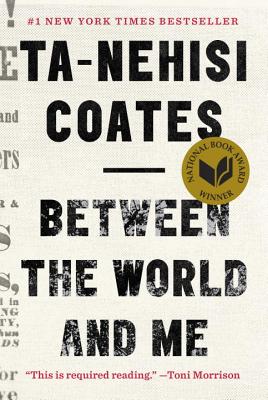
  1. First, rip off your emotional blinders. Read Between the World and Me, by Ta-Nehisi Coates.

    This book is soul-changing.

  2. Learn the history you never knew you needed to know: Wherever you can fit it into your day, listen to episodes of the podcast “Seeing White” by John Boewin, with special guest Chenjeria Kumanyika.
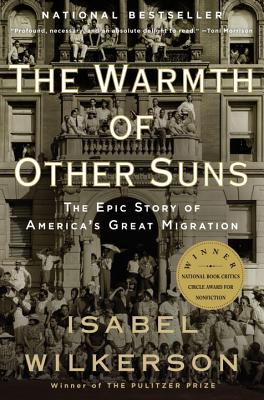
  3. Get personal with that history. Read The Warmth of Other Suns by Isabel Wilkerson.

    Better yet, read it with a friend.

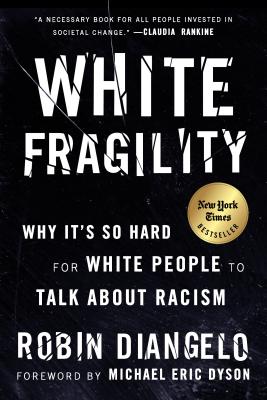
  4. Turn the lens on yourself. Read Robin DiAngelo’s White Fragility or Debbie Irving’s Waking Up White. Or both.

    Start a book group.

  5. Reach out. Investigate groups you may have never heard of, like Color of Change. What work are they doing? Do you want to support it, and if so, how? Watch Netflix shows like “Dear White People” or “BlackAF”–they’ll make you laugh while your mind is expanding. Read People of Color. Listen to People of Color. Think about what you’ve never thought about. Think about where this country has an opportunity to go.
  6. Get involved with a group like VoteForward or Common Purpose to defeat Donald Trump. While we find a way to move forward, we have to keep our country from sliding further backward. How can you help?

    Racism is like COVID, or cancer. If you can’t study it and talk about it, you can’t cure it.

You know and I know, it is no longer possible just to dislike racism. We are either doing anti-racist work–starting with ourselves–or we are permitting racism to hold its grip. Please add your own suggestions here for what people like you, like me, or ANY people can do.

My New Furlough “Job”: Fun With Elected Officials

Even though, like many Americans, I’m furloughed from my job at the moment, I recognize that I’m in the 1% of ridiculously lucky people who has no one in my home demanding care nor worry; ample resources; and lovely outdoor space close to hand.

I’m sorry, New York–I wish I could send you some!

What I also have? A sense of helplessness. When we finished quarantining after our road trip, I signed up to deliver food around our island. But then I had to go off-island again. Twice. I understand the reason for the quarantine rule, but still I chafed. What can I DO to HELP?

Enter University of Washington professor David Domke and Common Purpose. I’d already attended an Orientation with this impressive group dedicated to promoting voting, and signed up for national get-out-the-vote work next fall. But next fall is so, so far away, and the daily COVID news weighs heavily. So I was thrilled when the email call came to ADVOCATE FOR EXPANDED VOTING OPTIONS FOR NEXT NOVEMBER,* from my own living room.

*Notice I’m not saying voting for whom? That’s not what this push is about. You don’t have to dig too deep to find which party supports more voting and which party wants to limit it…but that ain’t my affair. I just happen to think America has had about enough disenfranchisement for our past couple-plus centuries.

Plus, Professor Domke said it would be fun!

27 of our 50 states don’t allow for any way to vote except in-person on one single day. Which, in a pandemic, sounds pretty CRAZY, right? Right. Just ask Wisconsin. So I signed up to contact elected officials in those 27 states. Two senators. One governor. And one person in charge of elections.

Oh dear. That’s 4 x 27…128 people. Fun, huh?

I decided to treat this task like a job. You have the option to call, email, or tweet, and since the only thing I loathe more than making political calls is receiving them, I chose email as my medium. I tweaked the form letter Common Purpose sent to make it sound more like me. Okay. Ready for fun.

For the past 2 days, I’ve emailed for approximately an hour. Because there’s a Senate bill coming up now (Thank you, Oregon Senator Ron Wyden!) I started with Senators. 

Copy email letter. Open provided link to given Senator. Autofill all my details. Pick topic. Paste letter. Make sure I’m not subscribing to any newsletters! Prove I’m human. Click Submit. Next…

Y’know what, Professor Domke? This is NOT fun. This is boring as all get-out. I hate this.

So I started embroidering a little.

I let the two senators from North Carolina know I’m a Tarheel born & bred, and finished my letter with “Go Heels!” (Too bad for me if they’re Duke fans.)

I congratulated some of the senators who recently (or less recently) dropped out of the race for being so stalwart.

I started noticing stuff. Like: Some senators make you choose a prefix for your name; others let you opt out. Some senators have “Abortion/Right to Life” on their Issues list; others, just one or the other. Some senators don’t have anything on their Issues list that covers the topic at hand–Elections? COVID? Civil Rights?–forcing me to choose “Other.” Hmph.

And Cory Booker has the most adorable website, which asks for your first name right off the bat, then goes to “Hi, Gretchen!” Awww…Miss you, Cory.

After thirty minutes or so, I noticed something else: I was actually having a kind of nerdy fun. Go figure.

Hey, time’s up. I contacted 40 senators. Only 14 to go. And then all those Governors and Secretaries of State…

Wonder if any of their websites will tell me “Hi!”?

If you’d like to join this fun enterprise–no, really, in all seriousness, if you’d like to participate in the push to keep voters safely at home without being deprived of their right to help elect our next President, click here.

Woohoooo! Democracy! At least until I get to back to work at the bakery.

Equal Time For the Better Angels of Our Nature

My readers probably know that I’m not much of a podcast listener, but that if I AM listening to a podcast, it’s probably On Being with Krista Tippett. I started this habit after the 2016 election and, three and a half years later, I need her show more than ever.

Today I want to provide a peek into an especially uplifting interview about…ready? The evolutionary aspects of human goodness. Evolutionary? Human Goodness? Yes please!

(What follows are shameless excerpts from the transcript of Krista Tippett’s show, which I’m assuming she won’t mind because I’m encouraging everyone to listen to her.)

Human goodness? Does that mean sunflower seeds?

Nicholas Christakis is Professor of Social and Natural Science at Yale. More specifically, he works at something called the Human Nature Lab—which sounds spooky until you hear what they’re studying. They’re studying goodness. (Oh my goodness. Literally.)

Says Dr. Christakis,

I’m interested in the qualities that make a collective good. How is it that a group of humans come together to form a good society? And in what way, and to what extent, has evolution equipped us with these capacities?

Please, oh please, tell me more about our good capacities. Do you really mean to say we have them built in, evolutionarily, and if so, why do never hear about this? Dr. C?

…scientists and citizens on the street have focused on the dark side of human nature, on our propensity for selfishness and tribalism and mendacity and cruelty and violence, as if this were a natural or normal or primary state of affairs. And yet, I think the bright side has been denied the attention it deserves, because, equally, we are capable of love and friendship and teaching and cooperation and all these other wonderful things. And, in fact, I would argue…those qualities are more powerful than the bad qualities; and therefore, in some ways, much more important.

More important? Really? Tell me why!

I think, if every time I came near you, you were mean to me, or you filled me with fake news — you told me falsehoods about the environment in a way that was detrimental to my capacity to survive in the environment, or you killed me, I would be better off living apart from you.

But we don’t do that. We live together. And so, therefore, the benefits of a connected life must have outweighed the costs. And they did outweigh the costs. And the question is, how did that state of affairs come to be?

Whoa. He’s right. We DO, for the most part, live in societies. Have done for millennia. And yes. Dr. Christakis is talking about EVOLUTIONARY time here, not human history.

…In fact, every argument that I make…I could make about human beings who were alive 10,000 years ago, before the action of a lot of the technological and historical forces that we take as so relevant and ascendant today. So we were capable of love and friendship and living together 10,000 years ago. And we were also capable of violence, of course, then, too. But all of these things were a part of our nature well before we then had this overlay of cultural and technological and historical forces acting. And in some ways I would argue that those forces are a thin veneer overlaid on a much more fundamental edifice.

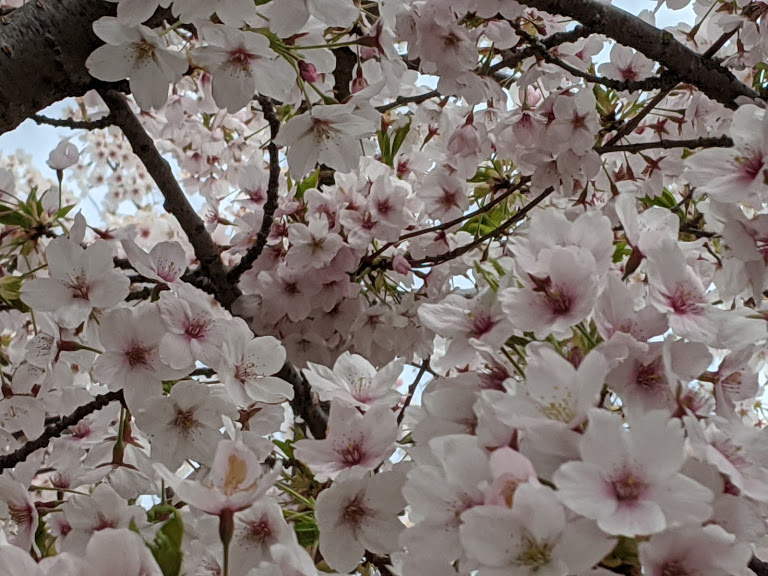
A not particularly relevant but definitely uplifting photo I took the other day.

In other words, the prof is arguing that certain basic positive traits are the driving force of ALL human societies EVERYWHERE. These traits include our ability to…

love the people we’re having sex with; we form sentimental attachments to them. We are, technically, monogamous. We befriend each other; we form long-term, non-reproductive unions with other members of our species. This is exceedingly rare in the animal kingdom.We do it; certain other primates do it; elephants do it; certain cetacean species do it — we form friendships with unrelated people. It’s universal in human groups.


cooperate with each other, altruistically.We’re kind to strangers — again, to unrelated individuals;


...teach each other things. People take this for granted, but it’s actually unbelievable.

Yeah, the purple highlights are mine. They represent my DELIGHT in hearing an eminent, sober scientist tell the world that we humans are as good as we KNOW we can be–not simply as bad as our TV and movies tell us, over and over, that we must be.

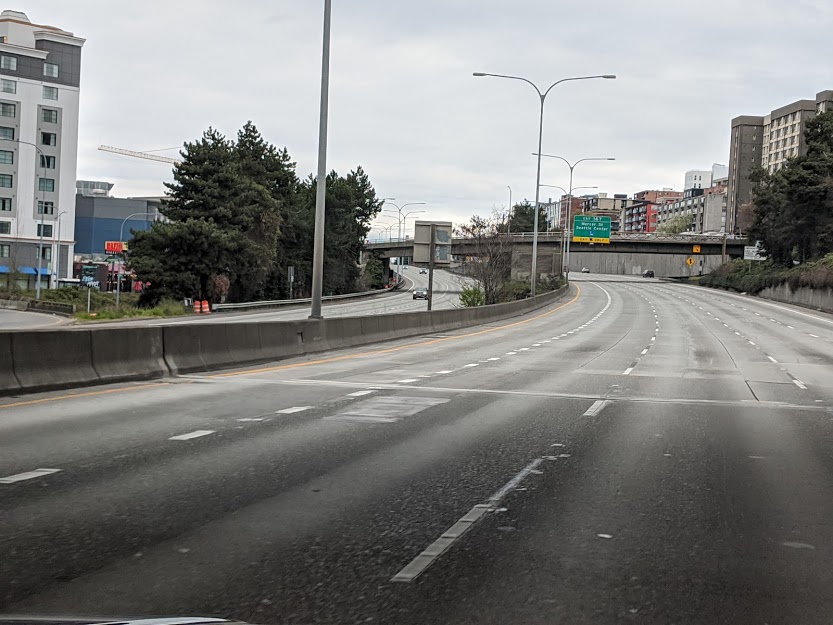
THIS is relevant: Seattleites being altruistic by staying home, off the freeway. (OK, yeah, also being a little scared.)

If you, like me, need some inspiration right now, I encourage you to read this last paragraph aloud, as if it were a sermon, or a speech at the Lincoln Memorial.

Deeper, more powerful, more ancient forces are at work, propelling a good society, endowing us with these wonderful capacities, which were always there, are still there, are unavoidable; and that, if anything, these moves that we’ve made as a species in the last few hundred years are…the thin veneer over this more fundamental reality of the better angels of our nature.

Preach on!

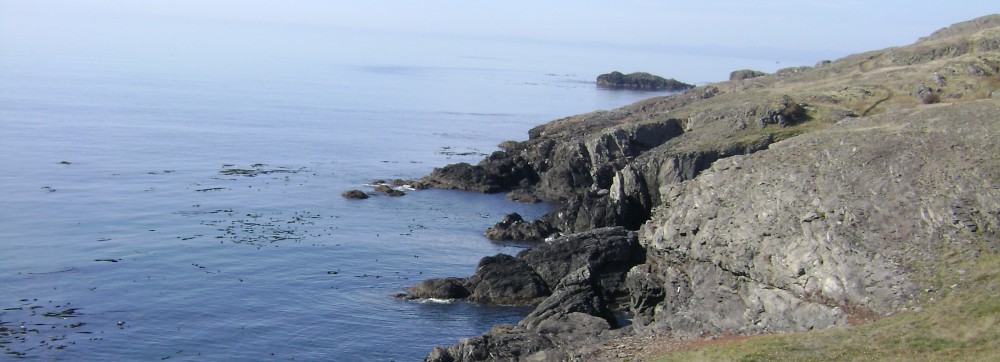
Which do you want to focus on: the dark, tangled foreground, or the shining tree?

Please know: like Dr. Christakis, I’m no Pollyanna about human nature. All I’m asking for is equal time for our better angels.

“How To Love a Country”–With a Little Help From My Poets and Reporters

As part of my New Year Intention to spend more time with bridge-builders, I recently listened to an On Being podcast I’d stockpiled for moments like these (like, for example, when your country suddenly decides to go to war). I sure picked a good one. When Krista Tippett interviews civil engineer/poet Richard Blanco, these guys give me language to keep looking for bridges.

(Did you catch that? Poet AND civil engineer? How much bridgier can you get?)

Mr. Blanco celebrates what he’s noticing about this country, that whoever “we” are, we’re starting to pay attention to others at risk.

 I just love that we’re stepping up, and we’re realizing, no. OK, this is — I don’t have to go to that protest; it’s not about me. But that poem … you know, “First they came for the so-and-so”? Remember that poem? And I think we’re finally — we’re not doing that. We’re not waiting for them to come for us. We are stepping up and realizing that the quality of life, the virtue of this country, depends on every human being’s story, to a certain degree; that our happiness depends on other people’s happiness, and we’re moving from a space of dependence to realizing our interdependence.

And Krista agrees:

It becomes a discipline, almost like a spiritual discipline, to take that seriously, too. It’s a way of us, some of us, enough of us, collectively, living this phrase that you have at the beginning of the book, How to Love a Country: “Tell me with whom you walk, and I’ll tell you who you are.” So it’s us, expanding that sense of who we are.

As an American, I would prefer to walk in a wider lane than I have, historically, as a White woman. I want a richer sense of who “we” are. Since I moved from a very diverse town and job to an island that is…let’s say NOT diverse, I’ve been finding other ways to broaden my “we.”

The most significant step I’ve taken is to subscribe to the New York Times, and then sign up for its newsletter on the topic of “Race/Related.” That means I get stories right into my inbox that particularly relate to people NOT like me. The other day, for example, I read a wonderful story by Kurt Streeter about the WNBA star Maya Moore taking a sabbatical from basketball at the peak of her career to work on freeing a man from prison whom she believes to be innocent. What a story. What a gift.

Yes, the NYT costs money and CNN is free…but the NYT is doing work I actively want to support. Because it supports US.

Listening to the interview with Richard Blanco left me feeling choked up about my country. (Do you know how hard it is to ride your exercise bike hard while choking up? I had to slow down.) And this is the poem that did it. I’m passing it on to you now, hoping it both chokes you up and builds you up, as it did me. As it could us.

The poem is called Declaration of Interdependence, and is woven through with actual excerpts from the Declaration of Independence. Here’s the poet’s explanation of the title:

...finding language, finding another angle, finding another dialogue, and how easily stereotyped and typecast people can become in the news; and, also, how we do it to ourselves — “Oh, you drive a red pickup truck; therefore, you must be this person. You shop at Whole Foods; therefore, you must be this kind of person. You drive a Subaru; therefore, you must be this kind of person,” and realizing that that’s really something that’s been slowly chipping away at our brains, this sort of immediate — I won’t say “judgment,” but a typecasting that sometimes, we’re not even aware. So I just wanted to break down some of those stereotypes and create empathy across those stereotypes.

But it also, ultimately, comes from a saying, a greeting from the Zulu people, that was the real inspiration here…They don’t say “Good morning” like we do, like we did, this morning. “Good morning; I need coffee.” [laughs] They look at one another, right in the eyes, and say, “I see you.” And there’s an incredible power in seeing and being acknowledged. And if I’m not mistaken, the reply is, “I’m here to be seen. And I see you.” …We’re not seeing each other as clearly, and I think this poem was trying to let us see each other clearly.

And here’s the poem. Happy Interdependence Day!

“Declaration of Interdependence”

 Such has been the patient sufferance…

We’re a mother’s bread, instant potatoes, milk at a checkout line. We’re her three children pleading for bubble gum and their father. We’re the three minutes she steals to page through a tabloid, needing to believe even stars’ lives are as joyful and as bruised. Our repeated petitions have been answered only by repeated injury…

We’re her second job serving an executive absorbed in his Wall Street Journal at a sidewalk café shadowed by skyscrapers. We’re the shadows of the fortune he won and the family he lost. We’re his loss and the lost. We’re a father in a coal town who can’t mine a life anymore because too much and too little has happened, for too long.

A history of repeated injuries and usurpations…

We’re the grit of his main street’s blacked-out windows and graffitied truths. We’re a street in another town lined with royal palms, at home with a Peace Corps couple who collect African art. We’re their dinner-party talk of wines, wielded picket signs, and burned draft cards. We’re what they know: it’s time to do more than read the New York Times, buy fair-trade coffee and organic corn.

In every stage of these oppressions we have petitioned for redress…

We’re the farmer who grew the corn, who plows into his couch as worn as his back by the end of the day. We’re his TV set blaring news having everything and nothing to do with the field dust in his eyes or his son nested in the ache of his arms. We’re his son. We’re a black teenager who drove too fast or too slow, talked too much or too little, moved too quickly, but not quick enough. We’re the blast of the bullet leaving the gun. We’re the guilt and the grief of the cop who wished he hadn’t shot.

We mutually pledge to each other our lives, our fortunes and our sacred honor…

We mutually pledge to each other our lives, our fortunes and our sacred honor…

We’re the dead, we’re the living amid the flicker of vigil candlelight. We’re in a dim cell with an inmate reading Dostoevsky. We’re his crime, his sentence, his amends, we’re the mending of ourselves and others. We’re a Buddhist serving soup at a shelter alongside a stockbroker. We’re each other’s shelter and hope: a widow’s fifty cents in a collection plate and a golfer’s ten-thousand-dollar pledge for the cure. 

We hold these truths to be self-evident…

We’re the cure for hatred caused by despair. We’re the good morning of a bus driver who remembers our name, the tattooed man who gives up his seat on the subway. We’re every door held open with a smile when we look into each other’s eyes the way we behold the moon. We’re the moon. We’re the promise of one people, one breath declaring to one another: I see you. I need you. I am you.

–Richard Blanco

“I see you. I need you. I am you.” (Photo by TPapi, “Crowds on the Mall,” Jan. 9 2009)

New Year’s Intention: Spend Time With Bridge-Builders

You know who I mean. People who challenge me, gently, if I start to rant, instead of saying, “I know, right?” People who aren’t afraid of talking with folks who disagree with them. People who are only afraid of what happens if we all stop talking with folks we disagree with.

I am not a bridge-builder by nature. Truth be told, I don’t know many in person. So my 2020 intention is to spend regular time with them through books and articles and poetry and podcasts and blogs and movies. 

I intend to read, listen, watch learn–and spread the word. So here’s a start: “My Semester With The Snowflakes,” by James Hatch. This former Navy SEAL  enrolled as a freshman at Yale this past year, at the age of 52.

I should give a bit of background information. I was an unimpressive and difficult student in public schools. I joined the military at 17 and spent close to 26 years in the US Navy. I was assigned for 22 of those years to Naval Special Warfare Commands. I went through SEAL training twice, quit the first time and barely made it the second time. I did multiple deployments and was wounded in combat in 2009 on a mission to rescue an American hostage.

Every single day I went to work with much better humans than myself. I was brought to a higher level of existence because the standards were high and one needed to earn their slot, their membership in the unit. This wasn’t a one-time deal. Every time you showed up for work, you needed to prove your worth.

The vetting process is difficult and the percentage of those who try out for special operations units and make it through the screening is very low.

In an odd parallel, I feel, in spite of my short time here, the same about Yale.

(photo by Roger Kidd, courtesy Wikimedia Commons)

Hatch goes on to address the notion of “liberal snowflakes.” (Yep–folks like me.)

Let me address this “snowflake” thing. According to the Urban Dictionary, a “snowflake” is a “term for someone that thinks they are unique and special, but really are not. It gained popularity after the movie Fight Club from the quote ‘You are not special. You’re not a beautiful and unique snowflake. You’re the same decaying organic matter as everything else.’ ”

I hear the term occasionally from buddies of mine who I love. They say things like, “How are things up there with the liberal snowflakes?”

Let me assure you, I have not met one kid who fits that description. None of the kids I’ve met seem to think that they are “special” any more than any other 18–22-year-old. These kids work their assess off. I have asked a couple of them to help me with my writing. One young woman volunteered to help me by proof-reading my “prose” and, for the record, I believe she will be the President someday. I recently listened while one of my closer pals, a kid from Portland, Oregon, talked to me about the beauty of this insane mathematics problem set he is working on. There is a young man in our group who grew up in Alaska working on fishing boats from a young age and who plays the cello. There is an exceptional young woman from Chicago who wrote a piece for the Yale Daily News expressing the importance of public demonstrations in light of a recent police shooting. She and I are polar opposites. I am the “patriarchy” at first glance, and she is a young black woman who is keen on public protests. Not the type of soul I generally find myself in conversation with. We come from different worlds and yet we both read classic works with open hearts and minds.

We recently met with a prominent writer from a think tank who is researching the state of the humanities in the university setting. There were four of us students: two young men, the young woman from Chicago, and me, the old guy. As the younger students started to express their thoughts, the young woman (truly a unicorn of a human) used the word “safe space” and it hit me forcefully. I come from a place where when I hear that term, I roll my eyes into the back of my vacant skull and laugh from the bottom of my potbelly. This time, I was literally in shock. It hit me that what I thought a “safe space” meant, was not accurate. This young woman, the one who used the phrase, isn’t scared of anything. She is a life-force of goodness and strength. She doesn’t need anyone to provide a comfortable environment for her. What she meant by “safe space” was that she was happy to be in an environment where difficult subjects can be discussed openly, without the risk of disrespect or harsh judgment. This works both ways. What I mean is, this young woman was comfortable, in this university setting, wrestling with things like the Aristotelian idea of some humans being born as “natural slaves.” She was quite comfortable in that space. The question was, how comfortable was the 52-year-old white guy in that discussion? Did it make me uncomfortable? Yes. I’m grateful for the discomfort. Thinking about things I don’t understand or have, for most of my life, written off, is a good thing.

That, my friends, is the sound of brick and mortar. A bridge. Thanks, James Hatch. Here’s to more voices like yours in the year to come. And Happy 2020, everyone!

Bridges, please!

But Wait! I Have One More Gift Idea! Just…Give! OK? Merry Christmas.

Before I sign off for the holiday week (I know, I’m not a teacher anymore, but I still think of Christmas/New Year as one lengthy holiday. That’s still better than the corporations, who seem to think it starts after Halloween.)–sorry, where was I? Right. The holidays. I know it’s late, but I have ONE MORE EXCELLENT GIFT IDEA, and it requires NO driving, NO wrapping, and very little time. But lots of thought, and heart.

Why not give the gift of giving? My best find of 2019 was the Americans of Conscience Checklist, a weekly message in my inbox full of suggestions of political phonecalls to make or letters to write (including thank-you notes to people who’ve taken good or brave action). AoCC is a regular part of my week now–usually 20 minutes’ worth.

And now, AoCC offers a curated list of causes to donate to, based on your passions–or those of the person you wish to gift. Click here to see the list.

Categories for giving include:

Migrant justice: give to an organization which collects airline miles to help re-unite separated migrant families.

Prison reform: support an organization dedicated to providing books for prisoners, while educating Americans about the prison crisis.

Election integrity: give to a non-partisan group which oversees elections at all levels, in our own country. And there’s one particular group that focuses on enfranchisement in Indian Country.

I can’t think of a better way to show your love for someone than to donate to a cause they love.

Of course, it’s not all about money. If you want to gift someone with the feeling I’ve been enjoying these past few months–the feeling of empowerment–just send them the AoCC link and let them feel it for themselves.Merry happy!

Merry, happy Everything, people! See you in 2020.

My Conscience Speaks In Joan Baez’s Voice. And I Don’t Care If That’s Weird.

A friend once offered some questions she’d brought back from a writing retreat. I can’t remember them verbatim, only that they were mind-opening. Especially the one that went something like this:

“Give your Inner Critic a persona and a voice. What does s/he say?”

I didn’t have to think at all. My Inner Critic–sometimes self-doubt, but more often simply my conscience–sounds like Joan Baez. She IS Joan Baez. And she usually wants to know, in her beautiful, stripped-down, poetic but peremptory way, why I’m not making more out of my time on Earth.

Do I need to explain this foible of mine, or defend it? Maybe I will, someday. But right now all I want to do is celebrate and share Joan singing, “The President Sang Amazing Grace.”

The song, written by Zoe Mulford, captures in song the moment Barack Obama did just that, in June 2015, while giving the eulogy for Reverend Clementa Pinckney, who was shot in his own church along with eight other worshippers by a young man in the depths of hate. But it also captures…amazing grace. The kind that turns hopeless grief into hopeful action. The kind that speaks, decade after decade, in Joan Baez’s voice, asking me if I’m living the best life I can lead.

That’s all I think I need to say. If the hatred of our age is getting to you…just listen to Joan. Then comment and/or share as you feel moved.

What Are We Actively Avoiding Paying Attention To? A Love Letter.

Dear Tacoma,

I know, I don’t write you often enough. As my adopted hometown, as my official Now I Am a Northwesterner Address, as the birthplace of my children, you have owned my heart since I first met you in the mid-80s. I love your grit, the hell-no-we’re-not-Seattle chip on your shoulder. I love all your big things: big trees, big ships, big trains, big Dome. Thanks for being you.

But Tacoma, you have a dark spot. No, I’m not talking about your Superfund sites–I know you’re working on those. I’m talking more a cancer, a symptom of our New American Normal of meanness. I’m talking about the Northwest Center for Detention, run by ICE in conjunction with GEO Group, a private prison firm.

The NWDC sits right smack in the middle of your industrial heart, Tacoma. And you know it. Your City Council approved it in 2004, and allowed its expansion in 2009. You probably know too about the hunger strikes that detainees have waged, on and off, since 2014, trying to improve conditions which our House Representative, Adam Smith, called “shocking.”

This particular demonstration was led by a synagogue from Seattle.

But I know you, Tacoma. I know you’d rather not think about the over 1,300 people locked up in your heart like hardcore prisoners for the crime of trying to live and work in this country, or fleeing violence in theirs, or both.

You know why I know how actively you’re avoiding thinking about those people, Tacoma? Because I’ve been doing the same thing. I’ve been REALLY good at it. Even though I moved away in 2010, I still consider myself a Tacoman at heart, and I haven’t even been aware of the NWDC until three years ago. And when I learned about it, did I take the time to learn why there were protesters out front? Did I do anything at all?

Self-explanatory.

Nope.

But Tacoma, that moment arrives when you have to look yourself in the mirror and stop pretending you don’t know about stuff you don’t want to think about. I had that moment a few months ago. It took me a long time to act on it for a number of reasons, but this past weekend I finally did. I joined the weekly protest run by La Resistencia.

Most of these protesters are from Seattle, I’m sorry to say–not Tacoma.

I’m a slow learner, Tacoma. Now that I’ve finally made myself learn about the conditions inside the NWDC–the maggots in the food, the medical neglect, the lack of clean water, the reprisals against anyone who dares to complain–I can’t un-know these things. And I can’t not get involved, and raise my voice.

Which is why I’m writing you this letter, with deep affection. You are better than this, Tacoma. We are all better. If you are actively avoiding this ugliness–ANY ugliness–as I have done, your conscience knows why.

Paper cranes of hope, outside the gates.

PS: Please don’t just take my word for it. Here’s ICE’s own website. Here’s KUOW’s take on the NWDC, with photos. And here’s the perspective of the Northwest Immigrant Rights Project. 


Americans of Conscience Checklist: For Those Of Us Who Can’t Keep Up

I admit it. I hate calling my Congressperson. I actually have to ASSIGN myself a time to call, or a number of calls to make, depending on the issue. But after calling, I always feel good, and wonder why I had to fight so much inertia.

If this sounds at all like you, you might be interested in this website I was just introduced to by my friend Iris, the Americans of Conscience Checklist.

I signed up to receive the weekly Checklist via email. It’s pretty much exactly what it sounds like. As it tells you on the home page,

the AoC Checklist features clear, well-researched actions for Americans who value democracy, equality, voting, and respect. To stay engaged through challenging times, we practice gratitude, self-care, and celebration.

So I get the best of both worlds: a definitive, time-based reminder that’s done all my legwork for me. All I have to do is choose one thing–boom, done. I can go deeper if I want, but that’s entirely up to me.

My own little bit for America (photo by SweetShutter, courtesy Wikimedia Commons)


Take this week’s list, for example. It offers actions to take if you are concerned about…

…advocating for a crucial safeguard against election fraud:

[h/t Verified Voting]Call: Your two state legislators (look up).

Script: Hi, I’m calling from [ZIP] because I want security around [STATE]’s elections to be public and trustworthy. Nonpartisan experts agree that a specific type of post-election oversight called a risk-limiting audit (RLA) is the strongest and most cost-effective defense against malfunctioning or hacked voting systems. Can I count on [NAME] to support mandatory RLAs in [STATE] beginning with the 2020 presidential primaries? Thank you.

…the rights of vulnerable people, like Native American women:

 [h/t National Indigenous Women’s Resource Center] Call: Your two senators (look up).

Script: Hi. I’m calling from [ZIP] to express my deep frustration that the Senate still has not acted on the Violence Against Women Act, lapsed now for more than a year. As a result, Native American women in particular are even more vulnerable to assault and rape. I’m asking [NAME] to support the complete House version (H.R. 1585) and call for an immediate vote on it.

The checklist goes on to offer a name of someone worthy of thanking. This week, it suggests: “Thank NBA Commissioner Adam Silver for affirming employees’ individual rights to freedom of expression.”

And of course it provides Mr. Silver’s address.

Then comes my favorite part, the Good News section. Don’t know about you, but I need this stuff to keep me hopeful! There’s national good news…

A federal court issues a temporary injunction against the administration’s “public charge” rule, which would limit aspiring Americans’ ability to receive green cards should they need to utilize public assistance. 

…as well as state-by-state, like this from Vermont:

VT will allow young adults aged 18-20 with criminal charges to remain in the juvenile court system, providing them with age-appropriate services and allowing them to avoid a life-altering criminal record.

Way to go, Vermont! I doubt I would have learned that news from any other source.

Point is, my inertia doesn’t stand a chance against this kind of easy, hand-picked list of ways to weigh in on things I do care about, even if you wouldn’t know it from my laziness. If you can relate to this at all, I hope you’ll consider checking out the Americans of Conscience Checklist here.

Let’s go, America! (photo by finn, courtesy Wikimedia Commons)